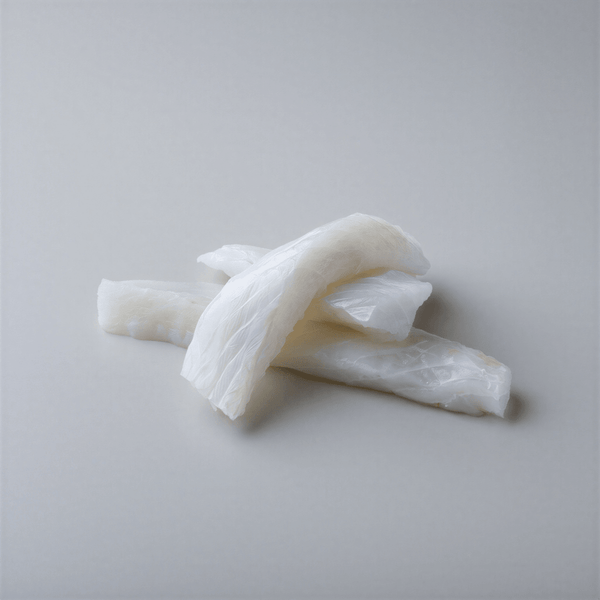
Anisakis generates fear, and understandably so. But most of what is believed about this fish parasite is myth, exaggeration, or simply false. In this article, we separate real risks from urban legends, explain which fish are more likely to contain it, and, most importantly, show you how to prevent it safely and definitively. Spoiler: salted cod and canned anchovies are among the safest products available.
What exactly is anisakis?
Anisakis (Anisakis simplex) is a parasitic nematode (a microscopic roundworm) that lives naturally in the digestive tract of marine mammals such as whales, dolphins, and seals. In its larval stage, anisakis is found in the viscera and, to a lesser extent, in the musculature of various fish and cephalopods.
It's important to understand a fundamental point: anisakis is not a contamination or a defect of the fish. It is a natural parasite that has been part of marine ecosystems for millions of years. Its presence in fish does not indicate poor quality or bad preservation; it indicates that the fish is wild and comes from the sea, nothing more.
Size and appearance
Anisakis larvae measure between 2 and 3 cm in length and less than 1 mm in diameter. They are white or slightly transparent and are usually found coiled in a spiral. They can be detected in fish with the naked eye, although it is not always easy to distinguish them from the fish's own tissues, such as tendons or nerves.

Anisakis life cycle
Understanding the anisakis life cycle helps to explain why it affects certain fish and not others:
- Definitive host: Marine mammals (whales, dolphins, seals) are the definitive hosts. Adult anisakis live in their stomachs and produce eggs that are released into the sea with feces.
- Free-living stage: The eggs hatch in the water, and the larvae are ingested by small crustaceans (krill, copepods).
- First intermediate host: Infected crustaceans are consumed by small fish (herring, sardines, anchovies).
- Second intermediate host: Larger fish feed on the small fish and accumulate anisakis larvae. This is where the fish we consume come in: hake, cod, bonito, mackerel, horse mackerel, etc.
- Cycle closure: When a marine mammal eats an infected fish, the larvae develop into adults, and the cycle repeats.
Humans are an "accidental host": we are not part of the natural anisakis cycle. If we ingest a live larva, it cannot complete its development and dies in our digestive tract. But before dying, it can cause problems.
Symptoms of anisakiasis: what happens if you get infected
Anisakiasis (anisakis infection) can manifest in two ways:
Gastric anisakiasis (most common)
Occurs when the larva penetrates the stomach lining. Symptoms appear between 1 and 12 hours after consuming infected fish:
- Severe abdominal pain (epigastric)
- Nausea and vomiting
- In some cases, moderate fever
It usually resolves spontaneously within a few days when the larva dies, although in severe cases, endoscopic removal may be required.
Allergic reaction
Some people develop an allergic response to anisakis proteins, which can range from mild hives to anaphylaxis in exceptional cases. This reaction can occur even if the larva is dead (from cooking or freezing), as the allergenic proteins are heat-resistant. People with diagnosed anisakis allergy must take extreme precautions and consult their allergist.
Real data on incidence
Spain is the second country in the world with the most cases of anisakiasis (after Japan), which makes sense given our high fish consumption and our tradition of lightly cooked preparations (e.g., marinated anchovies). However, severe cases are rare: it is estimated that there are between 8,000 and 10,000 annual cases in Spain, most of them mild and self-limiting.

Which fish have more anisakis?
Not all fish carry the same risk. The prevalence of anisakis varies greatly depending on the species, catch area, and part of the fish:
High risk (high prevalence)
- Hake: Especially from the Cantabrian Sea and the Mediterranean. Studies show prevalences of 70-90% in viscera.
- Fresh anchovy/boquerón: High prevalence, especially in the Cantabrian Sea.
- Horse mackerel: Very high prevalence in Spanish waters.
- Blue whiting: One of the species with the highest parasite load.
- Mackerel: Significant prevalence, especially in large specimens.
Medium risk
- Fresh cod: Variable prevalence depending on origin. North Atlantic cod has lower rates than North Sea cod.
- Wild salmon: Moderate risk. Farmed salmon has virtually no risk.
- Bonito/tuna: Medium prevalence, larvae usually concentrate in viscera.
Low risk or no risk
- Aquaculture fish: Gilthead bream, sea bass, trout, turbot, farmed salmon. Since they are fed with feed, they do not get infected.
- Bivalve mollusks: Mussels, clams, oysters, cockles. Their filtration system does not allow anisakis to enter.
- Cephalopods: Squid, cuttlefish, and octopus have a low risk, though not zero.
Anisakis and cod: is there a real risk?
This is the question we get asked most often at Bacalalo.com, and the answer is reassuring:
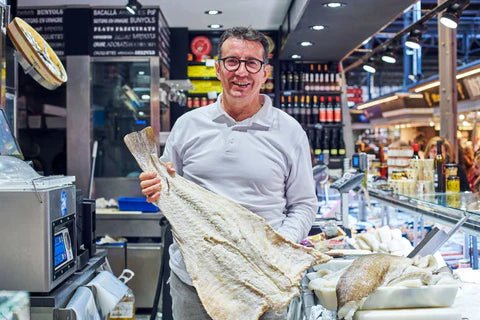
Salted cod: virtually no risk
The cod salting process involves prolonged exposure to very high salt concentrations (over 20%) for weeks. These conditions are lethal to anisakis larvae. Various scientific studies have confirmed that traditional cod salting effectively eliminates anisakis larvae.
Furthermore, subsequent desalting in cold water does not "resurrect" the parasite (this is a myth): larvae killed during salting cannot become viable again.
Cooked cod: no risk
Any cod preparation that exceeds 60°C in the center of the product for at least 1 minute kills all anisakis larvae. Since the vast majority of cod recipes involve cooking (baked, pil-pil, confit, fried, in stews), the risk is nonexistent.
Raw fresh cod: requires prior freezing
The only risk scenario would be consuming raw or undercooked fresh cod without having frozen it beforehand. This is uncommon in Spanish gastronomy, but if you plan to prepare fresh cod ceviche or carpaccio, freeze it beforehand at -20°C for 72 hours.
7 myths about anisakis you should stop believing
Myth 1: "Vinegar kills anisakis"
FALSE. This is the most dangerous myth. Vinegar DOES NOT kill anisakis larvae, not even in prolonged marinades. Marinated anchovies (boquerones en vinagre) are the main cause of anisakiasis in Spain precisely because of this erroneous belief. Anchovies must be frozen BEFORE marinating them in vinegar.
Myth 2: "Lemon kills anisakis"
FALSE. Neither lemon, nor lime, nor any citrus kills anisakis. Ceviches prepared with unfrozen fish are a real risk.
Myth 3: "If the fish is fresh, it doesn't have anisakis"
FALSE. The freshness of the fish is unrelated to the presence of anisakis. A freshly caught fish can have anisakis in its viscera. The difference is that in fresh fish, the larvae are usually in the viscera, and as it deteriorates, they migrate to the musculature.
Myth 4: "Only cheap fish have anisakis"
FALSE. Anisakis does not distinguish between Cantabrian hake and cheap hake. Prevalence depends on the species and fishing area, not the price.
Myth 5: "Anisakis is always visible to the naked eye"
PARTIALLY FALSE. Adult larvae (2-3 cm) can be seen, but smaller juvenile larvae can go unnoticed, especially when deeply embedded in the fish's musculature.
Myth 6: "Microwaves don't kill anisakis"
FALSE. Microwaves DO kill anisakis, provided the center of the fish reaches 60°C. The problem is that microwaves heat unevenly, so cold spots where larvae survive can remain. That's why conventional cooking is recommended for greater safety.
Myth 7: "Frozen fish loses quality due to the anti-anisakis process"
PARTIALLY FALSE. Freezing at -20°C for 72 hours has a minimal impact on fish quality if done correctly and thawed slowly in the refrigerator. The impact is greater on very delicate fish (such as turbot), but for most species, the difference is imperceptible.
How to prevent anisakis: the two infallible methods
Method 1: Cooking
Cooking fish to an internal temperature of 60°C or higher for at least 1 minute kills all anisakis larvae. This includes:
- Oven (from 170°C, ensuring 60°C in the center)
- Frying pan or griddle (cooking on both sides)
- Boiling or steaming
- Frying (most effective due to high temperatures)
- Microwave (ensuring uniform temperature)
Method 2: Freezing
For raw or lightly cooked preparations, prior freezing is mandatory:
- Domestic freezer (-18 to -20°C): Minimum 5 days (the official recommendation in Spain is 72 hours, but a larger margin is safer).
- Industrial freezer (-35°C): Minimum 15 hours.
- Ultra-freezing (-60°C): Instantaneous or nearly so.
When to apply each method?
- Marinated anchovies (boquerones en vinagre): FREEZE before marinating (minimum 72h at -20°C)
- Sashimi, tataki, ceviche: FREEZE beforehand
- Cold-smoked salmon: FREEZE beforehand
- Baked cod, pil-pil, stews: COOKING is sufficient
- Salted cod: The SALTING process has already eliminated the risk
- Canned anchovies: CURING in salt has eliminated the risk
Spanish regulations on anisakis
Spain has one of the strictest regulations in the world regarding anisakis:
- Royal Decree 1420/2006: Requires all fish to be served raw or lightly cooked in catering establishments to be frozen at -20°C for 24 hours.
- EC Regulation 853/2004: All fishery products intended for raw consumption must be pre-frozen at -20°C for 24h or -35°C for 15h.
- AESAN (Spanish Agency for Food Safety): Recommends a minimum freezing of 5 days at -20°C in domestic freezers (which do not always reach a real -20°C).
Seafood products that are NOT at risk of anisakis
To conclude on a reassuring note, these seafood products are completely safe regarding anisakis:
- Salted cod: Salt eliminates the larvae
- Canned anchovies (cured in salt): Months of salt curing eliminate any parasites
- Aquaculture fish: Gilthead bream, sea bass, trout, farmed salmon
- Bivalve mollusks: Oysters, mussels, clams, cockles
- Canned fish (heat-treated): Canned tuna, canned sardines, etc.
- Hot-smoked fish: The smoking temperature (70-80°C) kills the larvae
- Surimi and processed derivatives: Industrial processing includes heat treatment
Frequently asked questions
Can salted cod have live anisakis?
No. The salting process, which exposes cod to salt concentrations above 20% for weeks, is lethal to anisakis larvae. Salted cod is one of the safest products available regarding parasites. Even if the original fresh cod contained anisakis, the larvae die during salt curing.
Is it safe to eat marinated anchovies (boquerones en vinagre)?
Yes, provided the anchovies have been previously frozen at -20°C for a minimum of 72 hours (5 days is safer in domestic freezers). Vinegar alone DOES NOT kill anisakis. This is the main cause of anisakiasis in Spain, so it is a crucial point that should not be ignored.
Can pregnant women eat cod?
Yes, with complete safety. Cooked cod (baked, pil-pil, in stews, etc.) poses no risk of anisakis as cooking kills the larvae. Salted cod also poses no risk. Cod is also a fish with low mercury content, making it an excellent choice during pregnancy.
Do canned anchovies have anisakis?
No. Canned anchovies undergo a salt curing process that lasts for months (between 6 and 24 months for artisanal anchovies from the Cantabrian Sea). This process completely eliminates any parasites. You can consume canned anchovies with complete peace of mind, including pregnant women.
Can smoked salmon be eaten without freezing it first?
It depends on the type of smoking. Hot-smoked salmon (above 60°C) is safe without prior freezing. Cold-smoked salmon (most commercially sold) must have been frozen previously. The good news is that European regulations require this prior freezing, so commercial smoked salmon from recognized brands has already gone through this process.
Is my home freezer enough to kill anisakis?
If your freezer reaches -20°C or below (most 3 or 4-star freezers do), then yes, it is sufficient. But you need a minimum freezing time: AESAN recommends 5 days (not just 24 or 72 hours) because domestic freezers can have temperature fluctuations. Make sure your freezer has a 4-star (****) rating, which indicates -18°C or below.
What should I do if I see a worm in the fish I bought?
Don't be alarmed. The presence of visible anisakis does not mean the fish is bad or dangerous. Remove the larva and any others you can see, and cook the fish as usual (to over 60°C in the center). If the fish is to be eaten raw or undercooked, freeze it beforehand. The presence of anisakis is natural in wild fish and does not indicate a lack of quality.