Anchovies in Pregnancy: Can You Eat Them? Safety Guide
Canned anchovies are safe during pregnancy. The salting and curing process (a minimum of 6 months in salt) eliminates the risk of anisakis and listeria, which are the real concerns when consuming fish during gestation. However, not all anchovy preparations have the same safety profile. This guide details which types of anchovies you can eat, which to avoid, in what quantities, and why — based on data from AESAN, EFSA, and available scientific evidence.
Quick answer: yes, with caveats
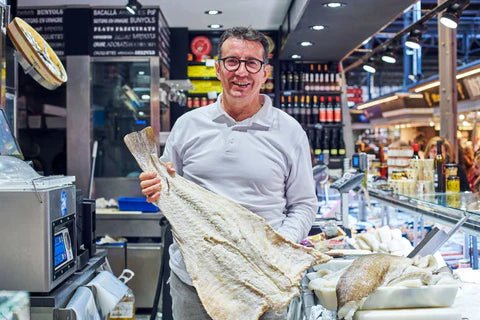
Updated March 2026. In our experience of more than 30 years at Mercat del Ninot, this is what we recommend.
Canned anchovies (in olive oil) and salted anchovies (semi-preserved in cans or jars) are safe during pregnancy. The curing process in salt for a minimum of 6 months — and generally 10-12 months for quality anchovies — eliminates anisakis and drastically reduces the risk of pathogens.
What you should not eat during pregnancy are fresh raw anchovies (homemade marinated anchovies without prior freezing) due to the risk of anisakis. Marinated anchovies from bars or restaurants are the most frequent source of anisakiasis in Spain.
Quick summary:
| Type of anchovy | Safe in pregnancy | Reason |
|---|---|---|
| Anchovies in oil (canned) | Yes | Cured 6-12 months in salt. Anisakis eliminated. |
| Salted anchovies | Yes | Prolonged salting. No risk of pathogens. |
| Marinated anchovies (previously frozen) | Yes, with caution | If frozen at -20 °C for 72h before marinating. |
| Marinated anchovies (unfrozen) | No | High risk of anisakis. Avoid. |
| Fresh raw anchovies | No | No treatment against anisakis. |
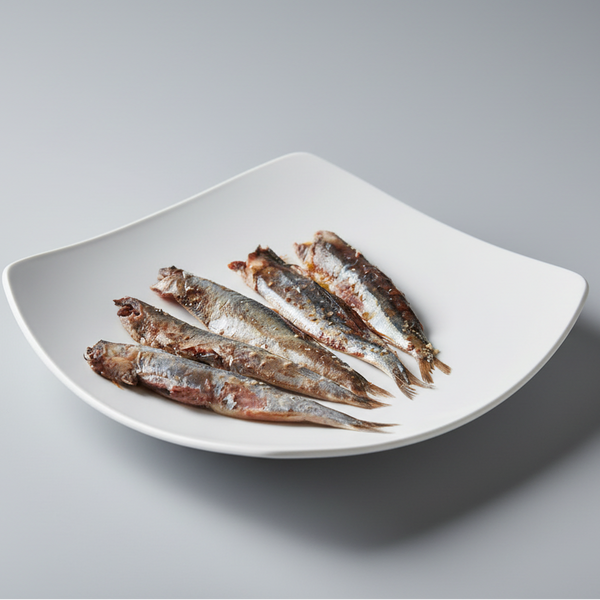
| Fresh cooked anchovies (fried, baked) | Yes | Cooking at >60 °C eliminates anisakis. |
The real risks of fish in pregnancy
There is much misinformation about fish consumption during pregnancy. The reality is that the risks are specific and manageable — and the benefits of fish consumption far outweigh the risks when chosen correctly.
The three real risks
- Mercury (methylmercury): accumulates in large predatory fish (bluefin tuna, swordfish, shark). Anchovies, being small, short-lived fish, have very low levels.
- Anisakis: parasite present in raw or undercooked fish. It is eliminated by freezing (-20 °C, 72h) or cooking (>60 °C). Prolonged salting (>6 months) also destroys it.
- Listeria (Listeria monocytogenes): bacteria that can survive in refrigerated foods. In correctly processed canned and semi-canned goods, the risk is practically nil.
None of these three risks apply to quality canned anchovies. Let's see why.
Types of anchovies and their safety in pregnancy
Cantabrian anchovies in olive oil
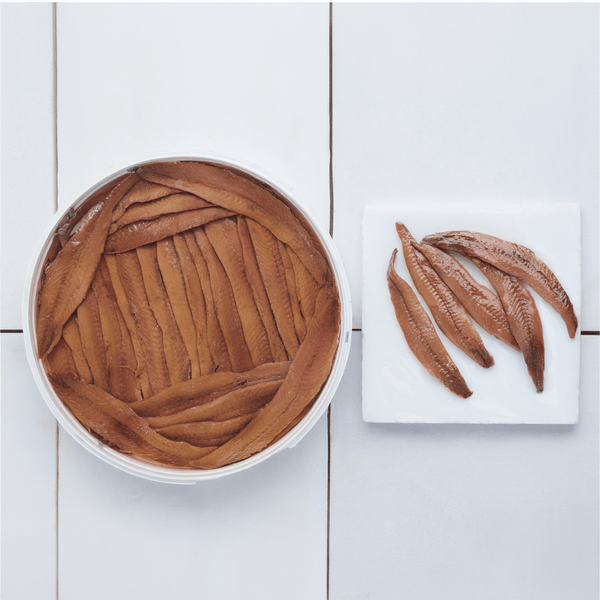
The Cantabrian anchovies sold in cans or jars are the result of a salting process that lasts between 6 and 12 months. During this time:
- The salt concentration (>20%) destroys anisakis and any pathogenic bacteria.
- The fish's own enzymes transform the flesh, giving it its characteristic texture and flavor.
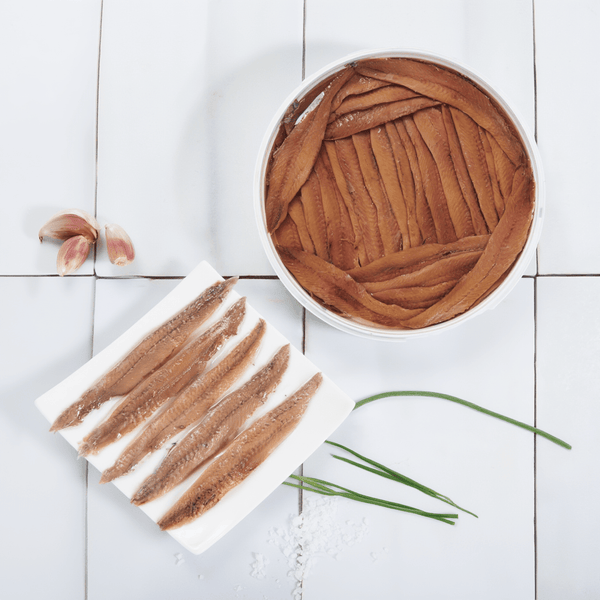
- After curing, the fillets are washed, hand-boned, and packed in olive oil.
This process makes canned anchovies one of the safest fish products available. There is no documented risk of anisakis or listeria infection associated with the consumption of canned anchovies in medical literature.
Salted anchovies (large can)
Salted anchovies — those that come whole, with bones, covered in salt in large cans — are also safe. They undergo the same curing process but are sold before being filleted and packed in oil. They only need to be cleaned and deboned at home before consumption. If you want to learn how to prepare them, our guide to salted anchovies explains the complete process.
Marinated anchovies: the gray area
Marinated anchovies are a risky preparation. Vinegar DOES NOT kill anisakis — this is a widespread but false myth. Anisakis survives vinegar, lemon, and salt for short periods. Only these destroy it:
- Freezing at -20 °C for a minimum of 72 hours (or -35 °C for 15 hours).
- Cooking at over 60 °C for at least 1 minute.
- Prolonged salting (more than 6 months at a concentration of >20%).
In Spain, legislation requires restaurants to freeze fish before serving it raw or marinated. But compliance is not universal, and at home, many people prepare marinated anchovies without freezing. During pregnancy, avoid marinated anchovies unless you are absolutely certain that they have been previously frozen.

Green Olives Stuffed with Anchovies Family Size - 1.5 kg | A92
Our Cantabrian anchovies mature between 10 and 12 months in salt using the traditional artisanal method. Hand-filleted, packed in extra virgin olive oil. Each batch has traceability from the fishing season to your table.
Mercury in anchovies: real data
Mercury is the most frequent concern — and the least applicable to anchovies. Data from AESAN (Spanish Agency for Food Safety and Nutrition) and EFSA are clear:
| Fish | Average mercury (mg/kg) | EU limit (mg/kg) | Risk in pregnancy |
|---|---|---|---|
| Swordfish | 0.97 | 1.0 | High — avoid |
| Bluefin tuna | 0.63 | 1.0 | High — maximum 1 time/month |
| Pike | 0.53 | 1.0 | High — avoid |
| Light tuna (canned) | 0.19 | 0.3 | Low — moderate consumption |
| Albacore tuna | 0.14 | 0.3 | Low |
| Anchovy / boquerón | 0.04 | 0.3 | Very low — safe |
| Sardine | 0.03 | 0.3 | Very low — safe |
Anchovies have one of the lowest mercury levels of all fish: 0.04 mg/kg, about 24 times less than swordfish. They are small fish (10-15 cm) with a short lifespan (3-4 years) that feed on plankton and small crustaceans. They do not have the time or position in the food chain to accumulate significant mercury.
AESAN classifies anchovies in the group of "fish with low mercury content" and recommends their consumption 3-4 times per week during pregnancy, along with sardines, hake, salmon, and cod.
Recommended quantities
AESAN's recommendations for pregnant women regarding anchovies:
- Canned / salted anchovies: 3-4 weekly servings of fish in general, of which anchovies can be a regular part. A serving is equivalent to 50-80 g (1-2 small cans).
- Salt limit: the main precaution with anchovies in pregnancy is not mercury or anisakis, but salt. Anchovies are a salty product (>5 g of salt per 100 g). If you have gestational hypertension or preeclampsia, moderate consumption.
- Omega 3: EFSA recommends 250 mg of DHA daily during pregnancy. A serving of anchovies (50 g) provides approximately 500 mg of EPA+DHA. It is one of the best available sources.
Nutritional benefits of anchovies in pregnancy
Anchovies are not only safe — they are nutritionally beneficial during pregnancy. Their nutritional profile includes nutrients especially important for gestation:
- Omega 3 (DHA): essential for fetal brain and visual development. Anchovies are one of the most concentrated sources.
- Calcium: if eaten with bones (salted anchovies), they provide bioavailable calcium. 100 g of anchovies with bones contain ~150 mg of calcium.
- Iron: anchovies contain heme iron (more absorbable than vegetable iron). Important in pregnancy, when iron needs double.
- Vitamin B12: essential for the formation of the fetal nervous system. Anchovies provide ~6 µg per 100 g (250% of the daily value).
- Protein: 25-28 g of complete protein per 100 g. High bioavailability.
- Iodine: necessary for maternal and fetal thyroid function. Anchovies are a good source of marine iodine.
Scientific evidence is consistent: women who consume omega-3 rich fish during pregnancy have children with better cognitive development measured at 3 and 7 years (ALSPAC study, Hibbeln et al., The Lancet 2007). The benefits of moderate fish consumption outweigh the risks of mercury in low-content species like anchovies.
Anisakis and anchovies: what you need to know
Anisakis is a parasite present in many marine fish. In Spain, it is estimated that 36% of hake and 50% of Cantabrian anchovies contain anisakis larvae. However, the presence of the parasite does not mean risk if the fish is processed correctly.
Methods that eliminate anisakis
- Freezing: -20 °C for 72 hours (or -35 °C for 15 hours). Mandatory by law in Spain for raw fish.
- Cooking: >60 °C for at least 1 minute in the center of the product.
- Prolonged salting: salt concentration >20% for more than 6 months. This is the process for canned anchovies.
Methods that DO NOT eliminate anisakis
- Vinegar (even submerged for 48 hours).
- Lemon juice or citrus.
- Cold smoking.
- Short marinating.
- Salting for less than 6 months.
Canned anchovies undergo a salting process of 6-12 months. Anisakis does not survive this process. It is biologically impossible. That is why canned anchovies are completely safe.
Listeria and canned goods: the reality
Listeriosis is a serious infection during pregnancy that can cause miscarriage, premature birth, or neonatal infection. It is transmitted through food contaminated with Listeria monocytogenes.
Foods at risk for listeria are:
- Unpasteurized soft cheeses (brie, camembert, artisanal fresh cheese).
- Refrigerated cold cuts and pâtés.
- Cold-smoked salmon.
- Prepared salads.
Canned anchovies are not a risk food for listeria. The combination of high salt concentration, low pH, and airtight packaging creates an environment where Listeria monocytogenes cannot survive or multiply. There are no documented cases of listeriosis associated with the consumption of canned anchovies.
If you are concerned about the safety of smoked salmon during pregnancy, we have a specific guide for that product.
Green Olives Stuffed with Anchovies Family Size - 1.5 kg | A92
Anchovies of "00" caliber, the largest and scarcest of each fishing season. 12-month maturation in barrels. Fleshy texture, intense but balanced flavor. Hand-packed in extra virgin olive oil.
Frequently asked questions
Can I eat anchovies on pizza during pregnancy?
Yes. Anchovies on pizza are canned anchovies (salt-cured) that are also baked at over 200 °C. They are doubly safe: due to curing and cooking. No restrictions.
What about marinated anchovies from a restaurant?
It depends. By law, restaurants in Spain must freeze fish before serving it raw or marinated. If you trust that the restaurant complies with regulations, they are safe. If you have doubts, it's best to avoid them during pregnancy. The risk of anisakis in unfrozen marinated anchovies is real and documented.
How many cans of anchovies can I eat per week while pregnant?
There is no specific limit for anchovies due to mercury (they have very low levels). The limitation is salt: if you don't have hypertension, you can eat 3-4 small cans (50 g) per week without a problem. If you have high blood pressure or preeclampsia, consult your doctor due to the sodium content.
Do canned anchovies have anisakis?
No. The process of curing in concentrated salt (>20%) for 6-12 months completely destroys anisakis larvae. It is biologically impossible for an anchovy cured for months to have viable anisakis. Canned anchovies are one of the safest fish products available.
Which fish should I avoid during pregnancy?
According to AESAN, avoid swordfish, shark, pike, and bluefin tuna due to mercury (maximum 1 time per month). Avoid any raw or undercooked fish that has not been previously frozen, due to anisakiasis risk. Safe and recommended fish include: canned anchovies, sardines, salmon (cooked), hake, cod, canned albacore tuna.
Is the oil from canned anchovies safe during pregnancy?
Completely safe. The olive oil in which anchovies are packed is a sterilized product. Furthermore, it absorbs omega-3 and anchovy flavor during maturation. You can use it as a dressing for salads or toasts — it is an enriched oil of excellent quality.
🛒 Related Products from Bacalalo
Cantabrian Anchovies "00" Gourmet Selection
Premium 00 size, artisanally prepared
38.90€
View product →⭐ 4.9/5 · 24-48h chilled delivery · Since 1990 at Mercat del Ninot
Conclusion
Canned anchovies are safe during pregnancy. They do not contain significant mercury, have no anisakiasis risk (eliminated by months of salting), and do not pose a listeria risk. Furthermore, they are an excellent source of omega-3, vitamin B12, iron, and calcium — nutrients especially important during gestation.
The only real precaution is with unfrozen pickled anchovies and raw fresh anchovies, where the risk of anisakiasis is documented. And if you have gestational hypertension, moderate the quantity due to the salt content. Aside from that, enjoy them with peace of mind.