Summary: Canned anchovies (in olive oil) are generally safe during pregnancy. They are a product cured with salt for months, which eliminates relevant pathogens. The risk of anisakiasis is non-existent in cured anchovies. The only point of concern is the high sodium content. Pickled anchovies (boquerones en vinagre), however, do require caution. Always consult your doctor.
Important note: this article is for informational purposes only and does not replace medical advice. Always consult your gynecologist or midwife about your diet during pregnancy.

The Short Answer
Yes, canned anchovies (in olive oil) can be eaten during pregnancy. They are a product that has undergone a salt-curing process for at least 6 months, which eliminates pathogens relevant to food safety in pregnancy. They are not raw or semi-raw fish: they are a cured and preserved product.
That said, there are important nuances to be aware of. Not all "anchovies" are the same, and the distinction between cured anchovies and pickled anchovies (boquerones en vinagre) is critical for food safety during gestation.
Anchovies in Olive Oil: Safe with Nuances
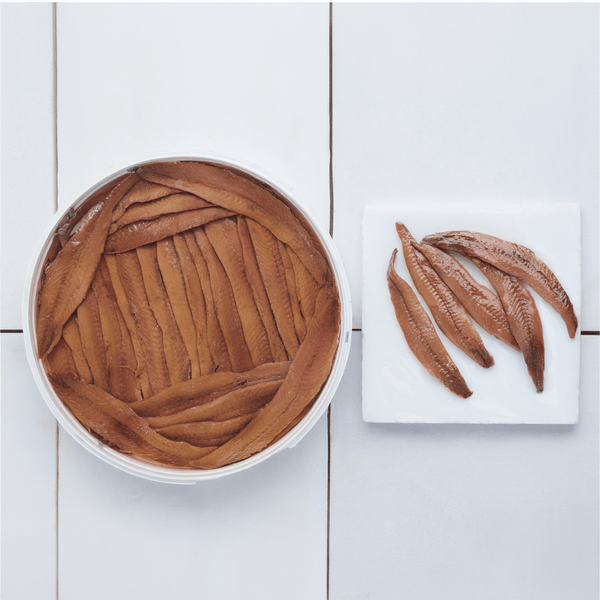
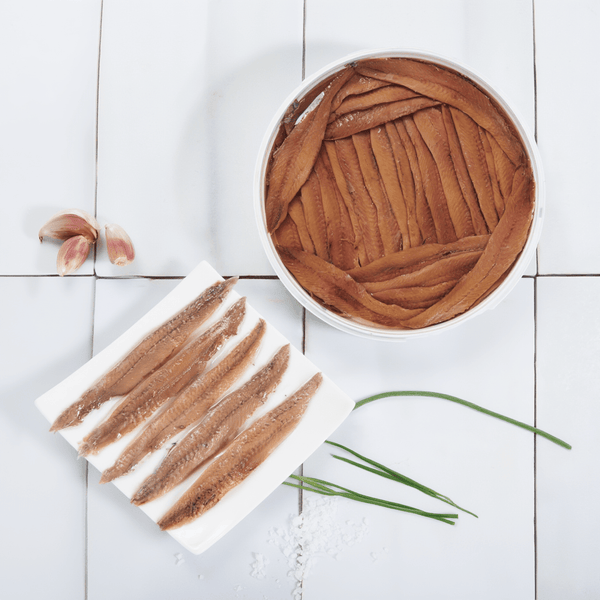
The anchovies in oil that you buy in a can or jar have undergone a process that makes them safe from a microbiological point of view:
- Extended salting (minimum 6 months): the salt concentration in the fish tissue reaches levels that are lethal for virtually all pathogens, including Listeria monocytogenes, which is the main concern during pregnancy.
- Low free water content: the water activity (Aw) in a cured anchovy is very low, which prevents bacterial growth.
- Packaged in oil: the oil creates an anaerobic barrier that complements preservation.
The result is a stable, safe product with a shelf life of years. It is not raw fish. It is not a semi-preserve. It is a complete preserve that has undergone a curing process that completely transforms the original product.
The important nuance: safety refers to the anchovy preserve unopened or freshly opened. A can of anchovies opened 5 days ago in the refrigerator no longer has the same guarantees. During pregnancy, consume anchovies the same day you open the can or, at most, the next day.
🐟 Our Cantabrian Anchovies
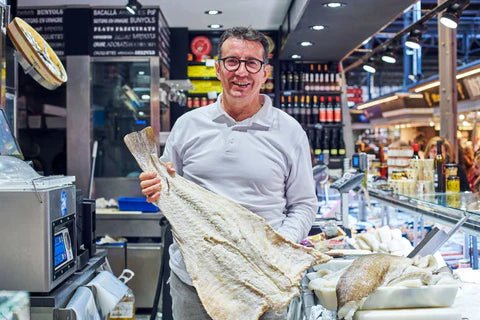
Hand-selected at Mercat del Ninot since 1990. Size 00, artisan craftsmanship, incomparable flavor.
View Anchovies →Anisakiasis and Anchovies: Real Risk vs. Unfounded Fear
Anisakiasis is one of the main food concerns during pregnancy in relation to fish. Let's clarify the situation with anchovies:
Canned anchovies (salt-cured): anisakiasis risk = practically zero. The 6+ month salting process destroys Anisakis simplex larvae. The salt concentration, combined with the curing time, is lethal to the parasite. There are no documented cases of anisakiasis from consuming properly prepared canned anchovies.
Pickled anchovies (boquerones en vinagre): anisakiasis risk = REAL if not previously frozen. Vinegar alone does NOT kill anisakiasis larvae. Spanish regulations require freezing fish at -20°C for at least 48 hours before preparing it in vinegar. This is one of the reasons why pickled anchovies are a higher risk product during pregnancy.
The distinction is critical: cured anchovy ≠ pickled anchovy (boquerón en vinagre). They are completely different products in terms of food safety, even if they come from the same fish.

Listeria and Anchovies: What the Evidence Says
Listeria monocytogenes is the pathogen of greatest concern during pregnancy because it can cause listeriosis, with serious consequences for the fetus. What do we know about listeria and anchovies?
The AESAN (Spanish Agency for Food Safety and Nutrition) does not include canned anchovies among the foods at risk for listeria during pregnancy. Risk foods include: unpasteurized soft cheeses, short-matured raw cured meats, refrigerated smoked fish, and un-canned pâté.
Canned anchovies have a water activity (Aw) of less than 0.92 and a salt concentration greater than 10%, conditions under which Listeria monocytogenes cannot grow. In addition, packaging in oil limits oxygen availability.
Scientific evidence indicates that canned anchovies are a safe product against listeria. But again: this refers to the unopened or freshly opened product, not a can opened days ago in the refrigerator.
Mercury in Anchovies: The Good News
Mercury is another legitimate concern during pregnancy. Large, predatory fish (bluefin tuna, swordfish, shark) accumulate mercury through bioaccumulation throughout their lives. What about anchovies?
Anchovies have one of the lowest mercury levels of all fish. They are small, short-lived fish (2-3 years) that feed on plankton and are not at the top of the food chain. Mercury bioaccumulation in anchovies is minimal.
According to EFSA (European Food Safety Authority) data, average mercury levels in anchovies are well below the limits established for consumption during pregnancy. Anchovies are classified as a low-mercury fish.
This is good news, especially since anchovies are rich in omega-3 (EPA and DHA), essential nutrients for fetal neurological development.

Sodium: The Real Precaution
If there is a legitimate concern with anchovies during pregnancy, it is sodium. Canned anchovies contain between 3,000 and 5,000 mg of sodium per 100g of drained product. That is between 150% and 250% of the recommended daily intake in just 100g.
During pregnancy, excess sodium can contribute to fluid retention (which is already a common problem during gestation) and, in predisposed women, to an increase in blood pressure. Women with preeclampsia or gestational hypertension should especially limit the consumption of very salty foods.
Practical recommendations on sodium and anchovies in pregnancy:
- Moderate quantity: 3-5 anchovy fillets per occasion is reasonable. Do not eat half a 100g can in one sitting.
- Not daily: 2-3 times a week at most.
- Compensate for sodium: on the day you eat anchovies, reduce salt in the rest of your diet.
- Hydration: drink enough water to facilitate the elimination of excess sodium.
Pickled Anchovies (Boquerones en vinagre): Here There is Risk
It is crucial not to confuse canned anchovies with pickled anchovies (boquerones en vinagre). They are the same fish but completely different products in terms of safety:
Pickled anchovies are a semi-preserve: the fish is marinated in vinegar, which denatures proteins ("cooks" the fish) but does not eliminate all pathogens. Vinegar does not kill anisakiasis larvae, and if the product has not been previously frozen at -20°C for 48 hours, there is a real risk of infection.
Furthermore, pickled anchovies have higher water activity than cured anchovies, which makes them more susceptible to Listeria growth if preservation conditions are not perfect.
Recommendation for pregnant women: avoid pickled anchovies during pregnancy unless you are absolutely certain that they have been properly frozen before preparation. In restaurants, that certainty is difficult to obtain. Canned anchovies (salt-cured, in a can or jar) are safe.
Nutritional Benefits During Pregnancy
Anchovies are not only safe: they have relevant nutritional benefits for pregnancy:
- Omega-3 (EPA and DHA): essential for fetal brain and eye development. EFSA recommends a minimum of 200mg of DHA daily during pregnancy. Three anchovy fillets provide approximately 100-150mg.
- High biological value proteins: necessary for fetal growth and maternal tissues.
- Calcium: anchovies are a significant source of calcium, a nutrient in high demand during gestation.
- Vitamin D: important for calcium absorption and the immune system.
- Vitamin B12: essential for the formation of the fetal nervous system.
- Iron: iron needs increase during pregnancy. Anchovies provide heme iron, which has high bioavailability.
Consumed in moderation (due to the sodium content), anchovies are one of the most beneficial fish during pregnancy precisely because of their low mercury content and high content of essential nutrients.
Practical Recommendations
Summary of recommendations for consuming anchovies during pregnancy:
- Canned anchovies (can/jar in oil): YES, safe. Moderate consumption due to sodium (3-5 fillets, 2-3 times/week).
- Salted anchovies: YES, safe (salt kills pathogens). Desalt before consuming. Same sodium limit.
- Pickled anchovies (boquerones en vinagre): CAUTION. Avoid unless certain of prior freezing.
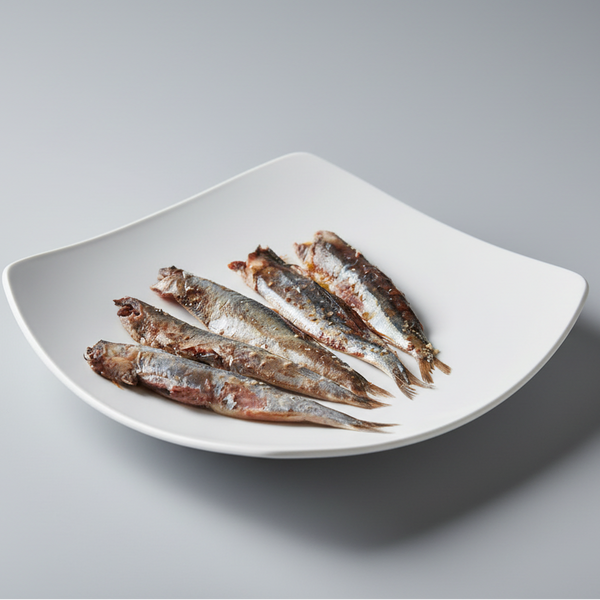
- Fresh fried anchovies (boquerón fresco frito): YES, safe if well cooked (frying kills pathogens at >60°C).
- Buy reliable brands: choose recognized producers with complete labeling.
- Consume upon opening: do not keep an opened can for more than one day during pregnancy.
- Consult your doctor: if you have gestational hypertension, preeclampsia, or sodium restriction, ask your gynecologist before including anchovies in your diet.
If you are looking for quality anchovies for your diet during pregnancy, at Bacalalo we work with selected Cantabrian anchovies, cured for a minimum of 6 months, in extra virgin olive oil, without additives. Ingredients: anchovy, salt, EVOO. Nothing more.
Related articles: Complete Guide to Cantabrian Anchovies | Anchovy vs. Boquerón: Differences | Types of Canned Anchovies
🛒 Related Products from Bacalalo
Cantabrian Anchovies "00" Gourmet Selection
Premium 00 size, artisanal preparation
38,90€
View product →⭐ 4.9/5 · 24-48h cold shipping · Since 1990 at Mercat del Ninot
Frequently Asked Questions
Can you eat canned anchovies during pregnancy?
Yes. Canned anchovies (in olive oil) are a product cured with salt for a minimum of 6 months, which eliminates relevant pathogens. They are not raw fish. The only point of concern is the high sodium content: consume in moderation (3-5 fillets, 2-3 times a week) and consult your doctor if you have hypertension.
Do anchovies have anisakiasis?
Canned anchovies (salt-cured for months) have no risk of anisakiasis. The prolonged salting process destroys the parasite larvae. Pickled anchovies (boquerones en vinagre) can have anisakiasis if the fish has not been previously frozen at -20°C for 48 hours.
Can I eat pickled anchovies (boquerones en vinagre) while pregnant?
This is a higher risk product. Vinegar does not eliminate anisakiasis larvae nor does it guarantee the elimination of Listeria. They are only safe if the fish has been properly frozen before preparation, and that certainty is difficult to obtain in restaurants. The general recommendation is to avoid them during pregnancy.
Do anchovies have a lot of mercury?
No. Anchovies are small, short-lived fish that feed on plankton. They have one of the lowest mercury levels of all fish. They are classified as a low-mercury fish by the EFSA, making them suitable for consumption during pregnancy.
How many anchovies can I eat while pregnant?
There is no official limit, but the practical recommendation due to sodium content is: 3-5 fillets per occasion, 2-3 times a week. If you have gestational hypertension or preeclampsia, consult your gynecologist before including anchovies in your diet.
Are anchovies good during pregnancy?
Yes, consumed in moderation. They are rich in omega-3 (DHA, essential for fetal brain development), protein, calcium, vitamin D, B12, and iron. Their low mercury content makes them one of the best fish sources during pregnancy.
🎁 Anchovy Tasting Pack
Taste and compare the best anchovies from the Cantabrian Sea. Selection curated by experts from Mercat del Ninot.
View Gift Packs →