📋 Table of Contents
Why the oil matters
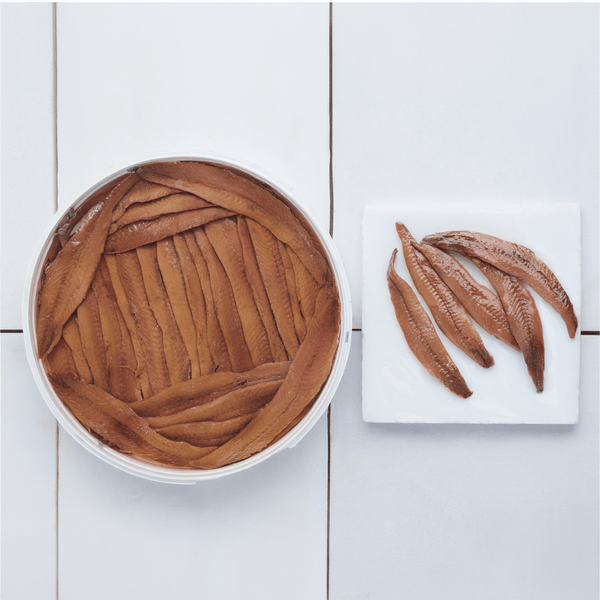
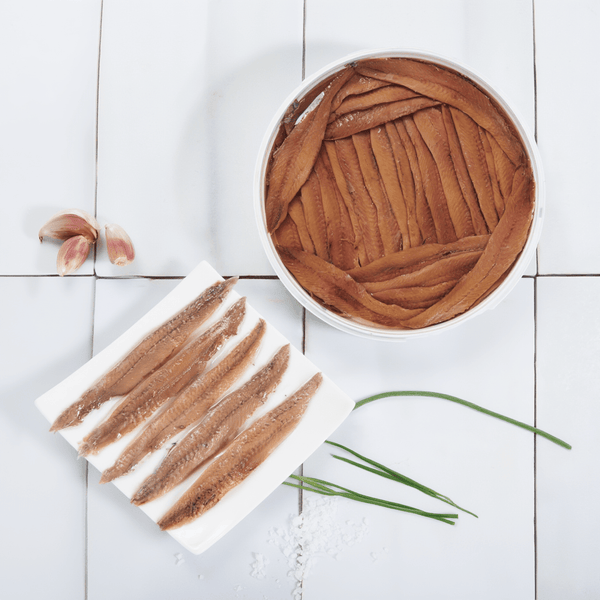
Canned anchovies spend years submerged in oil. During this time, there is a constant exchange of flavors between the fish and the oil. If the oil is of poor quality, it transmits rancid or chemical flavors to the anchovy. If it is of high quality, the exchange is bidirectional: the oil absorbs the umami and salt from the anchovy, and the anchovy absorbs the fruitiness and polyphenols from the oil.
| Oil type | Effect on anchovy | Recommendation |
|---|---|---|
| Extra Virgin Olive Oil (EVOO) | Enhances flavor, adds fruitiness | ⭐⭐⭐⭐⭐ Optimal |
| Olive oil (virgin) | Good preservation, neutral flavor | ⭐⭐⭐⭐ Very good |
| Refined olive oil | Neutral, preserves well | ⭐⭐⭐ Acceptable |
| Sunflower oil | Flat flavor, no beneficial exchange | ⭐⭐ Avoid if possible |
🛒 Cantabrian Anchovies in EVOO
Preserved in quality olive oil from day one. The exchange of flavors between anchovy and oil creates the ultimate product.
View product →Types of oil and result
The best artisanal anchovies are exclusively preserved in EVOO with a designation of origin. Mass-produced industrial anchovies often use sunflower oil to reduce costs. This is one of the most important hidden differences between "cheap" and premium anchovies.
Some artisanal brands even specify the olive variety: Arbequina for a soft fruity flavor, Picual for intensity and long preservation, Hojiblanca for balance.
The canning process
After maturation in salt (8-18 months), artisanal anchovies undergo:
- Partial desalting in running water
- Manual filleting and cleaning
- Drying on absorbent paper
- Packaging in a can or jar with selected oil
- Minimum 2-3 months resting in oil before sale
Uses for leftover oil
The oil left in the can after consuming the anchovies is liquid gold. It's packed with umami flavor. Use it to:
- Dress salads (mixed with vinegar or lemon)
- Sauté vegetables or potatoes
- As a vinaigrette base for cod salads
- Mix into pasta sauces
- Spread on toast with tomato
🛒 Products mentioned in this article
⭐ 4.9/5 · Chilled delivery 24-48h · Since 1990 at Mercat del Ninot