Zamburiñas are one of the tastiest and lesser-known shellfish outside of Galicia: small, intense, and with a flavor that surpasses many scallops at a fraction of the price. In this guide, we explain what they are exactly, how to differentiate them from scallops, the Galician-style recipe, and what to look for when buying the best ones.
What are zamburiñas
Updated March 2026. After decades working with seafood, we've learned that quality makes all the difference.
The zamburiña (Chlamys varia) is a bivalve mollusk from the pectinidae family, a close cousin of the scallop but much smaller: between 4 and 7 cm in diameter compared to the scallop's 10-15 cm. It lives on sandy and rocky bottoms of the European Atlantic, especially abundant in the Galician estuaries (rías).
What makes the zamburiña special is its concentrated flavor. Being smaller than a scallop, the proportion of meat to shell is lower, but that meat is more intense, sweeter, and has more character. It's the principle of "less quantity, more quality" applied to seafood.
In Galicia, zamburiñas are a highly anticipated seasonal product. They are caught by freediving or dredging, and the best ones come from the Arousa, Pontevedra, and Vigo estuaries. Outside of Galicia, they are a relatively unknown product that deserves much more attention.
Difference between zamburiña and scallop
| Characteristic | Zamburiña | Scallop |
|---|---|---|
| Scientific name | Chlamys varia | Pecten maximus |
| Size | 4-7 cm | 10-15 cm |
| Shell | Two convex, asymmetrical valves | One flat and one convex valve |
| Shell color | Varied: brown, violet, orange | Uniform reddish-brown |
| Flavor | More intense and sweet | Softer and more delicate |
| Meat texture | Firmer and more concentrated | More tender and smooth |
| Coral | Yes (orange or red) | Yes (larger) |
| Price | 15-30 €/kg | 25-50 €/kg |
| Availability | Seasonal (autumn-spring) | Year-round (aquaculture) |
The common confusion: Many restaurants outside Galicia serve "zamburiñas" that are actually queen scallops (Aequipecten opercularis), a different species, cheaper and with less flavor. The queen scallop has a flatter and more symmetrical shell than the zamburiña. If the price seems too good to be true, they are probably not authentic zamburiñas.
Types of zamburiñas on the market
Fresh zamburiña from the ría (estuary)
Zamburiñas freshly caught in the Galician estuaries. Sold live in their shell and should be consumed the same day or the next. This is the star product: pure sea flavor, firm texture, natural sweetness. Available from October to March-April (fishing season).
Frozen zamburiña
Zamburiñas ultra-frozen on board or at the plant shortly after capture. They retain their properties well if the cold chain is maintained correctly. They are the most accessible option outside Galicia and out of season.
Canned zamburiña
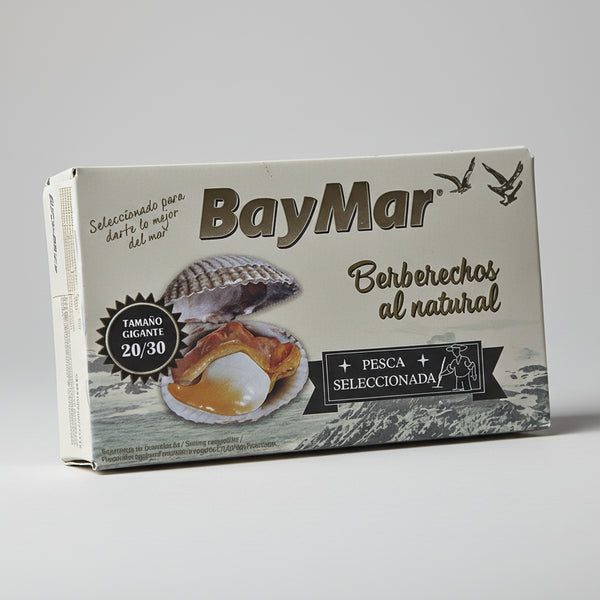
Zamburiñas in olive oil, Galician sauce, or natural. Good canned zamburiñas are a top-tier gourmet product. The canning process concentrates the flavor and provides a different texture (more tender than fresh). Quality Galician brands (Conservas de Cambados, Real Conservera Española, Rías Gallegas) offer excellent products.

Clams in Brine 20/30 Rías Gallegas Dardo Premium Canned Food - 120ml
Galician canned zamburiñas in olive oil. Artisan product packaged at source. The flavor of the estuaries in your pantry.
Recipe: Galician-style zamburiñas
The most popular recipe and the one that best respects the product. Simple, direct, and delicious.
Ingredients (4 people as an appetizer)
- 16-20 fresh (or frozen) zamburiñas
- 4 tablespoons extra virgin olive oil
- 3 cloves garlic, thinly sliced
- 1 dried chili (or a pinch of spicy paprika)
- Breadcrumbs: 3 tablespoons
- Fresh chopped parsley
- Lemon
Preparation
- Clean: Open the zamburiñas with a short knife (like oysters, but easier: the shell is thinner). Remove the dark part (viscera) and keep the white meat and orange coral. Clean the deeper shell and place the zamburiña inside.
- Sauté: In a small frying pan, heat the olive oil over medium-low heat. Add the sliced garlic and chili. Sauté for 2 minutes until the garlic is lightly golden (not burnt).
- Assemble: Place the zamburiñas in their shells on a baking tray. Pour a teaspoon of the garlic oil over each one. Sprinkle breadcrumbs on top.
- Bake: Grill in the oven at 220 °C with the broiler for 4-5 minutes, until the breadcrumbs are golden and the zamburiña is cooked but juicy.
- Serve: Remove, sprinkle with fresh parsley, and serve immediately with lemon wedges.
Total time: 15 minutes. The secret is not to overcook: 4-5 minutes under the broiler is enough. One minute more and the zamburiña will be rubbery.
Recipe: gratinated zamburiñas with cheese
A heartier variation, perfect as a starter for a special meal.
Ingredients
- 16-20 zamburiñas
- 100 ml liquid cream
- 80 g grated cheese (Parmesan and Gruyère mix)
- 2 tablespoons butter
- 1 shallot, finely chopped
- 50 ml white wine
- Salt and pepper
- Nutmeg
Preparation
- Open and clean the zamburiñas. Reserve the meat and corals in the shells.
- In a frying pan, melt the butter and sauté the shallot for 3 minutes. Add the white wine and reduce by half.
- Add the cream, a pinch of nutmeg, salt, and pepper. Cook for 2 minutes until slightly thickened.
- Pour a tablespoon of the sauce over each zamburiña in its shell. Cover with grated cheese.
- Gratinate at 220 °C for 5-6 minutes until the cheese is golden and bubbly.
Canned zamburiñas: how to choose and serve
Quality canned zamburiñas are an accessible luxury. Unlike many canned seafoods that lose character, canned zamburiñas gain in flavor depth.
What to look for on the label
- Species: It should say "zamburiña" (Chlamys varia), not "volandeira" (queen scallop) or generic "pectinid".
- Origin: Galician Rías (estuaries). Zamburiñas from other origins are legitimate, but the standard reference is Galician.
- Medium: In olive oil (preferably extra virgin) or in Galician sauce (oil + paprika + bay leaf). Natural loses nuances.
- Pieces per can: Quality cans indicate the number of pieces. Less than 10 pieces in a 115 g can indicates large zamburiñas (better).
How to serve canned zamburiñas
The most respectful way: open the can, let it come to room temperature for 15-20 minutes, and serve as is with sourdough bread. If you want to be more elaborate: on a toast with a touch of smoked paprika and a few drops of lemon.
Clams in Brine 20/30 Rías Gallegas Dardo Premium Canned Food - 120ml
Zamburiñas, cockles, mussels, and more. Canned artisanally or fresh on request. Guaranteed Galician quality.
How to choose the best zamburiñas
- Fresh: They must be alive (they close when touched). The shell should be clean and shiny. Reject any that are open and do not react or those that smell of ammonia.
- Meat color: Creamy white with orange or red coral. If the meat is grayish or the coral is dark brown, they are not fresh.
- Weight: Fresh zamburiñas should feel heavy for their size (they contain water). Very light ones may be empty or dead.
- Season: October to April is the fishing season. Outside these months, fresh ones you find are probably frozen and defrosted (which is not bad, but you should be aware).
Prices and season
| Format | Estimated price (2026) | Availability |
|---|---|---|
| Fresh zamburiña from the ría | 15-30 €/kg | October - April |
| Frozen zamburiña | 10-20 €/kg | Year-round |
| Canned (115 g can) | 5-12 €/can | Year-round |
| Fresh queen scallop (NOT zamburiña) | 6-12 €/kg | Year-round |
The price of fresh zamburiña varies greatly depending on the season and sea conditions. At the beginning of the season (October), prices are higher; as the campaign progresses and supply increases, they decrease. Canned products maintain a more stable price throughout the year.
🛒 Related Products from Bacalalo
⭐ 4.9/5 · Cold shipping 24-48h · Since 1990 at Mercat del Ninot
Frequently Asked Questions
What is the difference between zamburiña and volandeira (queen scallop)?
The zamburiña (Chlamys varia) has asymmetrical shells of varied colors (brown, violet, orange) and a more intense flavor. The volandeira (Aequipecten opercularis) has more symmetrical and flatter shells, of uniform color, and a milder, less sweet flavor. The volandeira is significantly cheaper. Many restaurants outside Galicia sell volandeiras as zamburiñas.
Can zamburiñas be eaten raw?
Yes, like oysters, zamburiñas can be eaten raw if they are fresh and from a controlled source. Open them, remove the viscera, and eat the meat with the coral, with a few drops of lemon. It is an intense and marine experience that is not for all palates, but raw seafood lovers enjoy it immensely.
How many zamburiñas per person?
As an appetizer or starter: 4-6 zamburiñas per person. As a main course (accompanied by bread and salad): 8-12 per person. Zamburiñas are small and have little meat, so you need quantity for them to work as a main dish.
Can fresh zamburiñas be frozen?
Yes, but it is best to freeze them already cleaned (without shell, just the meat and coral) in an airtight container or vacuum bag. They last 2-3 months in the freezer. When thawing, do it in the refrigerator overnight, never in the microwave.
Why don't the zamburiñas at the restaurant taste like those from Galicia?
Probably because they are not zamburiñas but queen scallops, or because they have been incorrectly frozen and thawed, or because they have been overcooked. Fresh zamburiñas from the ría, freshly opened and cooked for 4-5 minutes, have a flavor that is difficult to replicate with sub-par or poorly handled product.
What wine pairs best with zamburiñas?
An Albariño from Rías Baixas is the classic and perfect pairing: its acidity and mineral notes complement the sweetness of the zamburiña. Other options: Godello, Txakoli, or a Chablis. Avoid wines with too much oak or red wines: they mask the delicate flavor of the shellfish.
Zamburiñas are one of those products that, once you discover them, you can't ignore. More flavor than scallops, more accessible in price, and with a versatility ranging from gourmet canned food to the Galician-style recipe in 15 minutes. The only requirement: make sure they are real zamburiñas, not disguised queen scallops.
If you've never tried them, start with a good Galician canned product in olive oil. If you already know them, the fresh seasonal ones (October to April) are an experience that must be had at least once a year.
Related articles:
Written by Marc González Sáez, seafood expert since 1990, Mercat del Ninot, Barcelona.