Summary
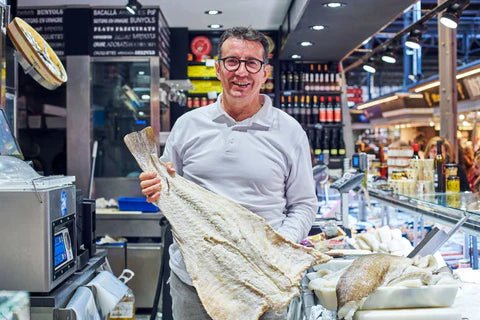
At Bacalalo, we have been selecting top-quality seafood products at Barcelona's Mercat del Ninot for over three decades. In this guide: Malossol: etymology and exact meaning, Why salt content matters so much, How to identify authentic malossol caviar.
What is Malossol? The Meaning of the Best Quality in Caviar
At Bacalalo, we have been selecting top-quality seafood products at Barcelona's Mercat del Ninot for over three decades. When someone asks us about caviar, sooner or later the word malossol appears on the label, and the same question arises: what exactly does it mean? The short answer is "little salt" in Russian. The long answer explains why that very brief difference in curing changes absolutely everything you perceive on the palate.
Malossol: etymology and exact meaning
The word malossol caviar comes from the Russian malo sol (мало соль), which literally translates to "little salt." In the context of caviar, it means that the product has been cured with less than 3% salt by total weight of the roe. Some producers even work with 1.5-2%, seeking the minimum necessary to preserve the product without masking its flavor.
This term is not simply a marketing claim: it has decades of tradition in the Caspian Sea fisheries, where Tsarist master curers perfected the technique of preserving sturgeon roe with the smallest possible amount of salt. The result was a product that arrived at the table with the sturgeon's flavor almost intact, fresh, with its marine nuances and natural creaminess.
The alternative to malossol is payusnaya (pressed) caviar or caviar with higher salt content, which preserves longer but loses much of its aromatic complexity. For any expert, the distinction between a malossol and a very salty caviar is as obvious as the difference between an acorn-fed Iberian ham and a grain-fed one.
Why salt content matters so much
Salt in caviar serves two functions: preserving the product and, in excess, altering its flavor profile. Below 3%, the roe maintains its original texture, natural shine, and genuine flavor. Above 4-5%, salt begins to dominate the palate and mask the nuances that make each sturgeon species special.
From a technical standpoint, the malossol curing process is as follows:
- The roe is extracted from the sturgeon immediately after capture or slaughter, within a maximum of 15 minutes.
- It is separated from the ovarian membrane with fine mesh sieves, a process called straining, without breaking the grains.
- Fine-grain sea salt (between 1.8% and 2.8% of the weight) is added and mixed by hand for 2-4 minutes.
- It is packed in tins of 30g, 50g, 125g, or 500g, with the tin filled to the maximum to prevent oxidation.
- It is stored between -2°C and 2°C, with a shelf life of 4-6 months unopened.
The precision at each step determines whether the result deserves the malossol label. One extra gram of salt or an additional minute in the mix can change the texture of the roe. The best Iranian and Russian Caspian producers have been refining these processes for generations.
How to identify authentic malossol caviar
Not every tin that carries the word "malossol" on the label lives up to the name. Here are the real indicators of quality:
- Declared salt content: Serious producers state it on the label. Look for between 2% and 3%. If it's not declared, be suspicious.
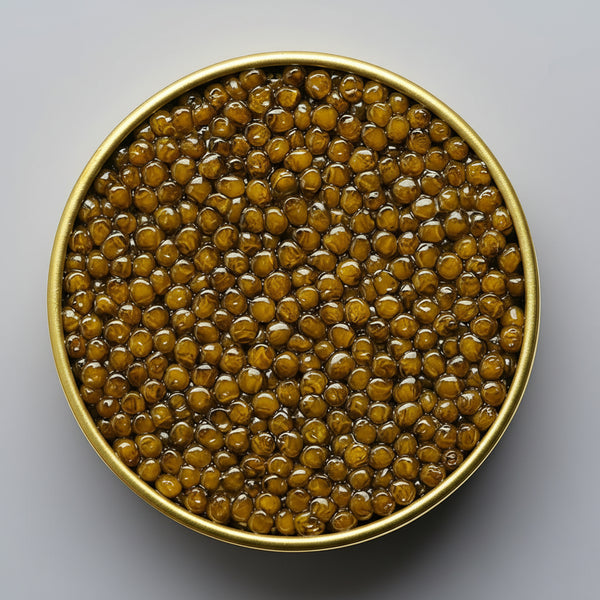
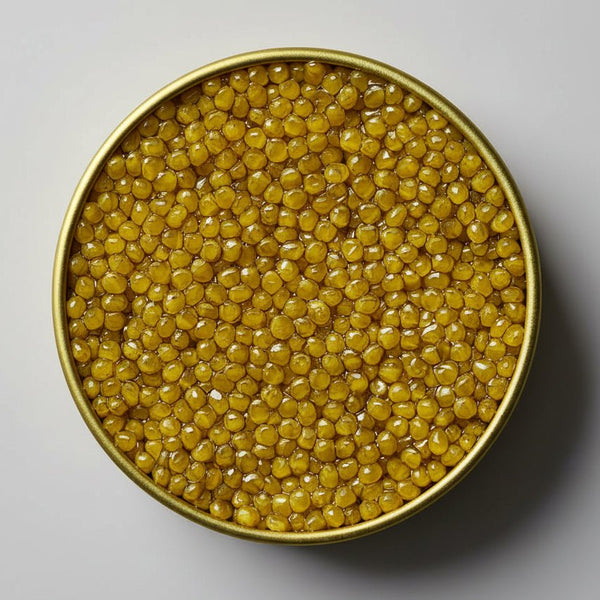
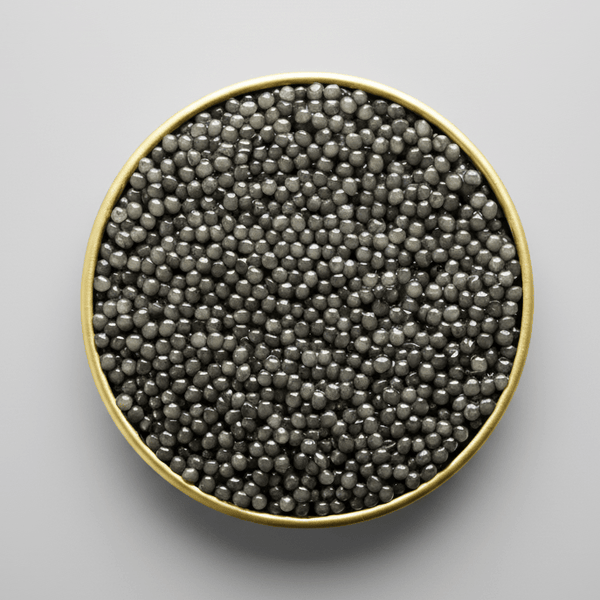
- Brightness of the roe: Good malossol has shiny, almost lacquered grains, without a dull or dry appearance.
- Separation of the grains: When opening the tin, the grains should be loose, not clumped or broken. If there is a lot of moisture or liquid in the tin, it indicates excessive salt or poor processing.
- Aroma: Fresh, marine, without a strong fishy smell or dominant saltiness. It recalls the clean ocean.
- Storage temperature: It must arrive cold, between -1°C and 2°C. If it has traveled without adequate cold chain, the quality will have deteriorated.
In Spain, authentic malossol caviar comes mainly from Iran (Caspian basins under strict control), from certified aquaculture producers such as Riofrío in Granada or Nacarii in Girona, and from European producers of Beluga, Osetra, and Sevruga raised on controlled water farms.
Bacalalo Products

Mújol Shikrán Selection - Premium Roe with Smo...
6,95 €

Assortment "The Great Beluga Gift"
227,91 €

Black Mullet Shikrán 550g - Smoked Herring and...
27,95 €

Sevruga Caviar
100,00 €
Refrigerated shipping 24-48h throughout the Peninsula
Malossol by species: not all caviar is equal
The malossol designation applies to any sturgeon species, but the result varies considerably depending on the source:
Beluga (Huso huso): Beluga malossol is the most prized in the world. Large grains of 3-4mm, pearl gray to black color, extremely smooth, creamy flavor, with a long and deep aftertaste. Genuine Beluga malossol can cost between €2,000 and €4,000 per kilo.
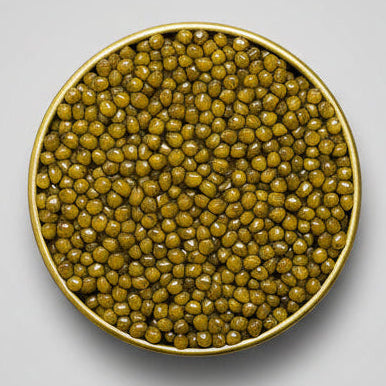
Osetra (Acipenser gueldenstaedtii): Medium grains of 2-3mm, golden to dark brown tones, nutty flavor with iodine nuances. Imperial Osetra malossol, from 25-30 year old fish, is one of the most complex caviars in existence. Price: €800-€1,500/kg.
Sevruga (Acipenser stellatus): Small grains of 1-2mm, intense black color, pronounced marine flavor and naturally saltier. Sevruga malossol is the most accessible of the big three, with prices starting from €600/kg, and is surprisingly intense for those who try it for the first time.
White Sturgeon (Acipenser transmontanus): Medium-large grains, mild and buttery flavor. Californian aquaculture producers like Tsar Nicoulai work with very rigorous malossol standards, sometimes even with 1.8% salt.
Malossol versus other quality designations
Understanding malossol caviar requires contextualizing it within the complete classification system. It is not the only quality criterion, although it is the most important in terms of processing:
- Grade 1 or Extra: Grains are uniform in size, color, and firmness. No broken grains. This is the highest presentation classification, independent of salt content.
- Grade 2: Slight variation in size or color. Perfectly edible, sometimes preferred by chefs looking for a more affordable product to incorporate into preparations.
- Malossol + Grade 1: The most exclusive combination. This is what luxury restaurants and gourmet collectors seek.
- Pressed caviar (Payusnaya): Pressed roe with higher salt content, which yields a more concentrated and longer-lasting product. Different gastronomic use, not necessarily inferior.
In the Spanish market, when you see "malossol" on a label of national aquaculture caviar, such as those from Riofrío or Nacarii, it means that the producer has respected the traditional minimal curing process. Both brands work with Spanish sea salt and process the roe within the first hours after the fish is harvested.
How to serve and taste malossol correctly
Malossol caviar deserves a serving protocol that respects its delicacy. This is not an aristocratic whim: it's because heat, metal, and strong flavors literally destroy what makes this product special.
Serving temperature: between 2°C and 6°C. Take the tin out of the refrigerator 5-10 minutes before serving, no longer. In summer, serve over crushed ice.
Utensils: Mother-of-pearl, bone, wood, or plastic spoons. Never silver metal: silver reacts with caviar and adds a metallic taste that will mask everything else. Mother-of-pearl spoons are the traditional standard.
Quantity per person: For a pure tasting, 10-15g per person is sufficient. For an appetizer with accompaniments, 20-30g. The typical "luxury" portion in high-end restaurants is around 30-50g.
Accompaniments that work: warm blinis, very thin unsalted toast, sour cream (smetana), very finely chopped boiled egg. What should not accompany it: lemon (the acid kills the nuances), strong onion, capers.
Bacalalo Products
Mújol Shikrán Selection - Premium Roe with Smo...
6,95 €
Assortment "The Great Beluga Gift"
227,91 €
Black Mullet Shikrán 550g - Smoked Herring and...
27,95 €
Sevruga Caviar
100,00 €
Refrigerated shipping 24-48h throughout the Peninsula
🛒 Products mentioned in this article
⭐ 4.9/5 · Cold shipping 24-48h · Since 1990 at Mercat del Ninot
Frequently asked questions about malossol caviar
Is Malossol a brand or a quality designation?
It is a process designation, not a brand. Any producer can use the term as long as the salt content is less than 3% of the total weight. There is no official body that certifies the use of the term, so it is advisable to verify it by checking the nutritional label where sodium appears.
Does malossol caviar last less time than saltier caviar?
Yes, it has a slightly shorter shelf life. Unopened malossol, properly stored at -1°C, lasts 4-6 months. Caviar with 4-5% salt can last 8-12 months. Once opened, malossol should be consumed within 48 hours, while a saltier pressed caviar can last up to a week.
Is it legal to use the term malossol for aquaculture caviar?
Completely legal and increasingly common. The world's best aquaculture producers, from California to Italy and Spain, produce very high-quality malossol caviar. The origin of the sturgeon (wild or farmed) does not affect the processing designation.
How do I know if the caviar I buy online is really malossol?
Buy from specialized distributors who offer a complete technical sheet: species, fish origin, processing date, salt content in percentage, and shipping temperature. At Bacalalo, we send all caviar orders in a refrigerated cold chain within 24-48 hours to ensure the product arrives in optimal condition.
Is malossol caviar always more expensive?
Not necessarily significantly. The price difference between a malossol and a saltier caviar from the same producer and species is usually 10-20%. The biggest price difference is due to the species, grain size, and age of the fish, not so much the salt percentage.
Can I use malossol in hot cooking recipes?
Technically you can, but it's a waste of a product that shines when cold. If you want to add caviar to a hot dish, use second-grade caviar or lower-priced roe substitutes. Heat breaks down the malossol grains, destroys its texture, and nullifies its most delicate nuances. In pasta, sauces, or eggs, it's difficult to distinguish malossol from a much cheaper product once cooked.
What is the most affordable malossol to start with?
Sevruga malossol caviar or Spanish aquaculture sturgeon caviar (Riofrío, Nacarii) are the best entry points. Sevruga malossol costs around €80-120 for 30g, and national aquaculture caviars can be found from €40-60 for 30g. Both are authentic malossol and allow you to understand what the term refers to before moving on to Osetra or Beluga.
Discover our premium selection
Seafood products carefully selected since 1990 at Mercat del Ninot, Barcelona. Refrigerated shipping in 24-48h.