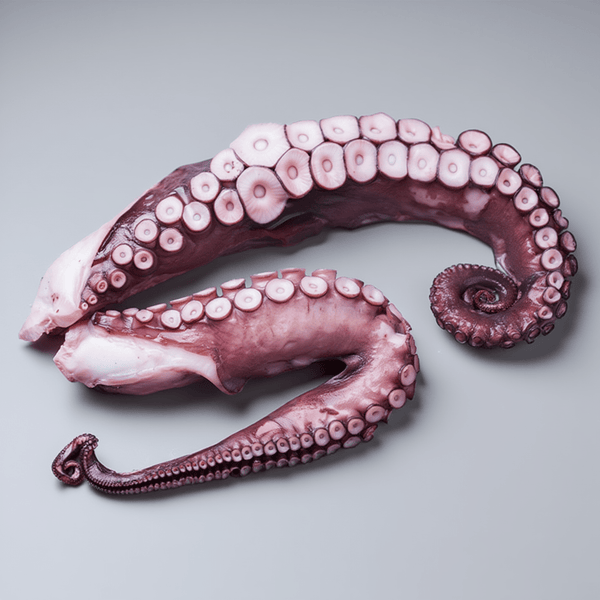
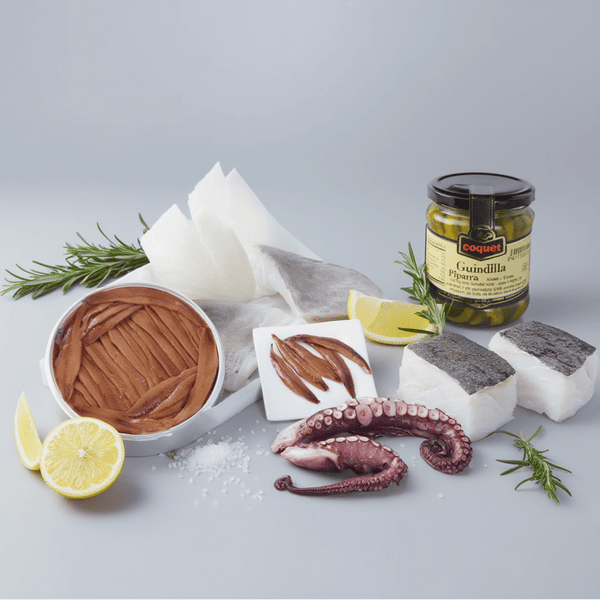
Cooking octopus seems simple, but the exact cooking time makes the difference between a tender octopus and a rubbery one. In this guide, you'll find the cooking time chart by weight, the tricks that really work (and the myths that don't), and 3 classic recipes to make the most of a perfectly cooked octopus.
Table of Contents
- Why Cooking Time Matters So Much
- Cooking Time Chart by Weight
- Step-by-Step Octopus Cooking
- Tricks That Work (and Myths That Don't)
- How to Cook Frozen Octopus
- Recipe 1: Galician-Style Octopus (Pulpo a la Gallega)
- Recipe 2: Grilled Octopus (Pulpo a la Brasa)
- Recipe 3: Pulpo á Feira
- Frequently Asked Questions
- Conclusions
Why Cooking Time Matters So Much
Octopus has a very dense muscle structure, with cross-linked collagen fibers that make it extremely tough when raw. Cooking needs to break down those collagen fibers and transform them into gelatin without drying out the meat. If you overcook it, the meat loses water and becomes fibrous and dry. If you undercook it, it becomes rubbery and impossible to chew.
The exact point depends on three variables: the weight of the octopus, whether it is fresh or frozen, and the altitude at which you are cooking (water boils at a lower temperature at altitude, which extends the cooking time). For the vast majority of kitchens in Spain (sea level or low altitude), the following table is your reference.
Cooking Time Chart by Weight
| Octopus Weight | Cooking Time (fresh) | Cooking Time (frozen) | Notes |
|---|---|---|---|
| 500 g - 1 kg | 20-25 minutes | 18-22 minutes | Small octopus, ideal for individual servings |
| 1 kg - 1.5 kg | 25-35 minutes | 22-30 minutes | Most common size |
| 1.5 kg - 2 kg | 35-45 minutes | 30-40 minutes | Medium-large size |
| 2 kg - 2.5 kg | 45-55 minutes | 40-50 minutes | Large octopus |
| 2.5 kg - 3 kg | 55-65 minutes | 50-60 minutes | Exceptional piece |
| More than 3 kg | 65-80 minutes | 60-70 minutes | Check with skewer from 60 min |
Important note: These times are approximate. The definitive test is to pierce the thickest part of the tentacle with a toothpick or fork. It should enter with gentle resistance, like piercing a boiled potato. If it enters without resistance, you've overcooked it. If it doesn't enter, it needs more time.
Why frozen needs less time: Freezing partially breaks down the muscle fibers of the octopus (ice crystals act like micro-knives). This causes the collagen to transform into gelatin faster during cooking.
Step-by-Step Octopus Cooking
What you need
- Large pot (the octopus should fit loosely, without folding over itself)
- Plenty of water (no salt: octopus already has its own salinity)
- One bay leaf (optional but adds aroma)
- Half a lemon (optional, for color)
Step 1: Pre-preparation
If the octopus is fresh, freeze it at least 48 hours before cooking. Freezing is the most reliable method to tenderize octopus. If you bought it frozen, it's already done.
If the octopus is fresh and you don't want to freeze it, give it 30-40 firm blows against a hard surface (Galicians used the rocks of the port). This breaks down the muscle fibers. But freezing is more effective and less cumbersome.
Step 2: Scaring the octopus
Bring the water to a rolling boil over high heat. When it's boiling vigorously, hold the octopus by the head and submerge it three times, keeping it in the water for 5-10 seconds each time and removing it between immersions. This is called "scaring" the octopus and has a specific purpose: the thermal shock contracts the skin and prevents it from peeling off during cooking. Without this step, you'll end up with pieces of skin floating in the water and a messy-looking octopus.
Step 3: Cooking
After the third "scare," submerge it completely. Lower the heat to maintain a gentle, constant simmer (gentle bubbling, not rolling boil). Add the bay leaf if desired. Cook for the time indicated in the table according to the weight.
Step 4: Checking for doneness
Pierce the thickest part of the tentacle with a fork or toothpick starting from the minimum time. It should enter with gentle resistance. If in doubt, wait 5 more minutes and try again.
Step 5: Resting
Turn off the heat and let the octopus rest in its own water for 10-15 minutes. This resting allows the fibers to relax and the texture to homogenize. Cutting it immediately after cooking results in a tougher product.
Tricks That Work (and Myths That Don't)
What DOES work
- Freezing before cooking: This is the most effective method for tenderizing octopus. Ice crystals break down muscle fibers. A minimum of 48 hours in the freezer.
- Scaring the octopus: The three quick immersions before complete cooking do work to keep the skin attached.
- Gentle, not violent, boil: A strong boil agitates the octopus and can detach the skin. Gentle, constant bubbling gives better results.
- Resting in the water: 10-15 minutes of resting after turning off the heat significantly improves the final texture.
- Do not salt the water: Rock octopus has enough natural salt. Adding salt to the water can dry it out.
What DOES NOT work (myths)
- The cork stopper: A persistent myth says that putting a cork stopper in the water tenderizes the octopus. There is no evidence that cork has any effect on octopus fibers. It is a baseless tradition.
- The copper coin: Same case as the cork. Copper does not interact with octopus proteins in a relevant way at cooking temperatures.
- Adding vinegar to the water: Vinegar acidifies the water and can harden the external proteins of the octopus, producing the opposite of the desired effect.
Fresh Octopus and Seafood — Market Quality
Atlantic rock octopus, shrimp, langoustines, and more. Fresh produce selected daily at the market.
How to Cook Frozen Octopus
If your octopus comes frozen (which is the most common and recommended), the process has a small variation:
- Do not thaw: You can cook the octopus directly from the freezer. Place it in cold water in the pot, bring to a boil, and start counting the time from when it comes to a boil.
- Or thaw slowly: Move it to the refrigerator 24-36 hours before. Never thaw in the microwave or under hot water.
- If you put it in directly frozen: Start with cold water, bring to a boil. There's no need to "scare" frozen octopus (freezing has already done that job). Count the time from when it comes to a boil.
- If you have thawed it: Proceed exactly as with fresh octopus (scare it, gentle boil, etc.), but reduce the cooking time by 10-15%.
Advantage of frozen: Frozen octopus is more tender than unfrozen fresh octopus. Industrial freezing is fast and forms small crystals that break down fibers uniformly. Even the best Galician restaurants work with octopus that has been previously frozen.
Recipe 1: Galician-Style Octopus (Polbo á feira)
The most iconic cooked octopus recipe. Extremely simple, where everything depends on the quality of the octopus and the cooking point.
Ingredients (4 servings)
- 1 octopus of 1.5-2 kg (already cooked)
- Extra virgin olive oil
- Pimentón de la Vera (sweet and spicy)
- Coarse salt
- Boiled potatoes (cachelos) — optional but traditional
Preparation
- Cut the cooked octopus into 1 cm slices with kitchen shears (not a knife: shears give a cleaner cut).
- Boil the whole potatoes with skin in the octopus water (take advantage of the flavor). Peel them and cut them into slices.
- On a wooden plate (essential for Galician presentation), place the potatoes as a base and the cut octopus on top.
- Drizzle generously with extra virgin olive oil.
- Sprinkle sweet paprika and a pinch of spicy paprika. Tradition says that the paprika should fall "like snow": evenly and without excess.
- Add coarse salt on top.
Recipe 2: Grilled Octopus (Pulpo a la Brasa)
Grilled octopus is the modern evolution of cooked octopus. Pre-cooking softens it; grilling gives it that smoky flavor and crispy edges that elevate it to another level.
Preparation
- Cook the octopus according to the cooking time chart but reduce by 5 minutes (you will finish it on the grill).
- Cut it into large pieces (whole tentacles or cut in half).
- Brush them with olive oil.
- Heat the grill or griddle over very high heat. Place the tentacles and do not move them for 2-3 minutes per side until they have defined grill marks and crispy edges.
- Serve with a drizzle of oil, flaky salt, and a squeeze of lemon.
Tip: Grilled octopus needs to be dry on the outside to brown well. After cooking, dry it with paper towels before placing it on the griddle or grill.
Recipe 3: Pulpo á Feira with Cachelos and Grelos
The most complete version of Galician octopus, with the accompaniments served at the "feiras" (fairs) of Galicia.
Additional Ingredients
- Grelos (turnip greens) — 300 g
- Potatoes (cachelos) — 4 medium
- Galician chorizo — 1 piece (optional)
Preparation
- In the water where you cooked the octopus, boil the whole potatoes with skin (20-25 minutes).
- Remove the potatoes. In the same water, blanch the grelos for 5 minutes.
- If using chorizo, boil it briefly in the same water (5 minutes).
- Assemble the dish: grelos as a base, peeled and sliced cachelos, sliced octopus, and sliced chorizo.
- Dress everything with olive oil, paprika, and coarse salt.
The beauty of it is that everything is cooked in the same water (the octopus water), which accumulates flavor with each cooking. It's resourceful cooking at its finest.
Pimentón de la Vera and oils — Perfect seasoning
Complement your octopus with the best seasonings. Extra virgin olive oil, smoked paprika, flaky salt.
Frequently Asked Questions
How do I know if the octopus is cooked?
Pierce the thickest part of the tentacle (near the head) with a fork or toothpick. It should enter with gentle resistance, as if you were piercing a boiled potato. If it enters without any resistance, it's overcooked. If it doesn't enter, it needs more time. With practice, you'll learn to identify the exact point.
Is it better to cook fresh or frozen octopus?
Frozen. Freezing breaks down muscle fibers and produces a more tender octopus with less cooking time. Even specialized Galician restaurants work with previously frozen octopus. If you buy fresh octopus, freeze it for at least 48 hours before cooking.
Can octopus be cooked in a pressure cooker?
Yes, and it reduces the time by approximately half. A 1.5 kg octopus in a pressure cooker needs about 15-18 minutes from when the valve rises. The disadvantage: it's easier to overcook because you can't keep piercing to check. For those without experience, a conventional pot offers more control.
Can octopus be cooked the day before?
Yes, it's even recommended. Cook it, let it rest in its water, and refrigerate it in the cooking water. The next day, take it out, cut it, and season it. The texture after a long rest in the refrigerator is excellent. Save the water to cook potatoes or make broth.
Why is my octopus rubbery?
Three possible causes: 1) You didn't freeze it before cooking (the fibers didn't break down). 2) You boiled it too vigorously (violent bubbling hardens the outer layer). 3) You took it out too soon (the internal fibers didn't transform into gelatin). The simplest solution: always freeze, boil gently, and respect the times in the chart.
Do you add salt to the octopus cooking water?
No. Octopus has enough natural salinity (it lives in seawater and its meat retains salt). Adding salt to the cooking water can dehydrate it by osmosis, resulting in a drier octopus. Salt is added later, when seasoning.
What do I do with the octopus cooking water?
Don't throw it away. Octopus cooking water is a concentrated broth with excellent seafood flavor. Use it to cook potatoes (cachelos), make soup, rice with broth, or as a base for a fish stock. It can be frozen in portions for later use.
Cooking octopus is not rocket science, but it does require attention to detail: freezing beforehand, scaring correctly, gentle boiling, and respecting the times. The chart in this guide is your reference, but your best tool is a fork and the patience to keep checking for doneness.
Once you master the cooking, the possibilities are endless: Galician-style, grilled, salad, carpaccio, ceviche. It all starts with a well-cooked octopus.
Related articles:
Written by Marc González Sáez, seafood expert since 1990, Mercat del Ninot, Barcelona.