Table of Contents
Why eating seasonal fish truly matters
We've been selling fish at the Mercat del Ninot for 35 years. And if we've learned anything, it's that the difference between mediocre fish and extraordinary fish is almost never the species — it's the time of year you buy it.
An anchovy (Engraulis encrasicolus) caught in April, in peak season, has a fat content of between 6% and 9%. The same anchovy in December barely reaches 2%. Fat is flavor. Without fat, you have dry fish that can only be saved with liters of oil.
Three verifiable reasons to eat seasonally:
- Price: A fish at its peak abundance can cost 30-50% less than out of season. Hake (Merluccius merluccius) in summer is around 8-12 €/kg; in winter it is scarce and rises to 15-20 €/kg.
- Flavor: Species accumulate fat before reproducing. This is their optimal organoleptic point. It's not opinion — it's biochemistry.
- Sustainability: Fishing bans exist for a reason. Respecting reproductive cycles is not armchair environmentalism, it's common sense fishing. Spain has lost 30% of its fish biomass in 40 years according to data from the IEO (Spanish Institute of Oceanography).
And there's a fourth reason no one mentions: seasonal fish doesn't need freezing. It arrives fresh at the market, goes through the auction, and is on your table within 24 hours. You can't achieve that with a turbot imported from Norway in August.
Calendar table: 12 months of fish in Spain
This table lists the main species available in Spanish fish markets during each month. It is not an exhaustive list — it is a practical guide based on what actually arrives in good condition at the markets.
| Month | Featured Fish | Featured Shellfish |
|---|---|---|
| January | Red seabream, cod, hake, monkfish | Goose barnacles, spider crab, velvet crab |
| February | Cod, turbot, sea bass, conger eel | Cockles, oysters, shrimp |
| March | Blue whiting, grouper, red mullet, mackerel | Norway lobster, red prawn, langoustine |
| April | Anchovy, sardine (start), bluefin tuna, albacore tuna | Lobster, scarlet prawn |
| May | Sardine, albacore tuna, swordfish, horse mackerel | Langoustine, white prawn |
| June | Sardine (peak), bluefin tuna, albacore tuna, mackerel | Huelva red prawn, lobster |
| July | Sardine, line-caught hake, albacore tuna | Blue lobster, female spider crab |
| August | Sardine, tuna, swordfish, pompano | Mussels, white prawn |
| September | Gilt-head bream, sea bass, red mullet, Atlantic horse mackerel | Mussels (peak), razor clams |
| October | Monkfish, gilt-head bream, hake, red mullet | Spider crab, goose barnacles, velvet crab |
| November | Red seabream, cod, hake, monkfish | Male spider crab, oyster |
| December | Red seabream (peak), cod, hake, sea bass | Goose barnacles, spider crab, langoustine |
Winter: December, January, February
Winter is the season for white fish par excellence. The cold waters of the North Atlantic push species towards more accessible fishing grounds, and Christmas demand drives up December prices — but if you wait until January, you get virtually the same quality at half the price.
Red seabream (Pagellus bogaraveo): The king of Spanish Christmas. From November to February, it's at its best. A 1.5 kg red seabream baked whole, with a little garlic and chili, is one of the most sophisticated dishes in Spanish cuisine. At the fish market, it can reach 40-60 €/kg on Christmas Eve; in January, it drops to 18-25 €/kg.
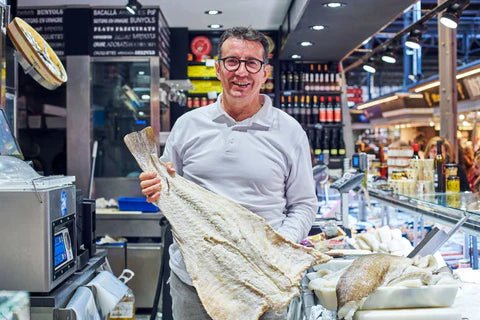
Cod (Gadus morhua): Fresh winter cod is spectacular, but the reality is that 90% of the cod we consume in Spain comes salted or desalted. And for good reason: salting is a preservation technique that enhances umami flavor. The fishing season in Iceland and Norway runs from January to April.
Monkfish (Lophius piscatorius): Available all year round but optimal in winter. Its firm, boneless flesh makes it the perfect fish for those who "don't like fish." Usual price: 15-25 €/kg depending on size.
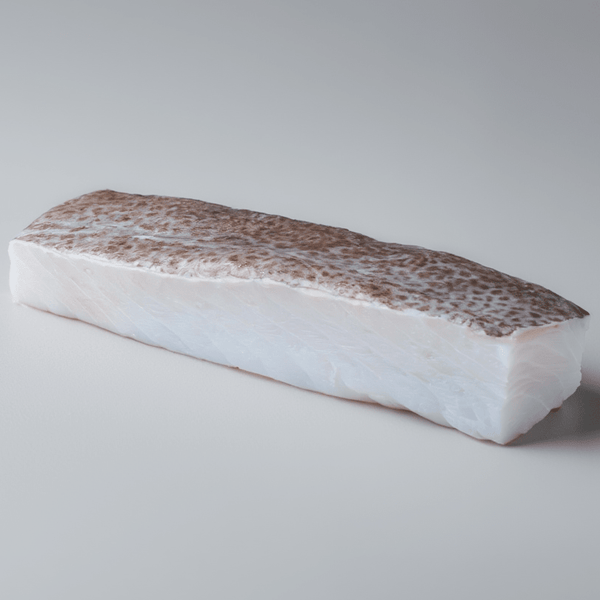
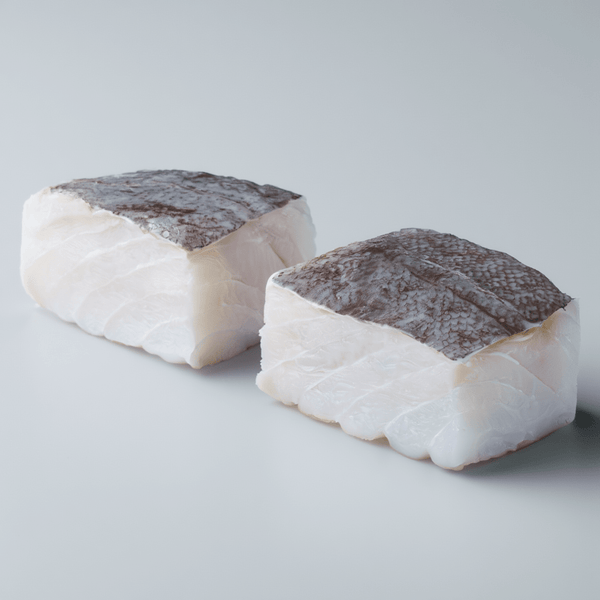
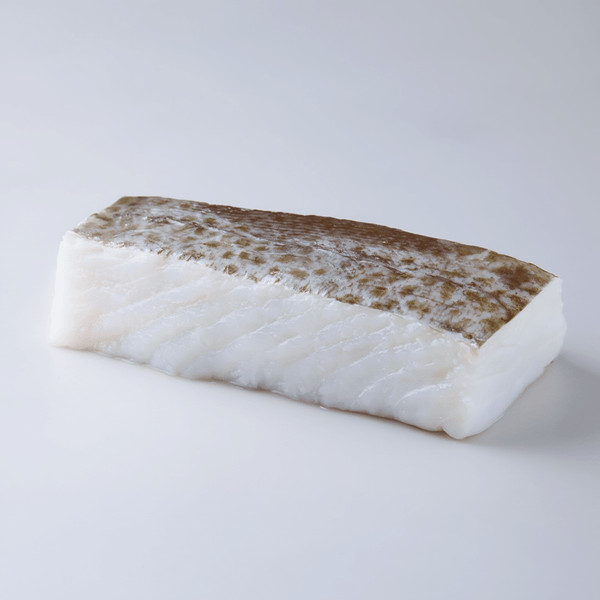
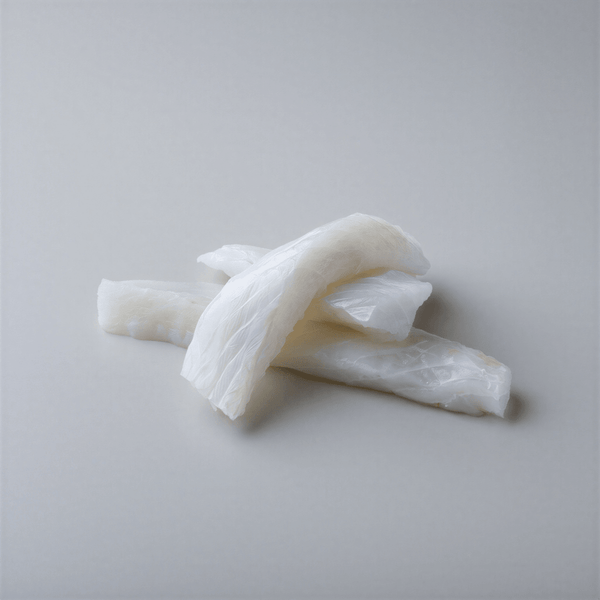
Quality desalted cod does not depend on the season — it depends on the raw material and the process. Our artisan desalted cod comes from Icelandic catches and is slowly desalted for 48-72 hours. No rush, no tricks.
Spring: March, April, May
Spring brings the revolution of oily fish. The waters warm, schools of anchovies and sardines approach the coast, and one of the best times to eat fish in Spain begins.
Anchovy / Boquerón (Engraulis encrasicolus): From April to June is when Cantabrian anchovies reach their maximum fat content. This is exactly the same fish that later becomes salted anchovy — the difference is only the curing process. A good spring anchovy, in vinegar with garlic and parsley, is unrivaled.
Albacore Tuna (Thunnus alalunga): The albacore tuna season begins in May-June in the Cantabrian Sea. It is a smaller white tuna than bluefin, with light flesh and a soft texture. Do not confuse it with yellowfin tuna (Thunnus albacares), which is a completely different animal.
Red mullet (Mullus surmuletus): From March to June. One of the most underrated fish in Spanish cuisine. Its liver is considered a delicacy — the Romans already knew this and paid fortunes for large specimens.
Summer: June, July, August
Summer is the season for sardines and bluefin tuna. It's also when seafood prices drop because tourist demand focuses on beach bars rather than market fishmongers.
Sardine (Sardina pilchardus): From June to October, peaking in July-August. The sardine of San Juan (June 24th) is a tradition, but the August sardine, larger and fattier, is objectively better. Look for specimens over 15 cm — small ones haven't accumulated enough fat.
Bluefin tuna (Thunnus thynnus): The Andalusian almadraba catches bluefin tuna from April to June, when it enters the Mediterranean to reproduce. It is one of the most expensive fish in the world — a whole tuna can exceed 200 €/kg at the market for sashimi-grade pieces. Almadraba bluefin tuna is Spanish gastronomic heritage.
Line-caught hake (Merluccius merluccius): Hake caught with a hook (line-caught) is sustainable and of superior quality to trawl-caught hake. In summer it is abundant in the Cantabrian Sea and is distinguished in the market by not showing net marks on its skin.
Autumn: September, October, November
Autumn is the transition season — blue fish gradually give way to white fish, and Galician seafood enters its prime.
Gilt-head bream (Sparus aurata): Wild autumn gilt-head bream is incomparable to farmed varieties. The problem: 90% of gilt-head bream in Spain is from aquaculture. Learn to distinguish them — wild ones have a more stylized body, a more pronounced lateral line, and a price of 20-35 €/kg compared to 6-8 €/kg for farmed ones.
Spider crab (Maja brachydactyla): From October to January is the season for Galician spider crab. The male (November-December) has more meat; the female (October) has coral, which many consider superior. Price: 30-50 €/kg depending on size and date.
Goose barnacles (Pollicipes pollicipes): Available all year round but optimal from October to March. It is the most dangerous shellfish to collect — "percebeiros" risk their lives on the Galician cliffs. This partially justifies their price of 40-120 €/kg.
When the season isn't right, quality canned goods are the smart alternative. In our gourmet canned goods collection, you'll find fish caught in season and preserved at its optimal point.
How to recognize fresh fish at the fishmonger's
There's no point in buying seasonal turbot if it's been on ice for 5 days. Here are the indicators we use at Mercat del Ninot to assess freshness:
| Indicator | Fresh Fish (0-2 days) | Old Fish (+4 days) |
|---|---|---|
| Eyes | Convex, bright, black pupil | Sunken, opaque, grey pupil |
| Gills | Intense red, moist | Dark brown, mucus |
| Skin | Shiny, clear mucus | Dull, yellowish mucus |
| Flesh | Firm, elastic (springs back when pressed) | Soft, leaves a mark when pressed |
| Smell | Sea, algae, iodine | Ammonia, rancid |
| Scales | Adhered, shiny | Easily detached |
A foolproof trick: ask to smell the gills. If the fishmonger hesitates, you have your answer. In a trusted market, they shouldn't have a problem letting you check.
And a piece of advice worth money: shop on Tuesdays and Wednesdays. On Mondays, many fish markets don't operate (boats don't go out on weekends), so Monday's fish is usually from the previous Thursday or Friday. The first fresh catch of the week arrives on Tuesday.
Keep exploring
How to desalinate cod correctly · Premium desalted cod · Cantabrian anchovies · Gourmet preserves
Frequently asked questions
Is seasonal fish better than farmed fish?
It's not a direct comparison. Wild seasonal fish has a superior flavor and fat profile because it has eaten freely and accumulated fat naturally. Aquaculture produces correct but more homogeneous fish. Wild gilt-head bream has 15-20% more omega-3 than farmed according to CSIC studies.
Which seasonal fish is cheapest?
Sardines in summer (June-September) are the most economical and nutritious fish you can buy: 3-6 €/kg with an omega-3 content comparable to salmon. Horse mackerel (Trachurus trachurus) is also very affordable: 4-8 €/kg in season.
Can I eat any fish all year round?
You can, but you shouldn't. Out of season, fish comes from imports (higher carbon footprint, less freshness) or aquaculture. Moreover, respecting fishing bans ensures that populations regenerate.
Does cod have a season?
Cod (Gadus morhua) fishing in the North Atlantic is concentrated from January to April. But since it is mostly consumed salted or desalted, it is available all year round without loss of quality. Salting is precisely a preservation technology.
Are canned fish a good alternative out of season?
Good canned goods are made with fish caught at their optimal seasonal point. A can of albacore tuna packed in July can be superior to fresh albacore tuna bought in January. The key is to choose canneries that indicate the catch date and fishing gear.
Is the seasonal calendar reliable for the Mediterranean and the Atlantic?
Seasons vary slightly between the Atlantic and Mediterranean coasts. Sardines, for example, start their season 2-3 weeks earlier in the Mediterranean. This calendar is a general guide for all of Spain — check your local market for exact dates.