


Summary: Marinera mussels are cooked by steaming the mussels open with white wine, setting them aside, and preparing a sauce with the same broth: a sofrito of onion and garlic, flour to thicken, the cooking broth, paprika, and a touch of tomato. The mussels are returned to the sauce to soak up the flavors. 25 minutes, 4 people. The difference from steamed mussels is the sauce: thicker, more complex, more substantial.

Marinera vs. steamed: what's the difference?
Steamed mussels are opened with wine and served in their natural broth — simple, pure, quick. Marinera mussels go a step further: a sauce is prepared with a sofrito, flour, and the cooking broth. The result is a dish with more body, a richer, more enveloping flavor, and a sauce that cries out for bread.
Marinera is the "Sunday version" of steamed mussels. More elaborate, more comforting, but equally accessible. If you have an extra 10 minutes, make them marinera style — it's worth it.
Ingredients for 4 people
- 1.5 kg fresh mussels
- 1 medium onion, finely chopped
- 3 cloves garlic, minced
- 200 ml dry white wine
- 1 ripe tomato, grated
- 1 tablespoon flour
- 1 teaspoon sweet paprika from La Vera
- 1 bay leaf
- Fresh parsley, chopped
- Extra virgin olive oil
- Salt and pepper
Step-by-step
Step 1: Clean and open the mussels (7 min). Clean beards and any attached debris. In a large pot, boil the white wine with the bay leaf. Add the mussels, cover, and cook for 3-4 minutes. Once they open, remove them to a bowl. Strain the broth through a fine sieve and set aside — this is the base for the sauce.
Step 2: Sofrito (8 min). In a large saucepan, heat oil and sauté the onion for 6-8 minutes. Add the garlic, cook for 2 more minutes. Incorporate the grated tomato and cook for 3-4 minutes until it thickens.
Step 3: Flour and paprika (1 min). Remove from heat briefly. Add the tablespoon of flour and the paprika. Stir quickly for 30 seconds to prevent the paprika from burning.
Step 4: The sauce (5 min). Gradually pour in the strained mussel broth, stirring to prevent lumps. Cook over medium heat for 5 minutes until it thickens slightly. The sauce should have some body but not be as thick as a béchamel — more like a stew sauce.
Step 5: The mussels (2 min). Return the mussels to the sauce. Stir gently to coat them. Cook for 1-2 more minutes — just enough for the mussels to heat through without overcooking.
Step 6: Serve. Sprinkle generously with fresh parsley. Serve in the saucepan with rustic bread.
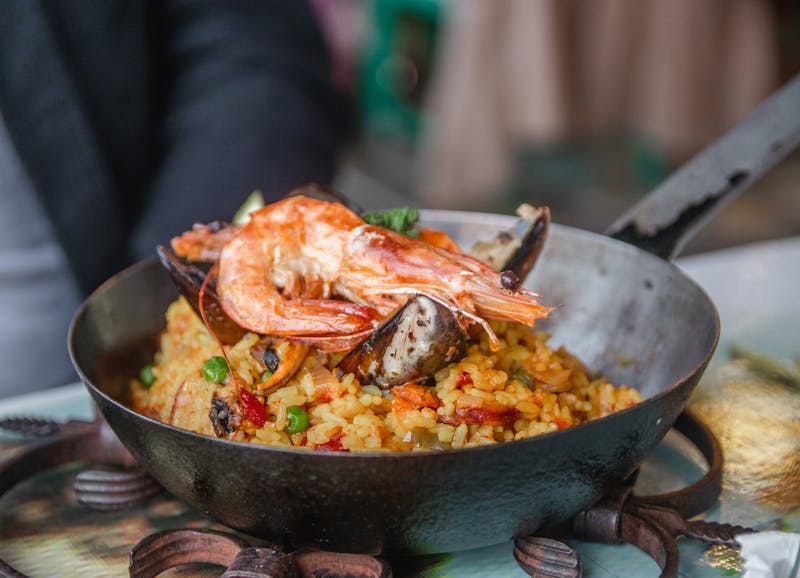
The perfect marinera sauce
The sauce is what distinguishes a good marinera from an exceptional one. The three pillars:
- Mussel broth: Don't use water. The cooking broth contains the essence of the sea. Strain it well to ensure no sand or shell bits pass through.
- Flour-broth balance: 1 tablespoon of flour for 250-300 ml of broth. If it's too runny, cook for a couple more minutes. If it's too thick, add a little more broth.
- Paprika off the heat: Paprika burns in 5 seconds over direct heat and becomes bitter. Remove the pan, add it, stir, and return to the heat. That 5-second gesture changes the dish.
Tips
- Remove one shell: For presentation, remove the empty shell from each mussel and serve only the halves with meat. They are easier to eat and absorb more sauce.
- Do not overcook: The mussels are already cooked from the initial steaming. In the sauce, they only need to heat through for 1-2 minutes. More time = rubbery.
- Day-old bread: Slightly dry bread absorbs the sauce better than fresh bread. Cut it into thick slices and place it on the table.
- Resting: 5 minutes with the lid on before serving. The sauce settles and the flavors integrate.
Regional variations
- Galician: With hot paprika from La Vera instead of sweet, and a touch of chili. More potent.
- Basque: Green sauce with abundant parsley, without tomato or paprika. More delicate.
- Catalan: With sofregit (onion + very cooked tomato) as a base, and a splash of aged wine instead of white.
- Belgian-French: With cream, celery, and butter. Creamier, less Mediterranean.
Nutritional information (per serving)
| Nutrient | Per serving |
|---|---|
| Calories | 220 kcal |
| Protein | 20 g |
| Iron | 5.6 mg |
More recipes: tiger mussels, steamed mussels, pickled mussels.
Discover our premium selection
Seafood products carefully selected since 1990 in Mercat del Ninot, Barcelona. Refrigerated shipping in 24-48h.
Conclusion
Marinera mussels are the natural next step after mastering steamed mussels. The sauce with sofrito, paprika, and mussel broth transforms a simple tapa into a dish with personality. 25 minutes, basic ingredients, professional-level result.
Frequently asked questions
What is the difference between steamed mussels and marinera mussels?
Steamed: opened with wine and served in their broth. Marinera: a sauce is prepared with a sofrito, flour, and paprika using the broth as a base. Marinera has more body and complexity.
Can I make the sauce in advance?
Yes. Prepare the sauce and store it in the refrigerator for up to 2 days. When serving, heat the sauce, steam fresh mussels, and incorporate them. This allows the sauce to rest and the mussels to be freshly cooked.
Can I use hot paprika?
Yes, it's the classic Galician variation. Half a teaspoon of hot + half a teaspoon of sweet provides a perfect balance if you don't want excessive spiciness.
How many mussels per person?
As a tapa: 300-400 g with shells. As a main course: 500 g. With 1.5 kg for 4 people, you get a generous tapa portion.
Can it be frozen?
The sauce can (3 months). Cooked mussels do not freeze well — they become rubbery. Prepare the sauce and freeze it; cook the mussels fresh when serving.
Can I use canned mussels?
Yes. Prepare the marinera sauce with fish broth (as you won't have mussel broth). Add the drained canned mussels at the end and heat for 2 minutes.
María José Sáez Pastor
Over 35 years selecting and preparing seafood products at Mercat del Ninot in Barcelona. She knows every recipe because she has cooked them all — and improves them with professional expertise.


