Summary: Properly cleaning fish varies by type: scaling a sea bream is not the same as gutting a hake or filleting a salmon. Here are the specific techniques for each fish family, with the right tools and mistakes to avoid. Average time: 3-8 minutes per piece.
Table of Contents
Essential Tools for Cleaning Fish
| Tool | Use | Homemade Alternative |
|---|---|---|
| Fish scaler | Removing scales | Large knife or soup spoon |
| Kitchen shears | Cutting fins, opening abdominal cavity | — |
| Fillet knife (flexible) | Separating fillets from the backbone | Sharp, thin knife |
| Fish bone tweezers | Removing intermuscular bones | Clean tweezers |
| Cutting board | Work surface | Large non-slip board |
| Paper towels | Drying, holding slippery fish | Clean cloth |
Pro Tip: A sharp knife is the most important tool. A dull knife will shred the fish flesh, break fibers, and turn filleting into a disaster. If you invest in only one tool, make it a knife sharpener.
Technique 1: Descaling
Scales are dermal plates of keratin and calcium that protect the fish. Not all fish need descaling — it depends on the species and preparation.
Fish that need descaling: Sea bream (Sparus aurata), sea bass (Dicentrarchus labrax), red sea bream (Pagellus bogaraveo), red mullet (Mullus surmuletus), snapper, John Dory.
Fish that DO NOT need descaling: Hake (tiny scales that are removed easily), monkfish (no scales), sole (skin is removed directly), fresh cod (very small scales), sardine (scales loosen easily when handled).
Procedure:
- Place the fish on the board. Hold the tail firmly with one hand (use paper if it's slippery).
- With the fish scaler or the back of a large knife, scrape from the tail towards the head in short, firm strokes. Always against the direction of the scales.
- Work both sides. Don't forget the back and near the fins, where scales adhere more.
- Rinse under the tap to remove loose scales.
Trick: Scale inside a large open plastic bag — it contains the scales that fly all over the kitchen. Or do it in the sink with a gentle stream of water.
Technique 2: Gutting (Removing Organs)
Gutting should be done as soon as possible after purchase. The digestive enzymes in the fish's intestinal tract remain active post-mortem and can degrade the surrounding flesh, altering flavor and texture.
Procedure for flat fish (sole, megrim):
- Make a semi-circular cut behind the head, just below the gills.
- Insert your fingers and pull out the viscera carefully.
- Rinse the cavity under cold water.
Procedure for round fish (hake, sea bream, sea bass, cod):
- With kitchen shears, cut from the anal opening to the base of the gills (the entire ventral line).
- Remove all viscera with your fingers. Identify and separate the liver if it's large — in some species (monkfish, cod), the liver is a delicacy.
- Scrape the bloodline (kidney) that runs along the backbone with your thumb or a small spoon. This dark line will cause bitterness if not removed.
- Rinse with cold water until it runs clear.
The gills: Remove the gills if you're cooking the fish whole — they can add bitterness to the broth. Hold the operculum open, cut the attachments with shears, and pull them out. Gills are the fastest decomposing tissue, so removing them improves perceived freshness.
Technique 3: Removing Bones
Intermuscular bones (those not part of the main skeleton but embedded in the muscle) are the bane of parents with small children and adults who have had bad experiences.
How to find them: Run your fingertips over the surface of the fillet, pressing gently. The bones will feel like thin, stiff needles. In salmon and trout, they form a diagonal line from the dorsal area towards the belly. In hake, they are in the central line of the fillet.
How to remove them: With fish bone tweezers (or clean regular tweezers), grasp the protruding end of the bone and pull in the direction of its insertion angle, not perpendicularly. Pulling at an angle ensures the bone comes out cleanly without tearing the flesh.
| Species | Intermuscular Bones | Difficulty |
|---|---|---|
| Salmon/trout | ~30-40 per fillet, in a diagonal line | Medium |
| Hake | Few, in the central line | Easy |
| Cod | Few, large and easy to detect | Easy |
| Sardine | Many, thin, difficult to remove | High |
| Sea bream/sea bass | Moderate, in the rib area | Medium |
| Monkfish | Practically none | Very Easy |
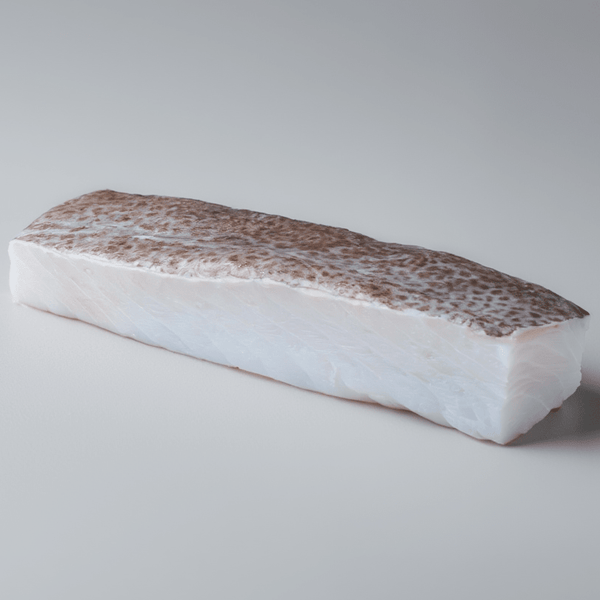
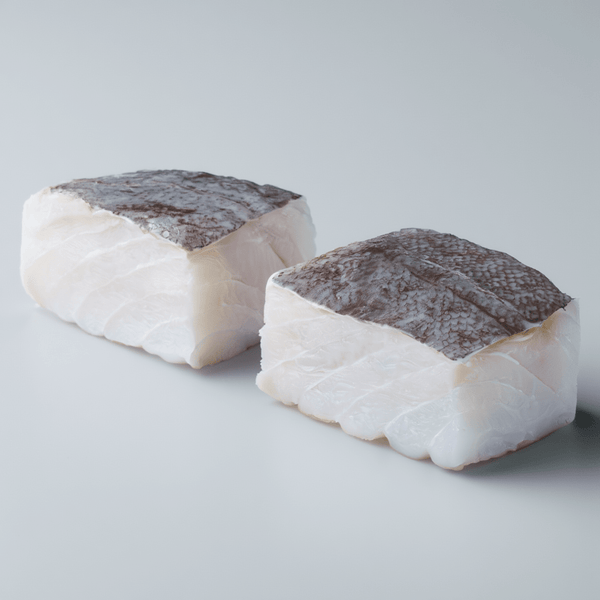
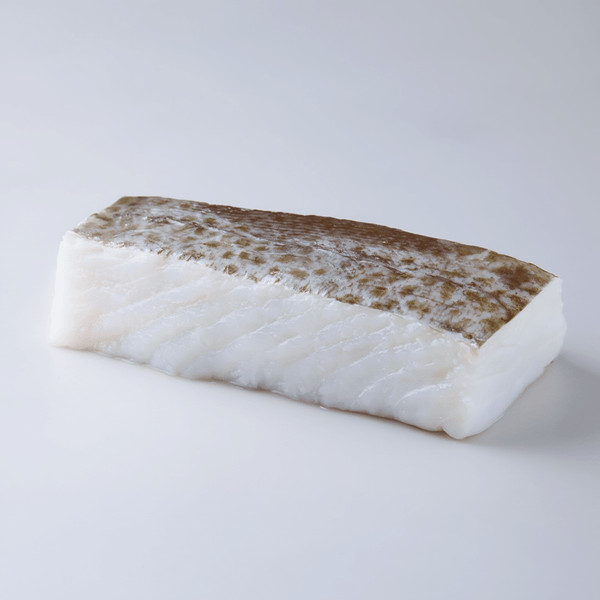
Prefer boneless, ready-to-cook fish? Our salted cod comes in clean, boneless loins, perfectly desalted. You just have to cook it.
Technique 4: Filleting
Filleting is separating the flesh from the backbone to obtain boneless portions. It requires a flexible, sharp knife and some practice.
Round fish (2 fillets):
- Place the gutted fish on its side. Make a cut behind the head until you reach the backbone.
- Rotate the knife 90° and slide the blade along the backbone from head to tail, using long, fluid movements. Let the knife do the work — don't force it.
- Lift the fillet. Turn the fish over and repeat on the other side.
- With the flexible knife, remove the rib bones (the row of curved bones) by making a shallow V-cut.
Flat fish (4 fillets):
- Make a cut along the lateral line (the dark line that divides the fish) down to the backbone.
- Slide the knife from the central line towards the fin, keeping it close to the bones. You get the first fillet.
- Repeat on the other side of the central line. Flip it over and get the remaining two fillets.
Typical yield: A well-filleted round fish yields 40-50% of its weight in clean fillets. A flat fish, 35-45%. The rest are head, backbone, skin, fins, and viscera — which, by the way, are excellent for making fumet.
Quick Guide by Species
| Species | Scale | Gut | Bones | Fillet | Notes |
|---|---|---|---|---|---|
| Hake | Not necessary | Yes | Few | Easy | Tender flesh, handle with care |
| Sea bream | Yes (hard scales) | Yes | Moderate | Medium | Excellent whole baked |
| Sea bass | Yes | Yes | Moderate | Medium | Large scales, easy to remove |
| Salmon | Not necessary | Yes (usually comes done) | Many intermuscular | Easy | Removing bones with tweezers is key |
| Cod | Not necessary | Yes | Few, large | Easy | Firm flesh, good for filleting |
| Sardine | Come loose easily | Yes | Many, thin | Difficult | Better to open by hand than with a knife |
| Sole | Skin is removed | Yes | Few | 4 fillets | Pull skin from the tail |
Common Mistakes and How to Avoid Them
- Dull knife: The number one mistake. A knife that doesn't cut will shred the flesh, produce irregular fillets, and increase the risk of cutting yourself (a dull knife requires more force and slips easily).
- Not drying the fish: Wet fish slips on the board. Dry it with paper towels before handling.
- Scaling after gutting: If you open the belly first, flying scales will get inside the cavity. Correct sequence: first scales, then viscera.
- Throwing away the head and backbone: They are gold for fumet. Freeze them if you don't use them immediately.
- Not removing the bloodline: That dark line along the backbone (the kidney) gives a pronounced bitter taste when cooking the fish whole.
The Alternative: Pre-cleaned Fish
Not everyone has the time, desire, or skill to clean fish. And that's perfectly fine. The modern fishing industry offers formats that eliminate all the work:
- Fresh fillets: Your fishmonger cleans and fillets it on the spot.
- Salted cod: Already clean, boneless, desalted, and ready to cook.
- Canned goods: Zero cleaning, zero preparation. Tuna, sardines, mussels — all ready.
- Frozen: Quality frozen fillets (cod, hake) come skinless, boneless, and portioned.
Our desalted cod is the perfect example: premium boneless loins, perfectly desalted, ready to cook. All the quality, none of the work.
Frequently Asked Questions
Can you clean fish with a regular kitchen knife?
For gutting and scaling, yes. For filleting, a standard kitchen knife (stiff, 8-inch) works but is less precise than a fillet knife (flexible, thin blade). If you fillet frequently, a flexible 7-8 inch knife (costs €15-€30) makes a huge difference.
Is it better to buy fish whole or already filleted?
Whole is fresher (you can check freshness by eyes and gills), more economical (you pay less per kilo), and more versatile (you use scraps for fumet). Filleted is more practical and eliminates the work. If you have time and want to learn, start with firm-fleshed fish like sea bream or cod — they are more forgiving of mistakes than hake.
How long does it take to clean a whole fish?
With practice: 3-5 minutes to scale, gut, and clean a medium-sized piece (sea bream, sea bass of 400-600 g). Filleting adds another 2-3 minutes. Initially, it will take twice as long. After 10-15 pieces, you'll do it without thinking.
How do I remove fish smell from my hands?
Rub your hands with lemon juice, vinegar, or stainless steel (a spoon works). Trimethylamine (responsible for the smell) reacts with acids and with the chromium in steel. Regular soap is not enough on its own because trimethylamine is not soluble in conventional soap.
Can the bones and head be used?
Absolutely. Head, backbone, fins, and skin (without scales) are the base of an excellent fumet. Sauté with onion, leek, and carrot, cover with cold water, bring to a gentle boil, and cook for 20-30 minutes. Strain, and you'll have a fish broth that no carton can match. Do not use viscera — they add bitterness.