

Table of contents
Brands and varieties on Mercadona's shelves
Mercadona's canned tuna aisle is extensive. Most of it is Hacendado (private label), with occasional appearances from manufacturer brands. The main references:
- Light tuna in sunflower oil (Hacendado): The best-selling can. Economical, mild flavor, soft texture.
- Light tuna in olive oil (Hacendado): Same tuna, better oil. Noticeable difference in flavor.
- Light tuna in natural water (Hacendado): No oil, in its own juice with water and salt. For those looking for minimal calories.
- Bonito del Norte in olive oil (Hacendado): A different species, better quality. More expensive but a different level.
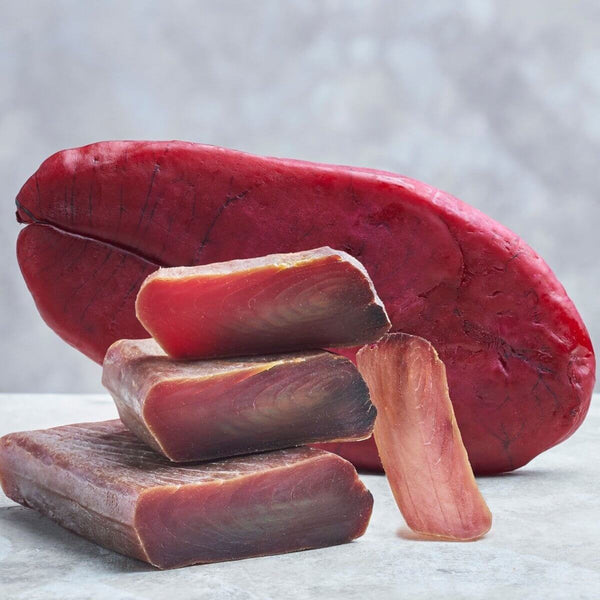
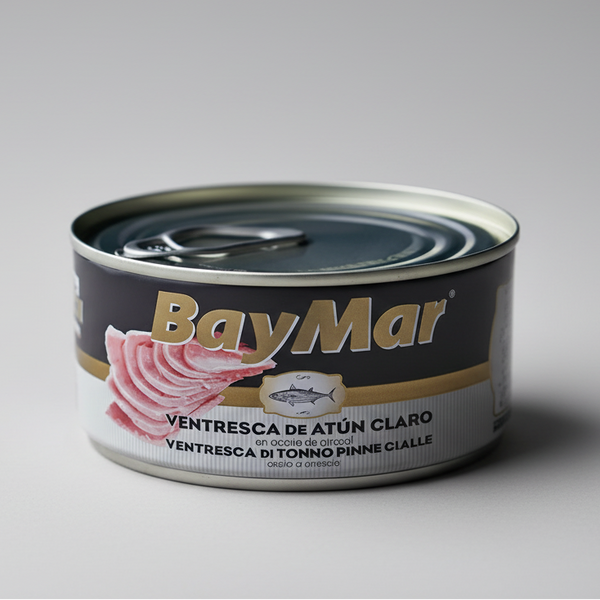
- Tuna belly (appears occasionally): The fattiest and most expensive part of the tuna.
- Pickled tuna (Hacendado): For those looking for a different flavor.
Hacendado's suppliers rotate — Mercadona works with inter-suppliers such as Jealsa (Rianxeira), Frinsa, Conservas Cerqueira, and others. The same product can change manufacturers without the label changing. This means that quality can vary slightly between batches.
Light tuna vs. Bonito del Norte: two animals, two prices
This is the most common confusion and the one that costs uninformed consumers the most money.
Light tuna (Thunnus albacares): Also called yellowfin. It is a tropical tuna that can weigh 50-100 kg. It is massively caught in the Pacific and Indian Oceans. Its meat is pinkish, soft, and has a neutral flavor. It is the "everyday tuna" — decent but without character. Canned price: €1-€2.50/unit.
Bonito del Norte (Thunnus alalunga): A smaller tuna (5-30 kg) that migrates through the Cantabrian Sea in summer. Its meat is white, firm, and has a finer, more delicate flavor. It is caught with a hook (one by one) during the Cantabrian fishing season from June to October. It is a superior category. Canned price: €3-€8/unit.
| Characteristic | Light Tuna | Bonito del Norte |
|---|---|---|
| Species | Thunnus albacares | Thunnus alalunga |
| Meat color | Pinkish | White |
| Texture | Soft, flaky | Firm, layered |
| Flavor | Mild, neutral | Fine, delicate, more complex |
| Catch method | Purse seine, industrial longline | Hook-and-line, pole-and-line (artisanal) |
| Usual origin | Pacific, Indian Ocean | Cantabrian Sea, North Atlantic |
| Can price (Mercadona) | €0.90-€2.00 | €2.50-€4.50 |
| Omega-3 per 100 g | 0.3-0.5 g | 0.8-1.2 g |
Tip to avoid mistakes: If the can says "light tuna," it is Thunnus albacares (or similar). If it says "Bonito del Norte," it is Thunnus alalunga from the Cantabrian Sea. If it just says "tuna," without further specification, be suspicious — it could be any species, even skipjack (Katsuwonus pelamis), which is the lowest quality.
Reading the label: what they are really selling you
The label on a can of tuna hides more information than it seems. Here's what to look for:
1. Species: It must appear. "Light tuna" = Thunnus albacares. "Bonito del Norte" = Thunnus alalunga. "Tuna" alone = possible skipjack or mix.
2. Type of oil: "Olive oil" alone can be refined (the cheap one). "Extra virgin olive oil" is the superior category. "Vegetable oil" or "sunflower oil" is the most economical and contributes the least to the flavor.
3. Presentation: "In fillets" or "in loins" means large, whole pieces — better quality cut. "In pieces" or "flaked" are remnants of filleting — cheaper, poorer presentation.
4. Net weight vs. drained weight: A can with a net weight of 80g can have only 52g of drained weight. The rest is oil. To compare real prices between brands, always divide the price by the drained weight.
5. Catch area (FAO): FAO 27 (Northeast Atlantic) and FAO 34 (East-Central Atlantic) for Bonito del Norte. FAO 51/57/71 (Indian/Pacific) for tropical light tuna.
Comparison table: Mercadona's canned tuna
| Product | Net weight | Drained weight | Price | €/kg drained | Rating |
|---|---|---|---|---|---|
| Light tuna in sunflower oil (pack of 3) | 3×80 g | 3×52 g | €2.10 | €13.46 | Basic, decent |
| Light tuna in olive oil (pack of 3) | 3×80 g | 3×52 g | €2.85 | €18.27 | Better flavor, recommended |
| Light tuna in natural water (pack of 3) | 3×80 g | 3×56 g | €2.30 | €13.69 | For diets, a bit dry |
| Bonito del Norte in olive oil | 112 g | 80 g | €3.50 | €43.75 | Real quality leap |
| Low-salt light tuna | 3×80 g | 3×52 g | €2.50 | €16.03 | Less flavor |
Approximate prices in early 2026.
Olive oil vs. sunflower oil: why it matters
The oil in a can of preserved food is not just a preservation medium — it is an ingredient that adds (or detracts from) flavor, texture, and nutrition.
Sunflower oil: Neutral, cheap, does not interfere with the tuna's flavor. But it also adds nothing. Nutritionally, it has more omega-6 (pro-inflammatory in excess) than omega-3. It is the default option for cheap cans.
Olive oil (refined): More flavor than sunflower oil, better lipid profile (oleic acid). This is what most "in olive oil" cans contain. It is not extra virgin, but it is a notable improvement.
Extra virgin olive oil: The premium category. EVOO provides antioxidant polyphenols, a fruity flavor, and a superior fat profile. In a quality preserve, the oil infuses with the tuna's juices, creating a liquid that is worth gold — perfect for dressing salads or dipping bread.
Practical tip: The oil in the can is edible and nutritious. Don't throw it away. If the can is extra virgin olive oil, that oil has absorbed omega-3 from the tuna and provides polyphenols. Use it in salads, toasts, or vinaigrette.
The difference between an industrial can and an artisanal preserve is noticeable from the first bite. Our tuna and Bonito del Norte preserves use whole loins, EVOO, and artisanal processes that supermarket cans cannot replicate. Compare and decide.
Which one to buy depending on its use
- For a quick everyday salad: Light tuna in olive oil. Good price/flavor balance. Sunflower oil is acceptable if the budget dictates.
- For a toast, montadito, or pintxo: Bonito del Norte in virgin olive oil. Here, the tuna is the star, and the difference is noticeable. A whole loin on a toast with piquillo pepper is a txoko pintxo.
- For tuna empanada or pie: Light tuna in sunflower oil works perfectly. The filling contains onion, tomato, and egg that mask quality differences.
- For diet / gym: Natural tuna. Maximum protein, minimum fat. But beware — the flavor is bland and the texture dry. It improves greatly with lemon and a drizzle of EVOO on top.
- For an appetizer platter or gourmet gift: Bonito del Norte or tuna belly in EVOO. It's another category — elegance in a can.
Gourmet alternatives: when you want more
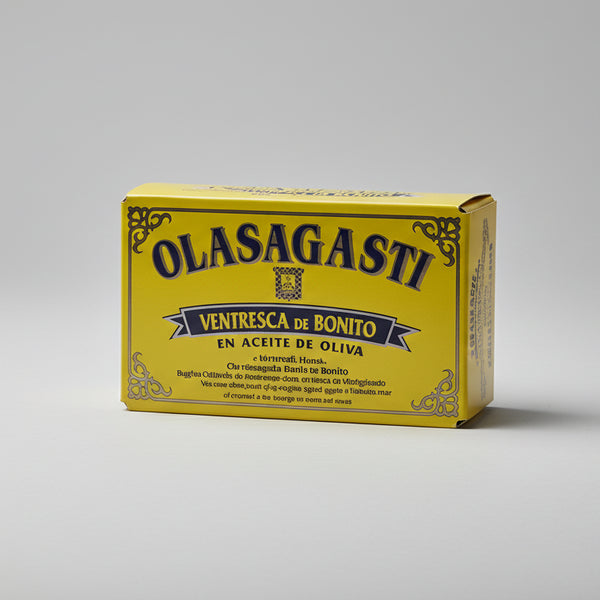
Gourmet canned tuna and bonito are a world apart. Cantabrian canneries (Olasagasti, Ortiz, Güeyu Mar, Los Peperetes) work with fresh seasonal raw material, premium oils, and artisanal processes that supermarket cans cannot replicate.
Is it worth paying €8-€15 for a can? If you value the product, yes. The difference is like comparing a cebo ham with an Iberian acorn-fed ham: technically they are "ham," but the experience is incomparable.
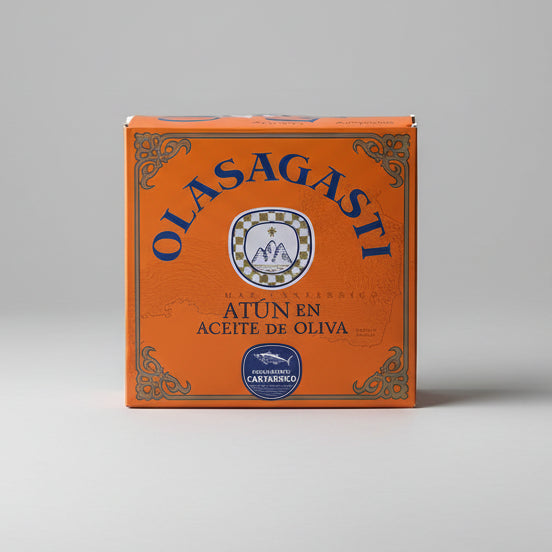
For those looking for real preserves, with whole loins of Bonito del Norte caught with a pole in the Cantabrian Sea and packed in EVOO: discover our selection of Olasagasti preserves — one of the best canneries in the Basque Country.
Keep exploring
Parts of tuna: cuts and uses · Mercury in tuna · Recipes with canned tuna · Canned tuna and bonito
Frequently asked questions
What is the best canned tuna from Mercadona?
The Bonito del Norte in olive oil is the best can in their line — a different species, a different texture, a different flavor. If you are looking for the best value for money for daily use, light tuna in olive oil is the sensible option.
Are light tuna and Bonito del Norte the same fish?
No. They are different species. Light tuna is Thunnus albacares (yellowfin, tropical). Bonito del Norte is Thunnus alalunga (smaller, Cantabrian Sea). Bonito has firmer white meat and a finer flavor.
Is it bad to eat canned tuna every day?
Tuna accumulates mercury through bioaccumulation. AESAN recommends limiting consumption to 3-4 cans per week for healthy adults. Pregnant women and children under 10 should limit it more. Bonito del Norte, being smaller, accumulates less mercury than light tuna.
Why is there such a price difference between tuna cans?
Three factors: the species (Bonito del Norte > light tuna > skipjack), the oil (EVOO > refined olive oil > sunflower oil), and the presentation (whole loins > pieces > flaked). The combination of the three creates a range from €0.90 to €15 per can.
Can the oil from the tuna can be eaten?
Yes, and you should. Especially if it's extra virgin olive oil — it has been infused with the tuna's juice and omega-3s during the preservation time. It's perfect for salads, toasts, or simply dipping bread.
What's the difference between "in fillets" and "in pieces"?
"In fillets" or "in loins" refers to large, whole pieces of tuna. "In pieces" are trimmings from filleting. "Flaked" is the residue. The quality of the fish can be the same, but the presentation, texture, and experience are better with whole loins.
Discover our premium selection
Seafood products carefully selected since 1990 at Mercat del Ninot, Barcelona. Refrigerated shipping in 24-48h.