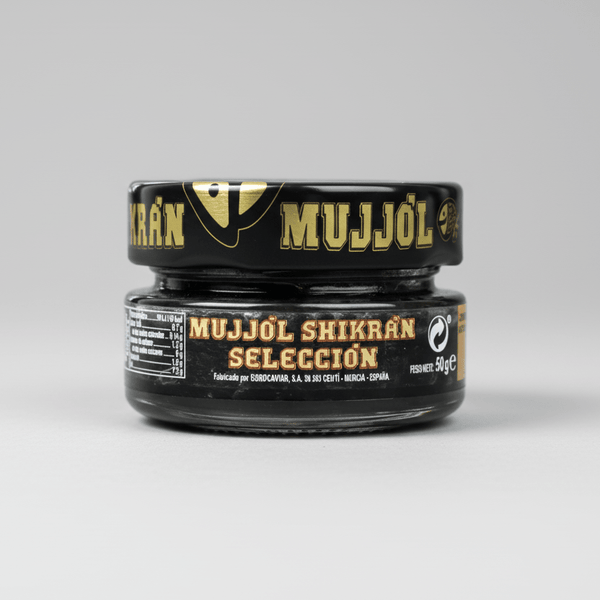
"Caviar" has become a catch-all term. On any menu, you might find "salmon caviar," "sea urchin caviar," or "mullet roe caviar," when technically there's only one true caviar: sturgeon roe. Mullet roe is something else entirely, with its own history, its own price, and its own place in cuisine. Comparing the two makes sense because they are often offered as alternatives, but it's important to know what you're buying and why it costs what it does.
Here's the honest comparison: what they are, how they are similar, how they differ, and when to choose each without overpaying or falling short.
What is Mullet Roe (Bottarga and Taramas)
Mullet (also called lisa or múgil) is a coastal and brackish water fish, found in the Mediterranean and Atlantic. Its roe is used in two very distinct ways, and it's important not to confuse them:
- Bottarga: the entire roe sac, salted and air-dried/cured for weeks. It becomes compact, amber to intense orange in color, and is grated or sliced very thinly. This is the gourmet format par excellence: intense, saline, with a hint that recalls the sea and nuts. In Italy, it's associated with Sardinia; in Spain, there's a tradition of cured roe in areas like the Mar Menor or the Andalusian Atlantic coast.
- Taramas (roe for taramasalata): mullet roe (or, in more economical versions, cod roe) in paste form or salted, forming the base of taramasalata, the Greek and Turkish spread emulsified with bread or potato, oil, and lemon.
In both cases, we are talking about cured or salted roe, not loose grains that burst in the mouth like caviar. That's the first important difference: the texture and format of use are not the same.
What is Caviar (Sturgeon Roe)
Caviar, in the strict sense, is sturgeon roe treated with salt (malossol method, "little salt"). Sturgeon is a prehistoric fish with very slow growth: a female can take between 7 and 15 years to produce roe, depending on the species. Today, due to the protection of wild sturgeon, almost all quality caviar comes from sustainable aquaculture.
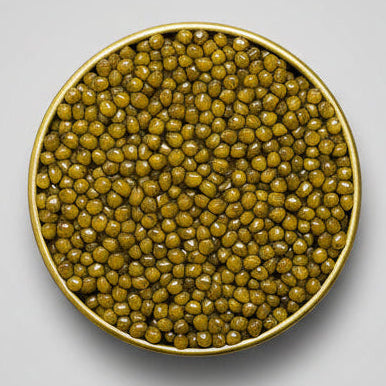
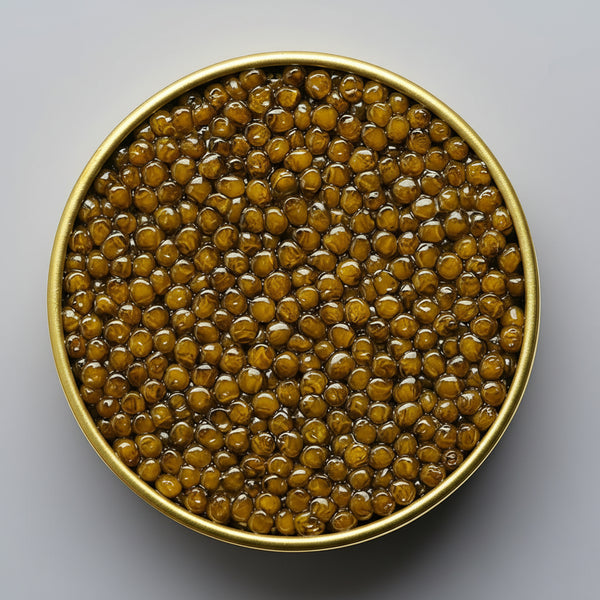
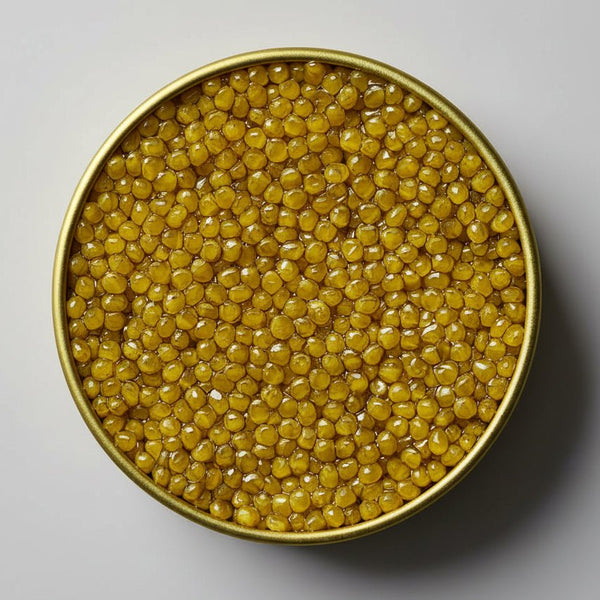
The classic varieties are Beluga, Osetra (Oscietra), and Sevruga, in addition to highly reputed hybrids and aquacultured caviars. The grain is spherical, shiny, and when pressed with the tongue, it releases a creamy, buttery explosion, with a long and elegant finish. This "pop" texture and creaminess are precisely what other roes try to emulate and rarely match.
If you want to see the real varieties and their differences in grain, color, and maturation up close, the Caspian caviar collection has each reference explained one by one.
Comparison Table: Mullet Roe vs. Caviar
| Criterion | Mullet Roe (bottarga / taramas) | Caviar (sturgeon) |
|---|---|---|
| Origin | Mullet/lisa, coastal fish from the Mediterranean and Atlantic | Sturgeon, very slow-growing fish, now from aquaculture |
| Format | Cured and dried sac (bottarga) or paste/salted roe (taramas) | Loose, whole grains, preserved with little salt |
| Texture | Firm, waxy, grated or sliced; does not "burst" | Spherical, shiny, bursts and releases cream in the mouth |
| Flavor | Very intense, saline, iodized, with nutty notes | Buttery, fine marine, subtle salinity, long finish |
| Typical Use | Grated over pasta, in taramasalata, with toast and oil | With a spoon, on blini/neutral toast, without masking its flavor |
| Indicative Price | Affordable to medium (quality bottarga is higher, but far from caviar) | High: luxury product due to its scarcity and years of maturation |
The table makes the pattern clear: they are not direct substitutes on the plate. One is used as an intense condiment; the other, as a delicate protagonist.
Flavor and Texture in Detail: Why They Are Not Interchangeable
The confusion arises because both are "salted roe," but the process leads them to opposite extremes.
Bottarga loses water during curing. This dehydration concentrates the flavor: what you taste is pure marine umami, with high salinity and that toasted almond undertone that appears when grated freshly from the cold. In the mouth, nothing bursts; it melts like a shaving and leaves a long, almost anchovy-like aftertaste. That's why it works as a seasoning: it adds intensity to a dish without needing a large quantity. Quality bottarga is recognized by its uniform color, a clean cut without cracks, and a clear marine aroma, never rancid.
Caviar, on the other hand, retains water inside each grain. The thin membrane yields when pressed and releases a warm cream at mouth temperature. Its salinity is much lower (hence the term malossol) precisely so as not to mask that creaminess. Serving it with lemon, onion, or strong sauces—a custom inherited from when low-quality caviar had to be disguised—is precisely the opposite of what a good product demands.
In summary: bottarga shouts, caviar whispers. And both have their moment.
Is Mullet Roe a Caviar Substitute? (The Honest Answer)
No. And this is important to state unequivocally, because marketing tends to sell any roe as "poor man's caviar."
A substitute is something that imitates another to take its place at a lower price. Bottarga does not imitate caviar: it has centuries of its own tradition in the Mediterranean, a distinct texture (it is grated, not bursting), and a much more intense and concentrated flavor profile. Calling it a "substitute" is like calling cured ham a "tenderloin substitute": they share a distant animal origin, but they are independent gastronomic categories.
Where true substitutes do appear is in dyed and flavored roes literally sold as "caviar imitation": these are usually small roes (from capelin or flying fish) colored black. If you're interested in that family, we explain it in detail in the guides on what masago is and what tobiko is. Mullet roe does not fall into that category: it plays in its own league.
When to Choose Each
The correct question is not "which is better," but "what do I want to achieve on the plate."
Choose mullet roe (bottarga) if...
- You want an impactful condiment: grated over pasta with oil and chili, on an egg, in a potato cream, or as an appetizer with toast.
- You're looking for intensity and marine umami without spending a luxury budget.
- You're going to make homemade taramasalata or want a flavor that can withstand heat and mixing with other ingredients.
- You like cooking with long-lasting products: bottarga, properly stored cold and wrapped, keeps for weeks.
Choose sturgeon caviar if...
- The moment calls for it and you want the product to be the star: a tasting, a celebration, a gift.
- You're looking for that unique bursting grain texture and buttery creaminess that no other roe reproduces.
- You're going to serve it with respect: a mother-of-pearl spoon, a neutral base, without masking it with lemon or strong flavors.
And if what you're looking for is the "caviar effect" at a low cost...
Then neither bottarga nor caviar is your direct answer: what you want are small, loose-grain roes that decorate and add crunchy texture without breaking the bank. This is where capelin or flying fish roe come in, designed for sushi, poke, and canapés. They are not caviar, but they don't pretend to be, and they fulfill that specific role very well. Bottarga is something else: a signature condiment, not a garnish.
In summary: bottarga is a great ingredient; caviar is an experience. Having both in the pantry is not contradictory, it's having good judgment. If you're ready to make the leap to the real product, compare varieties, size, and maturation wisely in the Caspian caviar selection and choose according to the moment, not the most expensive label.
How to Choose and Store Each
Buying well is half the battle. Some quick tips to avoid mistakes:
- Bottarga: look for uniform color (amber to orange), firm piece, and a clean marine smell. Avoid very dark or cracked ones, which indicate excessive drying or poor curing. Store it cold, wrapped to prevent further drying, and grate it fresh; if you buy it pre-sliced, consume it within a few days.
- Caviar: pay attention to the grain (whole, shiny, not clumpy), the packaging date, and the cold chain. Store at 0-4 °C (32-39 °F), without freezing (freezing breaks the grain), and once opened, it should be consumed within 2-3 days. Serve with a non-metallic spoon to avoid altering its flavor.
And a budget note: if you're torn between spending on good bottarga or an entry-level caviar, think about how many times you'll use it. Bottarga yields many servings as a condiment; caviar is a one-time expense for a specific moment. Neither decision is wrong if you make it knowing what you're buying.
Frequently Asked Questions
Is mullet roe the same as caviar?
No. Caviar is sturgeon roe, with a bursting grain and buttery flavor. Mullet roe is cured and dried (bottarga) or salted (taramas): it is firmer, more intense, and used as a condiment, not as a spoonful bite.
Why is caviar so expensive compared to bottarga?
Due to the biology of sturgeon: it takes between 7 and 15 years to produce roe, and today almost all of it comes from controlled aquaculture. Mullet breeds much faster, so its roe is considerably more affordable, although quality bottarga also has its price.
Do I need caviar for taramasalata?
No, and it would be a mistake. Taramasalata is traditionally made with salted mullet roe (or cod roe). Using sturgeon caviar there would be a waste of its texture and flavor, which would be lost when emulsified with bread, oil, and lemon.
Ready to try real caviar? Discover the true sturgeon varieties, with their grain, color, and maturation explained, in our Caspian caviar collection.