Summary: The gilda was born in Bar Casa Vallés in Donostia in 1946, created by Joaquín Aramburu. Its name comes from the film "Gilda" (1946) starring Rita Hayworth — "green, salty, and a little spicy." Three sacred ingredients: Cantabrian anchovy, manzanilla olive, and guindilla pepper (piparra). Today, it is one of the most recognizable pintxos in the world.
What is a gilda?
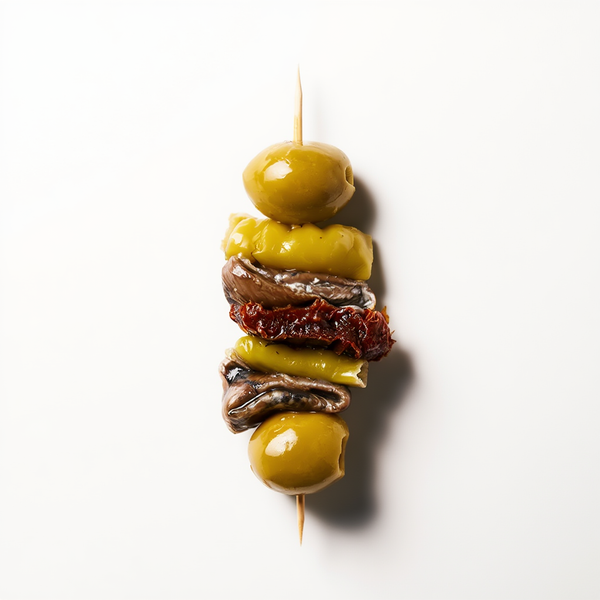
A gilda is a cold Basque pintxo made of three ingredients skewered on a toothpick: Cantabrian anchovy in oil, green manzanilla olive, and green guindilla pepper (piparra) in vinegar. It is served cold, usually as an appetizer with vermouth, white wine, or txakoli, in any pintxo bar in the Basque Country and, for years, all over the world.
Its definition is simple, but its impact is enormous: the gilda is considered the first modern pintxo and the origin of an entire Basque culinary culture that today projects the Basque Country as a global gourmet destination.
Key facts
Its origin: Bar Casa Vallés, Donostia 1946
1946 is a key year. The European post-war period was still felt in Spain. Donostia (San Sebastián), despite the difficulties, maintained its cosmopolitan character and its hospitality tradition. At Bar Casa Vallés, opened in 1942 on Reyes Católicos street, Joaquín Aramburu served wines and appetizers to a clientele mixed with merchants, sailors, and local bourgeois.
According to the most documented version (collected in Donostia City Council archives and interviews with the Aramburu family), one day Joaquín took a toothpick and combined three products he had on hand: a guindilla pepper in vinegar, a manzanilla olive, and a Cantabrian anchovy. He presented it to the customer as a casual appetizer. The combination worked: the saltiness of the anchovy, the vinegary-spicy touch of the guindilla, and the creamy olive as an anchor formed an addictive balance.

Why it's called "gilda" (the movie)
The naming is one of the most memorable details. A regular customer of the bar, upon seeing the pintxo and trying it, said: "This is like Gilda — green, salty, and a little spicy". He was referring to the character played by Rita Hayworth in Charles Vidor's film "Gilda", released precisely in 1946 and a huge success in Spain.
The name stuck. Within months, other bars in Donostia began offering "gildas," replicating the idea. By the late 1940s, the gilda was already established as an iconic Donostian appetizer.

The three sacred ingredients
1. Cantabrian Anchovy
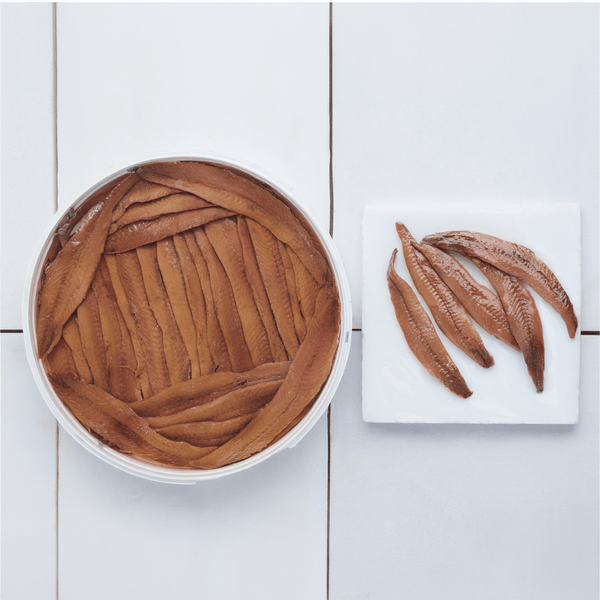
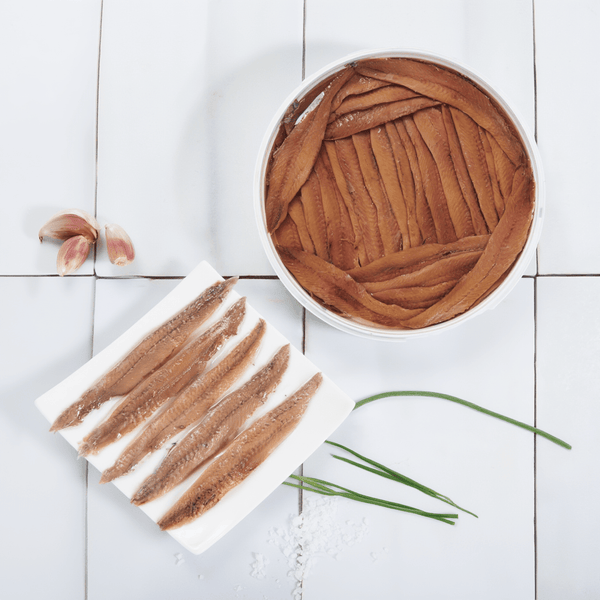
It is the backbone of the pintxo. It must be anchovy in olive oil, ideally from Santoña or Laredo (Cantabria) or from Ondarroa/Getaria (Basque Country). The quality of the anchovy determines the quality of the gilda. A cheap industrial anchovy = mediocre gilda. A "00" Premium Cantabrian anchovy = exceptional gilda.
2. Manzanilla Olive
Green, juicy olive, with a controlled hint of bitterness. Traditionally pitted to facilitate eating. Sevillian manzanilla or arbequina are the most commonly used. Some modern gildas use gordal, which is larger and meatier.
3. Green Guindilla Pepper (Piparra)
The piparra from Ibarra (Guipúzcoa) is the noble variety: long, thin, slightly spicy, with a mild vinegary note. Industrial spicy guindilla is an alternative but less "authentic gilda." The spiciness should be subtle — not overpowering.
| Classic ingredient | Common variation | Alternative | Function in the gilda |
|---|---|---|---|
| Cantabrian Anchovy | Bonito in oil | Tuna belly | Saltiness and depth |
| Manzanilla olive | Pitted Gordal olive | Arbequina olive | Fleshiness and balance |
| Ibarra Piparra | Industrial guindilla pepper | Pickled cucumber | Acidic and vegetal touch |
Donostia vs Bilbao: two pintxo schools
Although the gilda was born in Donostia, Bilbao has the highest concentration of pintxo bars in the world today. Each city has its own school:
Donostian school (puritan)
- Absolute respect for the original recipe.
- Innovation with caution.
- Sober presentation, premium ingredients.
- Casa Vallés, Bar Goiz Argi, Bar Txepetxa.
Bilbain school (explorer)
- Creative freedom: gildas with anchovies, spring onions, cheese, cherry tomatoes, gherkins.
- More fusion, more improvisation.
- Spectacular presentations.
- Bar Gure Toki, Café Iruña, Sorginzulo.
Both approaches are valid. The Donostian gilda is "heritage"; the Bilbain one is "exploration."
Evolution of the Basque pintxo (1940–2026)
Five key decades:
- 1946–1960: birth and local consolidation of the gilda.
- 1960–1980: expansion throughout the Basque Country. Variations appear (marriage, anchovy in vinegar).
- 1980–2000: "New Basque Cuisine" (Arzak, Subijana) elevates the pintxo to haute cuisine. Modern pintxo: hot, technical, small plate presentation.
- 2000–2015: international boom. Pintxos in Madrid, Barcelona, New York. Official pintxo competitions.
- 2015–2026: gilda as a "cool" icon. Premium artisanal brands, gourmet packaging, gourmet gift market.
The modern gilda: variations and global boom
Today there are literally hundreds of gilda variations. The most recognized:
- Gilda Matrimonio: anchovy + anchovy in vinegar + piparra. The salty + acidic pairing.
- Donostiarra Anchovy Gilda: butterfly anchovy + piparra + olive. A milder version.
- Octopus Gilda: Galician octopus + piparra + olive + paprika.
- Cheese Gilda: cured Basque cheese + piparra + olive. For those who don't like fish.
- Gilda with Dried Tomato: adds dried tomato to the classic kit to accentuate sweetness.
International trade has allowed artisanal Basque and Catalan brands to sell bottled or jarred gildas worldwide. Bacalalo offers 7 varieties of artisanal gildas in its catalog, maintaining the traditional recipe.


The gilda in current Basque culture
Beyond the bar, the gilda is a symbol of Basque gastronomic identity. It appears in:
- Official competitions: the National Pintxos Championship of Tolosa and Hondarribia includes a gilda category.
- Gastronomic festivals: San Sebastián Gastronomika dedicates modules to the pintxo.
- Gastronomic diplomacy: the Basque Government uses gildas in official receptions as a cultural ambassador.
- Gourmet gift markets: Basque basket = txakoli + gildas + bonito + Idiazábal cheese.
Where to try the best gildas today
Donostia (San Sebastián)
- Bar Casa Vallés (Reyes Católicos Street, 10): the birthplace, a must-visit.
- Bar Goiz Argi: perfect classic gildas.
- Bar Txepetxa: anchovy specialist, variety of gildas.
Bilbao
- Bar Gure Toki (Plaza Nueva): award-winning modern gildas.
- Café Iruña: Bilbao classic with a good gilda.
- Sorginzulo: creative gildas in the Old Town.
Outside of Euskadi
- Barcelona: pintxo bars in Born and Gracia bring Basque gildas.
- Madrid: Sagaretxe, Lamucca, and Basque bars in the city center.
- Online: specialized fishmongers like Bacalalo ship artisanal gildas throughout Spain.
Conclusion
The gilda is one of the most recognizable contributions of the Basque Country to world gastronomy. Three humble ingredients, a toothpick, and almost 80 years of history that have made it a symbol. Knowing its origin is not just trivia: it helps to understand the Basque pintxo culture, why authentic gildas are worth their cost, and how to distinguish a respectful version from an industrial imitation.
Read more:
- Comparison: anchovy gilda vs anchovy gilda vs octopus gilda
- Price of gildas in 2026
- Best homemade gilda recipes
- Gildas and appetizers collection