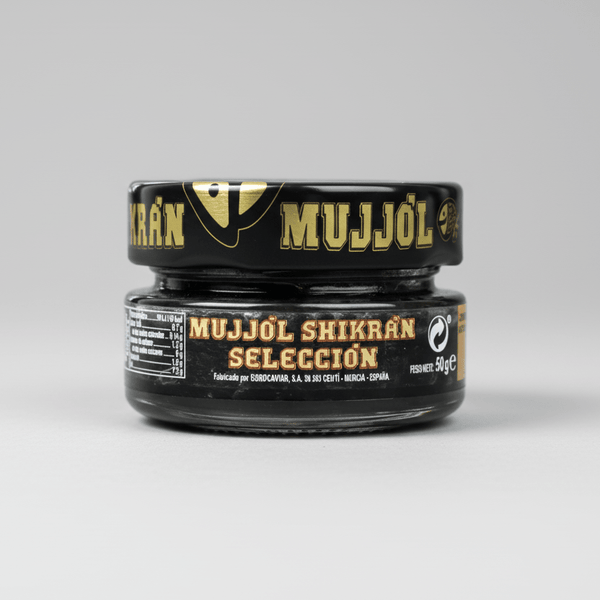
Summary: Osetra caviar is the choice of most Michelin-starred chefs when they cook for themselves — not for show, but for their own palate. Its flavor profile is the most complex of the three classic sturgeon types: nutty, toasted butter, mineral, with an aftertaste that can last almost a minute. This guide explains why Osetra deserves that status, how much it costs in Spain, how to distinguish good from mediocre, and when it is the smartest choice over Beluga.
Table of Contents
- What is Osetra Caviar: The Species and its History
- Osetra's Flavor Profile: Why Chefs Prefer It
- Iranian Imperial Osetra: The Quality Benchmark
- Osetra Caviar Price in Spain in 2026
- Osetra vs. Beluga: The Ultimate Comparison
- How to Recognize Premium Osetra
- How to Taste Osetra: Temperature, Utensil, Sequence
- Osetra Pairings: Combinations That Work
- Osetra in the Kitchen: Uses in Fine Dining
- Frequently Asked Questions about Osetra Caviar
What is Osetra Caviar: The Species and its History
Osetra caviar — also spelled Ossetra, Oscietra, or Oscetra, depending on the transliteration of the Russian osetr, which simply means "sturgeon" — primarily comes from Acipenser gueldenstaedtii, known as the Russian sturgeon or Caspian sturgeon. It is the most widespread sturgeon species in the Caspian Sea and historically produced the largest volume of caviar in the traditional fisheries of Iran, Russia, and Azerbaijan.
Acipenser gueldenstaedtii is a medium-sized sturgeon — it can reach between 1 and 2 meters and weigh up to 80 kg — that reaches sexual maturity between 8 and 15 years of age. This maturation window — slower than Sevruga but faster than Beluga — places Osetra in a balance between the production demands of the largest sturgeon and the relative accessibility of the smallest.
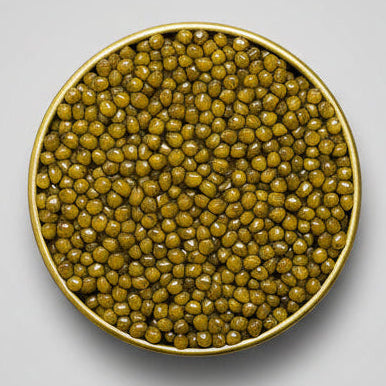
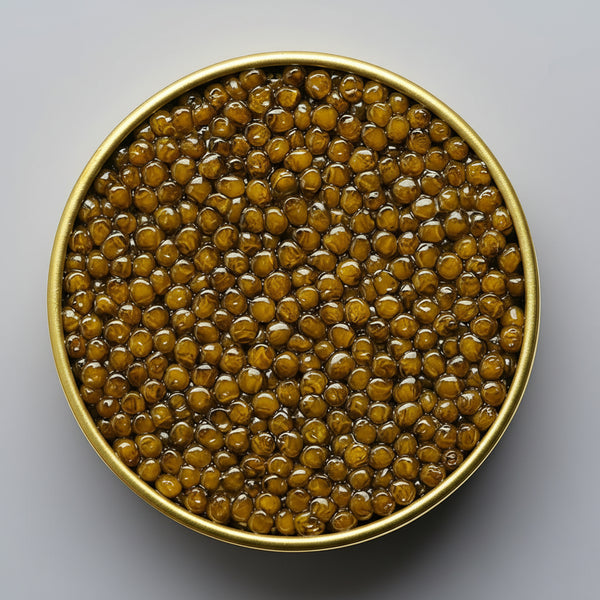
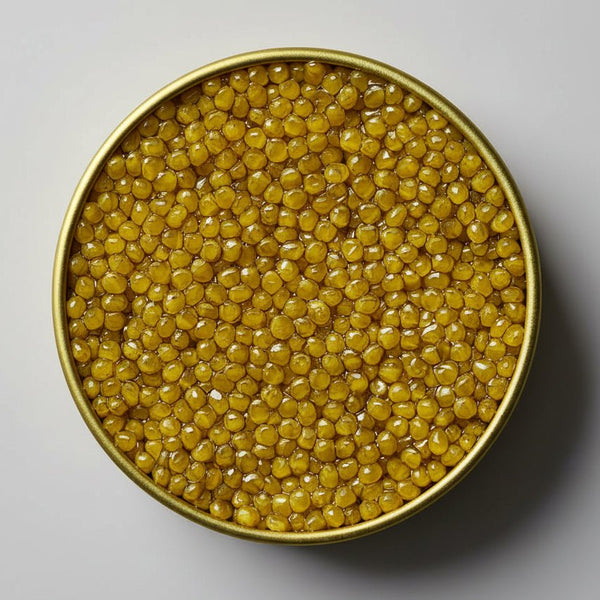
Its roe is medium-sized, between 2.5 and 3.5 millimeters in diameter, and exhibits the greatest chromatic variability of the three classic types: from olive green and golden brown to greenish-grey, with grains that, in older specimens, show iridescent golden tones. This variability is not a production defect but a natural characteristic of the species that connoisseurs interpret as an indicator of older, more experienced specimens.
The term "Imperial Osetra" designates the highest quality batches within Osetra production: roe selected for uniformity of size, color, and texture, from older females whose flavor profiles are more complex and developed. The "Imperial" designation does not have universal regulation — each producer applies it with their own criteria — so traceability of origin remains the most important evaluation parameter.
Osetra's Flavor Profile: Why Chefs Prefer It
Ask ten Michelin-starred chefs what their personal caviar is — the one they buy with their own money to eat at home — and most will answer Osetra. This is not a marketing anecdote: it has a specific organoleptic logic that explains this professional preference.
Osetra's flavor is, among the three classic types, the most complex in its structure. It does not have the creamy subtlety of Beluga or the direct intensity of Sevruga: it has its own character that combines three distinct and sequential layers of perception.
The first impact: saline and marine, with a more pronounced salinity than Beluga but less aggressive than Sevruga. In premium Osetra, this initial salinity has a characteristic cleanliness that leaves no residue on the palate.
Development in the mouth: when the roe yields — between 3 and 8 seconds of the first bite — the second act of Osetra's flavor appears: the nutty notes. This characteristic — which tasters describe as slightly toasted walnut, hazelnut, or even beurre noisette — is exclusive to Osetra among sturgeon caviars and is the main reason for its culinary status. No other caviar has this verifiable and constant nutty note in premium specimens.
The aftertaste: Osetra has the most prolonged aftertaste of the three types. In older and higher-quality specimens, the combination of mineral, sea salt, and nut can remain active on the palate for 40 to 60 seconds. This prolonged aftertaste is what makes Osetra particularly interesting as a culinary ingredient: it can transform the dish around it, not just decorate it.
This three-layered complexity explains why Osetra is more "interesting" from a gastronomic point of view than Beluga, even though Beluga is more expensive and more recognized by the general public. Beluga seduces with its creaminess and its price; Osetra convinces with its flavor.
Iranian Imperial Osetra: The Quality Benchmark
Within the Osetra caviar universe, Iranian Imperial Osetra holds the highest reference position for the same reasons as Iranian Beluga: the conditions of the Caspian Sea in its southern sector are the most favorable for sturgeon development, and the Iranian quality control system is the most demanding on the market.
The Iranian Imperial Osetra Caviar we sell comes from females selected by the IIFRO (Iranian Fisheries Research Institute) under strict criteria of age, health, and roe quality. The curing process — the Iranian malossol — uses salt in minimal amounts, between 3% and 4.5% of the caviar's weight, preserving the natural aromatic profile as much as possible without resorting to additional preservatives.
The specific characteristics of Iranian Imperial Osetra are: roe of uniform size between 2.8 and 3.2 mm, color between greenish-grey and golden depending on the batch, firm membrane with the correct tension for optimal tasting experience, and the flavor profile described above with the well-developed nutty note. Iranian origin is verified by CITES labeling with an IIFRO code.
Osetra Caviar Price in Spain in 2026
Osetra has, among the three classic caviars, the best quality-price ratio — especially in the Imperial category. This is the price reference for the Spanish market in 2026:
| Weight | Price Osetra medium quality | Price Iranian Imperial Osetra |
|---|---|---|
| 10g | 18-30 EUR | 25-40 EUR |
| 30g | 50-85 EUR | 75-120 EUR |
| 50g | 80-140 EUR | 120-200 EUR |
| 100g | 160-280 EUR | 240-400 EUR |
The price difference between standard quality Osetra and Iranian Imperial Osetra is not just about origin: it's about the selection process, uniformity of size, and quality verification in each batch. For the consumer seeking the maximum Osetra experience, the price differential is justified.
Iranian Imperial Osetra Caviar — 75 EUR — Chefs' favorite. Certified Iranian Caspian origin, characteristic nutty note, aftertaste of up to 60 seconds. The best quality-price argument in premium caviar.
View Imperial Osetra Caviar (75 EUR)Osetra vs. Beluga: The Ultimate Comparison
This is the question from caviar aficionados and deserves a direct answer rather than the usual gastronomic diplomacy.
Beluga is more expensive because it is scarcer: Huso huso takes 18-25 years to mature compared to Osetra's 8-15. This additional scarcity, along with the global brand recognition of "Beluga" as the ultimate symbol of food luxury, justifies its higher price.
Osetra is more complex in flavor: its nutty note, chromatic variability, and more structured aftertaste make Osetra the most interesting product from a purely gastronomic point of view. It is not softer than Beluga — it has more character. And that character is what chefs look for when they want caviar to be the star of the dish and not just its luxury signature.
Beluga wins in: ultimate elegance, creaminess, symbolic price as a luxury gift, accessible softness for those who haven't tried caviar before.
Osetra wins in: complexity of flavor, culinary versatility, quality-price ratio, its own character that justifies its position in elaborate dishes.
The honest answer to "which is better" is: it depends on what for. If the question is "which has the richest and most interesting flavor on its own," most gastronomy professionals answer Osetra. If the question is "which has more symbolic value as a luxury gift," the answer is Beluga.
How to Recognize Premium Osetra
The Osetra market has a lot of product that uses the name without meeting the quality conditions that justify it. The evaluation criteria for an informed buyer are:
The color: authentic, premium Osetra shows variability — grains of different shades between olive green, golden brown, and grey — within the same tin. A perfectly uniform, dark colored Osetra may indicate aesthetic selection over flavor criteria, or in the worst case, dyeing or mixing.
The nutty note: this is the definitive organoleptic indicator. If the caviar presented as Osetra does not have a recognizable nutty note in the development of the flavor in the mouth, it is not premium Osetra — regardless of what the label says.
The CITES label: the species code must indicate Acipenser gueldenstaedtii for classic Osetra, or Acipenser persicus for Persian Osetra (a variant of comparable quality from the same biotope of the southern Caspian).
Certified producer: for Iranian Osetra, look for IIFRO certification. For Osetra from other origins (Italy, France, China), verify equivalent national certifications.
How to Taste Osetra: Temperature, Utensil, Sequence
Osetra allows for slight variations in the tasting protocol compared to Beluga, precisely because of the greater robustness of its flavor profile. Its complexity needs a little more "space" to unfold.
Temperature: between 2 and 4 degrees, like all premium caviars. But Osetra can tolerate being slightly colder — up to 1-2 degrees — without losing its characteristics, which is not possible with Beluga, whose creaminess is blocked at those temperatures.
First tasting alone: essential to identify the nutty note that defines the product. If immediately mixed with sour cream or blinis, that note can be masked.
Amount per spoonful: between 4 and 7 grams per serving — slightly more than for Beluga — because Osetra's complexity develops better with an amount that allows the different notes to overlap in the mouth.
The aftertaste sequence: with Osetra, it is worth paying active attention to the aftertaste. First identify the salt (first impact, 0-3 sec), then the nutty note (appears between 5-15 sec), then the mineral (settles between 15-40 sec), and finally the marine background (can last up to 60 sec in the best specimens). This sequential structure is what turns Osetra tasting into a narrative, not just sensory, experience.
Osetra Pairings: Combinations That Work
Osetra's character allows for slightly more structured pairings than Beluga. Its nutty note opens up possibilities that Beluga does not have.
Champagne Blanc de Blancs or Extra Brut: the classic. The high acidity and mineral character of Chardonnay dialogue with Osetra's mineral structure. Avoid champagnes with too much dosage (high residual sugar) because they cover the nutty nuance of the caviar.
Chablis or white Burgundy (unoaked): Burgundian Chardonnay without barrel aging has a mineral and acidic profile that harmonizes with Osetra exceptionally well. This is the pairing preferred by many fine dining sommeliers when they want to move away from champagne.
High-quality, very cold Polish or Russian vodka: the classic Caspian option works with all caviars, but with Osetra, premium vodka — Belvedere, Grey Goose, or even better, an artisanal rye vodka — adds a dimension of palate cleansing that enhances the perception of the nutty note in the next bite.
Cold Junmai Daiginjo sake: the least conventional and one of the most interesting pairings. Very premium sake without added alcohol has an umami and mineral profile that connects with Osetra in a way that European wine cannot. For experiments with discernment.
Osetra in the Kitchen: Uses in Fine Dining
Osetra is the caviar of choice for cooking — the one chefs use when caviar needs to be integrated into an elaborate dish and not just decorate it. Its flavor intensity allows it to withstand the temperature of warm ingredients that would destroy Beluga's subtlety, and its aromatic complexity adds layers that no other ingredient can replicate.
On perfect low-temperature eggs: the classic combination of new Spanish cuisine. An egg cooked at 63 degrees, with the fluid yolk intact, topped with a spoonful of Osetra. The fatty content of the yolk enhances the caviar's creaminess; the salt and mineral of Osetra give structure to the whole.
In emulsified butter sauces: Osetra tolerates contact with warm ingredients better than Beluga. Adding a spoonful of Osetra to a rested beurre blanc sauce — never boiling — at the last moment adds a dimension of flavor that cannot be achieved with any other ingredient.
With fresh eggless pasta: fettuccine-type linguine with virgin olive oil, very discreet lemon notes, and Osetra on top — without additional heat on the caviar — is one of the most elegant dishes possible with minimal technique.
The golden rule for culinary use of Osetra is the same as for all quality caviars: never cook it directly. Heat destroys the texture and aromatic profile. Osetra is always incorporated at the end, on the plated dish.

Premium Seafood Products — Bacalalo
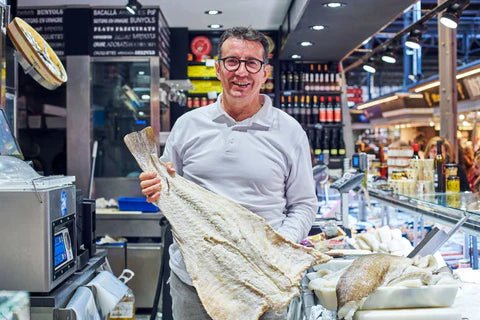
Since 1990 selecting the best from the sea at Mercat del Ninot, Barcelona. Refrigerated shipping 24-48h.
View Caspian Caviar →🛒 Products mentioned in this article
⭐ 4.9/5 · 24-48h refrigerated shipping · Since 1990 at Mercat del Ninot
Frequently asked questions about Osetra caviar
Is Osetra better than Beluga?
In terms of pure taste and organoleptic complexity, most professional chefs prefer Osetra for their own consumption. Beluga has a higher symbolic value and price — justified by its greater scarcity — but Osetra has the most interesting flavor profile for the discerning gastronome.
What does "Imperial" mean in Imperial Osetra?
The designation "Imperial" in Osetra caviar refers to selected roe from older females of verified quality within the producer's production. It is not a regulated European denomination, so its real value depends on the supplier's traceability and the documented selection process. In the case of Bacalalo's Iranian Imperial Osetra, the selection is certified by the IIFRO.
How many grams of Osetra do I need for a dinner for two?
For a pure tasting as a main dish or tapa, between 20 and 30g per person — 40-60g total for two. If the caviar is part of a larger menu as one of the elements, 15-20g per person is enough for each diner to have a real experience of the product.
Can Osetra be used for cooking?
Yes, provided that direct heat is not applied to the caviar. Osetra is always incorporated at the end of the cooking process, on the plated dish. Its intense flavor makes it particularly suitable for dishes where other ingredients have their own character — pasta with oil, egg, quality broth — as Osetra adds layers rather than being overshadowed.
What is the difference between Iranian Osetra and European Osetra?
Iranian Osetra comes from the original biotope of the Caspian sturgeon, with the most favorable natural conditions for the development of the species' aromatic profile. European aquaculture Osetra (Italy, France, Germany) are quality products but produced in continental water conditions that do not exactly replicate those of the Caspian. The result is a slightly different flavor profile — generally less pronounced nutty notes and less complex aftertaste — although the difference between a good European Osetra and a second-grade Iranian Osetra can be smaller than between an Imperial Iranian Osetra and a standard Iranian Osetra.
Discover our premium selection
Seafood products carefully selected since 1990 at Mercat del Ninot, Barcelona. Refrigerated shipping in 24-48h.