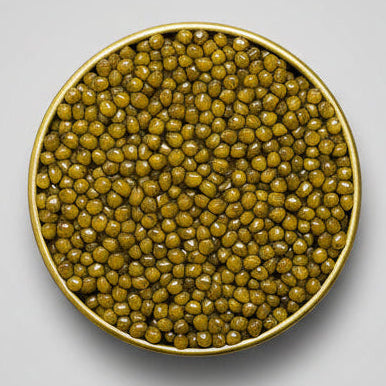
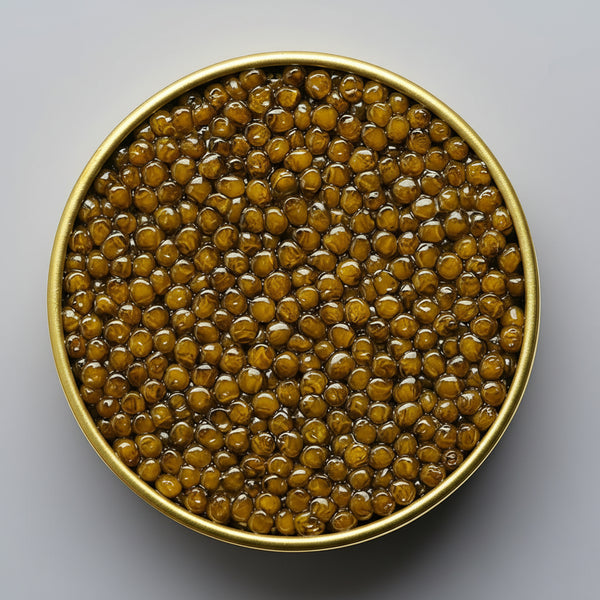
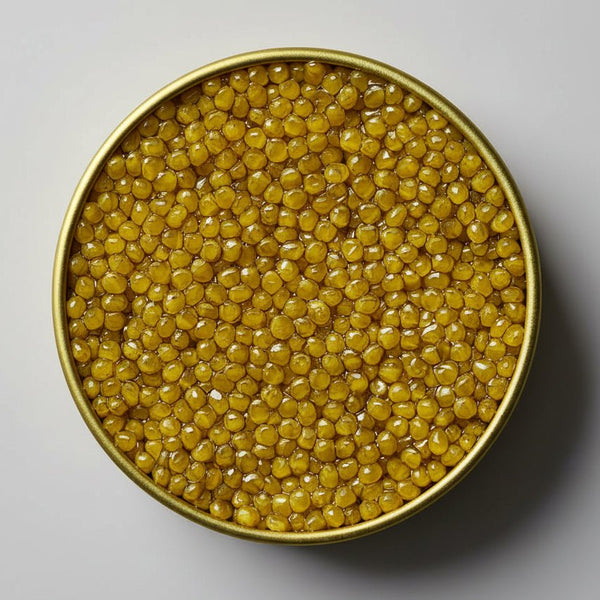
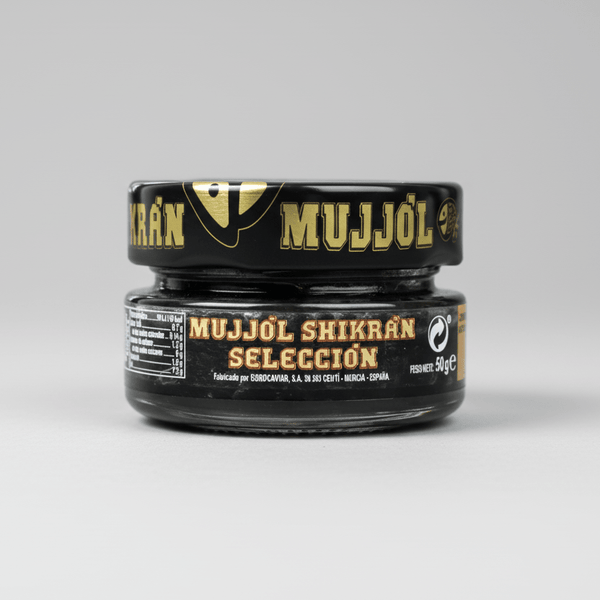
In summary: Mercadona and Lidl's "caviar" is a substitute: lumpfish roe dyed black, not sturgeon caviar (€2-4 vs real €60-150). Third option: real, undyed salmon roe (€8-20/100g).
Table of contents
What is actually sold as "caviar" at Mercadona and Lidl
At Mercadona, Lidl, Aldi, and other supermarkets, a product in a black can is commonly sold, which the brand usually calls "caviar substitute" or "Almare/Hacendado black caviar." It costs €2-4 per 50g can.
The actual content is lumpfish roe (Cyclopterus lumpus) — a common North Atlantic fish — dyed black with squid ink or food coloring E-151. Some brands use roe from similar cheap fish (capelin, herring, pollock).
It is a perfectly legal and edible product, but it is NOT caviar. European regulations (EC 1224/2009) reserve the name "caviar" exclusively for sturgeon roe. That is why serious brands label it as "substitute."
Real caviar vs. substitute: a comparison
Origin: real caviar = sturgeon roe (species like Osetra, Beluga, Sevruga). Substitute = lumpfish, capelin, or similar roe.
Flavor: real caviar has a complex profile (buttery, mineral, marine with nutty notes depending on the species). Substitute is salty and "fishy" without further layers.
Texture: real caviar has a delicate "pop" with a creamy interior. Substitute has a firmer "pop" and uniform consistency.
Price: real caviar €600-3000/kg. Substitute €30-80/kg.
Legality of name: real caviar legally uses the name "caviar." Substitute can only use "roe" or "caviar substitute."
Roe as a third option
If the substitute isn't convincing and real caviar is expensive, there's a third option: authentic roe from salmon, trout, or lumpfish (undyed).
Salmon roe: red/orange, natural, genuinely good flavor. €8-20/100g. Excellent for canapés, sushi, blinis.
Trout roe: small red-orange, delicate flavor. €10-18/100g. More subtle than salmon roe.
Lumpfish roe (undyed): natural pink/orange color. €5-12/100g. The honest version of the "substitute": it doesn't try to look like caviar.
Real (undyed) roe is an honest product. Mercadona's substitute is roe dyed to resemble caviar — it works but it's not the same.
When to choose each option
Mercadona/Lidl substitute (€2-4): for large-scale canapés for an informal celebration, decoration, or a very low budget. It works if you're honest about what it is.
Real undyed roe (€8-20/100g): for elegant tapas and appetizers. Better flavor than substitute, without pretense.
Real caviar (€60-150/50g): for special occasions, gourmet gifts, an experience. Justifies the price if the occasion is right.
Real Caspian Caviar (with CITES)
Osetra and Beluga caviar imported from the Caspian with legal CITES code. The difference between substitute and real caviar lies in the origin and process.
Frequently asked questions
Is Mercadona's caviar real caviar?
What about Lidl's?
How much does Mercadona's "caviar" cost vs. real caviar?
Does Mercadona's substitute taste good?
Is there an intermediate alternative?
Is it worth buying real caviar for occasions?
How to distinguish real caviar from substitute in a tin?
To conclude
Mercadona's "caviar" is not caviar — and the packaging itself states this in small print on the label. If you want real caviar, look for the CITES code (a stamp of legality). If you want something good without spending a lot, real undyed salmon roe is the honest option: a real product at an accessible price.
Premium salmon roe
Authentic Norwegian salmon roe, genuinely good flavor. An honest alternative to substitute. 10x more affordable than real caviar.