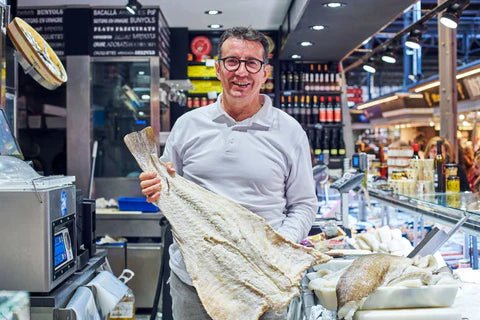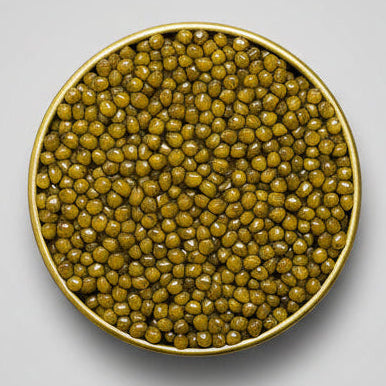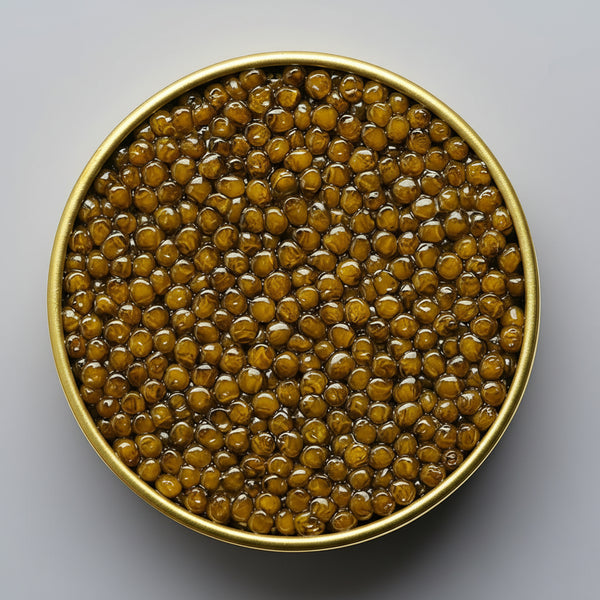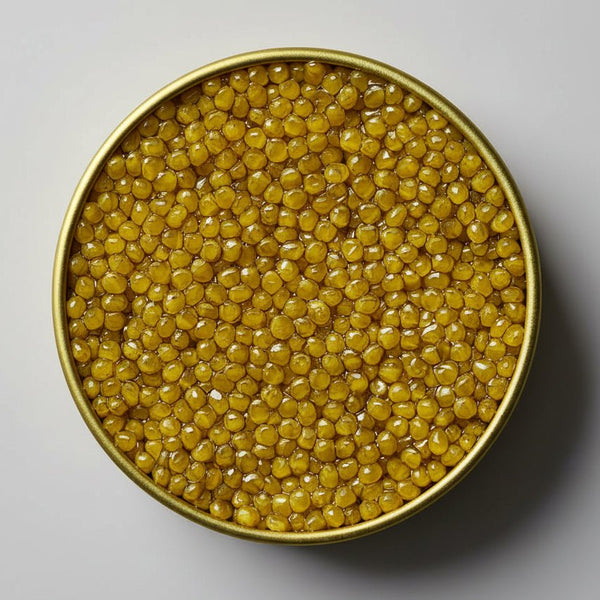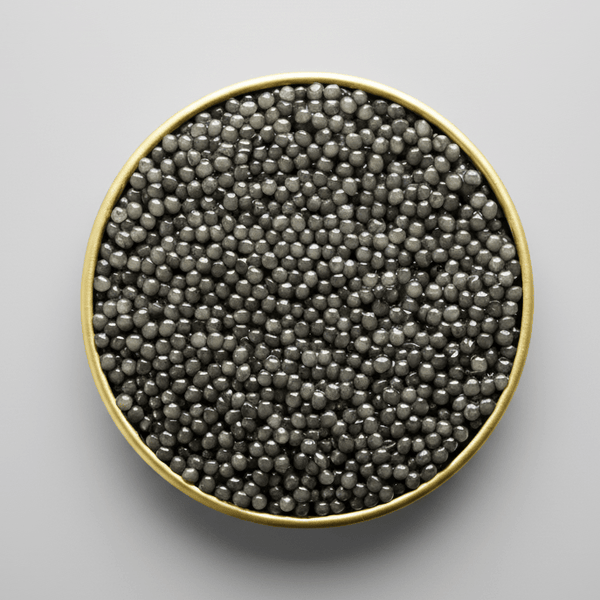


Summary: Iran has produced the world's most prized caviar for over a millennium thanks to the unique conditions of the southern Caspian Sea coast. This guide covers the history, biology, current SHILAT regulation, prices, and—most importantly—how to verify that the Iranian caviar you buy is authentic. Verifiable data from Mercat del Ninot.
History of Iranian Caviar: Over a Thousand Years of Tradition
Caviar is not a Russian invention, as popular culture suggests. Persians consumed Caspian sturgeon roe centuries before Russia existed as a state. The term "caviar" likely derives from the Persian "khag-viar" (roe cake) or the Turkish "havyar." The earliest written records of sturgeon roe consumption in Persia date back to the 9th century.
During the Safavid Empire (1501-1736), Caspian caviar was a product of the Persian imperial court—a luxury reserved for the aristocracy and used as a diplomatic gift. Persian merchants exported it to Europe via the Silk Road, where it arrived as an exotic rarity at astronomical prices.
The Russification of caviar in the Western imagination occurred in the 19th century, when the Russian Empire controlled the northern Caspian coast and developed a massive fishing industry. But the southern coast—the Iranian one—was always considered by experts to produce the highest quality caviar, thanks to the water conditions and the migratory routes of the sturgeon.
After the 1979 Islamic Revolution, Iran nationalized the caviar industry under SHILAT. Paradoxically, this nationalization protected Iranian sturgeon populations while in the rest of the Caspian (Russia, Kazakhstan, Azerbaijan, Turkmenistan) overfishing and illegal fishing decimated populations during the chaotic 1990s.
The Caspian Sea: Why it Produces the World's Best Caviar
The Caspian Sea is not a sea in the strict sense—it is the world's largest lake (371,000 km², larger than Germany). And its conditions are absolutely unique for caviar production.
The Caspian's salinity is approximately 12-13 parts per thousand—one-third that of the ocean. This intermediate salinity creates an environment where sturgeon do not need to expend as much energy on osmoregulation, allowing them to dedicate more resources to producing larger roe with higher fat content.
The temperature of the southern (Iranian) coast is warmer and more stable than the northern coast. The thermal range of 8-25°C throughout the year allows for more regular sturgeon growth and a more predictable reproductive cycle. Sturgeon from the northern coast face extreme temperatures (from -2°C in winter to 30°C in summer in shallow waters) which generate more metabolic stress.
The rivers that flow into the Iranian southern coast—mainly the Sefid-Rud, Tajan, and Gorgan-Rud—bring nutrients and sediments that feed a trophic chain rich in mollusks, crustaceans, and larvae, the natural diet of sturgeon. The quality of natural feeding directly translates into the complexity of the caviar's flavor.
The Caspian currents create a migratory pattern in which sturgeon move towards the southern coast during spawning seasons. The best specimens—the largest, most mature—tend to concentrate in Iranian waters during periods of maximum reproductive quality.
These combined factors cannot be artificially replicated. Aquaculture can control temperature and feeding, but it cannot reproduce the complete ecosystem of the southern Caspian. It's the difference between a Burgundy wine and a Pinot Noir grown elsewhere: the same grape, but an unrepeatable terroir.

SHILAT: How Iran Regulates its Caviar
SHILAT (Iranian Fisheries Organization) is the state body that manages all caviar production in Iran. Its role is crucial because it is simultaneously a regulator, producer, and protector of sturgeon populations.
SHILAT's functions include:
- Catch quotas: it annually establishes the maximum number of sturgeon that can be caught, based on population censuses. Quotas have been drastically reduced in the last two decades—from thousands of tons to hundreds, reflecting the decline in wild populations.
- Restocking program: Iran maintains the world's largest sturgeon restocking program. Every year, millions of fry are released into the Caspian to compensate for catches and natural mortality. It is a serious conservation effort, not a cosmetic operation.
- Certification and traceability: all legal Iranian caviar carries a CITES label managed by SHILAT that identifies the species, batch, date, and catch area. This traceability is, in practice, more rigorous than that of many European aquaculture producers.
- Quality control: the processing of Iranian caviar follows standardized protocols supervised by SHILAT. Processing facilities are on the Caspian coast, and the time from catch to salting rarely exceeds 4-6 hours—a freshness standard difficult to beat.
SHILAT is not perfect—Iranian bureaucracy and international sanctions complicate exports—but it has achieved something remarkable: maintaining relatively stable sturgeon populations while in the rest of the Caspian, populations have collapsed.
Caspian Caviar — Premium Selection
Iranian Beluga 000, Oscietra, Sevruga. Refrigerated shipping 24-48h to anywhere on the Peninsula. Since 1990 at Mercat del Ninot.
View Caviar →Iranian Caspian Sturgeon Species
In the Iranian waters of the Caspian, the three classic caviar sturgeon species inhabit:
Beluga (Huso huso): the largest and rarest. Iranian Beluga are considered the highest quality in the world due to the combination of natural feeding, water salinity, and maturation time (20+ years for the best specimens). Iranian Beluga caviar is the most expensive product in the sector. To learn more, see our complete Beluga guide.
Oscietra (Acipenser gueldenstaedtii): the most caught species in Iranian waters. Iranian Oscietra has a flavor profile with more mineral and iodized notes than aquaculture, probably due to the natural bottom diet of the Caspian. It is the workhorse of premium Iranian caviar. Details in our Oscietra guide.
Sevruga (Acipenser stellatus): the most common species but the one most affected by overfishing. Iranian Sevruga has an intense flavor, more potent than any other origin. It is a favorite of restaurateurs for culinary preparations where caviar must stand out over other ingredients.
Additionally, the Acipenser persicus (Persian sturgeon), endemic to the southern Caspian, is found in Iranian waters. It produces caviar similar to Oscietra but with its own nuances—somewhat milder and with subtle herbaceous notes. It is the least known internationally but highly valued in the Iranian domestic market.
From Sturgeon to Tin: How Iranian Caviar is Produced
Caviar processing is an art that Iranians have perfected over centuries. The process seems simple, but each step requires a precision that makes the difference between exceptional and mediocre caviar.
Catch and slaughter: the sturgeon is caught with seine nets or longlines. Slaughter is performed immediately to prevent animal stress from affecting roe quality (stress hormones degrade the membrane's texture). The time from catch to processing should not exceed 2-4 hours.
Extraction: the roe is extracted by an abdominal incision and separated from connective tissue (the ovarian membrane) by gentle sieving over calibrated meshes. This operation requires extreme delicacy—a broken grain contaminates the batch with intracellular fluid that accelerates degradation.
Salting (Malossol): the clean roe is mixed with high-purity fine salt in a proportion of 2.5-3.5% of the weight. The term Malossol (little salt) precisely defines this technique. The salt is absorbed for 5-8 minutes, during which a master caviar maker constantly evaluates the texture, shine, and firmness of the grains. This step is the most critical: 30 seconds more or less changes the result.
Draining and packaging: the salted caviar is drained on fine meshes to remove excess liquid and immediately packaged in characteristic tins (originally blue for Beluga, yellow for Oscietra, red for Sevruga). The tins are vacuum-sealed and refrigerated between -2°C and +2°C.
The entire process, from catch to tin sealing, should be completed in less than 6-8 hours. The best Iranian facilities do it in 4. Each additional hour degrades quality.

Wild Iranian Caviar vs. Iranian Aquaculture
A nuance that many buyers are unaware of: not all caviar labeled "Iranian" is wild. Iran has developed a significant sturgeon aquaculture industry, with farms in the Caspian provinces (Guilan, Mazandaran, Golestan) that produce aquaculture caviar under SHILAT supervision.
Wild Iranian caviar (CITES quota) is increasingly scarce. Quotas have been progressively reduced, and prices for authentic wild caviar have risen accordingly. A wild Iranian Beluga can exceed €10,000/kg—and available quantities are minimal.
Iranian aquaculture caviar benefits from the climatic conditions of the southern Caspian (farms use water from the Caspian itself or its tributary rivers) but does not have the natural feeding of wild caviar. The quality is high—superior to much European aquaculture—but not identical to wild. The price (€3,000-€6,000/kg for Beluga, €1,500-€2,500/kg for Oscietra) reflects this intermediate positioning.
When buying "Iranian caviar," always ask: wild or aquaculture? Both are legitimate and quality products, but the price difference between the two is significant and must be justified.
How to Verify that Iranian Caviar is Authentic
Fraud in Iranian caviar is a real problem. Demand vastly exceeds legal supply, creating incentives for substitution (selling caviar from another origin as Iranian) and counterfeiting (creating false CITES labels).
Authenticity indicators:
- Valid CITES label: all legal caviar carries a coded label with a standard format. For Iranian caviar, the country code is "IR." The label must include species (three-letter code), year of production, batch, and farm or catch area. If there is no CITES label, it is not legal.
- Authorized importer: verify that the seller works with an importer who has a CITES import license. In Spain, the CITES authority (SOIVRE) maintains a registry of authorized importers.
- Consistent price: if an Iranian Beluga sells for less than €4,000/kg, something is wrong. If an Iranian Oscietra costs the same as a European Baeri, be suspicious.
- Seller traceability: a serious seller can tell you who their Iranian supplier is, in which province the caviar is produced, and, ideally, the batch number. If they cannot answer these questions, the origin is dubious.
At Bacalalo.com, we work with verified importers and can provide full traceability for every batch of Iranian caviar we sell. It's not a sales pitch—it's an obligation.

Iranian Caviar Prices in 2026
- Wild Iranian Beluga (quota): €7,000-€10,000+/kg—extremely scarce
- Iranian Aquaculture Beluga: €4,500-€7,000/kg
- Premium Iranian Oscietra: €2,000-€3,500/kg
- Standard Iranian Oscietra: €1,500-€2,000/kg
- Iranian Sevruga: €1,200-€2,500/kg
For price context of all varieties, see our complete 2026 price guide.
Caspian Caviar — Premium Selection
Iranian Beluga 000, Oscietra, Sevruga. Refrigerated shipping 24-48h to anywhere on the Peninsula. Since 1990 at Mercat del Ninot.
View Caviar →🛒 Related Products from Bacalalo
⭐ 4.9/5 · 24-48h cold shipping · Since 1990 at Mercat del Ninot
Frequently Asked Questions
Is it legal to buy Iranian caviar in Spain?
Yes, provided it has CITES certification and has been imported by an authorized importer. International sanctions on Iran do not affect trade in food products such as caviar, as long as phytosanitary and traceability requirements are met.
Why is Iranian caviar more expensive?
Due to a combination of scarcity (limited quotas), superior quality (unique conditions of the southern Caspian), higher production costs (state oversight, conservation programs), and logistical export difficulties. The premium over European caviar ranges from 30% to 100%.
Does fake Iranian caviar exist?
Yes, it's a documented problem. It is estimated that a significant portion of caviar sold as “Iranian” in Europe actually comes from re-labeled Chinese or European aquaculture. The only protection is to buy from sellers who can demonstrate full traceability with verifiable CITES documentation.
What is the difference between northern and southern Caspian caviar?
The southern coast (Iran) has warmer water, more stable salinity, and a richer food web. Southern Caspian sturgeon tend to produce roe with higher fat content and a more complex flavor profile. The northern coast (Russia, Kazakhstan) historically produced higher volume but overfishing has decimated populations.
Is Caspian caviar better than farmed caviar?
Wild Caspian caviar has a more complex flavor profile due to natural feeding and ecosystem conditions. But a premium farmed caviar (Italian, French, or Spanish) is superior to poorly processed wild caviar. Origin is an important factor but not the only one — processing and the cold chain are equally determining.
Discover authentic Iranian caviar in our Caspian caviar collection. Verified traceability, refrigerated shipping, from Mercat del Ninot in Barcelona. Also consult the caviar types comparison and the guide to Spanish caviar.
Discover our premium selection
Seafood products carefully selected since 1990 at Mercat del Ninot, Barcelona. Refrigerated shipping in 24-48h.