Citrus Caviar: What It Is, How to Make It, and Recipes with Citrus Spheres
Citrus caviar is one of those terms that appears on Michelin-starred restaurant menus and puzzles most diners. It's not caviar in the strict sense. It doesn't come from sturgeon. It doesn't cost 300 euros per 100 grams. And yet, in the last five years, it has colonized the kitchens of Spain's most demanding chefs as a perfect complement to high-level dishes.
In this article, we explain exactly what citrus caviar is, how to make it at home with agar-agar, how it differs from real caviar, and, above all, how to combine it with top-tier gourmet products to create memorable dishes. Because if there's one thing we've learned at Bacalalo since 1990, it's that great ingredients deserve equally great companions.
What is Citrus Caviar: Spherical Emulsification Explained Simply
Updated March 2026. Based on our 30+ years of experience at Mercat del Ninot, this is what we recommend.
The term "citrus caviar" refers to two distinct things, and it's important not to confuse them.
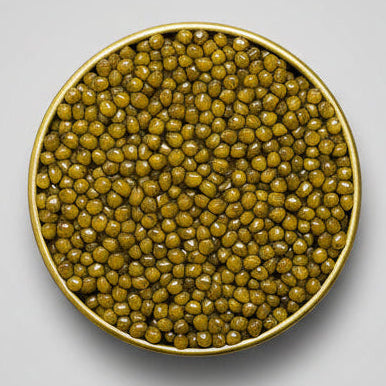
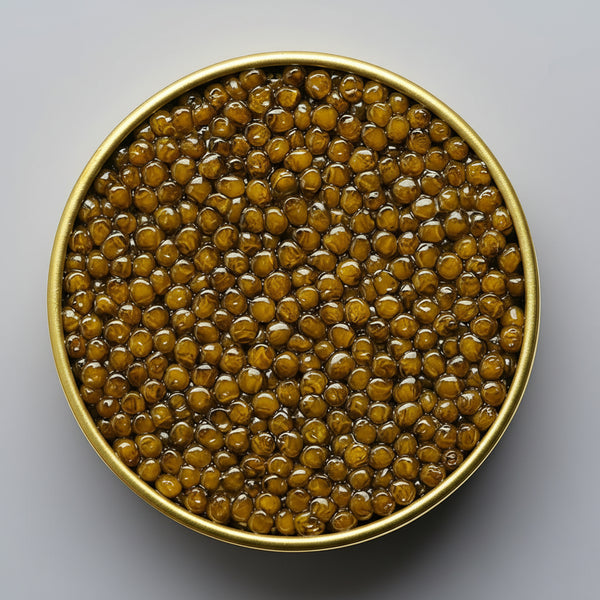
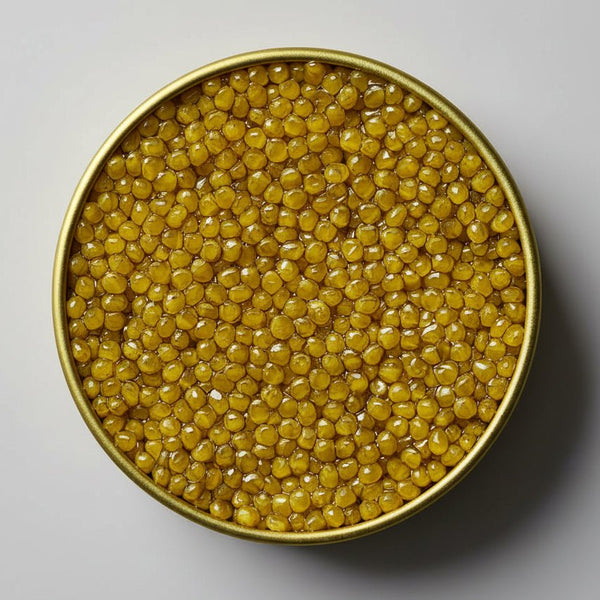
On the one hand, there is natural citrus caviar: the fruit of Microcitrus australasica, popularly known as finger lime. This native Australian shrub produces an elongated fruit whose pulp is made up of perfectly spherical vesicles that burst in the mouth, releasing an intense citrus aroma. Each fruit contains between 3,000 and 5,000 of these natural micro-spheres. Visually, it is identical to caviar: same size, same arrangement, same translucent appearance. Flavor-wise, it's pure concentrated citrus.
On the other hand, the term is also used to refer to citrus spheres made using molecular gastronomy techniques, specifically spherification. In this case, these are drops of lemon, orange, lime, grapefruit, or any other citrus juice that have been solidified on the outside through a controlled chemical reaction, creating a gelled capsule that retains the liquid inside and bursts when bitten.
Both versions share the visual and tactile effect. The difference lies in their origin: one is an exotic fruit from specialized cultivation, the other is a culinary technique reproducible in any well-equipped professional or home kitchen.
In Spain, when chefs talk about citrus caviar in their creations, they generally refer either to imported finger lime (available in limited season, at a high price) or to spheres made with agar-agar, which is the technique we will explain in detail in this article.
Citrus Caviar vs. Real Caviar: Fundamental Differences
Before getting into the recipe, it is necessary to clarify the differences between citrus caviar and real sturgeon caviar. Confusion can lead to mistaken expectations, and in gastronomy, poorly managed expectations ruin any experience.
Origin and nature. Real caviar is sturgeon roe, from a fish that can live up to 100 years and whose wild population has been on the verge of extinction precisely due to the demand for its roe. Citrus caviar, whether finger lime or molecular spheres, has no connection to the marine animal world. They are completely different categories.
Flavor profile. Real caviar has a complexity that no citrus sphere can replicate: marine notes, deep umami, hints of hazelnut and butter in premium varieties like Beluga or Iranian Osetra, and an aftertaste that can last several minutes. Citrus caviar has a clean, fresh, fruity, and acidic flavor. It is one-dimensional compared to real caviar, although that one-dimensionality is precisely its virtue: it provides an acidic contrast without competing with the main ingredient.
Price and accessibility. Premium quality real caviar costs between 80 and 400 euros per 50 grams depending on the variety. Natural citrus caviar (finger lime) costs around 40-80 euros per kilo in season. Spheres made at home with agar-agar cost pennies per serving. They are not comparable in price or exclusivity.
Function in the dish. Real caviar is the absolute protagonist. It is served alone, on toast with sour cream, or in minimal amounts on a neutral ingredient that allows it to shine. Citrus caviar is a complement: it adds texture, color, and acidity, but should never be the main element of the dish.
Gastronomic message. Serving real caviar implies a statement of intent about the quality of the ingredients. Serving citrus caviar implies a statement of intent about technical mastery and culinary creativity. These are distinct codes within the language of haute cuisine.
At Bacalalo, we work with first-quality real caviar from Iran, where Caspian Sea sturgeon has been domesticated and raised in controlled conditions for decades. If you want to discover the difference between artisanal citrus caviar and Imperial Iranian Osetra Caviar, the comparison is revealing: both are round and burst in the mouth, but the depth of flavor of the latter is out of this world.
How to Make Citrus Caviar at Home with Agar-Agar: Step-by-Step Recipe
The method we describe below is spherification with agar-agar in cold oil. It is technically simpler than spherification with alginate and calcium, and produces consistent results with home equipment. The result is spheres between 3 and 6 millimeters in diameter, firm on the outside and liquid on the inside, visually identical to real caviar.
Ingredients (for approximately 200 spheres)
- 200 ml of filtered citrus juice (lemon, lime, orange, grapefruit, or combination)
- 2 grams of agar-agar powder (1% of the liquid's weight)
- 400 ml of very cold sunflower or mild olive oil (minimum 2 hours in the refrigerator)
- Kitchen syringe or dropper pipette
- Fine strainer
- Paper towels
Process
Step 1: Prepare the oil. Pour the oil into a tall, narrow glass. Place in the freezer for 30 minutes or in the refrigerator for at least 2 hours. The oil should be very cold but not frozen. The temperature difference between the hot liquid and the cold oil is what solidifies the outside of each drop before it reaches the bottom of the container.
Step 2: Dissolve the agar-agar. Mix the agar-agar with the citrus juice in a small saucepan. Stir cold until there are no visible lumps. Heat over medium heat, stirring constantly, until it comes to a boil. Maintain the boil for 2 minutes: this step is critical because agar-agar needs to reach 85°C to activate properly. If it doesn't boil long enough, the spheres will not gel properly.
Step 3: Drip into the oil. While the mixture is still hot (do not let it cool or it will start to gel in the saucepan), load the syringe. Drop same-sized drops onto the cold oil from a height of 3-5 centimeters. The drops will solidify instantly upon contact with the cold oil, forming perfect spheres that fall to the bottom. The regularity of the size depends on constant pressure when squeezing the syringe: practice with the first 10-15 drops until you find the rhythm.
Step 4: Recover the spheres. Once the process is complete, strain the oil and recover the spheres. Rinse with cold water to remove residual oil. Dry on paper towels.
Step 5: Store and serve. The spheres can be stored in juice from the same citrus for 24-48 hours in the refrigerator. They do not last well longer: they tend to harden completely and lose their internal liquid texture. Serve immediately or on the day of preparation for the best result.
Variations
The same technique works with any liquid that agar-agar can handle: vinegars, tea infusions, reduced broths, white wines. Lemon caviar is the most versatile for savory dishes. Yuzu is the most sophisticated. Blood orange provides a spectacular reddish color on white dishes like oysters or cod tartare.
5 Gourmet Combinations with Citrus Caviar
Citrus spheres work best when they contrast with fatty, creamy, or intensely flavored ingredients. The acid balances the fat, the firm texture contrasts with the creaminess, the vivid color enlivens any presentation. These are the five combinations that work best in practice.
1. Citrus Caviar with Smoked Salmon and Sour Cream
The classic combination. Arrange thin slices of smoked salmon on a rye bread toast. Add a teaspoon of sour cream or crème fraîche. Top with 15-20 spheres of lemon or lime caviar. The acid of the spheres cuts through the fat of the salmon and cream, while the saltiness of the smoked fish balances the sweetness of the cream. Elegant presentation with minimal technical effort.
2. Citrus Caviar with Fresh Oysters
Oysters already have their own briny marine liquid. Add 8-10 spheres of lime or yuzu caviar directly onto the oyster in its shell. Do not add additional squeezed lemon: the spheres provide sufficient acidity in a controlled and aesthetically superior way. This is one of the uses where citrus caviar surpasses conventional squeezed lemon: the acidity is released upon biting, not before, keeping the oyster fresh without "cooking" its texture.
Ver selección