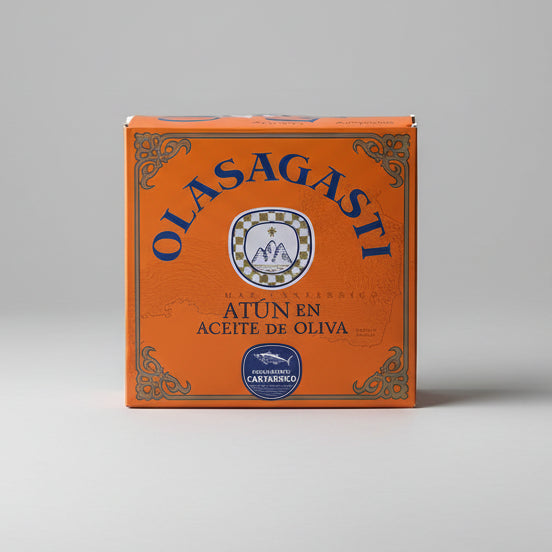


Bonito del Norte: The Definitive Guide — Season, Preserves, and How to Choose the Best
Bonito del Norte (Thunnus alalunga), also known as Albacore tuna, is one of the star products of the Spanish pantry. Every summer, the Cantabrian fishing season triggers a chain that ends in cans and glass jars that rival any gourmet product in the world for quality. But not everything labeled "Bonito del Norte" truly is, and the difference between a mediocre and an exceptional preserve depends on verifiable factors: species, fishing method, type of oil, cut format, and origin certifications. This guide compiles concrete data — not slogans — so you can choose wisely.
What is Bonito del Norte?
Updated March 2026. What we tell you here comes from serving thousands of customers in Barcelona.
Bonito del Norte is the commercial name in Spain for albacore tuna (Thunnus alalunga), a tuna species that inhabits the temperate waters of the North Atlantic and the Cantabrian Sea. It's not just any tuna: it's a specific species with distinct organoleptic characteristics that place it in the high-end range of preserved fish.
The most common confusion is calling "bonito" skipjack tuna (Thunnus albacares), which is an entirely different species. Spanish legislation is clear: only Thunnus alalunga can be labeled as "Bonito del Norte." Everything else — including skipjack tuna (Katsuwonus pelamis) that fills supermarket shelves — is legally another category.
The differences are not only taxonomic. Bonito del Norte has white flesh, a softer and juicier texture, a higher fat content than skipjack tuna, and a more delicate flavor. It's a fish that flakes apart, not dry fibers. These properties explain why its price is 2 to 4 times higher than conventional skipjack tuna.
Characteristics of Thunnus alalunga
- Average size: 60-100 cm, 10-30 kg (smaller than bluefin tuna)
- Long pectoral fins: its most distinctive visual feature, which gives it the English name "longfin tuna"
- White meat: unlike the pink meat of skipjack tuna or the red meat of bluefin tuna
- Fat content: 6-8% in the loin, up to 15% in the belly (ventresca) — which gives it that succulent texture
- Habitat: temperate waters of the North Atlantic (Bay of Biscay, Great Sole, Azores)
Bonito del Norte has become a product of gastronomic identity in northern Spain. Canneries in the Basque Country, Cantabria, Asturias, and Galicia have worked with this species for over a century. If you want to understand the complete ecosystem of quality oily fish, our oily fish guide complements this reading.
Bonito del Norte Season
The Bonito del Norte season in the Cantabrian Sea — known as "la costera" — runs between June and October, with peak catches between July and September. It is a short period, and this seasonality is precisely what defines the product's quality: the bonito is caught when it is at its fattiest, after having traveled thousands of kilometers feeding in rich North Atlantic waters.
Detailed Calendar of the Fishing Season
- May-June: Bonito schools begin to approach the Cantabrian Sea. First catches, still lean specimens. Some canneries start working with this early bonito.
- July-August: Peak of the season. The bonito has reached its maximum fat content. Large canneries process most of their annual production during these weeks. The quality of bonito from July-August is generally the highest.
- September-October: End of the season. The bonito begins to migrate to warmer waters. Catches decrease but there is still good quality product.
- November-May: Off-season in the Cantabrian Sea. Canneries work with frozen stock or with bonito from other origins (Azores, South Atlantic).
The fishing method is a quality factor as important as seasonality. The highest quality Bonito del Norte is caught with hook and line (trolling) or live bait, methods that ensure the fish arrives in perfect condition, without crushing or excessive stress. Catches with purse seines or nets — more efficient in volume — produce pieces of lower individual quality.
The Protected Geographical Indication (PGI) "Bonito del Norte", managed by the Regulatory Council based in the Basque Country, certifies Cantabrian origin, selective fishing methods, and artisanal processing. It is the most reliable certification for the consumer.
Bonito del Norte vs. Skipjack Tuna: Real Differences
This is the comparison that generates the most searches and where there is the most confusion. The data is clear:
| Characteristic | Bonito del Norte | Skipjack Tuna |
|---|---|---|
| Species | Thunnus alalunga | Thunnus albacares |
| Meat Color | White | Pinkish / beige |
| Texture | Soft, juicy, flakes apart | Firm, fibrous, more compact |
| Fat Content | 6-8% (loin), up to 15% (belly) | 1-3% |
| Flavor | Delicate, mild, slightly sweet | More neutral, less aromatic |
| Primary Fishing Area | Cantabrian Sea (June-October) | Tropical Oceans (year-round) |
| Fishing Method | Hook and line, trolling, live bait | Purse seine, industrial longline |
| Price per can (120g) | €4-10 | €1.50-3.50 |
| Protein (per 100g) | 24-26 g | 23-25 g |
| Omega-3 (per 100g) | 1.5-2.5 g | 0.3-0.8 g |
| Availability | Seasonal (limited stock) | Year-round (abundant) |
| PGI / Certifications | PGI Bonito del Norte, regulated labeling | No specific PGI |
The price difference is not capricious: it reflects the lower availability, the seasonality of fishing, the more selective methods, and the superior organoleptic quality of Bonito del Norte. When a can of "tuna" costs €1.20, you're not buying Bonito del Norte — and if the label says so at that price, be suspicious.
To delve deeper into the world of canned tuna and its varieties, you can consult our article on canned tuna: buying guide and the guide on tuna belly (ventresca), the most prized part of the fish.
Types of Bonito del Norte Preserves
The preservation format directly affects the flavor, texture, and culinary use of bonito. These are the three main types:
Bonito del Norte in Olive Oil
The king format. Olive oil (virgin or extra virgin in premium ranges) envelops the bonito, maintains its juiciness, and provides a complementary flavor that rounds out the whole. It is the most versatile format: it works alone, in salads, in sandwiches, or as an ingredient in elaborate dishes.
Within this category, there are important differences: bonito in extra virgin olive oil has a more complex and fruity flavor profile than that preserved in refined olive oil. Premium canneries use first-press EVOO, and that is noticeable in the final product.
Bonito del Norte in Escabeche (Pickled)
Escabeche — a mixture of vinegar, oil, paprika, bay leaf, and spices — is a traditional preparation from northern Spain that gives a tart and spicy flavor to bonito. It's a format with more personality than olive oil, ideal for tapas, pintxos, and salads with character. Escabeche tends to slightly firm the texture of the bonito, making it less succulent but more structured.
Artisanal canneries produce their own escabeches with generational recipes. It is a format where the differences between brands are more pronounced than in olive oil.
Bonito del Norte "Al Natural" (in its own juice)
Preserved in its own juice (water and salt), bonito "al natural" retains the purest flavor of the fish without interference from the preserving medium. It is the preferred format for controlled-fat diets and for those who want the clean taste of bonito without additives.
It has a disadvantage: the texture is slightly drier than in oil. But if the base bonito is of high quality, the natural result can be exceptional. It's the format that best reveals the real quality of the raw material — no oil can disguise a mediocre bonito.
Special Formats
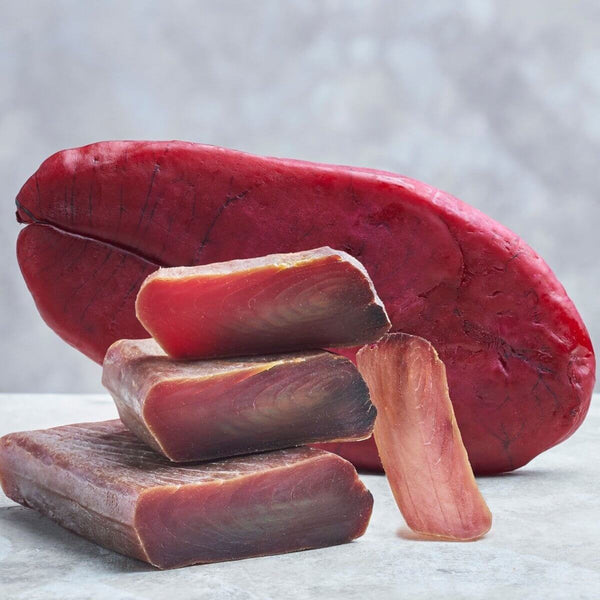
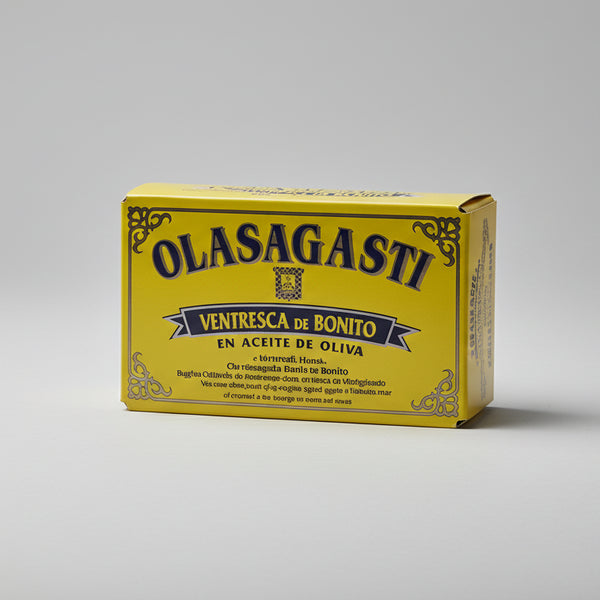
- Bonito belly (ventresca): the ventral part, the fattiest and most prized. Melting texture, intense flavor. The premium cut par excellence.
- Bonito loins: large, whole pieces, taken from the loin. The standard format for high quality.
- Bonito chunks: smaller, irregular pieces. Same fish, less presentation, lower price. Ideal for cooking.
- Bonito in glass jars: a format that allows you to see the product before opening. Associated with artisanal canneries and premium range.
How to Choose Good Canned Bonito
The market for bonito preserves offers products ranging from €2 to more than €15 per can. The difference is not always obvious on the shelf, but there are reliable indicators that any consumer can verify on the label.
1. Check the Species on the Label
The label should indicate Thunnus alalunga or "Bonito del Norte." If it simply says "tuna," "skipjack tuna," or Thunnus albacares, it is not Bonito del Norte. This is a legal requirement: the designation "Bonito del Norte" is protected by Spanish and European regulations.
2. Look for the PGI Seal
The PGI "Bonito del Norte" certifies that the product meets requirements of origin (Cantabrian Sea), fishing method (selective), and processing (artisanal or semi-artisanal). Not all quality preserves have PGI — some excellent canneries have not joined the Regulatory Council — but if it has it, it is a solid guarantee.
3. Differentiate Between Loins, Chunks, and Flakes
- Loins (or "fillets"): large, whole pieces of the bonito loin. The premium format.
- Chunks: smaller, generally from the same parts but irregularly cut. Good product at a more accessible price.
- Flakes (or "crumbs"): remnants from processing. Legitimate product but of a lower category. Ideal for fillings and empanadas, not for direct consumption.
4. Type of Oil
There are real differences between extra virgin olive oil, olive oil (a blend of refined and virgin), and sunflower oil. EVOO adds flavor and integrates better with the bonito. Sunflower oil is more neutral but also cheaper — and its presence usually indicates a lower-end product.
5. Fishing Method
Look for indications such as "hook-caught," "trolling," or "live bait" on the label. Selective methods produce higher quality fish. If the label does not mention the fishing method, it is likely purse seine or industrial methods.
6. Origin and Cannery
Canneries in the Basque Country (Bermeo, Ondárroa, Getaria), Cantabria (Santoña, Laredo), and Asturias have a centuries-old tradition with Bonito del Norte. This does not mean there are no good products from other areas, but the concentration of knowledge and tradition on the Cantabrian coast is a real factor.
7. Canning Date vs. Expiration Date
Bonito preserves improve with age — up to a certain point. A preserve aged 1-3 years usually has a more integrated flavor than a freshly canned one. Look for the canning date (not just the expiration date) and don't be afraid of preserves that are a few years old: they are designed for that.
The Best Bonito del Norte Brands in Spain
Spain boasts the greatest tradition of Bonito del Norte canning in the world. These are the reference brands, organized by profile:
Reference Artisanal Canneries
- Conservas Ortiz (Ondárroa, Vizcaya): the most internationally recognized brand. Bonito in olive oil and belly (ventresca) of the highest level. Its glass jar is iconic. Medium-high price with good value for money in the premium segment.
- Basque artisanal canneries (Bermeo, Vizcaya): family canneries with over 100 years of history. Their Bonito del Norte in extra virgin olive oil is one of the best in Spain. Glass jar format is especially recommended.
- Conservas Arroyabe (Ondárroa, Vizcaya): specialist in bonito and anchovies. Very consistent product, excellent belly (ventresca). Good distribution in gourmet stores.
- Premium artisanal canneries (Santoña, Cantabria): known for anchovies, but their Bonito del Norte in glass jars is exceptional. Limited production and high price, but justified.
- Conservas Güenaga (Bermeo, Vizcaya): boutique cannery with very careful artisanal production. Bonito loins of superior caliber.
Major Retail Brands with Good Quality
- Campos: "Reserva de Familia" range with high-quality Bonito del Norte at a competitive price.
- Isabel: their Bonito del Norte line (not to be confused with basic skipjack tuna) offers good value for money.
- Albo: a century-old Galician cannery with solid and consistent white tuna.
What to avoid
Be wary of cans labeled "bonito" without specifying "del norte" (northern) or the species Thunnus alalunga. Some brands use ambiguous names ("bonito in oil") that do not guarantee it is real northern white tuna. If the price per 120g can is below €3, there are reasonable grounds for doubt.
Nutritional value of northern white tuna
Northern white tuna is nutritionally one of the most complete oily fish. These are the average values per 100g depending on the type of preserve:
| Nutrient | In olive oil | In water | In escabeche |
|---|---|---|---|
| Energy | 225 kcal | 128 kcal | 175 kcal |
| Protein | 24 g | 26 g | 22 g |
| Total fat | 14 g | 2.5 g | 9 g |
| — of which saturated | 2.5 g | 0.7 g | 1.8 g |
| Omega-3 (EPA+DHA) | 1.8 g | 1.5 g | 1.2 g |
| Carbohydrates | 0 g | 0 g | 2 g |
| Sodium | 380 mg | 320 mg | 450 mg |
| Vitamin D | 4.8 µg | 4.2 µg | 3.5 µg |
| Vitamin B12 | 3.2 µg | 3.5 µg | 2.8 µg |
| Selenium | 52 µg | 55 µg | 48 µg |
| Phosphorus | 210 mg | 230 mg | 195 mg |
Highlighted nutritional benefits
- Omega-3: northern white tuna is one of the richest sources of EPA and DHA among canned fish. A 120g can covers the daily omega-3 needs recommended by the WHO.
- High biological value protein: 24-26 g per 100 g, with a complete essential amino acid profile. Comparable to meat, without the associated saturated fats.
- Selenium: an essential antioxidant. 100 g of tuna provides almost 100% of the recommended daily intake.
- Vitamin B12: essential for the nervous system. One serving covers more than 100% of the RDI.
- Vitamin D: especially relevant in latitudes with low sun exposure. White tuna is one of the few significant dietary sources.
- Low in mercury: being a medium-sized tuna (smaller than bluefin tuna), northern white tuna accumulates less mercury. AESAN considers it safe for regular consumption, including for pregnant women (in moderation).
The natural version is the lightest option (128 kcal/100g) for low-calorie diets or athletes. The extra virgin olive oil version provides additional monounsaturated fats from the oil itself, which complement the fish's lipid profile.