


![Anchoas en BonPreu: Marcas, Precios y Comparativa con Gourmet [2026] - Bacalalo](http://bacalalo.com/cdn/shop/articles/anchoas-en-bonpreu-marcas-precios-y-comparativa-con-gourmet-2026-6808253.jpg?v=1772955402&width=480)
Summary: BonPreu offers a decent selection of canned anchovies, including both their own brands and some from recognized manufacturers. But how do they compare to gourmet Cantabrian anchovies selected by specialists? We analyze brands, sizes, unit prices, and the sensory experience of each option to help you choose wisely.
Table of Contents
Anchovies at BonPreu: what you'll find
BonPreu, true to its spirit as a Catalan cooperative with a commitment to quality, dedicates significant shelf space to canned fish. The anchovy section is usually better stocked than in many national chains, reflecting the Catalan tradition of appreciating this product as an appetizer and a gastronomic ingredient.
In a medium-sized BonPreu, you will usually find between 5 and 10 anchovy references, including:
- Anchovies in olive oil: The classic presentation, in cans of 50g to 100g net drained weight
- Anchovies in sunflower oil: The most economical option, generally in larger formats
- Rolled anchovy fillets: With capers or olives, for direct appetizer consumption
- BonPreu brand anchovies: Their own brand, generally offering good value for money
It is important to note that BonPreu makes a visible effort to include quality products in its canned goods, and its anchovy selection is a good example. We are not dealing with a supermarket that only offers the cheapest options on the market — there is an intention to offer reasonable variety and quality.
Available brands and references
The anchovy brands you can find at BonPreu usually include:
Basic range (€4-8/can):
- BonPreu brand: Anchovies in olive oil, medium size. A decent product for cooking and casual consumption
- National preserves: Brands like Albo, Ortiz, or Consorcio often have a presence with their more standard references
Mid-range (€8-15/can):
- Cantabrian brands: You may occasionally find references from Cantabrian or Basque canneries in medium-sized formats
- Anchovies in glass jar: Some premium references in glass format, allowing you to see the product
What you will rarely find at BonPreu are anchovies of size 00 (the largest and most coveted), artisanal selections of specific Cantabrian "sobaqueras" (hand-packed anchovies), or limited seasonal editions that specialists might offer. This is not a limitation of BonPreu in particular — it is inherent to the mass distribution model.
Price and size comparison
The price of anchovies varies enormously depending on the size, origin, and preparation method. Let's look at an honest comparison:
| Anchovy type | BonPreu (approx.) | Gourmet specialist | €/fillet approx. |
|---|---|---|---|
| Anchovies in sunflower oil (50g can) | 3-5 € | — | 0.25-0.40 € |
| Standard anchovies in olive oil (50g can) | 5-8 € | 6-10 € | 0.40-0.65 € |
| Cantabrian anchovies, medium size | 8-14 € | 12-18 € | 0.60-1.00 € |
| Cantabrian anchovies, size 0 | Rarely available | 18-28 € | 1.00-1.50 € |
| Cantabrian anchovies, size 00 Selection | Not available | 30-45 € | 1.50-2.50 € |
As we can see, in the basic and mid-range, BonPreu offers competitive prices and access to recognized brands. The main difference appears in the larger sizes (0 and 00), which are practically exclusive to specialty stores and delicatessens.
An important fact: the price per fillet is the most honest metric for comparing anchovies. A cheaper can with small, broken fillets can end up being more expensive per usable fillet than a premium reference with large, whole fillets.
What makes an anchovy premium?
To understand the difference between supermarket anchovies and gourmet anchovies, it's helpful to know the factors that determine quality:
1. The size (of the fillet):
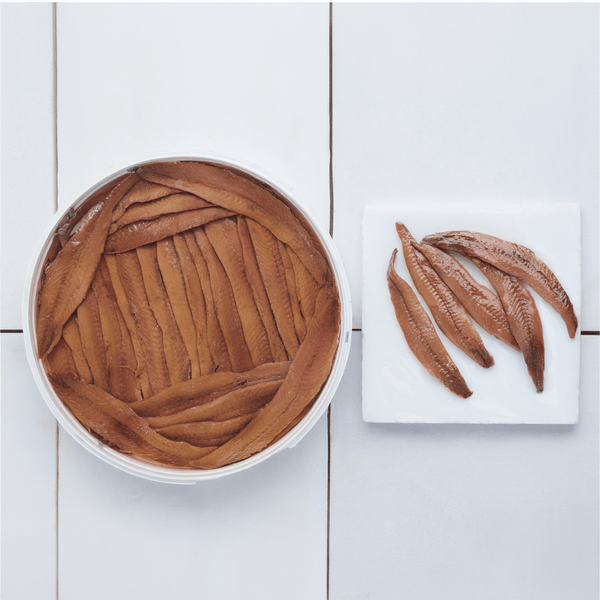
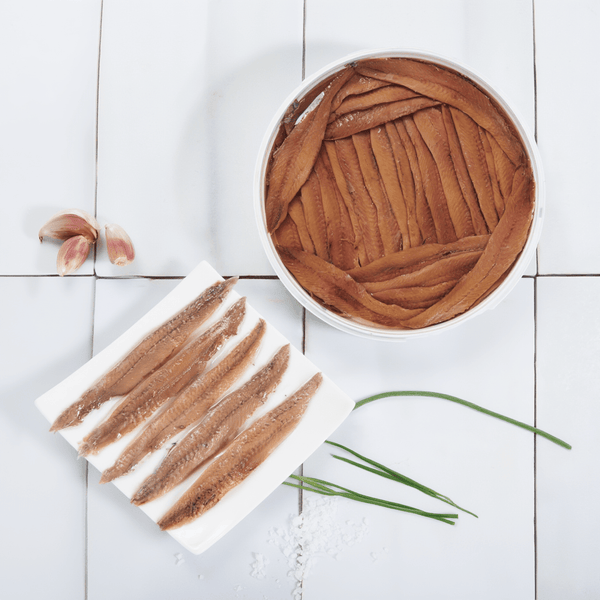
- Size 00 (double zero): The largest fillets, over 9 cm. Only 5-10% of the catch reaches this size. They are the juiciest anchovies, with more flavor and an unparalleled silky texture
- Size 0: Large fillets, between 7-9 cm. Excellent quality with an ideal balance between flavor and price
- Standard size: Fillets of 5-7 cm. The most common in supermarkets. Good, but with less presence and depth of flavor
2. The catch area:
Anchovies from the Cantabrian Sea (coasts of Cantabria and the Basque Country) are the most highly prized. The temperature and currents of the Cantabrian Sea produce an anchovy with a specific fat content that gives it its characteristic flavor. Anchovies from other sources (Mediterranean, South Atlantic) are more economical but have a different sensory profile.
3. The curing process:
The best anchovies mature in salt for 10 to 18 months before filleting. This slow and controlled process develops the complex umami flavors that characterize a premium anchovy. Accelerated industrial curing (3-6 months) produces a decent product but with less depth.
4. Filleting:
Manual filleting, done by experienced "sobaqueras" (hand-packers), produces whole, clean, and uniform fillets. Mechanical filleting is more efficient but generates more broken and irregularly presented fillets.
5. The covering oil:
First-press extra virgin olive oil makes a difference in the final result. More economical anchovies use refined olive oil or blends, which affects the overall flavor.
Related products from Bacalalo

Comparative tasting: supermarket vs gourmet
If you place a standard supermarket anchovy next to a size 00 Cantabrian anchovy selected by a specialist, the differences are evident even to an untrained palate:
| Aspect | Standard supermarket anchovy | Gourmet 00 anchovy |
|---|---|---|
| Fillet size | 5-7 cm, irregular | 9+ cm, uniform |
| Color | Medium brown | Bright pinkish-brown |
| Texture | Firm, somewhat dry | Melting, buttery |
| Flavor | Salty, one-dimensional | Complex umami, deep |
| Aftertaste | Persistent saline | Long, clean, marine |
| Presentation | Fillets often broken | Whole, perfect fillets |
This does not mean that supermarket anchovies are bad — in a pizza, a Caesar salad, or a quick toast, they perform perfectly. But for an appetizer where the anchovy is the absolute star, served on a slice of bread with a drizzle of extra virgin olive oil, the difference is transformative.
When to choose BonPreu and when to go gourmet
Choose BonPreu when:
- Anchovies are just one ingredient in a recipe (pasta, pizza, salads)
- You need an economical format for regular use
- You want to try different accessible brands to find your favorite
- You seek convenience and integrated shopping with the rest of your basket
- You're preparing informal weekday appetizers
Choose a gourmet specialist when:
- Anchovies are the star dish of an appetizer or celebration
- You want to give a can of premium anchovies as a gift (always a good choice)
- You're looking for large sizes (0 or 00) not found in supermarkets
- You want Cantabrian anchovies with complete traceability: cannery, season, size, and curing period
- You're organizing an appetizer platter or a special vermouth where every product should shine
In Barcelona, the tradition of Sunday vermouth with good anchovies is deeply rooted. If you are in the Eixample or near the Mercat del Ninot, combining your regular shopping with a visit to a seafood specialist is an experience worth having.
Storage and consumption guide
Regardless of where you buy your anchovies, these tips will maximize your experience:
Storage:
- Unopened: In a cool place (15-18°C ideal) or in the refrigerator. Anchovies improve with time if stored correctly, like a good wine
- Opened: Consume within 3-5 days. Cover remaining fillets with olive oil and store in the refrigerator
- Serving temperature: Take out of the refrigerator 15-20 minutes before serving. Cold anchovies lose flavor nuances
Optimal serving:
- Lightly toasted "pan de cristal" (crystal bread) with grated tomato
- "Coca" bread with a drizzle of Arbequina olive oil
- On roasted piquillo peppers
- Alone, as a first bite of an appetizer, accompanied by a good vermouth or cava
Common mistake: Do not cook premium anchovies. Heat destroys the nuances developed during months of curing. Gourmet anchovies are eaten raw, directly from the can to the plate. For cooking, use standard supermarket anchovies — that's exactly what they are designed for.
🛒 Products mentioned in this article
⭐ 4.9/5 · Cold delivery 24-48h · Since 1990 in Mercat del Ninot
Conclusion
BonPreu offers a selection of anchovies above the supermarket average, with recognized brands and good overall quality. For everyday use in cooking and informal appetizers, their anchovies perform perfectly and at a reasonable price.
The difference with gourmet anchovies selected by a specialist becomes evident in the larger sizes, artisanal curing, and the sensory experience of eating a whole Cantabrian 00 anchovy fillet. They are different products for different moments, and both have their legitimate place in your pantry.
The smart thing to do is to have both: a can from BonPreu for cooking and anchovies from the specialist for enjoyment. Your palate and your wallet will thank you.
Informative comparison based on public data. Prices and availability may vary.
What anchovy brands does BonPreu carry?
BonPreu typically offers its own brand, national brands such as Albo, Ortiz, or Consorcio, and occasionally references from Cantabrian canneries. The selection varies depending on the size of the establishment and the season.
How much do anchovies cost at BonPreu?
Prices range from €3-5 for basic anchovies in sunflower oil, €5-8 for standard anchovies in olive oil, and €8-14 for Cantabrian references when available. Large sizes (00) are not usually part of their regular assortment.
What is size 00 in anchovies?
Size 00 (double zero) identifies the largest anchovy fillets, over 9 centimeters. They represent only 5-10% of each catch, which explains their premium price. They are the juiciest, with a buttery texture and an unparalleled complex umami flavor.
Are expensive anchovies worth it?
It depends on the use. For cooking (pizzas, pastas, sauces), standard anchovies costing €5-8 are perfect. For tasting as a main appetizer, the difference between a standard anchovy and a size 00 Cantabrian anchovy is transformative and justifies the price.
How to store anchovies once the can is opened?
Cover the remaining fillets with olive oil in an airtight container and store in the refrigerator. Consume within 3-5 days. Take them out 15-20 minutes before serving so they regain their flavor nuances.
Related guides


![Anchoas en Carrefour: Precios, Marcas y Alternativas Gourmet [2026] - Bacalalo](http://bacalalo.com/cdn/shop/articles/anchoas-en-carrefour-precios-marcas-y-alternativas-gourmet-2026-3556808.jpg?v=1772955405&width=480)
