

Cod liver oil was our grandmothers' star supplement, and modern science proves them right. It contains omega-3, vitamin D, and vitamin A in a combination difficult to match with synthetic capsules. Here we explain real benefits with studies, safe dosages, contraindications, and why it remains relevant in 2026.
What is cod liver oil
Updated March 2026. Since 1990 we have hand-selected every product. This guide reflects that experience.
Cod liver oil is an oil obtained directly from the liver of the Atlantic cod (Gadus morhua). Unlike common fish oil, which is extracted from the body of different species, this one comes exclusively from the liver, which gives it a unique concentration of three nutrients: omega-3 fatty acids (EPA and DHA), vitamin A, and vitamin D.
Its appearance is a pale yellow to golden liquid, with a characteristic taste that older generations remember with a mix of respect and distaste. Today it is sold in soft capsules that eliminate the taste, although liquid oil remains the purest and most economical form.
What makes this supplement special compared to others is that it provides fat-soluble vitamins (A and D) naturally, not synthetically added. The body absorbs them better in their original lipid matrix than in isolated tablet form.
History: from Viking remedy to global supplement
Nordic peoples have been using cod liver oil for over a thousand years. The Vikings obtained it by boiling fresh cod livers and collecting the oil that floated to the surface. They used it both as a high-calorie food in extreme winters and to treat joint pain.
In the 18th century, European medicine began to study it formally. In 1789, Dr. Darbey of Manchester Hospital used it to treat rheumatism. But it was in the 19th century that it became an almost universal remedy: it was prescribed for rickets, tuberculosis, general weakness, and any childhood ailment.
Rickets, a disease that deformed children's bones due to a lack of vitamin D, practically disappeared in countries where cod liver oil was systematically administered to children. It wasn't until 1922 that Elmer McCollum identified vitamin D as the responsible compound, but doctors had been successfully prescribing it for a century.
In Spain, entire generations of children took their daily spoonful of cod liver oil until the 70s and 80s, when capsule supplements and synthetic multivitamins displaced it from the market. Today, with the rise of nutrition based on whole foods, it is regaining ground.
Detailed nutritional composition
One teaspoon (5 ml) of cod liver oil provides approximately:
| Nutrient | Amount per 5 ml | % Daily Value |
|---|---|---|
| Calories | 41 kcal | 2% |
| Total fat | 4.5 g | 6% |
| Omega-3 EPA | 400-500 mg | - |
| Omega-3 DHA | 400-500 mg | - |
| Vitamin A (retinol) | 1,350 mcg (4,500 IU) | 150% |
| Vitamin D3 | 10 mcg (400 IU) | 50% |
| Vitamin E | 1 mg | 7% |
What is striking is the natural synergy: vitamin D needs fat to be absorbed, and here it comes dissolved in its own fat. Vitamin A in the form of retinol (not beta-carotene) is the most bioavailable form. And omega-3s are in the form of natural triglycerides, not ethyl esters like in many cheap supplements.
Complete lipid profile
In addition to EPA and DHA, cod liver oil contains other fatty acids of interest:
- Palmitoleic acid: an omega-7 with anti-inflammatory properties
- Oleic acid: the same monounsaturated fatty acid as olive oil
- DPA (docosapentaenoic acid): a minor omega-3 but with its own biological activity
This lipid complexity is impossible to replicate in a synthetic supplement. It's the difference between a real food and a laboratory product.
Benefits of omega-3 (EPA and DHA)
The omega-3s in cod liver oil are EPA (eicosapentaenoic acid) and DHA (docosahexaenoic acid). Both have distinct and complementary functions.
EPA: the anti-inflammatory
EPA competes with arachidonic acid (omega-6) for the same enzymes, reducing the production of pro-inflammatory molecules like prostaglandins and leukotrienes. This translates to:
- Reduction of chronic low-grade inflammation
- Improvement of cardiovascular markers (triglycerides, blood pressure)
- Positive effect on mood states: several meta-analyses associate EPA with a reduction in depressive symptoms
- Support in autoimmune diseases like rheumatoid arthritis
DHA: the structural
DHA is a structural component of the brain (it represents 15-20% of brain lipids) and the retina. Its benefits include:
- Brain development in fetuses and children (reason why it is added to infant formulas)
- Maintenance of cognitive function in older adults
- Eye health: it is part of the photoreceptors of the retina
- Fluidity of cell membranes throughout the body
One teaspoon of cod liver oil provides between 800 and 1,000 mg of combined omega-3 (EPA + DHA), which is the daily dose that most health organizations recommend as a minimum.

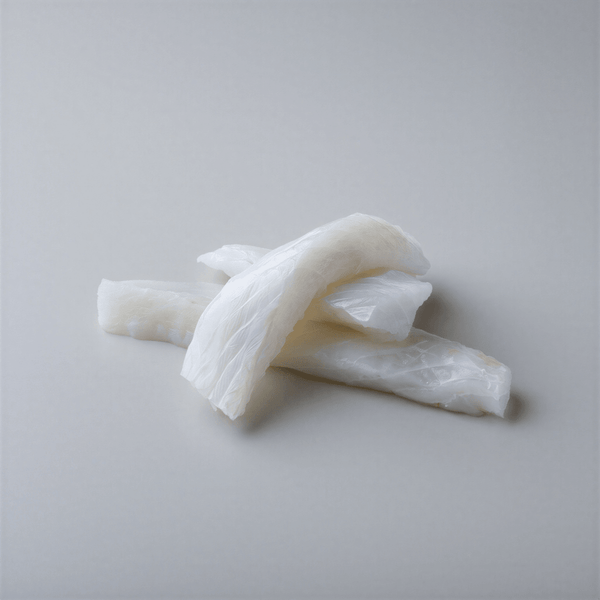
Universal Shredded Dried Cod - 500g
Available at Bacalalo.com with refrigerated shipping in 24-48h
Vitamin D: the missing nutrient in Spain
It seems paradoxical, but Spain has one of the highest rates of vitamin D deficiency in Europe. Studies by the Carlos III Health Institute estimate that between 30% and 60% of the Spanish population has insufficient levels (below 30 ng/ml).
There are several reasons: we use sunscreen (correct, but it blocks vitamin D synthesis), we spend a lot of time indoors, and in winter, the latitude of the northern half of Spain does not allow sufficient skin synthesis.
One teaspoon of cod liver oil provides 400 IU of vitamin D3, the most bioavailable form. This covers 50% of the recommended daily intake, and combined with moderate sun exposure and a diet that includes oily fish, it can be sufficient to maintain optimal levels.
Vitamin D and the immune system
Vitamin D is not only for bones. It acts as a hormone that modulates the immune response. Adequate levels are associated with:
- Lower incidence of respiratory infections (meta-analysis BMJ, 2017)
- Better regulation of the autoimmune response
- Support in the prevention of certain types of cancer (preliminary but consistent evidence)
Vitamin A: vision, immunity, and skin
The vitamin A in cod liver oil is in the form of preformed retinol, which the body can use directly without the need for conversion. This differentiates it from the beta-carotene in carrots, which needs to be converted to retinol and whose conversion rate varies depending on individual genetics (between 3% and 40%).
Key functions of vitamin A:
- Vision: essential for rhodopsin, the pigment that allows us to see in low light
- Immunity: maintains mucous barriers (respiratory, intestinal tract) and regulates the production of immune cells
- Skin: participates in cell renewal and collagen production
- Reproduction: necessary for spermatogenesis and embryonic development
Here comes the important nuance: preformed vitamin A has a safety limit. One teaspoon provides 4,500 IU, and the tolerable upper limit for adults is 10,000 IU daily. This leaves room, but you have to take into account the vitamin A that comes from other sources (animal liver, dairy, eggs).
What scientific studies say
The evidence on cod liver oil is extensive, although not all of it is of the highest methodological quality. The most solid findings:
Cardiovascular health
A Norwegian study published in the Journal of Internal Medicine (2011) with 68,000 participants found that regular consumers of cod liver oil had a 15-20% lower cardiovascular mortality rate. The main mechanism: reduction of triglycerides and improvement of the lipid profile.
Arthritis and joint pain
A controlled trial in the Annals of Rheumatic Diseases showed that patients with rheumatoid arthritis who took cod liver oil for 9 months reduced their use of anti-inflammatory drugs (NSAIDs) by 30% compared to the placebo group.
Rickets and bone health
The historical evidence is overwhelming: the systematic administration of cod liver oil eliminated rickets as a public health problem in Nordic countries. Modern studies confirm that the combination of vitamin D + omega-3 improves calcium absorption and bone mineral density.
Type 1 diabetes in children
A Norwegian study (American Journal of Clinical Nutrition, 2003) with 545 cases and 1,668 controls found that supplementation with cod liver oil during the first year of life was associated with a significant reduction in the risk of type 1 diabetes.
Recommended dosage by age and objective
| Group | Daily Dose | Observations |
|---|---|---|
| Children 1-3 years | 2.5 ml (1/2 teaspoon) | With pediatric approval |
| Children 4-12 years | 5 ml (1 teaspoon) | Or 1 softgel capsule |
| Adults (maintenance) | 5 ml (1 teaspoon) | Or 2 softgel capsules |
| Adults (vit. D deficiency) | 5-10 ml | Under medical supervision |
| Pregnant women | 5 ml maximum | Do not exceed due to vitamin A |
| Over 65s | 5-10 ml | Monitor vitamin A |
The ideal time to take it is with a meal that contains fat, as vitamins A and D are fat-soluble. Taking it on an empty stomach reduces absorption.
How long to take it
Cod liver oil supplementation can be continuous or seasonal. Many experts recommend taking it at least during the months of October to April, when skin synthesis of vitamin D is insufficient in latitudes above 35 degrees north (the entire Iberian Peninsula).

Smoked Cod in Oil in Thin Slices - 1000g
Available at Bacalalo.com with refrigerated shipping in 24-48h
Contraindications and side effects
Cod liver oil is safe for most people at recommended doses, but there are situations where caution is required:
- Pregnancy: do not exceed 3,000 IU of vitamin A daily (excess retinol is teratogenic). One teaspoon provides 4,500 IU, so some guidelines recommend using regular fish oil (without vitamin A) during pregnancy.
- Anticoagulants: omega-3s have an antiplatelet effect. If you take warfarin or similar, consult your doctor.
- Hypervitaminosis A: chronic excessive consumption can cause liver damage, headache, nausea, and, in severe cases, toxicity.
- Fish allergy: contraindicated. Although the oil is refined, it may contain traces of proteins.
- Scheduled surgery: discontinue 2 weeks before due to the anticoagulant effect.
Mild side effects
The most common are fishy burps, mild digestive discomfort, and diarrhea. Enteric-coated capsules minimize these effects. Storing it in the refrigerator also helps.
Cod liver oil vs modern supplements
| Feature | Cod Liver Oil | Concentrated Omega-3 | Vitamin D3 only |
|---|---|---|---|
| Omega-3 (EPA+DHA) | 800-1,000 mg/5ml | 1,000-2,000 mg/capsule | 0 mg |
| Vitamin D3 | 400 IU natural | 0 IU (unless added) | 1,000-4,000 IU |
| Vitamin A | 4,500 IU natural | 0 IU | 0 IU |
| Omega-3 form | Natural triglycerides | Ethyl esters or reconverted TG | N/A |
| Bioavailability | High (natural matrix) | Medium-high | High with fat |
| Monthly price | 8-15 EUR | 15-30 EUR | 5-10 EUR |
| Risk of excess vit. A | Yes, in high doses | No | No |
Cod liver oil wins in terms of quality-price ratio and nutrient synergy. Concentrated omega-3s win when high therapeutic doses of EPA/DHA are needed (for example, for high triglycerides, where 2-4 g/day are prescribed). And vitamin D alone is preferable when there is a severe deficiency that requires high doses without the risk of excess vitamin A.
Who each option is best for
- Cod liver oil: healthy individuals seeking a general supplement (omega-3 + vitamins), children, seniors for maintenance
- Concentrated Omega-3: individuals with hypertriglyceridemia, athletes requiring high doses, pregnant women (avoid vitamin A)
- Vitamin D3 alone: individuals with a diagnosed deficiency requiring 2,000-4,000 IU daily
How to choose good cod liver oil
Not all cod liver oils are the same. Criteria for making a good choice:
- Origin of the cod: Gadus morhua from the North Atlantic (Norway, Iceland, Arctic) produces the highest quality oil. Avoid oils from unspecified species.
- Extraction method: cold extraction better preserves nutrients and causes less oxidation. Industrial heat methods degrade omega-3s.
- TOTOX value: indicator of oxidation. It must be below 26 (GOED standard). Rancid oil not only tastes bad but also generates free radicals.
- Certifications: look for IFOS (5 stars), Friends of the Sea, or MSC for sustainability.
- Natural vs. Added Vitamins: some manufacturers remove vitamins during refining and then add synthetic vitamins. Read the label: "naturally present vitamins" is better than "fortified with."
Reference brands in Europe: Mollers (Norway, the oldest since 1854), Nordic Naturals, Rosita (artisanal cold extraction), and Lysi (Iceland). In Spain, they are easily distributed through Amazon or specialized health food stores.

Frequently asked questions
What is cod liver oil used for?
It serves as a natural source of omega-3 (EPA and DHA), vitamin D3, and vitamin A. It contributes to cardiovascular, bone, immune, and brain health. It is one of the supplements with the most historical and scientific evidence.
How many cod liver oil capsules per day?
The standard adult dose is 1-2 softgel capsules per day (equivalent to 5 ml of liquid oil), taken with a meal. This dose should not be exceeded without medical supervision due to the vitamin A content.
Is cod liver oil the same as fish oil?
No. Fish oil is extracted from the body of fatty fish and contains omega-3s but without significant vitamins A or D. Cod liver oil comes from the liver and contains both vitamins naturally, in addition to omega-3s.
Can pregnant women take it?
With caution. Excessive vitamin A (retinol) during pregnancy can be teratogenic. Most guidelines recommend not exceeding 3,000 IU of retinol daily, and a teaspoon of cod liver oil provides 4,500 IU. Many doctors prefer to recommend pure fish oil (without vitamin A) during pregnancy.
Does cod liver oil cause weight gain?
A teaspoon provides about 41 calories. In the context of a normal diet, this is negligible. There is no evidence that cod liver oil promotes weight gain; in fact, omega-3s can support the regulation of lipid metabolism.
At what age can children take it?
In Nordic countries, it is administered from 6-12 months of age, with pediatric approval. The usual child dose is 2.5 ml (half a teaspoon) per day. There are children's versions with lemon or fruit flavors that make it easier to take.
Does cod liver oil expire?
Yes. Once opened, it should be consumed within 2-3 months and stored in the refrigerator to prevent oxidation. Unopened, its shelf life is usually 2 years. If it smells or tastes rancid, do not consume it: oxidized oil is counterproductive.
Conclusions
Cod liver oil is not a remedy from another era: it is a supplement with a solid scientific basis that offers omega-3, vitamin D, and vitamin A in a natural combination that is difficult to replicate. Its quality-price ratio remains unbeatable for most of the population.
The key is the dosage. A daily teaspoon is sufficient and safe for most adults. More is not better, especially due to the vitamin A limit. And if you are pregnant or taking anticoagulants, consult first.
As we say at Bacalalo: cod has been showing us for centuries that it is an extraordinary food. Its liver is no exception.
Related articles: