Summary: Tuna tartare is one of haute cuisine's star dishes that you can replicate at home with results identical to those of a restaurant. The key is not complicated techniques but rather three factors: quality tuna, correct cutting, and balanced seasoning. We'll show you the professional recipe step-by-step.
What is tartare and why is it so popular in summer?
Tartare is a preparation of raw fish or meat cut into small cubes and seasoned with a vinaigrette or sauce. Tuna tartare has become the most ordered appetizer in Spanish restaurants during the summer months for a simple reason: it's fresh, elegant, satisfying, and requires no cooking.
Unlike ceviche (where citric acid "cooks" the fish), in tartare, the tuna remains completely raw. The seasoning is added just before serving so it doesn't alter the texture. This means that the quality of the tuna is absolutely critical: no sauce or cooking can disguise mediocre tuna.
Tuna tartare has French roots (the original steak tartare was made from meat), but its popularization with fish comes from 1990s Japanese-Western fusion cuisine. Today, it's a universal classic that never goes out of style because it delivers everything a diner looks for in summer: cold, light, flavorful, and visually spectacular.

How to choose the perfect tuna for tartare
Tuna for tartare must meet three non-negotiable requirements:
Certified freshness: Ask for "tuna for raw consumption" or "sashimi grade" at your fishmonger. This means the tuna has been previously frozen at -20°C for at least 24 hours (or -35°C for 15 hours) to eliminate parasites such as anisakis. In Spain, regulations require this prior freezing for any fish to be consumed raw.
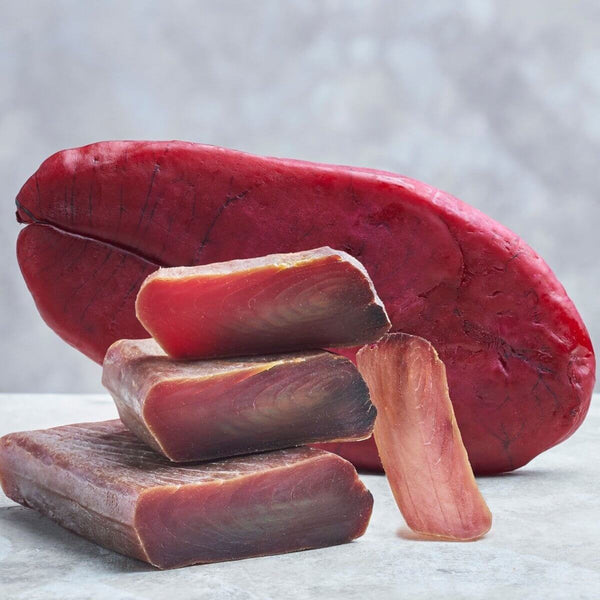
Correct cut: Bluefin tuna loin (the central part, without nerves or dark meat) is ideal. The belly (toro) is fattier and melts in the mouth, but its price is considerably higher. For a first tartare, the loin is the smart choice.
Color and texture: Fresh tuna has an intense red color, almost burgundy, without brown spots or grayish areas. To the touch, it should be firm, not soft. If the tuna has lost color or has a strong fishy odor (beyond a slight sea aroma), do not use it for tartare.
Quantity per person: For a starter, 80-100 g of tuna per person. For a main summer dish, 150-180 g. A 400 g tuna loin block comfortably yields 4 generous starters.
Cutting technique: the professional secret
The cut is what separates homemade tartare from restaurant-quality. At home, the tendency is to chop the tuna too finely or irregularly. A professional result requires uniform cubes of 8-10 mm:
- Chill the tuna: 15 minutes in the freezer before cutting. Semi-frozen tuna is easier to cut into clean cubes without crumbling.
- Use a sharp knife: A well-sharpened chef's knife or, ideally, a Japanese knife (yanagiba). The cut should be clean, in a single motion. Never saw the tuna.
- Slice: First, cut the block into slices 1 cm thick.
- Cut into sticks: Stack 2-3 slices and cut them into 1 cm sticks.
- Dice: Rotate the sticks 90° and cut them into 1 cm cubes. Do not chop further.
Fatal error: Never chop the tuna with a knife as if it were an onion (repeatedly hitting it). This breaks the fibers, releases liquid, and the tartare becomes mushy. Each cut must be clean and decisive.

Classic recipe: tuna tartare with soy and sesame
For 4 starters:
- 400 g bluefin tuna loin (sashimi grade)
- 2 tbsp low-sodium soy sauce
- 1 tbsp toasted sesame oil
- 1 tsp grated fresh ginger
- ½ ripe avocado, diced
- 1 tbsp finely chopped chives
- 1 tsp toasted sesame seeds (white and black)
- ½ tsp wasabi (optional, to taste)
- A few drops of lime juice
Preparation: Cut the tuna into 1 cm cubes as described above. In a cold bowl, mix soy sauce, sesame oil, ginger, and wasabi. Add the tuna and gently mix with a spatula — do not use forks or over-stir. Incorporate the avocado at the end so it doesn't get crushed. Plate immediately using a plating ring (see plating section). Sprinkle with sesame seeds and chives.
Total time: 15 minutes from start to finish. Do not leave the seasoned tuna for more than 5 minutes before serving: the soy sauce begins to "cook" the surface proteins and the color changes.
Mediterranean variation with EVOO and capers
For those who prefer a less Asian and more Mediterranean flavor profile:
- 400 g diced tuna
- 3 tbsp extra virgin olive oil (the best you have)
- 1 tbsp small capers, drained and chopped
- 1 tbsp finely diced shallot
- 1 tsp Dijon mustard
- Zest of ½ lemon
- Chopped sun-dried tomatoes (4-5 units)
- Chopped fresh parsley
- Black pepper, fleur de sel
Mix the dressing in a bowl, add the tuna, plate, and serve with a slice of crystal bread rubbed with tomato. This version is more subtle than the Asian one, with olive oil and capers providing Mediterranean umami.
Tropical variation with mango and avocado
The most visually appealing version and the one that is most popular at outdoor summer dinners:
- 400 g diced tuna
- ½ ripe mango, diced to the same size as the tuna
- 1 ripe avocado, diced
- Dressing: 2 tbsp soy sauce, 1 tbsp lime juice, 1 tbsp EVOO, ½ tsp sriracha
- Fresh cilantro, black sesame seeds
Layer using a plating ring: first, gently mashed avocado, then the seasoned tuna mixed with mango, and crown with cilantro and sesame seeds. The contrast of colors (red of the tuna, orange of the mango, green of the avocado) is spectacular.

Professional plating at home
The plating ring is the secret to making your tartare look restaurant-quality. You can buy one for €3-5 at any kitchen store, or improvise with an empty bottomless tin can.
- Place the ring in the center of the plate.
- Fill with the tartare, pressing gently with the back of a spoon to compact without crushing.
- Carefully lift the ring — the tartare will maintain its shape.
- Add toppings: sesame seeds, chives, a drizzle of oil, a few drops of sauce around the plate.
- If you want to go further, add a fried wonton crisp or a tempura crunch on top.
The ideal plate is white and plain — let the colors of the tartare be the protagonists. A plate with too much decoration competes with the food.
For more no-cook summer recipes, explore our cod ceviche, smoked salmon poke bowl, or cold seafood appetizers. In our gourmet preserves collection, you'll find premium products that complement any tartare.
Gourmet preserves for your summer recipes
🛒 Products used in this recipe
⭐ 4.9/5 · 24-48h refrigerated shipping · Since 1990 at Mercat del Ninot
Frequently asked questions
Is it safe to eat raw tuna at home?
Yes, provided the tuna has been previously frozen at -20°C for at least 24 hours to eliminate anisakis. Ask for "sashimi grade" at your fishmonger. In Spain, prior freezing is mandatory by regulation for any fish consumed raw or semi-raw.
Can I use canned tuna for tartare?
No. Canned tuna is cooked and has a completely different texture and flavor. Tartare requires fresh raw tuna. There is no way to replicate the result with canned fish. If you don't have access to quality fresh tuna, it's preferable to make smoked salmon tartare.
How much does tuna for tartare cost?
Sashimi-grade bluefin tuna costs between €30 and €60/kg depending on the season and origin. For a starter for 4 people, you need about 400 g, which means €12-24 total or €3-6 per person. This is comparable to the cost of a starter in an average restaurant.
Can I prepare tartare in advance?
You can cut the tuna and prepare the dressing separately up to 2 hours beforehand, storing both in the refrigerator. Mix and plate just before serving. Never leave seasoned tuna for more than 5-10 minutes before eating.
What are the alternatives to bluefin tuna?
Fresh salmon (sashimi grade) is the most popular alternative. Yellowfin tuna is more economical than bluefin and works very well. Gilthead bream and sea bass also lend themselves to tartare but with a milder flavor profile.