Summary: Bagna cauda is the Piedmontese anchovy sauce that has rightly become a staple of the European gourmet appetizer. Its preparation takes 15 minutes, three main ingredients, and an understanding of a simple principle: when anchovies melt in oil and butter with garlic, they don't produce an anchovy-flavored sauce — they produce a sauce with a depth of umami flavor that makes everything you dip into it taste more intensely like itself. Full recipe, variations, and quality criteria for the anchovy to be used.
What is bagna cauda and where it comes from
Updated March 2026. After decades working with seafood, we've learned that quality makes all the difference.
Bagna cauda literally means "hot bath" in Piedmontese. It is a sauce of medieval origin from Piedmont, the northwestern region of Italy bordering France and Switzerland, where the cold winter climate fostered a culinary culture of comforting and hearty dishes. Bagna cauda is the quintessential Piedmontese appetizer/fondue: a warm mixture of olive oil, butter, garlic, and anchovies into which raw and cooked vegetables are dipped.
Its history has an interesting geographical peculiarity. Piedmont is an inland region, without a coast. Anchovies arrived there via historical trade routes from the Mediterranean coast — specifically from Liguria and from the coasts of Provence and Catalonia. Salt and salted fish merchants ("portatori di acciughe") traveled through the alpine passes with barrels of cured anchovies, which they exchanged for inland products. Bagna cauda is the result of this exchange economy: an inland dish that uses a sea ingredient because it was one of the few protein-rich and flavorful foods available in winter for the rural Piedmontese people.
Today, bagna cauda is a seasonal dish consumed from October to March in Piedmont, always in company, never alone. Tradition dictates that it be prepared in an earthenware pot ("fujot") over a heat source that maintains a constant temperature throughout the meal.
Ingredients: anchovy quality is crucial
Bagna cauda is a dish with few ingredients where no element is irrelevant. With three main ingredients, the quality of each matters enormously.
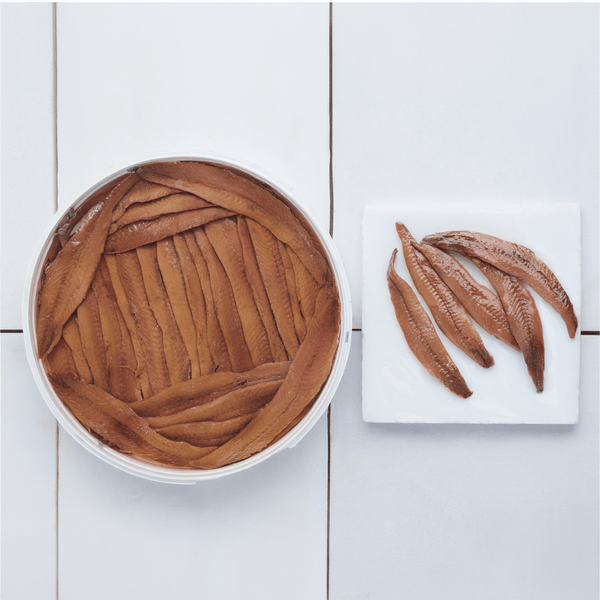
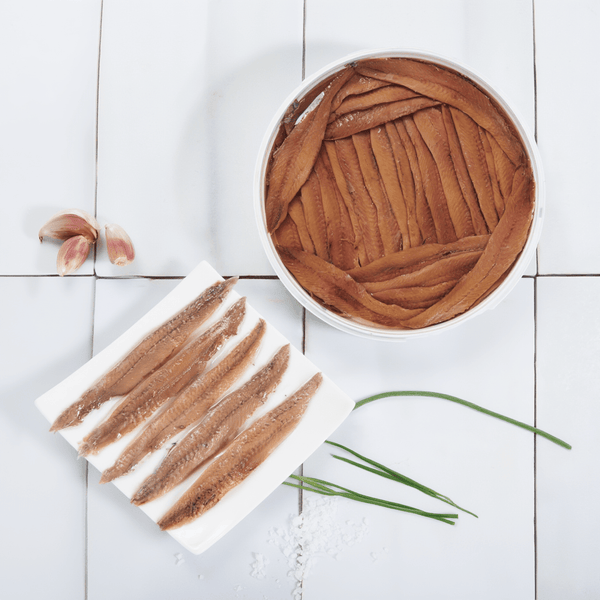
Anchovies are the ingredient that defines the outcome. A bagna cauda made with artisan-cured Cantabrian anchovies (10-14 months, genuine European anchovy) produces a sauce with depth of flavor and buttery nuances that an industrial anchovy cannot generate. The glutamate and free fatty acids from the long curing process are responsible for the irresistible character of quality bagna cauda.
Garlic should be mild. The most delicate version of bagna cauda uses garlic blanched in milk (boiled in milk for 10-15 minutes before use) to remove the harshness of raw garlic without losing its aroma. The more direct version uses garlic cooked in oil. Untreated raw garlic yields a result that is too aggressive for most palates.
Mild-flavored extra virgin olive oil is more suitable than a very intense one, because oil is the vehicle for the garlic and anchovy flavors and should not compete with them. In Piedmont, tradition uses Ligurian oil (milder than Tuscan or Sicilian) precisely for this reason.
Butter is optional in some versions but recommended: it softens the sauce, adds creaminess, and moderates the harshness of the garlic. In versions without butter, bagna cauda is more direct and intense — suitable for product enthusiasts but not for all palates.
Cantabrian Anchovies for bagna cauda and sauces — Bacalalo Selection
The quality of the anchovy defines the quality of the bagna cauda. Our anchovies, with a minimum artisanal curing of 10-12 months, are the base that transforms a simple recipe into a memorable result. Selected for 35 years at Mercat del Ninot in Barcelona.
View Premium "00" Anchovies — €24.90 | View exclusive oil anchovies 160g — €14.95
Bagna cauda recipe step-by-step
This is the classic Piedmontese version adapted for home use outside of Piedmont. Serves as an appetizer for 6-8 people.
Ingredients:
- 8-10 Cantabrian anchovy fillets in olive oil
- 8 large garlic cloves
- 150 ml mild extra virgin olive oil
- 50 g unsalted butter
- 200 ml milk (for blanching garlic, optional but recommended)
Step 1: Blanch the garlic. Peel the garlic cloves and cook them in milk over very low heat for 15-20 minutes until completely soft. This process removes the sulfur compounds responsible for the harshness of raw garlic and leaves only the soft, sweet aroma of cooked garlic. Drain the garlic (discard the milk) and mash it with a fork to form a paste.
Step 2: Melt the anchovies. In an earthenware pot or small saucepan over very low heat, warm the olive oil with the garlic paste. Add the drained anchovy fillets. With a wooden spoon, press and stir the fillets until they are completely dissolved in the oil — 5-8 minutes over minimum heat. The oil should be warm but never smoking. If it boils, the garlic burns and the sauce will have a bitter taste.
Step 3: Add the butter. Once the anchovies are completely dissolved and the garlic integrated, add the diced butter. Stir gently until it melts and the sauce has a homogeneous, slightly creamy consistency.
Step 4: Serve hot. Transfer to an earthenware pot over a candle or burner to maintain the temperature. The bagna cauda must be kept warm throughout serving — if it cools, the fats solidify and the texture changes. Serve surrounded by accompaniments.
What to eat with bagna cauda
Bagna cauda is a social winter dish. Traditional Piedmontese accompaniments are seasonal vegetables from October to March. The classic selection includes:
Raw vegetables: celery (the most traditional), fennel strips, carrots, red and yellow bell peppers, cardoon (if you can find it — it's the most typical accompaniment in Piedmont), cauliflower florets, endives.
Cooked vegetables: boiled potato chunks, roasted beets, roasted onions, steamed broccoli or cauliflower, cooked artichokes (artichoke dipped in bagna cauda is one of the best known combinations).
Bread and crackers: Thick country bread, toasted; grissini (Piedmontese breadsticks — their geographical origin is no coincidence); rye crackers. Bread acts as a sponge for the sauce and balances the intensity of the flavors.
Hard-boiled egg: Some bagna cauda aficionados finish the meal by dipping the yolk of a hard-boiled egg into the sauce remaining at the bottom of the pot. It’s one of the best bites of the session.
Anchovy sauce variations
Beyond Piedmontese bagna cauda, there are other anchovy sauce traditions that deserve attention.
Catalan anchovy sauce: romesco
Romesco is technically a tomato and ñora pepper sauce with almonds and hazelnuts, but in its most complete traditional version from Tarragona, it includes anchovies. The umami from the anchovies added to the dried pepper and nut base produces a depth that romesco without anchovies cannot achieve. In Barcelona, at Mercat del Ninot, the combination of ñora pepper pulp with Cantabrian anchovy is an appetizer classic that we have seen the best market chefs prepare for decades.
Anchovy paste (tapenade with anchovy)
Olivada with anchovy from southern France and Catalonia — crushed black olives with anchovies, capers, thyme, and olive oil — is another form of anchovy sauce that works as a dip, a spread, and a cooking condiment. The proportion of anchovy to olive determines whether the whole tastes more like tapenade or more like anchovy. For a balanced flavor: 3-4 fillets per 150g of olives.
Roman anchovy sauce: for pasta and meats
In the Roman tradition, there is an anchovy sauce used for both pasta and roasted meats. It is simpler than bagna cauda and more versatile as a cooking condiment.
Ingredients and preparation: In a frying pan, heat 4 tablespoons of olive oil with two sliced garlic cloves. When the garlic begins to brown, add 6-8 anchovy fillets and dissolve them. Add half a teaspoon of chopped capers, the juice of half a lemon, and a teaspoon of chopped parsley. Reduce for 2 minutes. This sauce, poured over a grilled beef fillet, al dente pasta, or roasted vegetables, serves as a gourmet finish that takes 5 minutes to prepare.
For pasta, see our complete guide to pasta with anchovies: 5 easy and quick Italian recipes.
Italian green sauce with anchovies
Italian green sauce ("salsa verde" or "gremolada") is a Lombard cuisine classic that accompanies bollito misto, cooked meats, and cod. It always includes parsley, garlic, capers, and mustard — and in its most full-bodied and characterful version, anchovies.
Ingredients: 1 bunch fresh parsley, 2 cloves garlic, 3 tablespoons drained capers, 4 anchovy fillets, 1 teaspoon Dijon mustard, 1 tablespoon white wine vinegar, 6 tablespoons extra virgin olive oil.
Preparation: Blend all ingredients in a mortar or food processor until a rough-textured (not smooth) sauce is obtained. Adjust acidity with more vinegar if necessary. Green sauce is not cooked — it is served cold. Its freshness and acidity provide a perfect counterpoint to fatty meats and intensely flavored fish.
Common mistakes in bagna cauda
The most frequent mistake is overheating the oil. Bagna cauda requires low and constant temperature — the garlic and anchovies should dissolve gently, not fry. If the oil smokes, the garlic burns in seconds, and the sauce acquires a bitterness that cannot be remedied. Minimum heat, maximum patience.
The second mistake is not blanching the garlic. Bagna cauda with raw garlic directly in the oil has an aggressive flavor that overshadows the anchovies and is difficult to tolerate for those who are not garlic lovers. Blanching in milk completely transforms the garlic's profile — it's a step that cannot be omitted if you seek a balanced result.
The third mistake is using low-quality anchovies, thinking that "in a sauce, it doesn't matter." It does matter. The complexity of bagna cauda depends directly on the aromatic compounds released by the anchovies during cooking. A short-cured, high-salinity anchovy produces a very salty sauce with no depth. An artisan-cured anchovy (12-14 months) produces a sauce with real umami and nuances that make people want to dip another vegetable.
Cantabrian Anchovies — The ingredient that defines the outcome
For bagna cauda, sauces, pasta, and appetizers: our complete collection of Cantabrian anchovies, selected with the same criteria we have applied at Mercat del Ninot in Barcelona since 1990.
Premium Seafood Products — Bacalalo
Since 1990, selecting the best from the sea at Mercat del Ninot, Barcelona. Refrigerated shipping 24-48h.
View Cantabrian anchovies →🛒 Products used in this recipe
Cantabrian Anchovies "00" Gourmet Selection
Premium "00" size, artisan preparation
€38.90
View product →⭐ 4.9/5 · Refrigerated delivery 24-48h · Since 1990 at Mercat del Ninot
Frequently asked questions about anchovy sauce and bagna cauda
Is bagna cauda too strong for palates unaccustomed to anchovies?
With well-blanched garlic in milk and the correct proportion of anchovies, bagna cauda is surprisingly accessible. The anchovy flavor is integrated into a combination of fat, garlic, and salt that many people who claim not to like anchovies enjoy without identifying the specific ingredient. What "scares" people about anchovies — the direct saltiness and frontal umami — is modulated by the oil and butter.
Can bagna cauda be made without garlic?
Bagna cauda without garlic is technically a hot anchovy sauce in oil, which is a perfectly valid condiment but not Piedmontese bagna cauda. If garlic is the issue, blanching several times in milk reduces its intensity to very tolerable levels. An alternative: use whole roasted garlic (1 hour at 180 °C) instead of fresh garlic — the result is sweeter and less aggressive.
Can bagna cauda be prepared in advance?
Yes, and it actually improves if prepared a few hours in advance and gently reheated just before serving. Store in the refrigerator in the earthenware pot. Reheat over minimum heat without boiling, stirring so that the ingredients reintegrate. Do not reheat in the microwave — uneven temperature can burn the garlic.
What wine pairs with bagna cauda?
In Piedmont, tradition dictates Barbera d'Asti or Dolcetto d'Alba—young red wines with good acidity and moderate tannins that cleanse the palate between bites of the rich sauce. In Spain, a barrel-aged white wine (Rioja white, aged Viura) also works well. For more guidance, see our guide to pairing anchovies with wine, beer, and vermouth.
Does bagna cauda have a lot of sodium?
Yes, like any preparation with anchovies. However, the amount of sauce consumed in a normal serving (3-4 tablespoons per person as an appetizer) does not represent a problematic sodium intake for most healthy people. For people with hypertension or prescribed sodium restriction, consult their doctor.