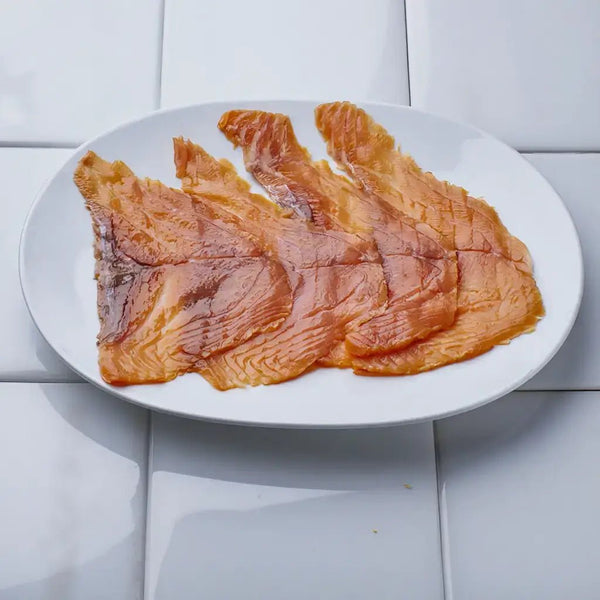
In short: How to cut mojama like a professional: sharp ham knife or 25cm chef's knife, 15-20° angle (not perpendicular), 1-2 mm translucent slices. Hydrate for 30 min with a damp cloth if very dry.
Table of contents
Why cutting technique matters so much for mojama
Mojama, like Iberian ham, critically depends on how it is cut. An excellent mojama cut poorly tastes ordinary; a mediocre mojama cut well seems premium.
The technical reasons: (1) concentrated saltiness requires thin slices to avoid overwhelming the palate; (2) the deep flavor is best released on large surfaces; (3) irregular thickness produces areas that are too salty and others that are bland.
The cut accounts for 50% of the final result. It's worth spending 5 minutes on it.
The right knife
Ideal: Ham knife, 25-30 cm, flexible blade, very sharp. If you have one for ham, it works perfectly.
Acceptable: Chef's knife, 25-28 cm, with a straight, sharp edge.
DO NOT use: Short knives (10-15 cm), serrated knives, dull knives. None of these allow for uniformly thin slices.
The knife must be SHARP. Before cutting mojama, run it through a honing steel or sharpening stone. A dull knife "scratches" and breaks the fiber; a sharp one cuts cleanly.
Step-by-step professional cutting
- Check moisture: If the mojama is very hard, wrap it in a damp cloth and refrigerate for 30 minutes beforehand.
- Firmly hold the piece with a cloth or a board with teeth. The mojama should not move during cutting.
- Place the knife at a 15-20° angle to the surface (not perpendicular).
- Cut by sliding the knife backward with a smooth motion, without pressing. The idea is to "slide," not "push."
- Move towards the end of the piece. The first slice may not come out perfectly — discard it or eat it yourself.
- Slices 1-2 mm thick. Check against the light: they should be translucent.
- If the piece is almost finished: continue cutting smaller pieces towards the end, without waste.
Common mistakes when cutting mojama
Slices too thick (3mm+): too much salt in the mouth, aggressive. Cut thinner.
Perpendicular cuts: use less surface area and the slices are less elegant. Angle is mandatory.
Dull knife: scratches and breaks the fiber. Sharpen beforehand.
Very dry mojama not hydrated: crumbles when cut. A damp cloth 30 min before solves this.
Rushing: cutting requires precision. 1 extra minute per slice = perfect slices.
How to serve after cutting
Spread slices on a neutral flat plate (white porcelain, slate). NEVER piled up. Drizzle with extra virgin Arbequina olive oil. Toasted Marcona almonds chopped around or toasted rustic bread served separately.
Serve at room temperature (take out of the fridge 15 min before if refrigerated). Cold temperatures hide flavors.
Pairing: Manzanilla from Sanlúcar, Fino from Jerez, dry white vermouth, brut nature cava. Verdejo Rueda white wine also works. Avoid red wines (they clash with the salt).
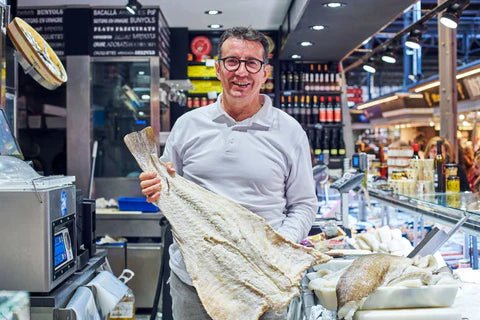
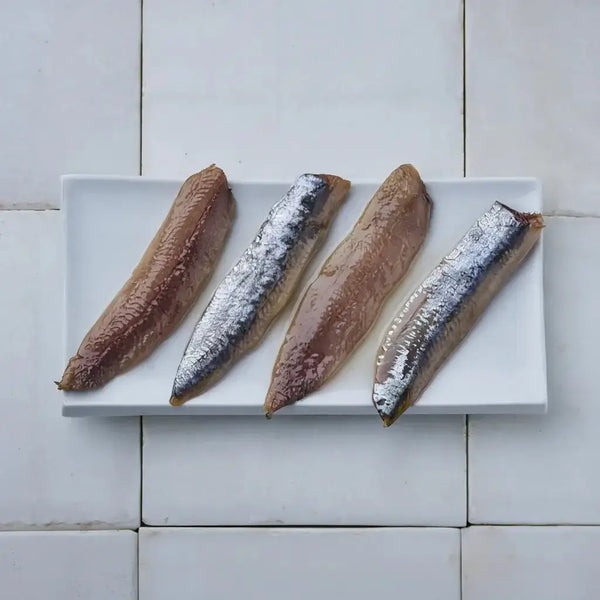
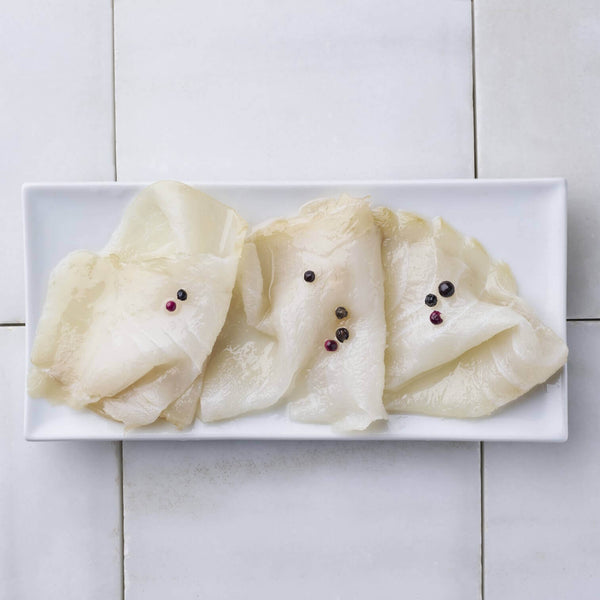
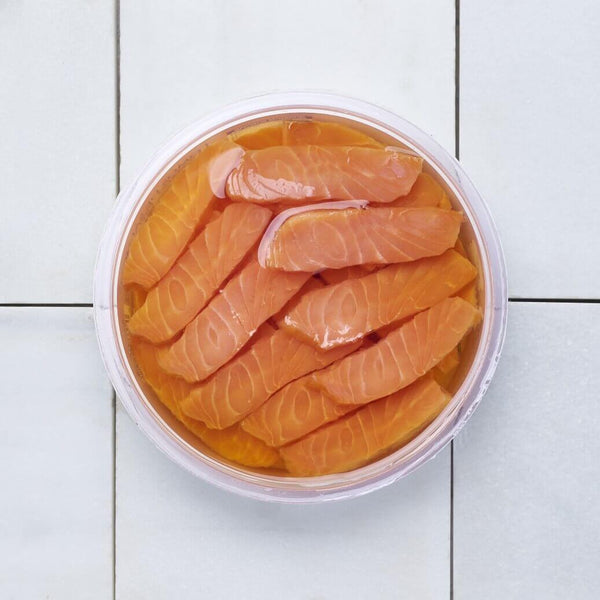
Premium Bacalalo Cured Fish
Mojama, bottarga, roe and other gourmet cured fish from the sea. Artisan selection from Mercat del Ninot. Cut to weight or whole piece.
Frequently asked questions
What knife should be used to cut mojama?
At what angle should it be cut?
Does mojama need to be hydrated beforehand?
How thick should each slice be?
How long does mojama last after cutting?
How to serve after cutting?
To conclude
Cutting mojama well is the difference between eating homemade salted fish and eating salted fish with professional technique. An extra 5 minutes before serving = a completely different gastronomic experience. If you want to get started, a piece of Barbate bluefin tuna mojama + good bread + Arbequina EVOO = a memorable appetizer.
Desalted cod: another classic salted fish
If you're interested in salted fish, salted cod is the most versatile version. Gourmet quality from Iceland.