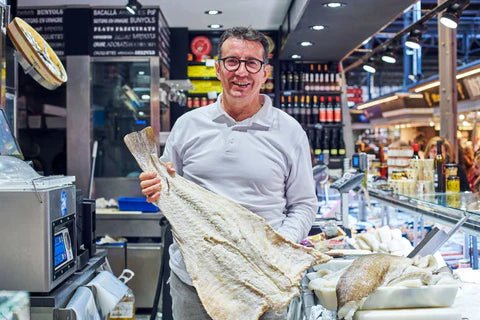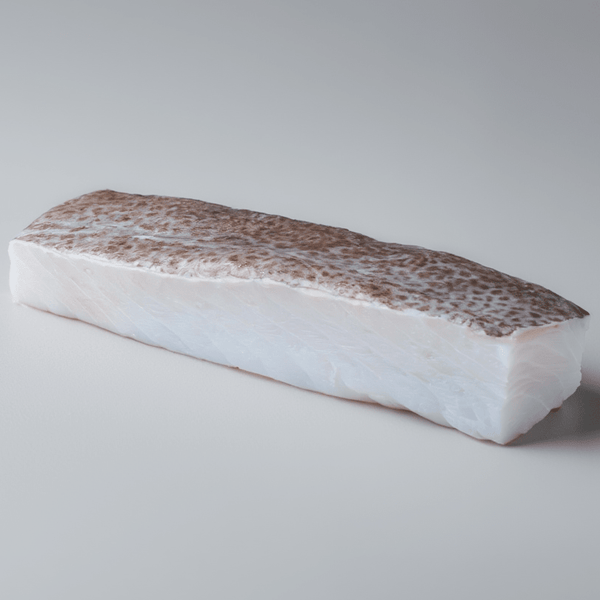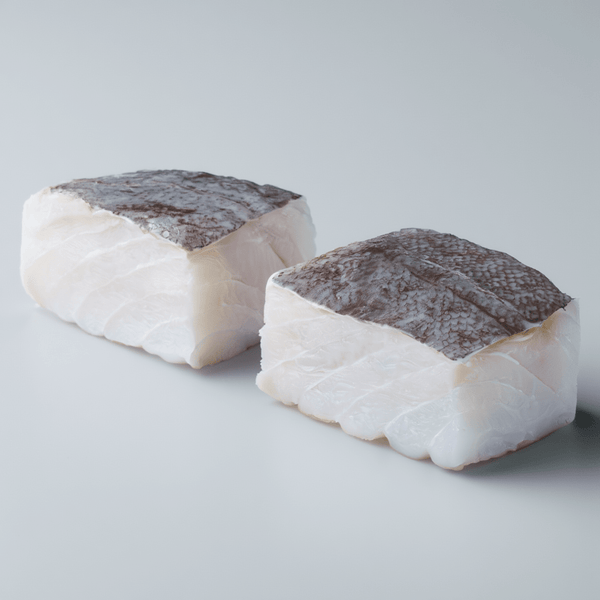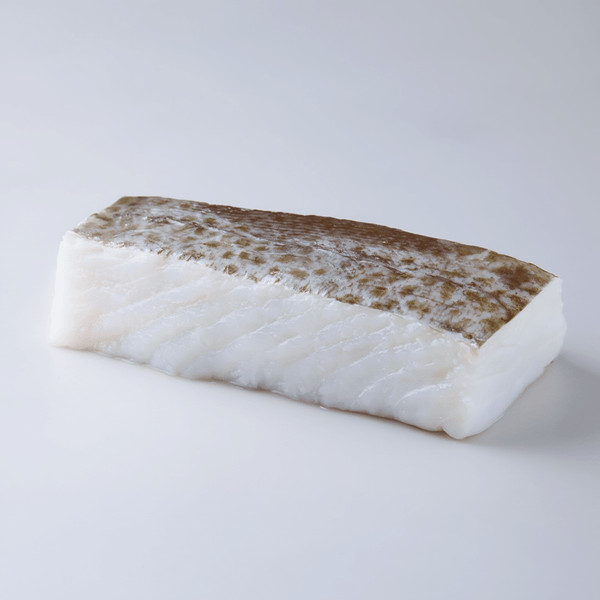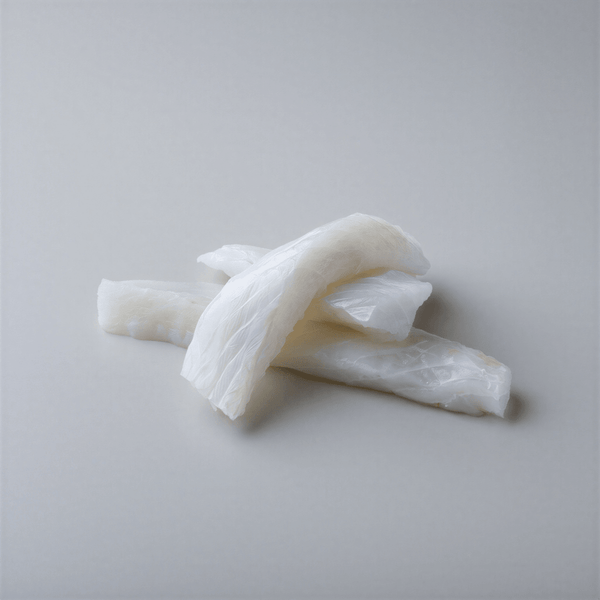
Quick Summary: Buying cod online is safe if the supplier declares the species (Gadus morhua), specific origin (Iceland, Lofoten, Faroe), size, curing method, and drained weight. Criminal fraud is rare; common issues include vague labeling ("white fish," "desalted loin" without species) hiding Saithe or Pollock instead of real cod. Red flags: abnormally low price for a large piece (<€25/kg), generic "North Atlantic" origin, no scientific name, no batch/date. Minimum guarantee: refrigerated shipping in 24-48 hours and returns policy.
What real fraud exists when buying cod online
Before discussing criteria, it's worth defining what real fraud exists:
- Species substitution: selling Saithe or Pollock as cod. This is illegal but happens with vague labeling.
- Inflated origin: selling Asian or Baltic cod as "premium Icelandic." Rarer because European traceability is strict.
- Weight inflated by water: 1 kg "net packaged" where only 700g is real cod, the rest is covering water.
- Falsified size: selling small loins as "extra thick." Only detectable upon opening.
- Inflated marketing: "premium gourmet artisan" without any supporting technical data.
Pure criminal fraud is rare. What's common is inflated marketing + vague labeling that takes advantage of buyer ignorance.
My approach
Criterion 1: species — true Gadus morhua
Authentic cod = Gadus morhua. Period.
| Species | Common name | Characteristic | Verdict |
|---|---|---|---|
| Gadus morhua | Authentic cod | Firm white flakes, concentrated flavor | PRIMARY use for ALL dishes |
| Pollachius virens (Saithe) | Coalfish / pollock | Grayish loin, flatter taste | Cheap substitute, NOT cod |
| Theragra chalcogramma (Alaska Pollock) | Alaska Pollock | Thin white loin, soft texture | Volume fishing, NOT cod |
| Gadus macrocephalus | Pacific Cod | Similar to Atlantic, less flavor | Acceptable, declare origin |
How to verify: Legal labeling requires the scientific name. If "Gadus morhua" is not explicitly stated, or if it only says "white fish / desalted loin," that's a red flag. Ask the supplier via message before paying — if they don't provide concrete data, you have your answer.
Criterion 2: detailed origin
"North Atlantic" is not an origin. It's FAO area 27, covering thousands of square kilometers. A serious origin specifies country and area:
| Origin | Characteristic | Typical price | Verdict |
|---|---|---|---|
| South / Southwest Iceland | Cold waters, large size, world-class | Premium 30-45 €/kg | Main course |
| Lofoten (Norway) | Historic tradition, concentrated flavor | Premium 28-42 €/kg | Classic salted |
| Faroe Islands | Similar to Iceland, high quality | Premium 28-40 €/kg | Traditional curing |
| North Atlantic unspecified | Vague, could be any area | 15-25 €/kg | Suspicious — demand detail |


Criterion 3: size and piece format
Size determines possible curing and final texture:
- Extra thick whole loin (>2 kg): main piece, slow concentrated curing 90-120 days, firm white flakes. For cod pil-pil, llauna, gourmet brandade.
- Medium loins (500 g - 1.5 kg): common household use, curing 60-90 days. For premium esqueixada, good tortilla, croquettes.
- Small loins / shredded (<500 g): small pieces, short curing. For tortilla, mariskito (seafood salad), salad, stuffing.
- Flakes / mariskito: controlled discard from large pieces, concentrated flavor, economical format. For mixed uses.
The common mistake: confusing "cod loins" with "extra thick loin" — they are different products at different prices. Always read the format description.
Criterion 4: curing and salt level
Curing completely changes the product. Three categories:
| Curing type | Time | Characteristic | Use |
|---|---|---|---|
| Short industrial curing | 15-30 days | Uniform high salt | Supermarket retail loins |
| Medium artisan curing | 45-75 days | Moderate salt, richer flavor | Serious fishmongers |
| Slow traditional curing | 90-120 days | Balanced salt, concentrated flavor | Main course cod |
A piece cured for 90-120 days is radically different from one cured for 20 days — the fiber changes, the concentrated flavor develops, the internal fat redistributes. If a large piece is sold very cheaply, it's impossible for it to have slow curing (warehouse, salt, and time costs don't allow for low prices).

Criterion 5: actual weight vs. advertised weight
Always read drained weight, not "net packaged weight":
- Vacuum-packed desalted cod: net weight includes 15-25% covering water. 1 kg net = 750-850 g actual.
- Dry salted cod: weight at purchase is actual. Desalting loses 30-50% (1 kg salted = 600-700 g desalted).
- Frozen cod: weight at purchase includes ice glaze (5-15%). Actual drained weight after thawing.
If the supplier only advertises "net weight" without clarification, ask via message. A serious supplier differentiates both.
Criterion 6: traceability and supplier
Minimum data that must be declared:
- Scientific name of the species.
- FAO area + specific country of capture.
- Fishing method (longline, hook, trawl — the first two are superior quality).
- Curing / packaging date + batch number.
- Producer or brand name (not just "imported by").
If the supplier declares all five data points on the label or technical sheet, they are serious. If any are missing, ask before buying.
Criterion 7: refrigerated shipping and timing
- Dry salted cod: does not require strict refrigeration — standard shipping 24-72 hours is sufficient.
- Vacuum-packed desalted cod: mandatory refrigeration, 24-48 hour delivery, with cooling gel.
- Frozen cod: isothermal box with dry ice, 24-hour delivery. If it arrives thawed, return it.
If a supplier sends desalted cod within 5 days without refrigeration, that's a problem. Ask about the shipping system before paying.

6 red flags that indicate fraud or mediocre product
- Abnormally low price for a large whole piece. Premium cod <€25/kg cannot be slow traditional curing.
- Label without scientific name. If it only says "white fish / desalted loin," be suspicious.
- "North Atlantic" origin without a country. Vague. Demand Iceland, Lofoten, Faroe, etc.
- No visible batch number or curing date. No traceability.
- "Premium gourmet artisan" marketing without supporting technical data.
- Customer service only via form. A serious supplier has a phone number or WhatsApp.
Final checklist before paying
Before buying cod online — verify
- ✓ Species: Gadus morhua declared
- ✓ Origin: specific country and area
- ✓ Size: clear weight and piece format
- ✓ Curing: declared days or method
- ✓ Weight: drained, not just net packaged
- ✓ Visible batch + date
- ✓ Refrigerated shipping if product is desalted or frozen
- ✓ Verified reviews (Trustpilot, Judge.me, Google)
- ✓ Guaranteed returns / replacement

Conclusion
Buying cod online is safe if you verify the seven technical criteria: species, origin, size, curing, actual weight, traceability, and shipping. Criminal fraud is rare; what's common is inflated marketing with vague labels. A provider that doesn't address these seven points with concrete data is not serious — regardless of how beautiful their website is.
At Bacalalo, we declare all seven data points on our labels and product sheets: Gadus morhua species, Iceland/Lofoten/Faroe origin, traditional curing 90-120 days, drained weight for desalted product, batch, and date. If you have a specific question, ask before buying — we respond to messages during business hours.
Related articles
- Mercadona cod vs gourmet online cod: a real comparison
- Online cod vs fresh fish market cod: when to choose each
- Complete salted cod collection
- Desalted cod collection