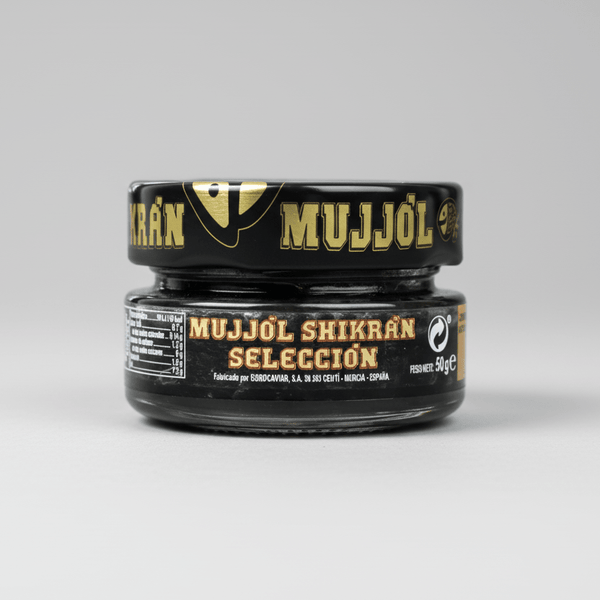
What Mercadona sells as "caviar" is not caviar. It's a substitute: roe from other fish (capelin, lumpfish, herring) dyed and processed to imitate the real thing. The difference with real caviar is not just price, it's the product itself. I'll explain what you'll find at Mercadona, how much real caviar costs, and when each option is worth it.
What Mercadona sells as "caviar"
Updated March 2026. We have hand-selected every product since 1990. This guide reflects that experience.
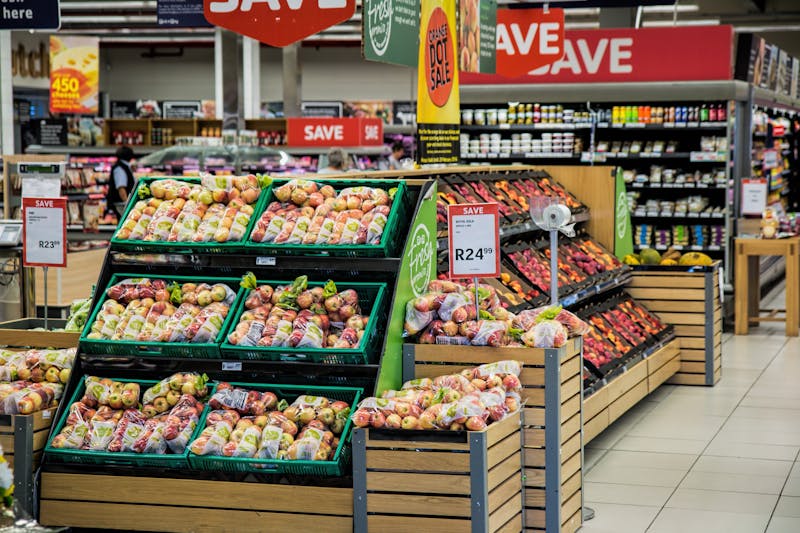
At Mercadona, you'll find several products labeled as "caviar" or "caviar substitute," usually in the refrigerated or canned goods section. It's important to understand exactly what they are:
Black caviar substitute
Capelin, lumpfish, or herring roe dyed black with squid ink or food coloring. Price: 2-4 euros per 100g jar. Soft texture, generic salty taste, lacking the complexity of real caviar. Primarily used as a garnish on canapés.
Lumpfish roe
The cheapest product that imitates caviar. Lumpfish roe is small, soft, and dyed black or red. Price: 1.50-3 euros. It is edible but has no organoleptic relationship with authentic caviar.
Vinegar or seaweed "pearls"
Alginate spheres that visually imitate caviar roe. They are not an animal product; they are a molecular gastronomy preparation. Interesting as a decorative resource, but they are not caviar and do not pretend to be.
None of these products are caviar. Caviar, by legal definition in the EU, is exclusively the roe of sturgeon (Acipenser). Everything else is a substitute, and must be labeled as such.
What real caviar is
Authentic caviar is sturgeon roe, processed only with salt ("malossol" method, meaning "little salt" in Russian). It is one of the most expensive foods in the world, and there are objective reasons for this:
- Time: A sturgeon takes between 7 and 20 years to reach maturity to produce roe, depending on the species.
- Scarcity: Overfishing drove wild Caspian sturgeon to the brink of extinction. Today, virtually all legal caviar comes from aquaculture.
- Process: Extraction, selection, salting, and packaging are done by hand by experts.
- Preservation: Requires constant refrigeration between -2 and +2 degrees Celsius.
The result is a product with a texture and flavor unlike anything else: firm roe that bursts in the mouth, releasing flavors of butter, sea, nuts, and umami. It is a complete sensory experience, not simply "salty fish eggs."
Comparison table: substitute vs. real caviar
| Criterion | Substitute (Mercadona) | Real Caviar |
|---|---|---|
| Species | Capelin, lumpfish, herring | Sturgeon (Acipenser) |
| Color | Dyed (artificial uniform black) | Natural (grey, black, golden, depending on species) |
| Texture | Soft, easily crushed | Firm, bursts in the mouth with a "pop" |
| Flavor | Generic salty, fishy | Complex: butter, sea, nutty, umami |
| Roe size | Small (1-2 mm) | Medium to large (2.5-4 mm depending on species) |
| Price/100g | 2-4 € | 50-300 € (depending on type) |
| Preservation | Months (pasteurized) | Weeks (fresh, -2/+2 degrees) |
| Main use | Garnish for canapés | Star product, tasting |
| Nutrition | Low protein, high sodium | Omega-3, high protein, vitamins B12, D |
Caviar prices in 2026
Real caviar has a wide price range depending on the species, origin, and producer:

| Type of Caviar | Species | Price/30g | Price/100g | Price/kg |
|---|---|---|---|---|
| Beluga | Huso huso | 80-150 € | 250-450 € | 2,500-4,500 € |
| Osetra | Acipenser gueldenstaedtii | 40-80 € | 120-250 € | 1,200-2,500 € |
| Iranian Osetra | Acipenser persicus | 50-100 € | 150-300 € | 1,500-3,000 € |
| Sevruga | Acipenser stellatus | 35-60 € | 100-180 € | 1,000-1,800 € |
| Baeri (Siberian) | Acipenser baerii | 20-40 € | 60-120 € | 600-1,200 € |
| Spanish/European Baeri | Acipenser baerii | 15-30 € | 50-90 € | 500-900 € |
An important fact: 30 grams of caviar is a generous individual serving. This means you can try quality real caviar (Baeri) for 15-30 euros. It's not cheap, but it's not unattainable either. It's the price of a decent bottle of wine or a quick dinner out.
Authentic Caviar at Bacalalo -- From Baeri to Iranian Osetra
Authentic sturgeon caviar, selected for roe quality, freshness, and flavor profile. 30g, 50g, and 100g tins with guaranteed refrigerated shipping. Because trying real caviar at least once is an experience worth having.
Types of real caviar: from Beluga to Sevruga
Beluga: the king of caviar
From the sturgeon Huso huso, the largest of all (can exceed 100 kg). Large roe (3-4 mm), pearl grey to dark grey color, creamy and lingering flavor. It is the most expensive and the rarest. Most comes from aquaculture in Iran, Bulgaria, and Italy.
Osetra: the experts' favorite
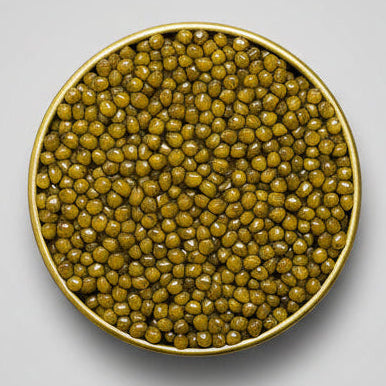
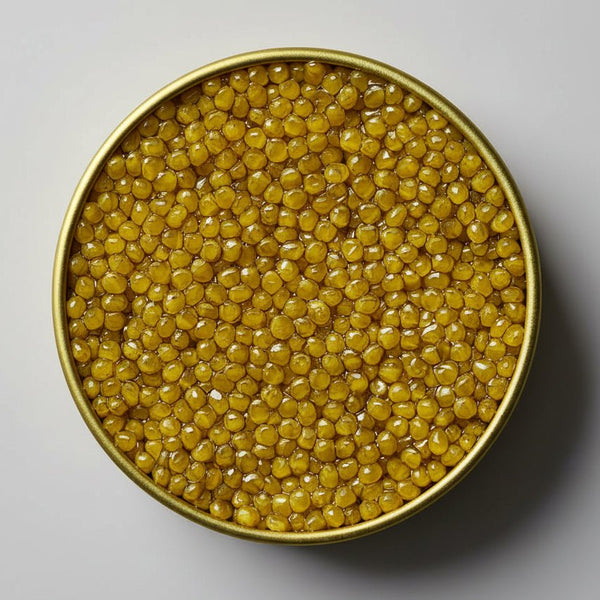
From the sturgeon Acipenser gueldenstaedtii. Medium roe (2.5-3 mm), variable color (golden, brown, greenish-grey). Nutty flavor with marine notes, considered by many experts to be the most complex and elegant. It is the type with the best quality-experience ratio.
Sevruga: intense and affordable
From the sturgeon Acipenser stellatus, the smallest of the three classics. Small roe (2-2.5 mm), dark grey to black color. More intense and salty flavor than Beluga and Osetra. It is the most affordable of the three classics.
Baeri: the gateway to real caviar
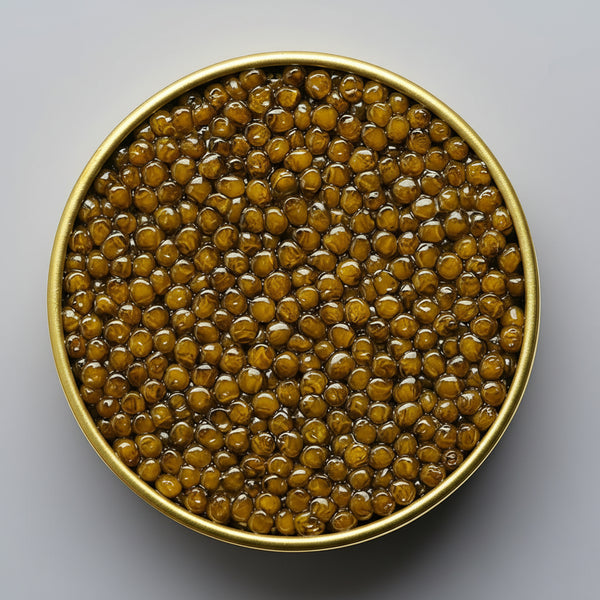
From the Siberian sturgeon Acipenser baerii, the most cultivated in Europe. Medium roe (2-2.5 mm), dark brown to black color. Smooth and buttery flavor. It is the most accessible caviar in terms of price and the best option for those who want to try real caviar for the first time.
Iranian caviar: the historical benchmark
Iran has the oldest caviar tradition in the world, with centuries of history on the shores of the Caspian Sea. Iranian caviar is distinguished by:
- Indigenous species: Acipenser persicus (Iranian Osetra) produces caviar with unique notes not found in European aquaculture.
- Salting method: The Iranian malossol tradition (2.5-3.5% salt) is the global benchmark.
- State control: Production is supervised by the Iranian government, ensuring consistent standards.
- Flavor profile: More complex and earthy notes than European caviar, with a longer finish on the palate.
You can explore our selection of Iranian caviar and our complete caviar guide: types, prices, and how to choose.
Iranian Osetra Caviar -- The benchmark from the Caspian Sea
Caviar from Persian sturgeon (Acipenser persicus) from the Caspian Sea. Golden to light brown roe, complex flavor with nutty and buttery notes. The most authentic caviar experience you can have.
When real caviar is worth it
Real caviar is not for every day or every budget. But there are times when the investment makes sense:
- Special celebrations: New Year's Eve, anniversaries, important birthdays. 30g of Baeri (15-30 €) is a memorable luxury.
- Gourmet gifts: A jar of real caviar impresses more than any generic Christmas hamper.
- Gastronomic experience: If you've never tried real caviar, it's worth doing so at least once to understand the difference.
- Commitment dinners: professional, romantic, or family. Caviar elevates any table.
And when it's NOT worth it:
- To garnish canapés at a large party: If you need quantity for 30 canapés, the substitute fulfills the decorative function at a fraction of the price.
- Mixed with other strong ingredients: If it's going into sushi with soy sauce and wasabi, you won't appreciate the nuances of real caviar.
- If you don't like fish: Caviar has a pronounced marine flavor. If you don't enjoy seafood flavors, it's not worth the investment.
How to serve and eat caviar correctly
Temperature
Remove the caviar from the refrigerator 5-10 minutes before serving. The ideal tasting temperature is between 4 and 8 degrees Celsius. You can place the tin on a bed of crushed ice.
Utensils
Never use a metal spoon (silver, steel). Metal oxidizes the roe and alters the flavor. Use mother-of-pearl, bone, wood, or even plastic spoons. Many premium caviar tins include a mother-of-pearl spoon.
How much to serve
For tasting: 10-15 g per person. For a generous starter: 25-30 g. To impress: 50 g. More than that is excessive even for the most discerning connoisseurs.
Classic accompaniments
- Plain: the purest way. Caviar on the back of your hand, between thumb and forefinger, directly to the mouth.
- Blinis: small Russian pancakes with a spoonful of crème fraîche and caviar on top.
- Toasted bread: thin sliced bread, toasted and cut into triangles.
- Potato: a slice of cooked potato as a neutral base.
- Brut champagne: the classic pairing. A brut nature cava also works.
- Ice-cold vodka: the Russian and Iranian tradition.
Common mistakes when buying caviar
1. Buying substitute believing it's caviar
If it costs less than 30 €/100g, it's not sturgeon caviar. Read the label: it must say "sturgeon roe" and specify the species.
2. Not checking the date
Fresh caviar has a shelf life of 4-8 weeks unopened (refrigerated). Once opened, consume within 2-3 days. Pasteurized caviar lasts longer but loses texture.
3. Storing it incorrectly
Always in the coldest part of the refrigerator (0-4 degrees Celsius). Never in the freezer. Never at room temperature for more than 20 minutes.
4. Using a metal spoon
Contact with metal alters the flavor. Use mother-of-pearl, bone, or plastic.
5. Buying Beluga as a first experience
Beluga is the most expensive but not necessarily the one that an untrained palate will like the most. Osetra or a good Baeri are better options to start with: more complex and at a more reasonable price.
Frequently asked questions
Is Mercadona caviar real caviar?
No. The products Mercadona sells as "caviar" are substitutes: capelin, lumpfish, or herring roe that has been dyed and processed. Real caviar is exclusively from sturgeon (Acipenser) and its minimum price is around 50 €/100g for the most accessible varieties.
How much does real caviar cost?
From 50-90 €/100g for Baeri caviar (Siberian sturgeon) to 250-450 €/100g for Beluga. An individual serving of 30g of good Baeri caviar costs 15-30 €, making it accessible for special occasions.
What is the best caviar to try for the first time?
Baeri caviar (Siberian sturgeon) or Osetra. Baeri is milder and more affordable. Osetra is more complex and a favorite of many experts. Both are better options than Beluga for a first experience, both for price and flavor accessibility.
Is supermarket caviar worth it for canapés?
For decorative use on party canapés, supermarket substitute fulfills its function: it provides visual color and texture at a minimal cost. If the canapés have other strong ingredients (smoked salmon, cream cheese), the difference with real caviar is diluted. It doesn't make sense to use a substitute as the main product.
How is caviar stored at home?
In the coldest part of the refrigerator (0-4 degrees Celsius), unopened, for 4-8 weeks depending on the producer. Once opened, consume within 2-3 days maximum, always covered and refrigerated. Never freeze fresh caviar: it destroys the texture of the roe.
Why is caviar so expensive?
Because a sturgeon takes between 7 and 20 years to produce mature roe. It is an extremely long production cycle that requires sustained investment for years before a product is obtained. In addition, extraction and processing are manual and require qualified experts. The natural scarcity of the product (wild sturgeon almost extinct) completes the price equation.
🛒 Our premium alternative
⭐ 4.9/5 · Cold shipping 24-48h · Since 1990 in Mercat del Ninot
Conclusions
Mercadona's "caviar" and real caviar are completely different products that share a name for commercial reasons. There's nothing wrong with using a substitute to decorate canapés at a party, but it's good to know that you're not eating caviar.
If you've never tried authentic caviar, it's worth doing so at least once. A 30g jar of Baeri (15-30 euros) is enough to understand why this product has fascinated half the world for centuries. It's not marketing: it's a taste unlike anything else.