


Summary: Malossol caviar is the supreme category of caviar: sturgeon roe with minimal salting of less than 4%, preserving the natural flavors of the sea. This guide explains its Russian origin, the production process, the three main types (Beluga, Osetra, Sevruga), actual prices by type and weight, and how to taste it to appreciate every nuance. If you are looking to buy authentic malossol caviar, here you will find all the information to make an informed choice.
Article Contents
Malossol Caviar: What It Is, Meaning, Types, and Prices
If you've ever seen the word "malossol" on a tin of caviar and wondered what it means, you're not alone. It's a term that separates exceptional caviar from merely acceptable, and understanding it makes the difference between paying a premium price knowingly or blindly.
In this comprehensive guide, we explain exactly what malossol caviar is, where the term comes from, how it's made, the main types that exist (Beluga, Osetra, Sevruga, and more), how much it really costs, and how to taste it to appreciate every nuance of flavor. All the information you need before investing in the world's most exclusive gastronomic product.
1. What is malossol caviar?
Malossol caviar is not a type or variety of caviar. It is a quality category that indicates the minimum amount of salt used in the curing process of sturgeon roe. When caviar is labeled "malossol," it means it has been processed with less than 4% salt — typically between 2.8% and 3.5%.
Why does this matter? Because salt acts as a preservative but also as a flavor masker. The more salt the caviar has, the longer it preserves, but the more the natural nuances of the roe are lost: notes of sea, butter, nuts, and minerals that are the essence of great caviar.
Only the freshest and highest quality roe can receive such low salting. If the roe is not in perfect condition, the caviar master needs more salt to preserve it. Therefore, "malossol" is synonymous with the best raw material processed with the most demanding technique.
In practice, 90% of the high-end caviar sold in Europe today is malossol. It is the standard of the premium market. But not all caviar is: there are other categories with more salt that we explain below.
2. Meaning and origin of "malossol"
The word "malossol" (also spelled malosol, malasol or malassol) comes from the Russian малосольный (malosolny), which literally means "little salt" or "lightly salted". It is composed of:
- мало (malo) = little, scarce
- соль (sol) = salt
The term originated in Russia and the Caspian Sea region in the 18th century, when caviar masters discovered that reducing salt to the indispensable minimum produced caviar of incomparably superior flavor. Only the best batches—the firmest, brightest, and most uniform roe—received this treatment, because the smallest margin of error required impeccable raw material.
This Russian tradition persists today in producing houses in Iran, France, Italy, and Spain, where the term "malossol" remains the universal designation for top-quality caviar.
3. How malossol caviar is made
The malossol caviar production process requires an artisanal precision that few foods demand. Each step directly influences the final result:
- Roe extraction: The roe is extracted from the female sturgeon at the optimal stage of maturation. The window is narrow: too early and the roe is soft; too late and it is hard.
- Sifting: The roe is passed through a mesh that separates the individual eggs from the ovarian membrane (the "skein"). A manual and delicate task.
- Visual selection: A caviar master evaluates color, size, uniformity, and firmness. Only Grade 1 batches (the best) receive malossol treatment.
- Salting: Between 2.8% and 3.5% fine salt is added and mixed with gentle movements for 3-5 minutes. In conventional caviar, this proportion rises to 5-8%.
- Resting and draining: The roe rests for 5-10 minutes for the salt to penetrate, and then excess liquid is drained.
- Packaging: It is packed in airtight tins (traditionally metal with a press-fit lid) and immediately refrigerated at -2°C / +2°C.
The entire process, from extraction to packaging, is completed in less than 15-20 minutes. Speed is essential: every minute that passes degrades the freshness that makes such low salting possible.
4. Types of malossol caviar
The term malossol applies to any sturgeon species. The differences between types of malossol caviar depend on the sturgeon species from which the roe comes:
Beluga Malossol Caviar
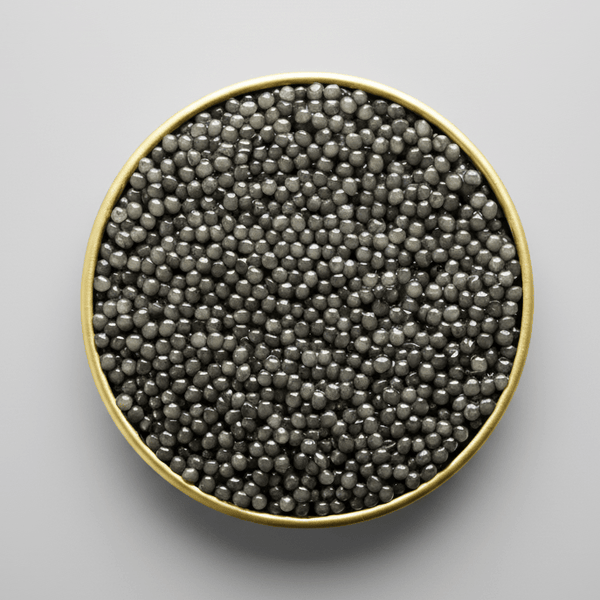
Beluga (Huso huso) is considered the king of caviar. Its roe is the largest (3-4 mm in diameter), with a color ranging from light gray to dark gray. The flavor is the smoothest and butteriest of all, with creamy notes and a long, clean finish. It is the rarest and, therefore, the most expensive.
Iranian Beluga, from the Caspian Sea, is the global benchmark. A Grade 000 malossol Beluga (the lightest) can reach €4,000-€6,000/kg. At Bacalalo, we offer authentic Iranian Beluga 000 at direct prices.
Osetra Malossol Caviar
Osetra (Acipenser gueldenstaedtii) is perhaps the most versatile and appreciated by experts. Its roe measures 2.5-3 mm and varies from golden to dark brown. The flavor is more complex than Beluga: notes of hazelnut, walnut, and sea, with a slightly saline finish.
Osetra "Imperial" is reserved for golden-hued eggs from older sturgeon (15+ years). An Iranian Imperial Osetra malossol offers exceptional value for money compared to Beluga.
Sevruga Malossol Caviar
Sevruga (Acipenser stellatus) has the smallest roe of the three classics (1.5-2 mm), dark gray to black in color. But it compensates with the most intense and iodized flavor of all: marine potency, pronounced mineral notes, and an explosion of flavor in the mouth.
It is the favorite of those who prefer character over subtlety. It is also more affordable than Beluga, making it a smart option for those seeking the malossol experience without the price of large roe. Our Caspian Sevruga is a perfect example.
Other species: Baerii, Siberian, Kaluga
In addition to the three Caspian classics, the term malossol applies to:
- Baerii (Acipenser baerii): The Siberian sturgeon raised in aquaculture. Small-medium roe, mild and fruity flavor. It is the basis of most European caviar.
- Kaluga (Huso dauricus): Beluga's freshwater cousin. Large roe, creamy flavor. An alternative to Beluga at a lower price.
- Wild Siberian: Russian river caviar. Harder to find, with unique earthy notes.
Bacalalo Products · Authentic Iranian Caviar

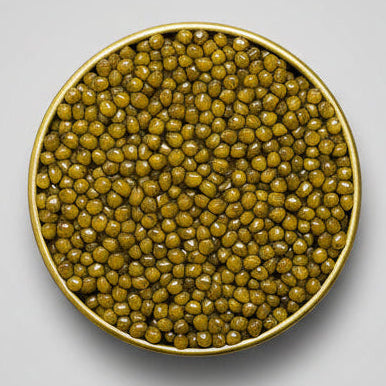
Caviar Beluga Imperial Iraní 00
90,00 €

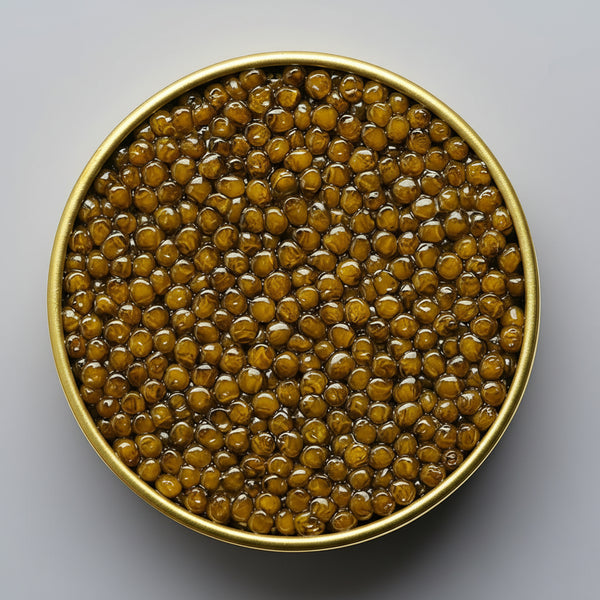
Caviar Osetra Imperial Iraní
75,00 €

Caviar Sevruga del Caspio
100,00 €

"Russian Whim" Box · Introduction
94,90 €
Refrigerated shipping 24-48h to all Peninsula · CITES certified Iranian Caviar
5. Malossol caviar prices by type
The price of malossol caviar depends on the species, origin, and weight. This is the updated reference for the Spanish market in 2026:
| Caviar Type | Price 30g | Price 50g | Price/kg | Predominant Flavor |
|---|---|---|---|---|
| Beluga 000 (Iranian) | 125 € | 200 € | 2,500-4,000 € | Buttery, creamy, clean |
| Beluga 00 (Imperial) | 90 € | 150 € | 1,800-3,000 € | Creamy, subtle, long |
| Osetra Imperial (Iranian) | 75 € | 120 € | 1,500-2,500 € | Hazelnut, walnut, mineral |
| Sevruga (Caspian) | 100 € | 160 € | 2,000-3,200 € | Iodized, intense, marine |
| Baerii (aquaculture) | 25-40 € | 40-65 € | 800-1,300 € | Mild, fruity, accessible |
| Kaluga (hybrid) | 50-70 € | 80-110 € | 1,000-1,800 € | Creamy, similar to Beluga |
Why the price difference? Beluga takes 18-25 years to reach reproductive maturity (Osetra 10-15 years, Baerii only 6-8). This waiting period is directly reflected in the price. Furthermore, Caspian Iranian origin is scarcer than European aquaculture.
6. How to serve and taste malossol caviar
Quality malossol caviar deserves service that respects its delicacy. These are the fundamental principles:
Serving temperature
Always cold, between 0°C and 4°C. Take the tin out of the refrigerator 5-10 minutes before serving, no more. Heat rapidly degrades the subtle flavors of malossol. Ideally, serve the tin on a bed of crushed ice.
Utensils: never metal
Metal (steel, silver) can transfer metallic flavors to the roe. Use mother-of-pearl, bone, glass, or ceramic spoons. If you don't have a mother-of-pearl spoon, a plastic spoon is preferable to a metal one.
Quantity per person
As an appetizer: 10-15 grams per diner. As a main tasting course: 30-50 grams. For a luxury experience: 50 grams is the amount that allows for full appreciation of the nuances.
How to eat it
The purest way: directly from the spoon, without accompaniment. Let the roe rest on your palate and press it gently with your tongue. You'll first notice the texture (the "pop" of each roe), then the buttery oiliness, and finally the deep flavors: sea, nuts, minerals.
If you prefer accompaniment: warm blinis (buckwheat pancakes) with a touch of crème fraîche. Avoid lemon, onion, or hard-boiled egg with malossol caviar — they mask the subtle flavors that make this category special.
7. Malossol vs. other types of curing
The curing of caviar determines not only its flavor but also its commercial classification. These are the three main categories:
| Category | % Salt | Shelf Life | Roe Quality | Flavor |
|---|---|---|---|---|
| Malossol | 2.8-4% | 4-6 weeks | Grade 1 · Firm, uniform, shiny | Pure, nuanced, complex |
| Semi-preserved (Salted) | 5-8% | 3-6 months | Grade 2 · Good but less uniform | Saltier, fewer nuances |
| Pressed (Payusnaya) | 10%+ | Months-Years | Grade 3 · Damaged or uneven roe | Intensely salty, dense |
The practical difference: malossol caviar tastes of the sea and butter; semi-preserved caviar tastes mainly of salt. If you're going to invest in caviar, make it malossol — everything else is a compromise.
8. How to store malossol caviar
Malossol's low salt content means a shorter shelf life. Follow these rules:
- Unopened: Refrigerated (0-4°C), 4 to 6 weeks from production. Always check the packaging date.
- Once opened: Consume within 2-3 days maximum. Cover the tin with plastic wrap in direct contact with the roe (to prevent oxidation) and return to the refrigerator.
- Never freeze: Freezing breaks the roe membrane and destroys the texture and subtle flavors that define malossol.
- Coldest part of the refrigerator: Place it at the bottom, near the vegetable drawer. Avoid the door (frequent temperature changes).
If the caviar smells of ammonia, strong fish, or has an excessively bitter taste, discard it — it has lost its cold chain.
9. How to choose the best malossol caviar
When you're going to buy malossol caviar, these are the quality indicators you should check:
- CITES Certification: All legal caviar has a CITES code on the tin indicating species, origin, year, and producer. Without this code, do not buy.
- Clear species: The label should specify the exact species (Huso huso, Acipenser gueldenstaedtii, etc.). Generic "sturgeon caviar" is a red flag.
- Packaging date: The fresher, the better. Malossol loses quality over time.
- Visual appearance: Bright roe, separate from each other (not sticky or crushed), uniform in size. When gently pressed, they should bounce back.
- Color: Within each species, lighter shades usually indicate older sturgeon and more complex flavor (especially in Osetra).
- "Pop" in the mouth: The roe should burst cleanly when pressed against the palate, releasing a creamy liquid. If they are mushy or fall apart, the quality is inferior.
10. Malossol caviar in Spain
Spain has become one of Europe's main producers of aquaculture caviar, with several sturgeon farms producing high-quality malossol caviar:
- Riofrío (Granada): Organic caviar from Acipenser naccarii, the native sturgeon of the Guadalquivir. The only certified organic farm in the world.
- Caviar de Rioja: Baerii production in La Rioja, with cold Ebro waters.
- Caviar Pirinea (Huesca): Caviar from the Aragonese Pyrenees, mountain water.
- Nacarii (Granada): Another Andalusian reference for Baerii and Osetra.
However, for authentic Caspian Beluga and Osetra malossol, Iran remains the reference. Iranian houses (like those that supply Bacalalo) maintain the centuries-old tradition of malossol caviar with wild Caspian sturgeon — an increasingly scarce and valuable product.
11. Pairings: what to drink with malossol caviar
Malossol caviar is so delicate that the drink matters as much as the caviar itself:
- Champagne Brut Nature or Extra Brut: The classic choice. Fine bubbles cleanse the palate between bites, and the acidity balances the creaminess. Avoid sweet champagnes (Demi-Sec) that compete with the nuances of the caviar.
- Chilled vodka: The original Russian tradition. A premium vodka (-18°C) completely "resets" the palate, making each spoonful of caviar a new experience.
- Cava Brut Nature: Excellent Spanish alternative. A long-aged Corpinnat or Cava de Paraje offers the necessary acidity and bubbles at a fraction of the price of champagne.
- Dry and mineral white wine: Albariño, Chablis, or a dry German Riesling. The minerality complements the marine notes of the caviar.
- Sake Junmai Daiginjo: A surprising option that works magnificently. The umami of Japanese sake amplifies the complexity of the caviar.
Avoid: Red wines with strong tannins, bitter beers, or any drink with a lot of residual sugar.
Bacalalo Products · Caviar Packs

"Caviar Starter Pack"
€119.90

"The Grand Beluga Gift Pack"
€227.91

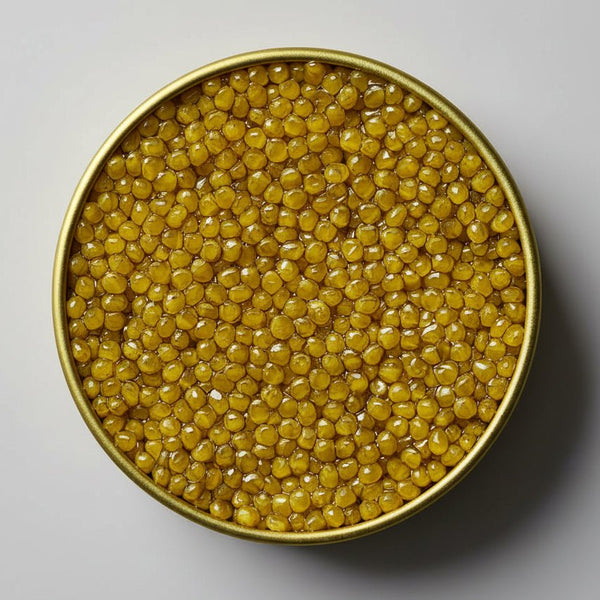
Iranian Beluga Caviar 000 Premium
€125.00

Premium Keta Salmon Roe
€26.90
24-48h refrigerated shipping throughout the Peninsula · CITES certified Iranian caviar
12. Where to buy malossol caviar online
Buying malossol caviar online requires a supplier that guarantees the cold chain from packaging to your table. These are the criteria for choosing safely:
- Mandatory refrigerated shipping: Malossol caviar does not survive standard shipping. Demand temperature-controlled transport (0-4°C).
- CITES traceability: Each tin must have its identification code to verify the species, origin, and legality.
- Fast stock rotation: A good supplier has high rotation, meaning the caviar you receive is fresh, not old in storage.
- Specialization: Be wary of general stores that sell caviar as just another product. Caviar requires expertise and a specific cold chain.
At Bacalalo, we work directly with Iranian producers from the Caspian Sea and guarantee refrigerated 24-48h shipping throughout the Peninsula. All our caviar is malossol, CITES certified, and you receive it with the freshness this product demands.
If it's your first time, we recommend starting with the "Caviar Starter Pack" which includes several species so you can discover your preference, or directly with an Iranian Imperial Osetra — the best value for money on the market.
🛒 Products mentioned in this article
⭐ 4.9/5 · Cold shipping 24-48h · Since 1990 at Mercat del Ninot
Frequently Asked Questions about Malossol Caviar
What is malossol caviar?
Malossol caviar is the highest quality category of sturgeon caviar, made with less than 4% salt (usually 2.8-3.5%). The term comes from the Russian "malosolny" meaning "lightly salted". This minimal salting preserves the natural flavors of the roe and is only applied to top-quality raw material.
How much does malossol caviar cost?
Prices vary depending on the species: aquaculture Baerii starts from €800-1,300/kg, Iranian Osetra is around €1,500-2,500/kg, and Caspian Beluga 000 reaches €2,500-4,000/kg. In individual format, a 30g tin of Imperial Osetra costs around €75 and a Beluga tin around €90-125.
What is the difference between malossol caviar and regular caviar?
The difference is in the amount of salt. Malossol caviar uses less than 4% salt, while "semi-preserved" caviar uses 5-8% and "pressed" (payusnaya) more than 10%. Less salt = more natural roe flavor, but a shorter shelf life (4-6 weeks vs. months). Malossol requires superior quality roe because it doesn't have the salt to "hide" defects.
How do you eat malossol caviar?
Ideally, straight from a mother-of-pearl spoon (never metal). Place it on your palate and press gently with your tongue to feel the "pop" of each roe and its flavors. If you prefer accompaniment, warm blinis with crème fraîche are the classic option. Avoid lemon, onion, or hard-boiled egg as they mask the nuances of malossol.
Can malossol caviar be frozen?
It is not recommended. Freezing breaks the roe membranes and destroys the texture and flavor nuances that define malossol caviar. Keep it refrigerated (0-4°C), unopened for up to 4-6 weeks, and once opened, consume within 2-3 days.
What is the best malossol caviar?
Caspian Sea Iranian Beluga 000 is universally considered the best caviar in the world: larger roe, creamier and purer flavor. But "best" depends on taste: if you prefer more complexity, choose Imperial Osetra (hazelnut notes); if you seek intensity, Sevruga. For beginners, Osetra offers the best quality-experience ratio.
What does "malossol" or "malasol" mean on a tin of caviar?
The spellings "malossol," "malosol," and "malasol" are variants of the same Russian term (малосольный). All mean the same thing: "lightly salted," indicating that the caviar contains less than 4% salt. It is not a brand or a type of sturgeon, but an indicator of the quality of the salting process.
Beluga, Osetra, or Sevruga malossol caviar: which to choose?
Beluga: the smoothest, creamiest, and most expensive — perfect for those who appreciate subtlety. Osetra: the most complex, with hazelnut notes — an expert favorite and best value for money. Sevruga: the most intense and iodized — for those who prefer a marine character. If it's your first time, start with Osetra or a tasting pack that includes all three.
What champagne pairs with malossol caviar?
A Brut Nature or Extra Brut Champagne (without sugar dosage) is the ideal choice. Fine bubbles cleanse the palate and high acidity balances the creaminess of the caviar. Reference brands: Billecart-Salmon, Krug Grande Cuvée, or if you're looking for a Spanish alternative, a Cava Corpinnat Gran Reserva Brut Nature.
Is malossol caviar pasteurized?
No. Malossol caviar is fresh (not pasteurized), which preserves its texture, the "pop" of each roe, and the complexity of flavors. Pasteurized caviar is heat-treated to extend its shelf life, but it loses the textural burst and many nuances. If you see "pasteurized" on the label, it is not malossol in the strict sense of the term.
Where to buy malossol caviar in Spain?
Online with refrigerated shipping is the most practical option. At Bacalalo we offer authentic Iranian malossol caviar (Beluga, Osetra, Sevruga) with 24-48h refrigerated shipping, CITES certification, and direct prices. You can also find quality Spanish caviar in Riofrío (Granada) and in specialized gourmet stores in major cities.
How many calories does malossol caviar have?
Approximately 250-270 kcal per 100g, with about 25g of protein, 17g of fat (rich in omega-3) and less than 4g of carbohydrates. Given that it is consumed in portions of 10-50g, the actual caloric intake is 25-135 kcal per serving. It is a nutritionally dense food: rich in vitamins A, D, B12 and minerals such as iron, selenium and zinc.
Ready to try authentic malossol caviar?
View Iranian caviar collection → · 24-48h refrigerated shipping · CITES certification
Discover our premium selection
Seafood products selected with care since 1990 in Mercat del Ninot, Barcelona. Refrigerated shipping in 24-48h.



![Dónde Comprar Bacalao en Barcelona: Mercados, Tiendas y Online [2026] - Bacalalo](http://bacalalo.com/cdn/shop/articles/donde-comprar-bacalao-en-barcelona-mercados-tiendas-y-online-2026-2164521.jpg?v=1772706821&width=480)

