

Battered Anchovies: A Step-by-Step Crispy Recipe
Battered anchovies — or fried boquerones, depending on the region — are one of the most popular tapas in Spanish cuisine. The secret is not complicated but requires method: fresh, well-cleaned anchovies, a thin, cold batter, oil at the exact temperature, and frying in small batches. This guide details three types of batter (flour, tempura, and panko), precise frying times, and the mistakes that turn crispy anchovies into a greasy mess.
Anchovies vs. Boquerones: Let's Clarify
Updated March 2026. After decades of working with seafood products, we have learned that quality makes all the difference.
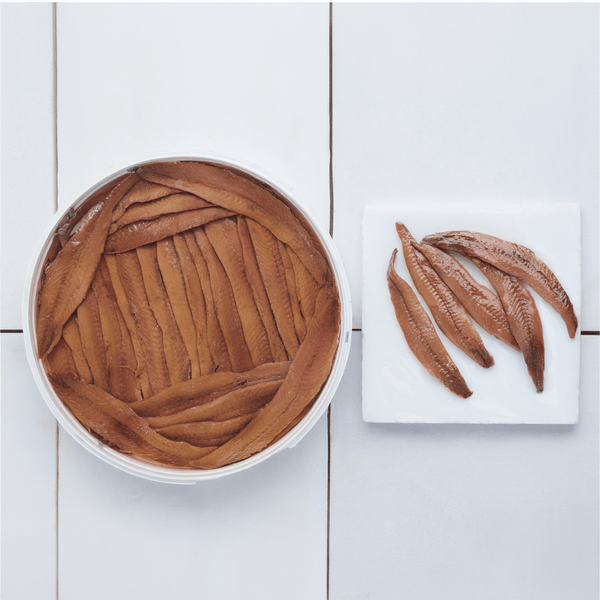
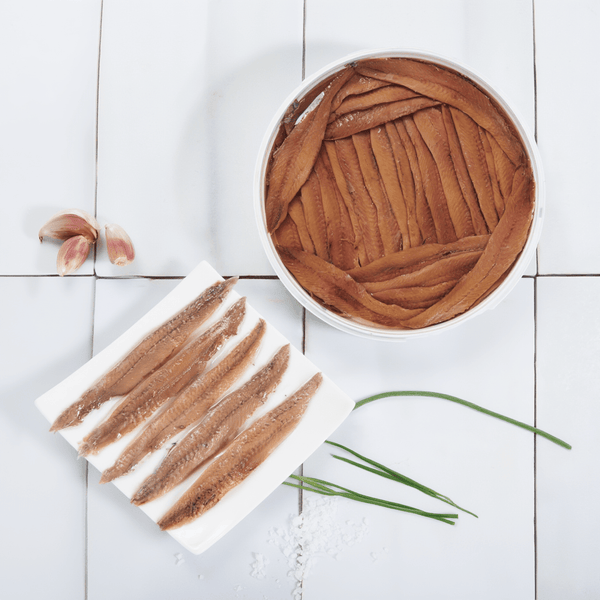
Anchovy and boquerón are the same fish: Engraulis encrasicolus. The difference is the preparation. "Boquerón" is used for fresh fish (fried boquerones, boquerones in vinegar). "Anchovy" is generally reserved for the product cured in salt and packed in oil — the Cantabrian anchovies we sell at Bacalalo.
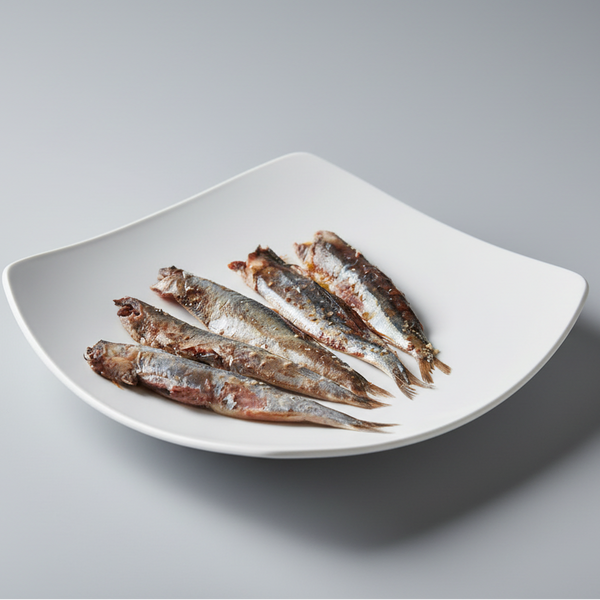
For this recipe, we use fresh boquerones (the same fish, uncured). They are bought whole at the fishmonger and cleaned at home. If you don't have access to fresh boquerones, the alternative is to use frozen fresh anchovies, which are thawed in the refrigerator and work well for frying.
How to Choose and Clean Anchovies
Signs of Freshness
- Eyes: bright, convex, transparent. Never sunken or opaque.
- Skin: silvery with a metallic sheen. If it's dull or yellowish, it's not fresh.
- Smell: clean sea smell. Any ammonia smell disqualifies the piece.
- Flesh: firm to the touch. If pressing leaves a finger mark, it's past its prime.
- Ideal size for battering: 8-12 cm. Smaller ones are fried whole, larger ones are butterflied.
How to Clean (5 minutes for 500g)
Remove the head with your fingers, pulling towards the belly — the guts will come out with it. Open the boquerón along the belly with your thumb, following the central spine. Remove the spine with a firm motion. Rinse under cold water. Pat dry with kitchen paper. You can leave them butterflied (more crispy surface) or closed (juicier inside).
3 Types of Batter
| Batter | Texture | Difficulty | Result |
|---|---|---|---|
| Just flour | Thin, crispy, classic | Easy | The traditional one. The most popular in bars. |
| Tempura | Light, airy, very crispy | Medium | More refined. Ideal for presentation. |
| Panko | Thick, ultra-crispy | Medium | Maximum crispiness. Japanese style. |
Batter 1: Just Flour (Classic Spanish)
Put wheat flour in a deep plate. Salt the cleaned boquerones. Coat them in flour, shaking off the excess. Fry directly. This is the fastest method and produces the thinnest batter.
Batter 2: Tempura
Mix 100g flour, 1 tablespoon cornstarch, 150ml very cold sparkling water, and a pinch of salt. Do not overmix — lumps are welcome. Dip the boquerones and fry. The sparkling water and cold temperature create the characteristic airy texture.
Batter 3: Panko
Coat the boquerones in flour, then in beaten egg, then in panko (Japanese breadcrumbs). The triple breading creates a thick, ultra-crispy crust that stays crisp for minutes without softening.
Classic Recipe Step by Step
Ingredients (4 servings as a tapa)
- 500g fresh boquerones (about 25-30 pieces)
- 150g wheat flour
- Salt
- Mild olive oil or sunflower oil for frying (minimum 1 liter)
- Lemon for serving
Step by Step
1. Clean: Remove heads, guts, and bones from the boquerones. Rinse and dry very well with kitchen paper. Moisture is the enemy of crispiness.
2. Salt: Season the boquerones with fine salt 5 minutes before battering. Salt extracts surface moisture that would otherwise prevent browning.
3. Heat the oil: In a deep frying pan or fryer, heat the oil to 180-190 °C (356-374 °F). The oil should completely cover the boquerones. Check the temperature with a kitchen thermometer or by dropping a small piece of bread: it should fry immediately with vigorous bubbles but without burning.
4. Flour: Coat the boquerones in flour one by one or a few at a time. Shake off the excess well: leftover flour absorbs oil and results in a soggy batter.
5. Fry in batches: Place 6-8 boquerones in the hot oil. Do not overcrowd the pan — if you put too many, the oil temperature drops and the result is oily instead of crispy. Fry for 2-3 minutes until uniformly golden brown.
6. Drain: Remove with a slotted spoon to a plate with absorbent paper. Do not pile up — arrange in a single layer.
7. Serve immediately: Battered anchovies are eaten hot. A squeeze of lemon and nothing else.
Frying Times and Temperature
| Anchovy Size | Oil Temperature | Time | Result |
|---|---|---|---|
| Small (5-8 cm) | 190 °C (374 °F) | 1.5-2 min | Crispy whole, eaten with bones |
| Medium (8-12 cm) | 180 °C (356 °F) | 2-3 min | Golden, juicy inside |
| Large (>12 cm) | 175 °C (347 °F) | 3-4 min | Butterflied, more cooking time |
Visual cue: when the oil's bubbling decreases (bubbles go from large and fast to small and slow), the boquerón is ready. The internal moisture has evaporated — it's time to remove it.
Accompaniment Sauces
1. Lemon (Classic)
A quarter lemon per person. Squeeze over the anchovies just before eating. It's the cleanest option and best respects the fish's flavor.
2. Aioli
Crushed garlic emulsified with olive oil. Powerful. Works as a contrast to the softness of the fried anchovy.
3. Tartar Sauce
Mayonnaise with chopped pickles, capers, spring onion, and parsley. A more elaborate version for those who want an accompaniment with texture.
4. Green Sauce
Parsley, garlic, Sherry vinegar, and olive oil emulsified. Fresh, herbaceous. For those who want something lighter than aioli.
Common Mistakes
| Mistake | Result | Solution |
|---|---|---|
| Oil at low temperature | Soggy, oily batter | Wait for 180-190 °C (356-374 °F) before frying |
| Too many boquerones at once | Temperature drops, poor frying | Maximum 6-8 pieces per batch |
| Wet boquerones | Splattering + soft batter | Dry very well with kitchen paper |
| Excess flour | Thick, soggy crust | Shake off excess flour before frying |
| Not serving immediately | Steam softens the batter | From pan to plate, no waiting |

Green Olives Stuffed with Anchovy Family Size - 1.5 kg | A92
If battered anchovies are the popular version, Cantabrian anchovies in olive oil are the gourmet version. Cured for 10-12 months, hand-filleted. For when you don't want to fry but do want the best seafood product.
Nutritional Value
Battered anchovies, like all fried foods, absorb oil during cooking. The caloric impact depends on the technique:
| Preparation | Calories / 100g | Fats / 100g | Proteins / 100g |
|---|---|---|---|
| Fresh anchovy (unbattered) | 131 kcal | 4.8 g | 20 g |
| Battered anchovy (well fried) | 195 kcal | 10 g | 17 g |
| Battered anchovy (poorly fried, cold oil) | 250+ kcal | 16+ g | 14 g |
Good frying (hot oil, short time) absorbs 10-15% oil. Poor frying can absorb 30% or more. Technique not only affects taste — it directly affects the caloric value of the dish.
Frequently Asked Questions
Can frozen anchovies be battered?
Yes, if you thaw them completely in the refrigerator first and dry them very well. Frozen anchovies can release more water, so drying is even more important than with fresh ones. The result is acceptable, although fresh ones are always better for frying.
What oil is best for frying anchovies?
Mild olive oil (not extra virgin) or high-oleic sunflower oil. Extra virgin olive oil has a lower smoke point and a strong flavor that can dominate. High-oleic sunflower oil is neutral and withstands high temperatures well. Never reuse oil more than 2-3 times.
How many anchovies per person as a tapa?
As a tapa, calculate 6-8 medium boquerones per person (about 125g raw). As a serving or sharing dish, 10-12 per person. A kilo of fresh boquerones serves 6-8 people as a tapa.
Can battered anchovies be made in the oven?
You can try, but the result is not comparable. The oven does not produce the same Maillard reaction as deep frying. Oven-baked boquerones are drier and lack the crispiness of fried ones. If you want to avoid frying, it's better to opt for grilled anchovies with olive oil.
Can battered anchovies be reheated?
It is not recommended: they completely lose their crispiness. If you insist, use the oven at 200 °C (392 °F) for 5 minutes (never microwave). But the reality is that battered anchovies are eaten freshly fried or not at all.
Green Olives Stuffed with Anchovy Family Size - 1.5 kg | A92
To assemble a complete appetizer: Cantabrian anchovies in preserves, boquerones in vinegar, and olives. All ready, no cooking needed. The perfect plan B when you don't feel like turning on the stove.
🛒 Products used in this recipe
Cantabrian Anchovies "00" Gourmet Selection
Premium 00 caliber, artisan elaboration
38,90€
View Product →⭐ 4.9/5 · Cold shipping 24-48h · Since 1990 at Mercat del Ninot
Conclusion
Battered anchovies are a tapa that seems simple but distinguishes the attentive cook from the improviser. Oil at the correct temperature, dry boquerones, thin batter, frying in batches, immediate service. Five steps that make the difference between a crispy, addictive dish and a soggy disaster.
If you want to experiment with the product without frying, our battered cod recipes apply the same principles to another fish that takes batter wonderfully.