Summary: Perfect tuna croquettes have three key elements: a thick, well-cooked béchamel (at least 10 minutes of cooking), quality tuna flaked coarsely (not mashed), and a resting period of at least 4 hours. Here's the complete recipe with exact proportions, chef's tricks, and the science behind each step.
Table of Contents
Why canned tuna is ideal for croquettes
Canned tuna (Thunnus alalunga — albacore tuna — or Thunnus albacares — skipjack tuna) is probably the most undervalued protein in the Spanish pantry. It works in croquettes for three reasons: it has a powerful flavor that survives the béchamel and frying, its texture flakes into fibers that provide bite without breaking the mixture, and nutritionally it provides 26g of protein per 100g with a superior omega-3 profile compared to most meats.
Spain consumes 3.17 kg of canned tuna per capita per year — European leaders. But most eat it in salads or sandwiches. Croquettes are a superior level.
The difference between mediocre tuna croquettes and extraordinary ones lies in three factors: the quality of the tuna (albacore in olive oil vs. skipjack in sunflower oil — there's a huge difference), the cooking of the béchamel (the most common mistake is not cooking it enough), and the frying temperature.
Exact ingredients and proportions
For 30-35 croquettes:
| Ingredient | Quantity | Note |
|---|---|---|
| Butter | 80 g | Unsalted preferably |
| Wheat flour | 80 g | All-purpose, not bread flour |
| Whole milk | 700 ml | Lukewarm, not cold |
| Canned tuna (drained) | 250 g (2-3 cans) | Albacore in olive oil |
| Onion | 1 medium (120 g) | Very finely chopped |
| Nutmeg | A pinch | Freshly grated |
| Salt and white pepper | To taste | White pepper to avoid black specks |
| Beaten eggs | 2-3 | For breading |
| Fine breadcrumbs | 200 g | Panko optional for extra crunch |
| Mild olive oil | For frying (1 liter min.) | Olive 0.4° or high oleic sunflower |
Key proportion: The 80:80:700 butter:flour:milk ratio produces a thick, "croquette-style" béchamel. If you want a béchamel for gratin, the ratio would be 40:40:500. For croquettes, you need double the consistency.
The béchamel: 80% of the success
Croquette béchamel is not pasta béchamel. It's a dough that should cleanly pull away from the sides of the saucepan. If it doesn't, it needs more cooking.
Step-by-step:
- Sauté the onion: In melted butter, over medium-low heat, for 8-10 minutes. You want transparent, sweet onion, not browned. Caramelized onion would give too intense a flavor.
- Add the flour: All at once, and stir with a wooden spoon for 2 minutes. This step is called "roux" and is where the flour loses its raw taste. It should bubble gently without browning.
- The milk, lukewarm and in three additions: Pour in a third of the milk (lukewarm, not cold — if you add it cold, lumps form instantly). Stir vigorously with a whisk until incorporated. Repeat two more times. The whisk is mandatory — a wooden spoon won't break up lumps in time.
- Long cooking: This is where most people fail. Cook the béchamel over medium-low heat, stirring constantly, for at least 10 minutes (ideally 12-15). The flour needs this time to fully hydrate and lose its floury taste. You'll know it's ready when it pulls away from the sides of the saucepan, forming a ball.
- Season at the end: Salt, white pepper, and nutmeg. Season slightly more than you think is correct — the breading and frying "absorb" flavor.
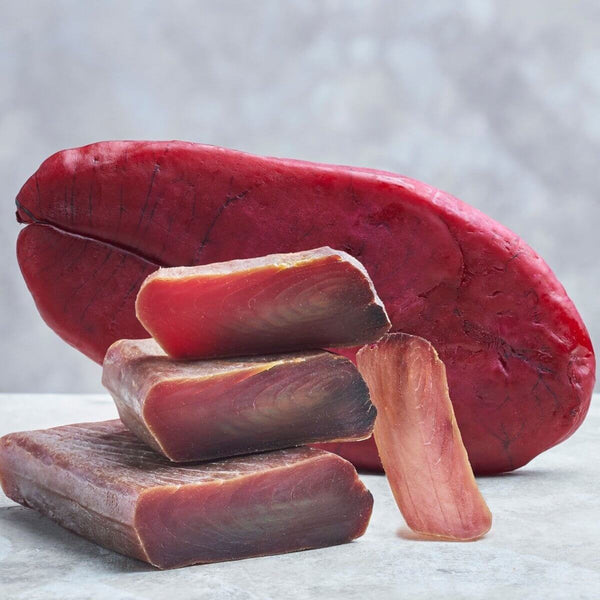
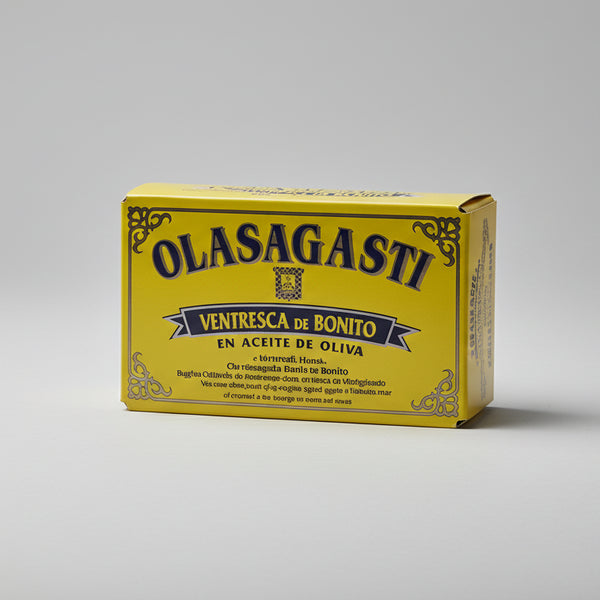
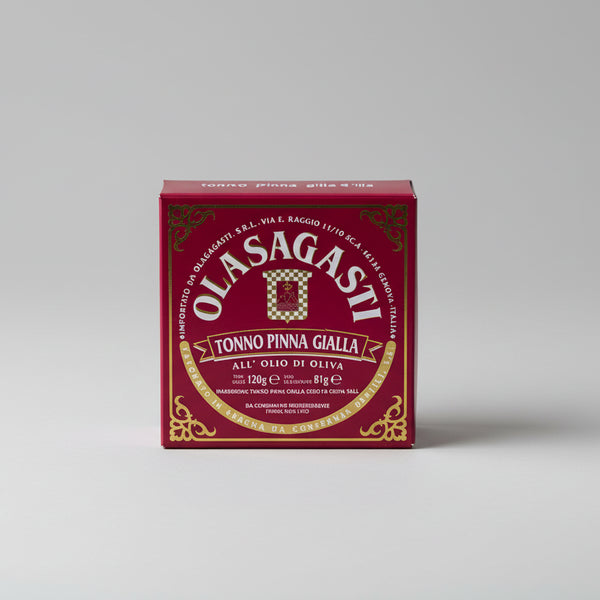
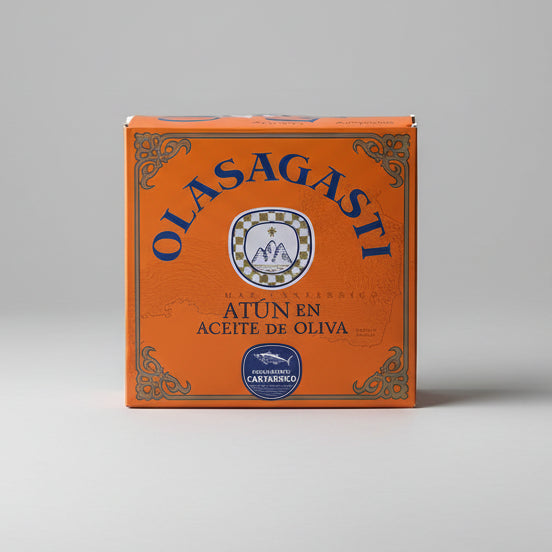
The quality of the tuna makes all the difference. Our canned tuna and bonito del norte are made with bonito (Thunnus alalunga) line-caught in the Cantabrian Sea and packed in extra virgin olive oil.
Adding the tuna: texture, not mush
Fatal error: mashing the tuna with the béchamel. If you mash it, you get a homogeneous mass with no personality — it could be croquettes of anything.
The right way: Drain the tuna from the oil (reserve the oil for other recipes — it's liquid gold). Flake it with a fork into irregular pieces of 0.5-1 cm. Incorporate the flaked tuna into the hot béchamel and mix with folding motions. You want each croquette to have small, visible strands of tuna when you bite into it.
Quantity: The proportion of 250 g of tuna to 700 ml of milk is the sweet spot. Less tuna and the croquette tastes like béchamel. More tuna and the mixture doesn't bind well.
The resting period: why at least 4 hours
Pour the mixture into a wide tray (so it forms a layer about 2-3 cm thick), cover with plastic wrap touching the surface (to prevent a skin from forming), and refrigerate.
Minimum 4 hours. Ideally: overnight.
Why? During cold resting, two processes occur: starch retrogradation (amylose molecules rearrange to form a firmer network) and complete cooling of the fat (the butter solidifies and provides structure). A well-chilled dough is easily shaped without sticking to your hands. A lukewarm dough is a sticky disaster.
Shaping and triple breading
With lightly dampened hands (not wet — water weakens the dough), take portions of about 25-30g and form cylinders or ovals. Whatever is most comfortable for you — the shape doesn't affect the taste.
Three-step breading:
- Roll the croquette in flour (shake off excess).
- Dip in beaten egg.
- Coat with breadcrumbs, pressing gently.
Professional tip: After the first breading, repeat steps 2 and 3 (double breading). This creates a thicker crust that better insulates the béchamel from the oil, producing croquettes that are creamier inside and crispier outside.
If you use Japanese panko instead of fine breadcrumbs, the result is even crispier, with a tempura-like texture. Mixing 50% panko + 50% fine breadcrumbs is a good compromise.
The perfect frying: 180°C and 90 seconds
Oil temperature is everything. Measure with a kitchen thermometer — don't trust the bread trick, it's very imprecise.
| Temperature | Result |
|---|---|
| < 160°C | The croquette absorbs oil, becoming greasy and soft |
| 170-175°C | Acceptable but slow — risk of bursting open |
| 180°C | Optimal point: crispy outside, creamy inside in 90 seconds |
| > 190°C | Browns too quickly and the inside remains cold |
Fry in batches of 4-5 croquettes maximum. More croquettes lower the oil temperature and result in uneven cooking. Drain on absorbent paper and wait 2 minutes before biting — the inside is over 90°C right out of the fryer.
Variants that work
- Albacore and Piquillo Pepper Croquettes: Add 100g of chopped piquillo peppers to the béchamel along with the tuna. The sweetness of the pepper balances the intensity of the albacore.
- With a touch of mustard: A tablespoon of Dijon mustard in the béchamel adds subtle acidity without overpowering. Works especially well with skipjack tuna.
- Version with aged cheese: 50g of grated aged Manchego incorporated into the hot béchamel. It melts and provides additional umami.
- Marmitako Croquettes: Add 80g of diced cooked potato and 50g of chopped green pepper. Direct Basque inspiration.
For these croquettes, we recommend albacore in olive oil. Check out our selection of canned tuna and bonito — line-caught, whole loins, no additives.
Frequently Asked Questions
Can I freeze the croquettes before frying?
Yes, and in fact, it's recommended. Once breaded, place them on a tray without touching and freeze for 2 hours. Then, transfer them to a freezer bag. Fry them directly without thawing, adding 30 seconds to the frying time (total: 2 minutes at 180°C). They last 2-3 months in the freezer.
Which canned tuna is best for croquettes?
Albacore (Thunnus alalunga) in extra virgin olive oil, always. It's more delicate and fibrous than skipjack tuna (Thunnus albacares). The price difference (2-3 times more) is directly noticeable in the taste of the croquette. Avoid tuna in sunflower oil — the flavor is bland.
Why do my croquettes explode when frying?
Three possible causes: the mixture was not cold enough (it needs at least 4 hours in the fridge), the breading had gaps (ensure uniform, seamless coverage), or the oil was too hot (>190°C). The most frequent cause is the first: lukewarm dough = explosive croquette.
Can they be made in an air fryer?
Yes, but the result is not the same. Preheat the air fryer to 200°C, spray the croquettes with oil, and cook for 10-12 minutes, turning them halfway. They turn out crispy on the outside, but the internal texture is slightly less creamy. It's an acceptable compromise if you're looking for less fat.
How many calories does a tuna croquette have?
A standard-sized croquette (30g of dough + breading) when fried has approximately 85-95 kcal. Of these, about 45 kcal come from fat (béchamel + absorbed oil) and the rest from carbohydrates (flour, breadcrumbs) and protein (tuna, milk). In an air fryer, it drops to about 65-75 kcal per unit.
Can vegetable milk be used in the béchamel?
Technically yes, but the result changes. Soy milk works best due to its similar protein content. Oat milk is too sweet. Almond milk is too watery. In any case, béchamel with vegetable milk takes longer to thicken and the final texture is less silky.
Keep exploring
Canned tuna and bonito · Gourmet preserves · Sardines and small sardines · Olasagasti preserves