Summary: Traditional Basque gildas emerge from the culinary wisdom of the Basque Country, specifically from the city of San Sebastián, where they began to be served in the most renowned pintxo-poteos around the 1940s. This gastronomic delicacy owes its name to the famous film "Gilda" starring Rita Hayworth, establishing an analogy between the actress's spicy and seductive character and the organoleptic characteristics of this appetizer.
Table of Contents
- History and origin of Basque gildas
- Essential ingredients for authentic gildas
- Bacalalo's perfect gilda: modernized artisanal tradition
- ' + product.title + '
- Preparation and presentation techniques
- Pairings and optimal service
- Nutritional value and gastronomic benefits
- Professional preservation and storage
- Frequently asked questions about traditional gildas
History and origin of Basque gildas
Traditional Basque gildas emerge from the culinary wisdom of the Basque Country, specifically from the city of San Sebastián, where they began to be served in the most renowned pintxo-poteos around the 1940s. This gastronomic delicacy owes its name to the famous film "Gilda" starring Rita Hayworth, establishing an analogy between the actress's spicy and seductive character and the organoleptic characteristics of this appetizer.

The original configuration of gildas consisted of a perfect triad: Cantabrian anchovy, arbequina olive and Basque guindilla, meticulously threaded onto a wooden skewer. This combination did not arise by chance, but as a result of the accumulated experience of generations of Basque tavern owners who understood the importance of the gustatory balance between salty, fatty and spicy.
In subsequent decades, gildas transcended the borders of the Basque Country to become a benchmark of Spanish gastronomy. Salt specialists and canneries perfected preparation techniques, meticulously selecting each ingredient to guarantee the excellence of the final product.
Essential ingredients for authentic gildas
Cantabrian anchovies: the salty soul
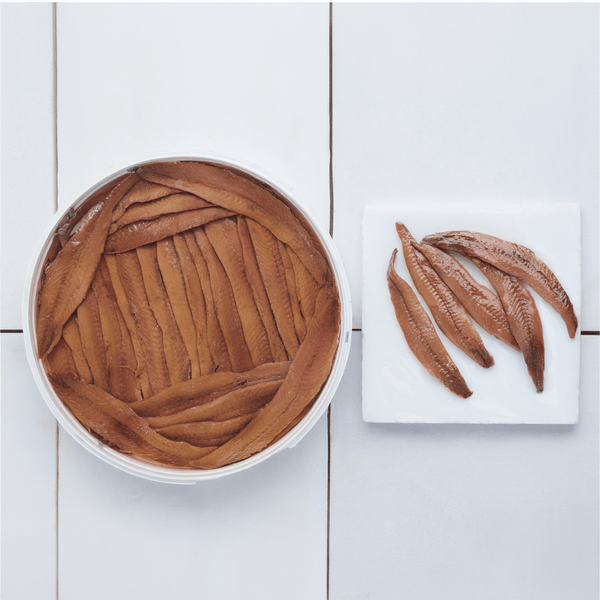
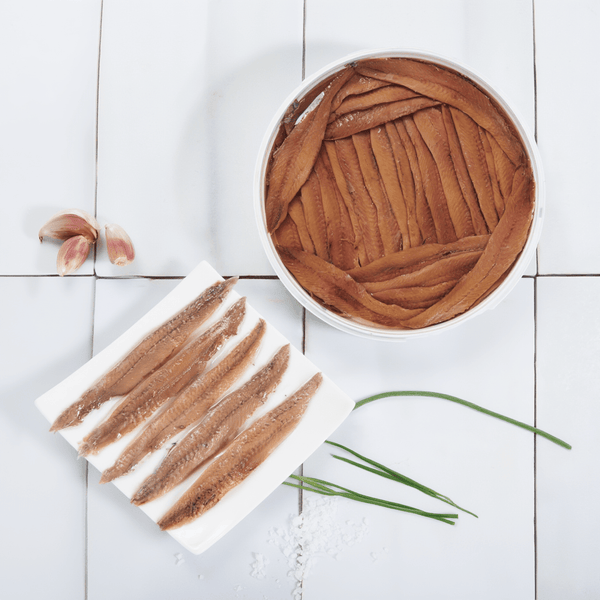
Anchovies constitute the backbone of traditional Basque gildas. The superior quality comes exclusively from the Cantabrian Sea, where cold currents and abundant plankton provide an optimal ecosystem for the development of these oily fish. The artisanal salting process, which can last up to eighteen months, gives the anchovies their characteristic umami flavor and silky texture.

Selection should prioritize medium-sized specimens, neither too large to be fibrous, nor too small to lack fleshiness. The color should range between intense pink and reddish-brown, indicative of correct maturation in salt.
Olives: the oleaginous contrast
Olives provide the fatty component and creamy texture essential to balance the saltiness of the anchovies. Traditionally, arbequina olives are used, although some variants incorporate picholines or manzanillas. The curing process must respect traditional methods, avoiding chemical additives that compromise the natural flavor of the fruit.
Guindillas: the distinctive pungent touch
Basque guindillas, scientifically known as Capsicum annuum, provide the characteristic spiciness that defines authentic gildas. Their cultivation on the slopes of the Basque Pyrenees, exposed to Atlantic influence, produces a pepper with thin walls and concentrated flavor, with a moderate but persistent capsaicin level.
Bacalalo's perfect gilda: modernized artisanal tradition
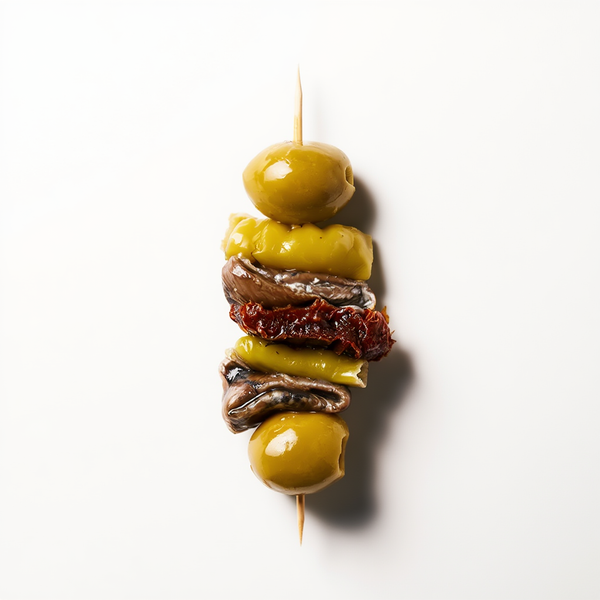
In the competitive landscape of gourmet preserves, Bacalalo has developed an exceptional proposal that respects the traditional essence of Basque gildas while incorporating contemporary gastronomic innovations. Their anchovy, olive, guindilla, and sun-dried tomato gilda represents a natural evolution of the classic concept, incorporating the fourth element that provides natural sweetness and aromatic complexity.

This artisanal preparation exclusively uses hand-selected Cantabrian anchovies, premium olives, and traditional Basque guindillas, complemented by sun-dried tomatoes that intensify the flavor profile. The combination results in a sophisticated appetizer that satisfies both purists and consumers looking for renewed gastronomic experiences.
Careful presentation and complete traceability of ingredients guarantee a premium product that reflects over three decades of expertise in the fine preserves sector.
Preparation and presentation techniques
Traditional step-by-step preparation
The preparation of traditional Basque gildas requires meticulousness and respect for ancestral processes. Initially, the anchovies should be brought to room temperature for fifteen minutes, allowing the natural oils to redistribute evenly. This process, called "resting," is fundamental to optimize the organoleptic characteristics.
Subsequently, assembly proceeds in a specific order: first the guindilla, which will act as the bottom stop; then the anchovy, naturally curved around the skewer; finally the olive, which crowns the composition. Some master canners incorporate a second folding of the anchovy, creating a denser texture.
Contemporary variations
Modern interpretations have expanded the classic repertoire by incorporating elements such as sun-dried tomatoes, caperberries, piquillo peppers or even pickled anchovies. These variations, although controversial among purists, have proven their commercial and gastronomic validity.
"The perfect gilda must ensure that each bite contains balanced proportions of all its components, creating a symphony of flavors that evolves on the palate from salty to spicy, passing through the oily."
Pairings and optimal service
Complementary wines and drinks
Traditional Basque gildas require specific pairings that enhance their qualities without competing with their intense flavor. White wines aged on lees, such as Albariños or Txakolís, provide the necessary acidity to counteract the saltiness of the anchovies.
Young reds with soft tannins, especially those made with Tempranillo, offer an interesting alternative that complements the umami of the preserves. In the realm of spirits, Asturian or Basque natural cider is the most traditional and appropriate pairing.
Service temperature and timing
Service requires attention to seemingly minor but determining details. The optimal temperature ranges between 12 and 15 degrees Celsius, allowing the aromas to be fully expressed without the oils solidifying. The ideal consumption time is between 10 and 15 minutes after opening the container, enough time for oxygenation but insufficient for oxidation.
| Ingredient | Ideal proportion | Key characteristics |
|---|---|---|
| Anchovy | 40% | Minimum 12 months salting |
| Olive | 30% | Arbequina or Picholine variety |
| Guindilla | 20% | Basque origin, moderate spiciness |
| Additions | 10% | Sun-dried tomato, capers |
Nutritional value and gastronomic benefits
Gildas offer an exceptional nutritional profile, concentrating proteins of high biological value, omega-3 fatty acids, and natural antioxidants. Anchovies provide approximately 20 grams of protein per 100 grams, in addition to B vitamins and essential minerals such as iron and phosphorus.
The oily components of olives contribute monounsaturated fatty acids, particularly oleic acid, beneficial for the cardiovascular system. Guindillas provide capsaicin, a compound with scientifically recognized anti-inflammatory and thermogenic properties.
Professional Storage and Preservation
Optimal Preservation Conditions
Proper preservation of traditional Basque gilda appetizers requires controlled environmental conditions. The temperature should be maintained between 5 and 18 degrees Celsius, avoiding thermal fluctuations that compromise product stability. Relative humidity should not exceed 65%, preventing the proliferation of undesirable microorganisms.
Packages should be stored horizontally, allowing the natural oils to keep all components hydrated. Light exposure must be minimized, as ultraviolet rays can trigger oxidative processes that alter color and flavor.
Shelf Life and Quality Indicators
Artisanal gildas maintain their optimal organoleptic properties for 24 months under adequate storage conditions. Indicators of deterioration include chromatic changes, rancid aromas, or excessively soft textures. Once opened, they should be consumed within a maximum of 48 hours.
Frequently Asked Questions about Traditional Gildas
Can gildas include other ingredients besides the classic trio?
Although the traditional version consists exclusively of anchovy, olive, and guindilla, variations with sun-dried tomato, caper berries, or piquillo peppers have gained gastronomic acceptance, provided they maintain the fundamental taste balance.
What is the difference between industrial and artisanal gildas?
Artisanal gildas use manual selection processes, certified origin ingredients, and traditional preservation techniques, while industrial ones prioritize mass production, often compromising the quality of raw materials.
Is it necessary to refrigerate gildas after opening the package?
Once opened, gildas must be refrigerated and kept covered by their covering oil to prevent drying and oxidation of the components.
- Always verify the origin of the anchovies, prioritizing those from the Cantabrian Sea
- Observe the uniform color and absence of whitish spots in the preserves
- Check that the covering oil is transparent and aromatic
- Choose suppliers with full traceability of ingredients
- Respect the best-before dates indicated on the label
Conclusions
- History and origin of Basque gildas: Traditional Basque gilda appetizers emerged from the culinary wisdom of the Basque Country, specifically from the city of San Sebastián, where they began to be served in the most renowned pintxos-poteos around the 1940s.
- Essential ingredients for authentic gildas: Anchovies are the backbone of traditional Basque gilda appetizers.
- Bacalalo's perfect gilda: modernized artisanal tradition: In the competitive landscape of gourmet preserves, Bacalalo has developed an exceptional proposal that respects the traditional essence of Basque gildas while incorporating contemporary gastronomic innovations.
- ' + product.title + ': The preparation of traditional Basque gilda appetizers requires meticulousness and respect for ancestral processes.
- Pairings and optimal serving: Traditional Basque gilda appetizers demand specific pairings that enhance their qualities without competing with their intense flavor.
Discover our selection of Cantabrian anchovies at Bacalalo.