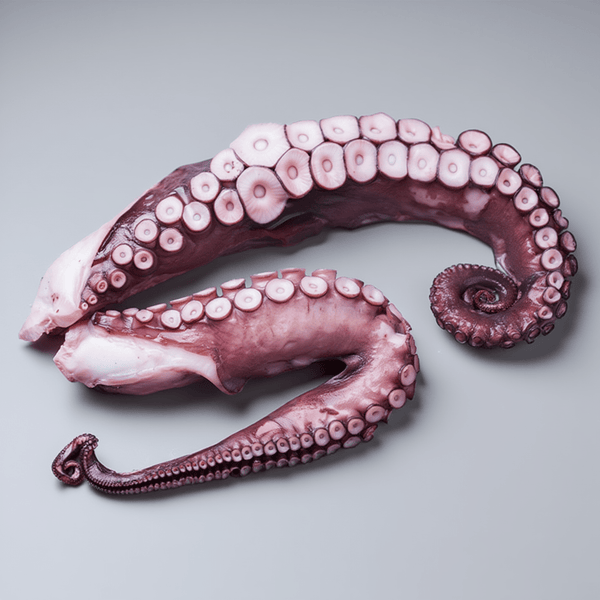
Summary: Pulpo a la gallega (Galician-style octopus, or pulpo á feira) is one of the most iconic dishes in Spanish gastronomy. In this complete guide, I'll show you the original recipe with all the tricks from the Galician "pulpeiras" (octopus cooks): from how to choose and cook the octopus to the traditional plating on a wooden dish with Pimentón de la Vera and extra virgin olive oil. It includes cooking times based on weight, Arguinano's version, grilled variations, and pairings with Galician wines.
Contents
- What is pulpo a la gallega and how does it differ from pulpo a feira
- History: the Galician pulpeiras and the fairs
- How to choose octopus: fresh, frozen, and ideal size
- How to cook octopus: the "scare" trick step by step
- Table of cooking times according to octopus weight
- Ingredients for pulpo a la gallega (4 servings)
- Pulpo a la gallega recipe step by step
- The secret of paprika: de la Vera vs. regular paprika
- Serving on a wooden plate: the tradition that matters
- Classic accompaniments: cachelos, corn bread, and peppers
- Arguinano's version: pulpo a la gallega with his touch
- Variations: grilled octopus, pan-seared, and in Thermomix
- Nutritional information and preparation comparison
- Pairing: Galician wines to accompany octopus
- Where to buy quality cooked Galician octopus
- Frequently asked questions about pulpo a la gallega
What is pulpo a la gallega and how does it differ from pulpo a feira
Pulpo a la gallega is one of the most emblematic dishes of Spanish cuisine, originating in Galicia and present on tables throughout the peninsula for centuries. It consists of cooked octopus, sliced, and seasoned with extra virgin olive oil, coarse salt, and paprika—generally sweet, although many also add a pinch of spicy.
However, there is a distinction that Galicians proudly uphold: pulpo a la gallega and pulpo a feira are not exactly the same, although outside of Galicia they are used interchangeably.
- Pulpo a feira (octopus at the fair): This is the most purist denomination. It refers to the octopus prepared (and still prepared) at Galician fairs and pilgrimages, especially in the A Ulloa region and towns like Carballino. It is served exclusively with olive oil, coarse salt, and paprika, on a wooden plate. No potatoes.
- Pulpo a la gallega: This is the version that has spread throughout the rest of Spain. It usually includes a base of cachelos (potatoes cooked in the octopus water), in addition to the classic accompaniment of oil, salt, and paprika.
In essence, all pulpo a feira is pulpo a la gallega, but not all pulpo a la gallega follows the orthodoxy of pulpo a feira. In this recipe, we will show you the original pulpo a la gallega recipe with both options so you can choose according to your preference.
History: the Galician pulpeiras and the fairs
The history of pulpo a la gallega is inextricably linked to the pulpeiras, the women who for centuries have been dedicated to cooking and serving octopus at Galician fairs. The tradition dates back at least to the Middle Ages, when inland Galician monasteries received octopus as offerings and tithe payments.
The historical epicenter is Santa Marina de Augas Santas, in the province of Ourense, where the women of the area developed a trade passed down from mothers to daughters. The pulpeiras traveled from fair to fair with their enormous copper cauldrons, firewood, and octopus-cutting scissors. The trade required precise knowledge: knowing how long to cook each piece according to its size, when it was perfectly done, how to cut it, and how to season it.
The Festa do Pulpo de O Carballino, held on the second Sunday of August, is today the largest gastronomic festival dedicated to octopus in Galicia, where more than 40,000 kilos are served in a single day. Also legendary are the pulperias of Melide, an essential stop on the Camino de Santiago, where pilgrims from all over the world taste authentic pulpo a feira for the first time.
If you are interested in traditional Galician cuisine, don't miss our Galician fish soup recipe, another classic from the northwest's seafaring cookbook.
How to choose octopus: fresh, frozen, and ideal size
The first step to a good pulpo a la gallega is choosing the right raw material. There are three main options:
Fresh octopus
If you buy fresh octopus at the market, make sure it has bright eyes, intact skin, and smells of the sea (never ammonia). Fresh octopus needs prior treatment to tenderize it: traditionally it was beaten against rocks or on a board. Today, the most practical method is to freeze it for at least 48-72 hours before cooking. Freezing breaks down muscle fibers and achieves the same effect as traditional beating.
Frozen octopus
This is the most convenient option and, honestly, the one used by the vast majority of restaurants. Since it has been frozen, its fibers are already broken down, and you don't need to beat it. Thaw in the refrigerator for 24 hours before cooking. Never thaw at room temperature or in the microwave.
Cooked Galician octopus
The most practical option if you're looking for professional results without complications. A quality cooked Galician octopus, vacuum-packed, guarantees a perfect cooking point, and you only need to heat, cut, and season. It is the ideal alternative for those who don't want to risk the cooking process.
Ideal size
For pulpo a la gallega, the ideal size is between 1.5 and 2.5 kg. Smaller pieces tend to be dry, and those over 3 kg require very long cooking times and are harder to handle. For 4 people, estimate between 250 and 300 g of octopus per diner (raw, as it loses about 40% of its weight during cooking).
How to cook octopus: the "scare" trick step by step
Cooking is the critical moment. A poorly cooked octopus is rubbery and inedible; overcooked, it falls apart and loses texture. The traditional method of the pulpeiras includes the famous "scare" trick (or "asustar el pulpo"), which is not folklore: it has a perfectly logical culinary explanation.
Why "scare" the octopus
When you submerge the octopus in boiling water, the surface proteins contract abruptly, and the skin separates. When you remove it, the thermal shock partially reverses this process. By repeating it three times, the skin progressively seals without peeling, and the internal cooking is more uniform. The result: an octopus with intact skin, vibrant color, and tender texture.
Steps to "scare" the octopus
- Bring a large pot of plenty of water to a boil. Do not add salt (it is seasoned at the end). You can add a bay leaf and half an onion for flavor, although purist pulpeiras only use water.
- Hold the octopus by the head with tongs or a large fork.
- First "scare": submerge the tentacles in boiling water for 5-8 seconds and remove them. You will see them curl up.
- Second "scare": repeat the operation. The tentacles will shrink a little more.
- Third "scare": once more. Now the skin is sealed.
- Submerge the octopus completely and let the water return to a boil. At that moment, lower the heat to medium-low so that it simmers gently, without violent bubbling.
The water should not boil vigorously: a gentle simmer is key. The pulpeiras say that the water should "smile, not laugh out loud."
Table of cooking times according to octopus weight
The cooking time for cooked octopus varies significantly with weight. This table will serve as a reference, although you should always check doneness by pricking the thickest part of the tentacle with a toothpick or knife: it should go in effortlessly but with slight resistance.
| Octopus weight | Cooking time | Approx. servings |
|---|---|---|
| 800 g - 1 kg | 25-30 minutes | 2-3 people |
| 1 - 1.5 kg | 30-40 minutes | 3-4 people |
| 1.5 - 2 kg | 40-50 minutes | 4-6 people |
| 2 - 2.5 kg | 50-60 minutes | 6-8 people |
| 3 kg or more | 60-75 minutes | 8-10 people |
Professional tip: when you think it's ready, turn off the heat and let the octopus rest in its hot water for 15-20 minutes. This resting period allows it to finish cooking gently with residual heat and absorb moisture, making it much juicier.
Ingredients for pulpo a la gallega (4 servings)
The beauty of the pulpo a la gallega recipe lies in its simplicity. There are few ingredients, but each must be of the best possible quality:
- 1 octopus of 1.5-2 kg (fresh, previously frozen, or frozen)
- Extra virgin olive oil -- generous, good quality
- Sweet Pimentón de la Vera -- 2 tablespoons
- Spicy Pimentón de la Vera -- 1 teaspoon (optional, to taste)
- Coarse salt (sea salt or Maldon salt) -- to taste
- 1 bay leaf (optional, for cooking)
- 1/2 onion (optional, for cooking)
For the cachelos (optional):
- 4-6 medium potatoes -- preferably Galician (Kennebec or Agria)
Pulpo a la gallega recipe step by step
This is the original pulpo a la gallega recipe, as it has been prepared for generations at Galician fairs. Follow each step, and you will achieve a result worthy of a pulpeira.
- Prepare the octopus: if fresh, freeze it at least 48 hours beforehand. If frozen, thaw in the refrigerator for 24 hours. Remove the beak (the mouth, in the center of the tentacles) and clean thoroughly under running water, removing any sand or visceral remains from the head.
- Bring water to a boil: fill a large pot with enough water to cover the octopus loosely. Add the bay leaf and half onion if desired. Bring to a rolling boil.
- "Scare" the octopus: hold the octopus by the head and submerge it three times in the boiling water (5-8 seconds each immersion), allowing the tentacles to curl. On the third "scare," release it completely into the pot.
- Simmer gently: when the water returns to a boil, reduce the heat to maintain a gentle simmer. Cook according to weight (consult the timing table). For an octopus of 1.5-2 kg, estimate 40-50 minutes.
- Cook the cachelos: with 20-25 minutes remaining for the octopus to cook, add the peeled potatoes, cut into thick slices (1.5 cm), directly to the octopus water. This will give them an extraordinary seafood flavor. If you prefer the purist version without potatoes, skip this step.
- Check for doneness: prick the thickest part of the tentacle with a toothpick. It should go in easily but without the octopus falling apart. If it still offers too much resistance, cook for another 5-10 minutes.
- Rest: turn off the heat and leave the octopus in the hot water for 15-20 minutes. This step is crucial for it to be juicy and tender.
- Cut with scissors: remove the octopus and cut it with scissors into slices approximately 1 cm thick. Pulpeiras always use scissors, never a knife, because the clean cut of the scissors seals the slice and prevents it from losing juices.
- Plate: place the cachelos (if you've made them) as a base on a wooden plate. Arrange the octopus slices on top. Sprinkle generously with coarse salt, sweet Pimentón de la Vera (and a pinch of spicy if you like), and drizzle with a good stream of extra virgin olive oil.
- Serve immediately: pulpo a la gallega is eaten hot or warm, never cold. Paprika loses its aroma quickly, so serve as soon as you plate.
If you enjoy traditionally prepared seafood, you'll surely also enjoy our homemade pickled mussels recipe, another classic of Spanish seafaring cuisine.
The secret of paprika: de la Vera vs. regular paprika
If there's one ingredient that makes the difference between a mediocre pulpo a la gallega and a memorable one, it's the paprika. And not just any will do.
Pimentón de la Vera (Protected Designation of Origin from Cáceres, Extremadura) is made by drying peppers over oak smoke for 10-15 days. This smoking process gives it a deep, complex, and slightly earthy flavor that is unmistakable. It is the paprika used by pulpeiras and the only one you should use for authentic pulpo a la gallega.
There are three varieties:
- Sweet (Ocal and Bola): this is essential. Smooth, smoky, and slightly sweet flavor. It forms the base of the seasoning.
- Bittersweet (Jaranda and Jariza): an intermediate point. Some cooks prefer it for its complexity.
- Spicy (Jeromín): used as a complement to the sweet. A teaspoon over the octopus slices provides a fantastic counterpoint.
Pimentón de la Vera differs from Hungarian paprika (which is sun-dried, not smoked) and Murcian paprika. For pulpo a feira, the Extremaduran smoke is irreplaceable.
Storage tip: store the paprika in its original, tightly sealed tin, in a cool, dark place. Once opened, consume within 6-8 months at most, as it loses aroma and color over time.
Serving on a wooden plate: the tradition that matters
Pulpo a la gallega is traditionally served on a wooden plate, usually made of birch or boxwood. This is not an aesthetic whim: the wood serves a practical function. It absorbs some of the excess oil and water released by the octopus, preventing the slices from "swimming" in liquid and maintaining the texture and intensity of the seasoning.
These wooden plates are called "pratos de pulpo" or "pratos de feira" in Galicia, and they have a low rim that allows the oil and paprika to distribute evenly. If you don't have one, you can use a flat ceramic plate, but the visual and gastronomic result will not be the same.
The correct plating order is:
- Cachelos at the base (if using)
- Octopus slices distributed on top
- Coarse salt sprinkled
- Generous sweet paprika, as a uniform reddish layer
- Spicy paprika (optional), in smaller quantity
- Extra virgin olive oil drizzled generously over the top
The oil must fall on the paprika to create that reddish, shiny, and aromatic sauce which is the visual hallmark of the dish.
Classic Accompaniments: cachelos, cornbread, and peppers
Although purist pulpo a feira is served alone, the extended version of pulpo a la gallega allows for several accompaniments that perfectly complement it:
Cachelos
Potatoes boiled in the octopus water are the most common accompaniment. Use floury potatoes (Kennebec, Monalisa, or Agria) cut into 1.5 cm slices. When boiled in the octopus broth, they absorb a seafood flavor. They are placed as a base and receive the same seasoning of salt, paprika, and oil.
Cornbread (broa)
Galician cornbread (broa or boroa) is the traditional bread accompaniment. It has a dense crumb, a crispy crust, and a slightly sweet flavor that contrasts very well with the smoked paprika. It is used for dipping in the oil with paprika left on the plate.
Pimientos de Padron
Fried in olive oil and sprinkled with coarse salt, Padron peppers are a classic accompaniment to any Galician meal. Served with the octopus, they create a complete menu of Galician flavors.
Galician Salad
A simple salad with lettuce, tomato, green pepper, onion, and tuna is the ideal fresh counterpoint to balance the richness of the octopus.
If you are looking for more traditional Spanish seafood recipes, check out our fish and seafood zarzuela recipe, a perfect celebratory dish to accompany octopus in a special menu.
Arguinano's Version: Pulpo a la Gallega with His Touch
Karlos Arguinano has popularized his own version of pulpo a la gallega on television, maintaining the essence of the dish but adding some personal nuances worth knowing:
- Onion in the cooking: Arguinano always adds a whole onion to the water for boiling the octopus, in addition to bay leaf. He says that the onion helps soften and provides a subtle flavor base.
- Thinly sliced potatoes: In his version, he cuts the cachelos thinner (1 cm) so that they absorb more flavor from the broth.
- Double paprika: Arguinano advocates the combined use of sweet and spicy paprika from La Vera. He applies the sweet first and then the spicy, never mixed, so that each bite has a different kick.
- Warm oil: A trick he shares is to slightly heat the olive oil (without smoking, to about 50-60 degrees) before pouring it over the octopus. The warm oil extracts more aroma from the paprika and integrates better with the salt.
- Fresh parsley: In some versions, he adds a few chopped parsley leaves as a finishing touch, although this deviates from the traditional Galician recipe.
Arguinano's version is an excellent gateway for those preparing pulpo a la gallega for the first time, as his explanations are clear and his proportions very balanced.
Variants: Grilled Octopus, Pan-Seared Octopus, and Thermomix Octopus
Once you master the classic recipe, you can explore these variants that maintain the spirit of the dish but offer different textures and flavors:
Grilled Octopus
First, boil the octopus following the classic recipe. Then, sear the tentacles on a high-heat barbecue or grill for 2-3 minutes per side. The result is a slightly crispy and smoky exterior with a tender interior. Season with the classic paprika, salt, and oil. It is the star of many contemporary Galician restaurants.
Pan-Seared Octopus
Similar to grilling but in a hot skillet or griddle. First boil the octopus, cut it into thick slices, and sear it on the griddle with a little oil over very high heat for 1-2 minutes per side. Do not move it while it cooks to form a golden crust. Final seasoning identical to the classic.
Pulpo a la Gallega in Thermomix
The pulpo a la gallega recipe in Thermomix is a practical alternative. Place the cleaned octopus in the bowl with 1.5 liters of water, the onion, and bay leaf. Set to 40 minutes at 100 degrees, speed 1, and reverse rotation. For a 1-1.5 kg octopus, this time is sufficient. For larger pieces, add 10 minutes. The result is a very tender octopus, although without the mark of the traditional "shock" method.
Octopus in a Pressure Cooker
For those in a hurry: put the octopus in the pressure cooker with water, bay leaf, and onion. When the valve rises, count 15-20 minutes for a 1.5-2 kg octopus. Slowly open the valve. The result is decent, although purists will notice a difference in texture compared to slow cooking.


Nutritional Information and Preparation Comparison
Octopus is one of the healthiest proteins from the sea: low in fat, high in protein, and rich in minerals. Here is the approximate nutritional information per 100g of cooked octopus (without seasoning):
| Nutrient | Cooked Octopus (100 g) | Pulpo a la Gallega (with dressing) |
|---|---|---|
| Calories | 82 kcal | 140-160 kcal |
| Proteins | 14.9 g | 14.9 g |
| Fats | 1.0 g | 8-10 g (from EVOO) |
| Carbohydrates | 2.2 g | 2.5 g |
| Iron | 5.3 mg (38% DV) | 5.3 mg |
| Vitamin B12 | 20 mcg (833% DV) | 20 mcg |
| Selenium | 44.8 mcg (81% DV) | 44.8 mcg |
Octopus is exceptionally rich in Vitamin B12 (a single serving covers more than 800% of daily needs), heme iron (highly absorbable), and selenium. Additionally, the extra virgin olive oil in the dressing adds healthy monounsaturated fats good for the heart. It is a nutritious, satisfying, and relatively low-calorie dish.
Compared to other seafood dishes, pulpo a la gallega has fewer calories than garlic prawns (220 kcal/100g) and much fewer than fried calamari (175 kcal/100g), making it one of the lighter options in seafood cuisine.
Wine Pairing: Galician Wines to Accompany Octopus
The natural pairing for pulpo a la gallega is, logically, with wines from Galicia. The acidity and freshness of Galician whites balance the oil's fat and the paprika's smokiness. These are the best options:
Albariño (D.O. Rías Baixas)
It is the classic pairing par excellence. Albariño provides vibrant acidity, citrus notes, and a mineral finish that cleanses the palate between bites. Serve it at 8-10 degrees. It is the safe and always correct choice.
Ribeiro (D.O. Ribeiro)
Ribeiro whites, made with Treixadura, Godello, and Loureira, are a more rustic and characterful alternative. They have less acidity than Albariño but more body, making them ideal if you serve the octopus with cachelos.
Godello (D.O. Valdeorras)
Godello has gained enormous prestige in recent years. It offers a more complex aromatic profile than Albariño, with notes of stone fruit, herbs, and a mineral background. Perfect for grilled or pan-seared octopus.
Mencia young red (D.O. Ribeira Sacra)
If you prefer red wine, a young Mencia from Ribeira Sacra is the only option we recommend. It should be a fresh, light red with good acidity and not too much wood. Serve it slightly chilled (14-15 degrees). The contrast of red fruit with paprika works surprisingly well.
In any case, the rule is simple: Galician wine for a Galician dish. Avoid wines with too much oak, excessive alcohol, or a heavy body, as they would overpower the subtle flavors of the octopus.
Where to Buy Quality Cooked Galician Octopus
If you don't want to bother with cooking or simply prefer the convenience of a pre-prepared product with guaranteed quality, the best option is to buy cooked Galician octopus of certified origin, vacuum-packed to preserve all its freshness and flavor.
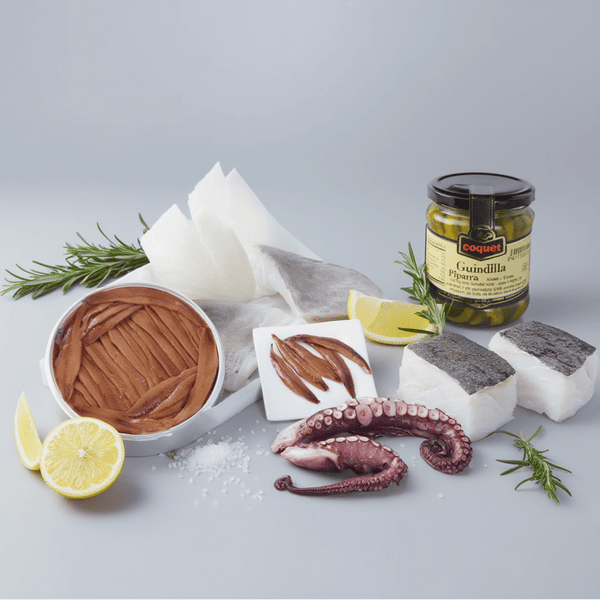
In our prepared dishes section you will find large-leg cooked Galician octopus, ready to cut and season in 5 minutes. We also offer gourmet seafood preserves that complement any seafood menu: from Cantabrian anchovies to northern bonito and selected sardines.
For lovers of Spanish gourmet preserves, a good pulpo a la gallega followed by a board of premium preserves is a festive meal that doesn't require turning on the oven.

🛒 Products mentioned in this article
⭐ 4.9/5 · Chilled shipping 24-48h · Since 1990 at Mercat del Ninot
Frequently Asked Questions About Pulpo a la Gallega
How long does pulpo a la gallega take to cook?
The cooking time depends on the weight: a 1-1.5 kg octopus needs 30-40 minutes; one weighing 1.5-2 kg, between 40-50 minutes; and one weighing 2-2.5 kg, 50-60 minutes. Always over low heat after "frightening" the octopus. Let it rest for 15-20 minutes in the hot water before removing it.
Is it necessary to freeze the octopus before cooking?
If the octopus is fresh, yes. Freezing it for at least 48 hours breaks down muscle fibers and tenderizes it, replacing the traditional pounding against rocks. If you buy pre-frozen octopus, this step has already been done. Vacuum-packed cooked octopus also does not require prior freezing.
Do you add salt to the octopus cooking water?
No. The octopus cooking water is never salted. Salt is added at the end, when plating, using coarse salt or salt flakes. If you salt the water, the octopus skin hardens, and the result is worse.
What is the difference between pulpo a la gallega and pulpo a feira?
Pulpo a feira is the purist version served at Galician fairs: just octopus with oil, salt, and paprika, on a wooden plate, without potatoes. Pulpo a la gallega is the more widespread version that usually includes cachelos (potatoes boiled in the octopus water) as a base.
Can I make pulpo a la gallega with frozen octopus?
Of course, and in fact, it's the most practical option. Frozen octopus already has its fibers broken down by freezing, which helps it become tender. Just make sure to thaw it in the refrigerator for 24 hours before cooking.
What kind of paprika is used for pulpo a la gallega?
Paprika from La Vera with Protected Designation of Origin, smoked over oak wood. Use sweet paprika as a base (2 tablespoons per serving) and optionally a pinch of spicy paprika. Avoid unsmoked paprikas, as the result will not be the same.
What is the "frightening" trick for cooking octopus?
It involves submerging and removing the octopus from boiling water three times before letting it cook. Each immersion lasts 5-8 seconds. This progressively seals the skin, prevents it from detaching during cooking, and achieves a more uniform texture and a more attractive color.
Can you make "pulpo a la gallega" (Galician-style octopus) in a Thermomix?
Yes. Place the cleaned octopus in the bowl with 1.5 liters of water, onion, and bay leaf. Set to 40 minutes at 100 degrees, speed 1, with reverse rotation. For larger pieces (over 1.5 kg), add an extra 10 minutes. The result is good, although it won't have the traditional "susto" (shock) effect.
What wine pairs with "pulpo a la gallega"?
The perfect pairing is an Albariño from Rías Baixas, served at 8-10 degrees Celsius. A white Ribeiro, a Godello from Valdeorras, or even a young Mencia red from Ribeira Sacra served slightly chilled also work well. The key is for the wine to be fresh, with good acidity, and without excessive oak.
How many calories are in "pulpo a la gallega"?
A serving of pulpo a la gallega (250g of cooked octopus with oil, salt, and paprika dressing) provides approximately 350-400 kcal. The octopus itself is very low in calories (82 kcal/100g), with olive oil being the main caloric contributor. If you add "cachelos" (boiled potatoes), add an extra 100-120 kcal per serving.
Can "pulpo a la gallega" be reheated?
Yes, but with care. The best way is bain-marie or in the microwave at medium power for 1-2 minutes. Never reheat it over high direct heat as it will toughen. Add the paprika and oil after reheating, not before, to preserve its full aroma.
How much octopus should I buy per person?
Calculate 250-300g of raw octopus per person, keeping in mind that it loses 40% of its weight during cooking. For 4 people, you'll need an octopus weighing approximately 1.5-2 kg. If serving with "cachelos" and other side dishes, you can reduce it to 200g per person.
If you enjoyed this recipe, explore more classic seafood dishes on our blog: from homemade pickled anchovies to the traditional recipe for Galician fish soup. And if you want to always have quality products in your pantry, don't miss our selection of gourmet canned seafood and artisanal ready meals.
Discover more