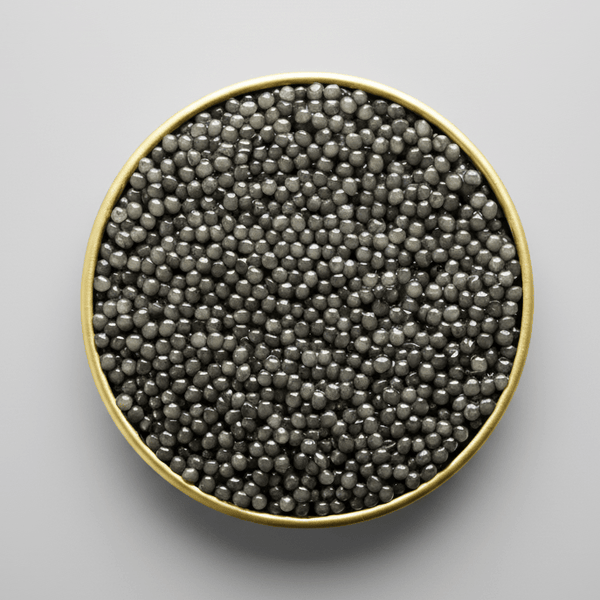
The beluga sturgeon (Huso huso) is the world's largest freshwater fish and the source of the most expensive caviar available. Specimens up to 1,500 kg and 7 meters have been documented in the Caspian Sea, although today these giants are practically impossible to find. Here we explain everything about this ancient species: biology, habitat, why its caviar costs what it does, the CITES situation, and the role of aquaculture.
Table of Contents
- What is Beluga Sturgeon
- Size and Records: The Freshwater Giant
- Habitat and Distribution
- Biology and Reproduction
- Beluga Caviar: Why It's the World's Most Expensive
- Beluga Caviar Grades and Classification
- Threats: From Overfishing to Extinction
- CITES and International Regulation
- Aquaculture: The Future of Beluga Sturgeon
- Beluga Caviar Price (2026)
- Frequently Asked Questions
- Conclusions
What is Beluga Sturgeon
Updated March 2026. Since 1990 we have hand-selected every product. This guide reflects that experience.
The beluga sturgeon (Huso huso) is a species of acipenseriform fish that inhabits the basins of the Caspian Sea, the Black Sea, and, formerly, the Adriatic Sea. It belongs to the family Acipenseridae, the sturgeons, a group of fish that has existed since the Triassic period (more than 200 million years ago), making them contemporaries of dinosaurs.
It is important not to confuse it with the beluga whale (Delphinapterus leucas), a completely different arctic cetacean. Both share a name (from Russian "beliy", white) but have no biological relation whatsoever.
The beluga sturgeon is an anadromous fish: it lives in salt or brackish waters and migrates up rivers to spawn. The Volga, Ural, Danube, and Don rivers have historically been its main breeding grounds. Today, most of these migratory routes are blocked by dams.
Physical Characteristics
- Body: fusiform, elongated, with 5 rows of bony plates (scutes) instead of scales
- Mouth: ventral (on the underside of the head), toothless, adapted for sucking prey from the bottom
- Barbels: 4 sensory barbels in front of the mouth, which detect prey on the bottom
- Color: dark gray to bluish-green on the back, silvery-white on the belly
- Skeleton: mostly cartilaginous, like sharks (primitive)
Size and Records: The Freshwater Giant
The beluga sturgeon holds the title of the world's largest freshwater fish (considering it is anadromous, spending part of its life in freshwater). Historical records document extraordinary specimens:
| Record | Data | Context |
|---|---|---|
| Longest documented length | 7.2 meters | Volga River, 19th century |
| Heaviest documented weight | 1,571 kg | Volga River, 1827 |
| Heaviest caviar weight from one specimen | Approx. 200 kg | Female of ~1,000 kg |
| Estimated maximum age | 100-118 years | Based on otolith and spine rings |
| Current average size (wild) | 2-3 meters, 100-200 kg | Mature specimens, rare |
| Size in aquaculture | 1.5-2 meters, 40-80 kg | At 15-20 years old |
To put this into perspective: a 1,500 kg beluga sturgeon is heavier than a polar bear, a racehorse, or a Smart car. It is a fish that, in its historical version, reached megafauna dimensions.
Today, specimens over 300 kg are exceptional in the wild. Systematic overfishing during the 20th century eliminated the longest-lived generations, and hydroelectric dams blocked access to spawning grounds.
Habitat and Distribution
The beluga sturgeon has historically inhabited three large basins:
Caspian Sea
The most important population and the source of the world's most famous beluga caviar. Iran (southern coast) and the countries of the former USSR (Russia, Kazakhstan, Turkmenistan, Azerbaijan) shared this population. The Volga River, which flows into the Caspian through Russia, was the main migratory route. The Volgograd Dam (1958) blocked access to 80% of the historical spawning habitat.
Black Sea
Populations in the Danube (Romania, Bulgaria, Ukraine), the Don, and the Dnieper. The Danube maintains a critical residual population, protected by European conservation programs. The Iron Gates dams drastically limited migration.
Adriatic Sea (historical)
The Po River in Italy and some rivers in the Balkans harbored beluga populations. Extinct or functionally extinct since the mid-20th century.
Habitat at sea
In its marine phase, the beluga lives in shallow coastal waters (up to 180 meters), feeding on other fish (herring, gobies, anchovies) and crustaceans. It is an active predator, unlike other more benthophagous sturgeons.
Biology and Reproduction
The reproductive biology of the beluga sturgeon is the main reason for its vulnerability and the price of its caviar:
- Female sexual maturity: 15-20 years (in aquaculture, 12-18 years with optimized conditions)
- Male sexual maturity: 10-15 years
- Spawning frequency: females do not spawn every year. The natural interval is 3-5 years between spawns.
- Fecundity: a large female can produce 300,000-7,000,000 eggs per spawn
- Egg size: 3-4 mm in diameter (the largest sturgeon eggs, accounting for the size of beluga caviar)
- Spawning season: spring (April-June), in rivers with gravel bottoms and moderate current
A female beluga sturgeon needs 15-20 years to produce her first eggs. This means that every female sacrificed for caviar represents two decades of growth. This is the fundamental equation that has led the species to the brink of extinction: the demand for caviar far exceeds natural reproductive capacity.

Iranian Beluga Caviar 000 Premium Quality
Available at Bacalalo.com with refrigerated shipping in 24-48h
Beluga Caviar: Why It's the World's Most Expensive
Beluga caviar is consistently the most expensive caviar on the market. The reasons are biological, not marketing:
- Production time: 15-20 years until the first caviar extraction. No other animal food requires such a temporal investment.
- Egg size: beluga roe are the largest among sturgeons (3-4 mm), which gives them a unique texture: they burst gently on the palate releasing a creamy, nutty flavor with delicate marine notes.
- Yield: a 40-60 kg aquaculture female can produce 4-8 kg of caviar. A large wild female (rare today) could produce up to 200 kg.
- Scarcity: the ban on exporting wild beluga caviar from the Caspian and CITES quotas have drastically reduced supply.
- Aquaculture cost: maintaining a beluga sturgeon for 15-20 years in a fish farm, with filtered water, controlled feeding, and veterinary monitoring, is enormously expensive.
Beluga caviar flavor profile
Beluga caviar is distinguished from other caviars by:
- Size: grains of 3-4 mm (vs 2-3 mm for osetra, 1-2 mm for sevruga)
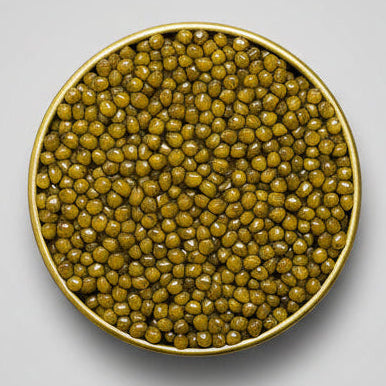
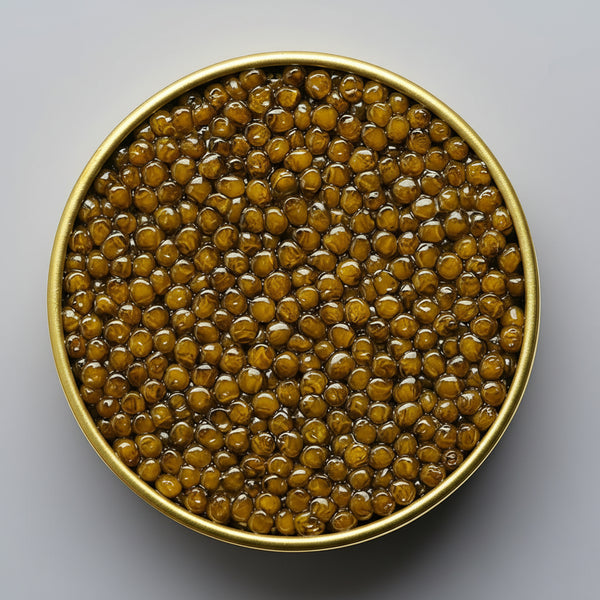
- Color: light gray to dark gray. Lighter grains ("000" or "Royal" grade) are the most valued
- Texture: soft, creamy, grains burst with minimal pressure
- Flavor: buttery, with notes of hazelnut, sea, and a long, slightly sweet aftertaste. Less salty than lesser caviars.
Beluga Caviar Grades and Classification
| Grade | Color | Grain size | Approximate price |
|---|---|---|---|
| 000 (triple zero) / Royal | Very light gray, almost silver | 3.5-4 mm | 8,000-15,000 EUR/kg |
| 00 (double zero) | Light gray | 3-3.5 mm | 5,000-10,000 EUR/kg |
| 0 (zero) | Medium to dark gray | 3-3.5 mm | 3,000-7,000 EUR/kg |
| Standard | Dark gray | 2.5-3 mm | 2,000-4,000 EUR/kg |
Color classification is traditional for Iranian and Russian caviar: lighter grains are associated with older females and are considered more refined in taste. Not all experts agree with this correlation, but the market continues to pay a significant premium for lighter grains.

Iranian Imperial Beluga Caviar 00
Caspian Caviar (beluga, osetra, sevruga) | Our entire caviar selection
Threats: From Overfishing to Extinction
The beluga sturgeon is classified as Critically Endangered (CR) on the IUCN Red List, the highest level of threat before extinction in the wild. The causes:
Historical overfishing
During the 20th century, global demand for beluga caviar led to unsustainable exploitation in the Caspian. Caspian caviar production decreased from 3,000 tons annually in the 1900s to less than 40 tons in the 2000s. Beluga populations collapsed by 90% to 99% depending on the basin.
Hydroelectric dams
Large dams on the Volga, Ural, Danube, and Dnieper blocked access to natural spawning grounds. The Volgograd Dam alone eliminated 80% of the Caspian beluga's reproductive habitat.
Pollution
The rivers that feed the Caspian and Black Seas receive industrial and agricultural pollution that affects water quality and the survival of larvae and juveniles.
Poaching
Despite bans, illegal sturgeon fishing remains a serious problem, especially in the Caspian waters shared by Russia, Kazakhstan, and Iran. The black market caviar moves millions of euros annually.
CITES and International Regulation
The beluga sturgeon is listed in CITES Appendix II (Convention on International Trade in Endangered Species) since 1998. This means:
- All international trade in beluga caviar (and any sturgeon product) requires CITES permits
- Every tin of legal caviar bears a CITES code on the label that allows tracking its origin (country, species, year, producer)
- Export quotas for wild Caspian caviar have been practically zero since 2006
- Beluga caviar sold legally in 2026 is almost exclusively from aquaculture
How to read the CITES label
Example: HUS/C/ES/2025/Farm01/001
- HUS: species (Huso huso = beluga)
- C: type (C = aquaculture, W = wild)
- ES: country of origin (Spain)
- 2025: year of production
- Farm01: farm code
- 001: lot number
If you buy beluga caviar without this label, it is illegal or suspicious.

"Russian Whim" Box · Introduction to luxury
Available at Bacalalo.com with refrigerated shipping in 24-48h
Aquaculture: The Future of Beluga Sturgeon
Beluga sturgeon aquaculture is today the only legal and sustainable way to produce beluga caviar. The main farms:
| Country | Featured Producers | Particularity |
|---|---|---|
| Italy | Agroittica Lombarda (Calvisius) | Europe's largest sturgeon farm. Beluga caviar from sturgeon raised since the 90s. |
| Iran | Shilat (state-owned company) | Transition from wild fishing to aquaculture. Almas caviar (albino beluga, the world's most expensive). |
| France | Sturia, Petrossian (with associated farms) | Strong in osetra; beluga expanding. |
| Spain | Caviar de Riofrio, Caviar Nacarii | Organic aquaculture in Granada and Girona. Limited beluga production. |
| Uruguay | Sturgeons of the Rio Negro | They take advantage of the cold waters of the Rio Negro. Export to Europe and Asia. |
| China | Kaluga Queen and others | World's largest caviar producer by volume (not always pure beluga). |
The challenge of beluga aquaculture
Raising beluga sturgeon is a very long-term investment:
- Eggs hatch after 6-8 days of incubation
- Juveniles take 2-3 years to reach 1-2 kg
- Reliable sex determination requires ultrasound at 3-5 years (males are destined for meat)
- Females do not produce caviar until 12-18 years in aquaculture
- The cost of feed, water, space, and veterinary care for 15+ years is enormous
This explains why few farms in the world produce genuine beluga caviar: you need 15-20 years of investment before obtaining the first gram of product. It is a business for generations, not for impatient investors.
Beluga Caviar Price (2026)
| Product | Format | Estimated price (EUR) |
|---|---|---|
| Standard beluga caviar (aquaculture) | 30 g | 120-250 |
| Standard beluga caviar | 50 g | 180-400 |
| Premium beluga caviar (light grain) | 30 g | 250-500 |
| Royal / 000 Beluga Caviar | 30 g | 400-800 |
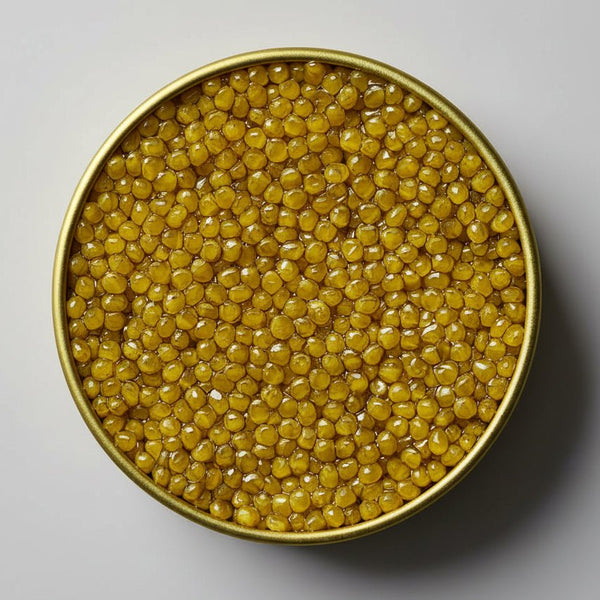
| Almas Caviar (albino beluga, Iran) | 30 g | 800-1.500 |
For context: 30g of beluga caviar is approximately 2 heaped teaspoons, enough for 2 people as a tasting or for 1 person as a generous serving. At 200 EUR per 30g, each teaspoon is worth 100 euros.
Frequently Asked Questions
How big does a beluga sturgeon get?
Wild adult specimens usually reach 2-3 meters and 100-200 kg. Historically, specimens of up to 7.2 meters and 1,571 kg have been documented, although these giants are a thing of the past. In aquaculture, beluga sturgeons reach 1.5-2 meters and 40-80 kg at 15-20 years of age.
Why is beluga caviar so expensive?
Because beluga sturgeon needs 15-20 years to produce its first eggs. No other animal food requires such a time investment. In addition, the species is critically endangered, which limits supply to aquaculture production, and keeping a beluga sturgeon for two decades on a farm is enormously expensive.
Is it legal to buy beluga caviar?
Yes, as long as it comes from CITES-certified aquaculture. Wild beluga caviar from the Caspian Sea has been practically banned for export since 2006. All legal beluga caviar in 2026 bears a CITES label with the species code, country, farm, and batch. If it doesn't have this label, don't buy it.
Is the beluga sturgeon endangered?
Yes. It is classified as Critically Endangered (CR) by the IUCN, the highest threat level. Wild populations have fallen by 90% to 99% in the last century due to overfishing, dams blocking spawning rivers, and pollution. Repopulation programs and aquaculture are the main hopes for the species.
What is the difference between beluga caviar and osetra caviar?
Beluga caviar (Huso huso) has larger grains (3-4 mm vs 2-3 mm for osetra), a softer and creamier texture, a more subtle flavor with nutty notes, and a higher price. Osetra caviar (Acipenser gueldenstaedtii) has firmer grains, a more intense and nutty flavor, and is significantly more affordable. Both are excellent; the choice is a matter of preference and budget.
Can beluga sturgeon be farmed in Spain?
Yes. There are sturgeon farms in Spain, such as Caviar de Riofrio (Granada) and Caviar Nacarii (Girona). The climate and availability of cold spring water allow for the farming of various sturgeon species. Beluga production specifically is limited by the maturation time (15-20 years), but there are farms with active programs.
Conclusions
The beluga sturgeon is one of the most extraordinary creatures on the planet: a fish that has been on Earth for more than 200 million years, that can grow to the size of a car, and live for more than a century. And we, in just a century of intensive exploitation, have driven it to the brink of extinction for its eggs.
The good news is that aquaculture offers a way to produce beluga caviar without destroying wild populations. The bad news is that beluga biology (15-20 years to maturity) makes recovery slow both on farms and in the wild.
If you decide to buy beluga caviar, always do so from CITES-certified aquaculture. It is the only way to enjoy this extraordinary product without contributing to the disappearance of the species that produces it.
Related articles: