


![¿Cuánto Cuesta el Caviar? Guía de Precios por Tipo [2026]](http://bacalalo.com/cdn/shop/articles/caviar-beluga-imperial-irani-4723678_bd3d4d30-a8d3-462c-864d-1c216f60156c.webp?v=1774815835&width=480)
Summary: Caviar ranges from €40 to over €10,000 per 100g depending on variety, origin, and producer. This guide breaks down real market prices in 2026, explains why there's such a difference, and helps you choose the best option for your budget. No marketing, just verifiable data.
What determines caviar price
Caviar is the gastronomic product with the widest price range in the world. A 30g tin can cost €25 or €350. Understanding why requires understanding four factors that multiply, not add up.
Sturgeon species is the main factor. Huso huso (Beluga) produces the largest, rarest, and most valued roe. A Beluga sturgeon takes between 18 and 25 years to reach sexual maturity and produce caviar. A Baeri (Acipenser baerii) takes 5-7 years. This time difference — more than a decade of feeding, space, and care — explains most of the price difference between the two.
Geographic origin matters more than the average consumer assumes. Iranian caviar from the Caspian Sea remains the global benchmark due to the unique conditions of that ecosystem: specific salinity, temperatures, and natural sturgeon diet. European aquaculture caviar (Italy, France, Spain, Germany) has greatly improved, but Caspian origin maintains a premium of between 30% and 100% over equivalent aquaculture qualities.
Production method — wild vs. aquaculture — has radically changed the market. Since the CITES ban on wild Caspian caviar (except for very limited Iranian quotas), more than 95% of the world's caviar comes from aquaculture. Aquaculture has democratized access: it has drastically lowered the entry price. But it has also created an enormous dispersion of qualities, because not all farms operate equally.
Processing and maturation are the least visible but decisive factors. Malossol caviar (low salt, less than 3%) has a purer flavor but a shorter shelf life and higher production cost. Pasteurized caviar lasts longer but loses nuances. The degree of maturation of the roe at the time of extraction, the processing speed (ideally less than 15 minutes from extraction to salting), and the cold chain determine the final quality.
Prices by variety in 2026: comparative table
These are the actual market price ranges in Spain in March 2026, based on prices from specialized distributors and gourmet stores. Prices include VAT.
- Beluga Caviar (Huso huso): €3,500 – €10,000/kg | €100 – €350 per 30g
- Oscietra Caviar (A. gueldenstaedtii): €1,200 – €3,500/kg | €40 – €120 per 30g
- Sevruga Caviar (A. stellatus): €800 – €2,500/kg | €30 – €80 per 30g
- Baeri Caviar (A. baerii): €600 – €1,500/kg | €20 – €50 per 30g
- White Caviar (Albino): €8,000 – €25,000/kg | Extremely rare
These prices are indicative. The sales format (10g, 30g, 50g, 100g, 250g tin) affects the price per gram: the larger the quantity, the lower the unit cost. A 10g tin of Oscietra can cost €18-25 (equivalent to €1,800-2,500/kg), while a 250g tin of the same product drops to an equivalent of €1,200-1,500/kg.

Beluga Caviar: why it's the most expensive in the world
Beluga concentrates all cost factors at the highest level. A female Beluga sturgeon needs between 18 and 25 years to produce roe. During that time, the animal consumes between 2 and 4 kg of food daily, occupies a considerable space in aquaculture facilities, and requires constant health monitoring. The accumulated cost of maintaining a single specimen until maturity exceeds €15,000-20,000 before a single gram of caviar is extracted.
Beluga roe is the largest of all sturgeons (3-3.5 mm in diameter), with thinner skin and a creamy texture that melts in the mouth. The color varies from light gray to dark gray, and the lighter specimens (the so-called "Beluga 000" or "Almas") reach collector's prices exceeding €25,000/kg.
In Spain, Iranian Beluga caviar (from authorized Caspian quotas) ranges from €5,000-10,000/kg. European aquaculture Beluga — produced mainly in Italy (Calvisius), Germany (Desietra) and more recently in Spain — ranges from €3,500 to €6,000/kg. The price difference reflects both the origin and the prestige of the producing brand.
Is the Beluga premium worth it? If you've never tried caviar, the honest answer is no. Start with a good Oscietra. If you already know Oscietra and want to experience the difference, Beluga offers a unique texture and complexity — but the distance between a great Oscietra and a mediocre Beluga does not justify tripling the price. The quality of Beluga depends enormously on the specific producer.
Caspian Caviar — Premium Selection
Iranian Beluga 000, Oscietra, Sevruga. Refrigerated shipping 24-48h to any point on the Peninsula. Since 1990 at Mercat del Ninot.
View Caviar →Oscietra Caviar: the connoisseur's favorite
Oscietra (also spelled Osetra, Ossetra or Ossètre) is the variety we recommend most in our caviar collection for an objective reason: it offers the best combination of flavor complexity, roe size, and accessible price on the market.
The Russian sturgeon (Acipenser gueldenstaedtii) matures in 8-12 years, significantly less than Beluga but enough to develop medium-large roe (2.5-3 mm) with an extraordinarily complex flavor profile: notes of nuts, butter, sea, and a long finish that evolves in the mouth.
In the range of €1,200 to €2,000/kg, you can find excellent quality aquaculture Oscietra caviar, produced in Italy, France, Spain, or China. High-end Iranian Oscietras go up to €3,000-€3,500/kg. For a first experience with serious quality caviar, a European aquaculture Oscietra in the range of €50-70 for 30g is the smartest investment.
A detail that few sellers explain: Oscietra's color varies enormously (from intense black to golden amber) and does not necessarily indicate quality. Lighter Oscietras sell for a higher price due to scarcity and visual preference, but in blind tastings, the flavor differences between colors are minimal. Don't pay 50% more just for the color.

Sevruga and Baeri: more accessible options without sacrificing quality
Sevruga (Acipenser stellatus) produces the smallest roe of the three classic Caspian varieties (1.5-2 mm), but with the most intense and marine flavor. It matures in 7-10 years. Its price (€800-€2,500/kg) positions it as a serious alternative to Oscietra for those who value flavor intensity over roe size. In restaurants, Sevruga is the most used variety in preparations where caviar accompanies other ingredients (blinis, crostini, tartare) because its flavor penetrates without being diluted.
Baeri (Acipenser baerii), also called Siberian caviar, is the revolution in aquaculture. It matures in just 5-7 years, adapts well to controlled conditions, and produces caviar with small-medium roe with a mild, slightly nutty flavor that is very accessible to unaccustomed palates. At €600-€1,500/kg, it is the entry point to real caviar — not imitation, not salmon or lumpfish roe, but authentic sturgeon caviar.
In Spain, Caviar de Riofrío (Granada) and Caviar Nacarii (Lleida) produce Baeri of remarkable quality at competitive prices. An organic Nacarii 30g sells for €25-35, making it a realistic option for a special dinner without breaking the bank.
How to calculate the real price: cost per serving
Prices per kilo sound prohibitive, but the correct way to calculate the cost of caviar is per serving, because no one consumes a kilo of caviar at once. And this is where the numbers become much more reasonable.
An individual tasting portion is 10-15g of caviar. With 30g, you can comfortably serve two people as an appetizer. With 50g, four people. Let's do the math with a mid-range Oscietra at €1,500/kg:
- Individual portion (10g): €15
- Appetizer for two (30g): €45
- Appetizer for four (50g): €75
Fifteen euros for a top-tier gastronomic experience is less than many restaurant dishes. Caviar has a reputation for being inaccessible partly because it is always presented at a price per kilo — a perception trick that works the same way as when you see black truffle priced at €3,000/kg and don't think that 5g in a pasta dish costs €15.
Practical tip: if it's your first purchase, start with a 30g tin of Oscietra or Baeri. It's enough for a serious tasting for two people with blinis or toasts, and the cost (€40-70) is comparable to dinner at a mid-range restaurant in Barcelona.

Where to buy caviar at a good price in Spain
The purchase channel significantly affects the final price. The same caviar can cost 40-60% more at one point of sale than another, due to distribution margins.
Specialized stores and delicatessens: the best channel for guaranteed quality and advice. Prices are higher than online but you have the guarantee of an impeccable cold chain and fresh product. In Barcelona, at Mercat del Ninot we have been advising on caviar and selecting directly from producers since 1990.
Specialized online stores: prices generally 15-25% lower than in physical stores due to lower operating costs. The key is to verify that shipping is done in cold (24-48h with an insulated bag and ice). At Bacalalo.com we ship all caviar with guaranteed cold chain to anywhere on the Peninsula.
Superstores: El Corte Inglés has caviar sections in its main centers. Prices are higher than online but offer a return guarantee. Selection is usually limited to 2-3 brands. Be careful with caviar in gift formats: the packaging premium can exceed 30%.
Directly from the producer: Riofrío and Nacarii sell directly online. It is the most economical way to buy Spanish caviar, with prices 20-30% below retail. The disadvantage: the selection is limited to their own varieties.
A necessary warning: be wary of "cheap" caviar without a clear species designation. If an online store sells "caviar" for €15 per 30g without specifying the sturgeon species, it is almost certainly imitation (lumpfish, salmon, or trout roe dyed and flavored). It is not caviar. Real sturgeon caviar has a minimum market price that does not fall below €500-600/kg due to the biology of the animal and production costs.
Caspian Caviar — Premium Selection
Iranian Beluga 000, Oscietra, Sevruga. Refrigerated shipping 24-48h to any point on the Peninsula. Since 1990 at Mercat del Ninot.
View Caviar →🛒 Recommended products in this guide
⭐ 4.9/5 · Cold shipping 24-48h · Since 1990 at Mercat del Ninot
Frequently asked questions
Why is caviar so expensive?
Due to the biology of the sturgeon: it takes between 5 and 25 years to mature depending on the species, eats a lot, takes up a lot of space, and caviar can only be extracted once (except for recent C-section techniques). Each kilo of caviar represents years of investment in a single animal. Add the costs of immediate processing, cold chain, and CITES regulation, and the price has a real, not speculative, justification.
How much does Beluga caviar cost?
In Spain in 2026, Beluga caviar ranges from €3,500 to €10,000 per kilo depending on the origin (Iranian vs. European aquaculture) and the producer. In 30g format, this translates to €100-350 per tin. Iranian Beluga from the Caspian Sea is at the higher end of the range; Italian or German aquaculture Beluga is at the mid-to-lower end.
What is the cheapest caviar that is worth it?
Baeri caviar (Siberian sturgeon) from Spanish aquaculture. Brands like Nacarii or Riofrío offer 30g for €25-35, with more than decent quality for a first experience or regular use. It is not the most complex caviar on the market, but it is real sturgeon caviar with a clean and pleasant taste.
How much caviar is needed per person?
For a tasting, 10-15g per person is sufficient. For a generous appetizer, 20-25g. For a full tasting experience with different varieties, 30g per person. The rule of thumb: a 30g tin comfortably serves two people as an appetizer.
Has the price of caviar gone up or down?
It has fallen significantly in the last two decades thanks to aquaculture. In the 90s, Oscietra caviar cost the equivalent of more than €5,000/kg today. Today it can be found for €1,200-€2,000/kg. Beluga has remained more stable because aquaculture production is still very limited. The general trend is stabilization with slight decreases in aquaculture varieties.
Is it worth buying caviar online?
Yes, as long as the seller guarantees cold shipping (24-48h, insulated bag). Online prices are 15-25% lower than in physical stores. The key is to buy from specialized sellers — not generic marketplaces — who specify the species, origin, production date, and shipping conditions. At Bacalalo.com we meet all these criteria.
Ready to try? Explore our Caspian caviar collection with clear prices and guaranteed cold shipping. Since 1990, we have been selecting the best from the sea at Mercat del Ninot, Barcelona. You may also be interested in our guide to types of caviar to understand the differences between varieties, or our tasting guide to know how to enjoy it correctly.
Variations and additional tips
Below, we compile variations and nuances from previous versions of this guide, merged into a single reference.
How much does caviar cost? Price ranges in Spain (2026)
The question "how much does caviar cost" does not have a single answer. The price depends on three main factors: the sturgeon species, the geographical origin, and the format (weight). And there is a fourth factor that few mention: the seller's margin.
In Spain, the actual caviar price ranges in 2026 are as follows:
- Iranian Beluga Caviar (Huso huso): 600-1,200 €/100g
- Imperial Ossetra Caviar (A. gueldenstaedtii): 350-850 €/100g
- Sevruga Caviar (A. stellatus): 180-400 €/100g
- Spanish Caviar (Riofrío/Nacarii, A. naccarii): 150-300 €/100g
- Chinese Aquaculture Caviar (Baeri, Schrenki): 50-150 €/100g
If you find something labeled "caviar" for €2-€5, it's not caviar. It's a lumpfish or herring roe substitute. There's nothing wrong with it, but it's a completely different product.
At Bacalalo, we work with Iranian Caspian caviar — Beluga and Ossetra — with CITES certification, full traceability, and refrigerated shipping. Our prices reflect genuine product without unnecessary luxury packaging surcharges.
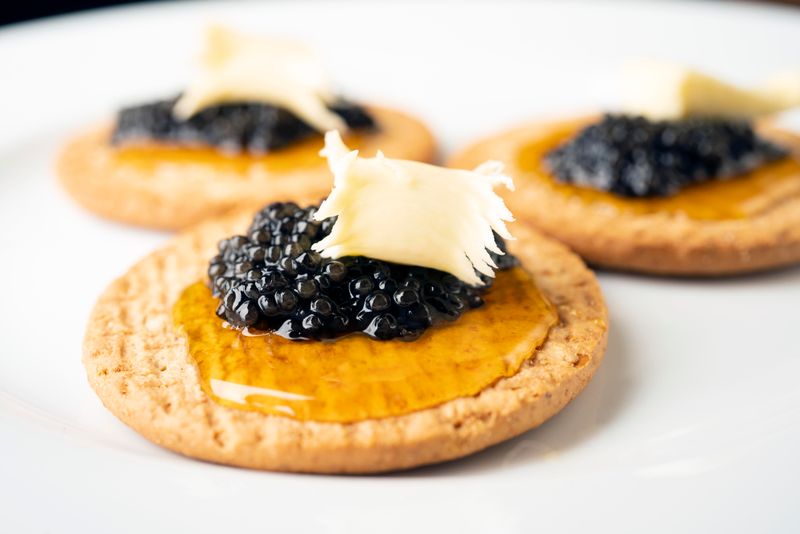
Caviar price chart by type in Spain (2026)
This table summarizes the caviar prices by type, including price per 100g, price per kg, and the most common sales format:
| Caviar type | Price/100g | Price/kg | Standard format | Sturgeon maturation |
|---|---|---|---|---|
| Iranian Beluga 000 | 600-1,200 € | 6,000-12,000 € | 30g, 50g | 15-20 years |
| Imperial Ossetra | 350-850 € | 3,500-8,500 € | 30g, 50g, 100g | 8-12 years |
| Sevruga | 180-400 € | 1,800-4,000 € | 30g, 50g, 100g | 7-8 years |
| Spanish (Riofrío/Nacarii) | 150-300 € | 1,500-3,000 € | 30g, 50g, 100g | 8-10 years |
| Baeri (Chinese aquaculture) | 50-150 € | 500-1,500 € | 30g, 50g, 100g, 125g | 6-8 years |
| Substitutes (lumpfish/herring) | 2-10 € | 20-100 € | 50-100g jar | N/A |
Indicative prices for the Spanish market in 2026. May vary depending on season, supplier, and specific format.
Caviar price per 100g and per kg: complete breakdown
One of the most common confusions is comparing prices without considering the weight. The price per gram of caviar varies significantly depending on the purchase format, and smaller formats usually have a significant relative surcharge.
Beluga caviar price by format
- 30g: 180-360 € (equivalent to 600-1,200 €/100g)
- 50g: 280-550 € (equivalent to 560-1,100 €/100g)
- 100g: 550-1,100 € (best price per gram)
- 125g: 650-1,350 € (price similar to 100g per gram)
Ossetra caviar price by format
- 30g: 95-250 € (equivalent to 316-833 €/100g)
- 50g: 160-400 € (equivalent to 320-800 €/100g)
- 100g: 300-750 € (best ratio)
- 125g: 370-900 €
Practical advice
If you are buying caviar for a celebration with 4+ people, the 100g format is more cost-effective than two 50g tins. The difference can be 10-15% per gram. But if it's your first time, a 30g format allows you to try it without committing too much budget.
Authentic Iranian caviar at Bacalalo
Beluga 000, Imperial Ossetra — with CITES certification, full traceability, and refrigerated shipping in 24-48h.
Beluga caviar price in Spain
- Iranian Beluga 000 (lightest): 800-1,200 €/100g
- Iranian Beluga 00: 650-950 €/100g
- European aquaculture Beluga: 500-800 €/100g
Why Beluga costs what it costs
The Beluga sturgeon is the largest in the world (it can exceed 5 meters and 1,000 kg) and the slowest to reach sexual maturity: between 15 and 20 years. This means that a fish farm invests two decades in feeding, veterinary care, and maintenance before obtaining a single gram of caviar from a specimen.
Beluga roe is the largest (3-3.5 mm), with a silky texture that melts in the mouth without needing to be chewed. The flavor is delicate, buttery, with subtle nutty and marine notes. The "000" classification indicates the lightest color (pearl gray), associated with more mature sturgeon and finer caviar.
Our Iranian Beluga Caviar is one of Bacalalo's most sought-after products. It comes from a certified fish farm in the Iranian Caspian Sea, with CITES certification included with each unit.
Ossetra Caviar: the best value for money
If professional chefs had to choose only one caviar, many would choose Ossetra. And it's not because of the price: it's because of the taste.
Ossetra caviar price in Spain
- Iranian Imperial Ossetra (golden): 500-850 €/100g
- Classic Iranian Ossetra: 350-600 €/100g
- European aquaculture Ossetra: 250-450 €/100g
Why Ossetra is chefs' favorite
Ossetra sturgeon (Acipenser gueldenstaedtii) produces roe of 2.5-3 mm with a color ranging from golden to dark brown. Its flavor is more complex than Beluga: nutty, buttery notes and a persistent marine hint, with a firm "pop" when bitten that releases all that flavor.
At a third or half the price of Beluga, Ossetra offers a gastronomic experience that many palates find more interesting and stimulating. It is the caviar we recommend if you are looking for exceptional flavor without the extreme price of Beluga.
Our Iranian Imperial Ossetra Caviar stands out for its golden color and complex notes. It is probably the best value-for-money caviar you can buy in Spain.
Caviar for experienced palates
Sevruga (Acipenser stellatus) has small roe (2-2.5 mm) of dark gray to intense black color. It is the caviar with the most intense and pronounced flavor of the three classics: saline, mineral, with a long finish that connoisseurs actively seek.
Sevruga sturgeon matures in 7-8 years, which allows for more regular production and more accessible prices than Beluga or Ossetra. It is the ideal caviar for those who already know the product and want intensity rather than subtlety.
Spanish caviar vs. imported caviar: price comparison
Spain produces internationally recognized quality aquaculture caviar. The two main brands are Riofrío (Granada) and Nacarii (Lleida).
| Criterion | Spanish caviar | Iranian caviar (Caspian) | Chinese caviar |
|---|---|---|---|
| Species | A. naccarii | Huso huso / A. gueldenstaedtii | A. baerii / A. schrenckii |
| Price/100g | 150-300 € | 350-1,200 € | 50-150 € |
| Roe size | 1.5-2.5 mm | 2.5-3.5 mm | 2-3 mm |
| Flavor | Smooth, delicate | Complex, nuanced | Uniform, less deep |
| Certification | CITES + EU Eco | CITES | CITES (variable) |
| Best for | Initiation, local produce | Premium experience | Volume, low price |
Spanish caviar is a quality product, but the flavor profile is different from that of the Caspian. The A. naccarii sturgeon produces smaller roe with a smoother and less complex flavor. It is a good entry option and for those who value local origin and sustainability.
Why caviar prices vary so much
The difference between paying €150 and €1,200 for 100g of caviar has an explanation. It is not always quality — sometimes it is intermediaries, packaging, and branding.
Factors that determine the real price
- Sturgeon species: the most important factor. A Beluga (20 years maturation) will always cost more than a Baeri (6-8 years).
- Geographical origin: the Iranian Caspian ecosystem produces a flavor profile that others do not replicate. The designation of origin plays a role.
- Salting method: malossol (less than 3% salt) is more expensive because it requires an impeccable cold chain. More salt = longer shelf life = less demanding = lower price.
- Grain classification: color, size, and uniformity. 000 (lightest) commands a higher price than 0 (darkest).
- Packaging and branding: a Petrossian or Kaviari tin includes a 40-60% margin due to brand positioning. The product inside can be identical to that of another supplier.
What the consumer actually pays for
The production cost of 100g of Osetra caviar from a certified fish farm is approximately €80-120. The rest of the RRP covers: refrigerated transport, CITES certifications, distributor's margin, retailer's margin, and packaging. In luxury brands, packaging and branding can account for more than half of the final price.
At Bacalalo, we don't have unnecessary luxury packaging: the tin arrives in perfect condition, refrigerated, with its certification. The product speaks for itself.
Prices by format: which tin size should you buy?
The format you choose significantly affects the price per gram and the experience:
30 grams (from €55-360)
The introductory format. Enough for 1-2 people as a tasting. It is the format with the highest cost per gram, but the lowest total outlay. Ideal for a first experience or an individual gift.
50 grams (from €90-550)
The classic size for a couple or an intimate appetizer. Good balance between total price and price per gram. The best-selling format in gourmet stores.
100 grams (from €150-1,100)
For dinners of 2-4 people with caviar as the star. The best price per gram from most suppliers. This is the format we recommend if the budget allows.
125-250 grams (from €190-2,500+)
Events and celebrations. From 125g, the savings per gram compared to the 30g format can be 15-20%.
Explore our caviar selection
Iranian Beluga, Imperial Osetra — all with CITES, 24-48h refrigerated shipping throughout Spain.
Warning signs: when you're overpaying
The caviar market has its pitfalls. These are the most common:
- "Beluga Caviar" for less than €400/100g: it's probably Kaluga (a different sturgeon, Huso dauricus) or a hybrid. Authentic Beluga (Huso huso) has a production cost that makes such prices impossible.
- "Caspian Caviar" without CITES: if there's no CITES label with a unique code, the origin is not verifiable. It could be re-packaged Chinese caviar.
- Disproportionate packaging: if the box is more spectacular than the tin, you're paying for cardboard, not roe.
- 30g tin for €300 when 50g of the same type costs €350: abusive margins on small formats are a common practice.
- "Premium Caviar" or "Gold Caviar" without specifying the species: marketing names that mean nothing if they don't indicate the sturgeon species.
- Prices well below market: "Iranian" caviar for €100/100g does not exist. Either the origin is fake, or the species is not as indicated.
Tips for buying caviar without wasting money
After more than three decades working with premium seafood products at the Mercat del Ninot in Barcelona, these are the tips we give our customers:
- Define your budget first. If you have €100-200, a 30-50g Osetra format will give you an excellent experience. You don't need Beluga to enjoy caviar.
- Always check CITES. It is mandatory in the EU and guarantees species, origin, year of production, and fish farm. Without CITES, do not buy.
- Compare price per gram, not per tin. A 100g format is usually 10-15% cheaper per gram than two 50g tins.
- Prioritize the cold chain. Caviar must be kept between -2°C and +2°C. Shipping without temperature control degrades the product even if the tin looks intact.
- Start with Osetra. If it's your first time, Osetra offers more flavor complexity than Beluga at a lower price. And Sevruga is the option if you're looking for intensity.
- Don't be impressed by the packaging. A well-preserved tin with great caviar inside is worth more than a lacquered wooden box with mediocre caviar.
- Buy from specialized stores. Gourmet stores with high product turnover and their own cold chain are the best guarantee of freshness.
Related guides
- Caviar: recipes and how to eat and serve it
- Caviar at Mercadona: price, brands and alternatives
- How to set up a perfect smoked fish platter
- Romantic dinner with gourmet seafood
- Bacalalo's caviar collection
Guide updated in April 2026. Indicative prices for the Spanish market; may vary by season, supplier, and format. Written by Marc González Sáez, founder of Bacalalo, a premium seafood store in the Mercat del Ninot in Barcelona since 1990.
What is caviar? The only correct definition
Caviar is, strictly speaking, the roe of sturgeon (Acipenseridae) processed by salting. Nothing more. There is no other fish whose roe can legitimately be called caviar without an additional qualifier.
This is important because the market is full of deliberate confusion. Black-dyed lumpfish roe sold in supermarkets is not caviar. Salmon roe — however good — is not caviar either. Seaweed "pearls" with a sea flavor are an imitation. Only sturgeon roe, extracted, selected, and lightly salted, deserves that name.
The process of making authentic caviar remains fundamentally artisanal:
- Extraction: the roe is extracted from the female sturgeon when it reaches the optimal point of maturity.
- Sieving: it is separated from the ovarian membrane using sieves of different thicknesses.
- Selection: a caviar master classifies the roe by size, color, firmness, and sheen.
- Salting: between 3% and 5% of fine salt is added (the malossol method, meaning "little salt" in Russian, uses less than 3%).
- Packaging: it is placed in original tins — traditionally lacquered metal with an airtight seal — and kept in a constant cold chain between 0 and 4 °C.
The result is a product with a limited shelf life (weeks to a few months), a unique creamy texture, and a complexity of flavor that no substitute can replicate. Each roe, when pressed against the palate, releases an explosion of marine, buttery flavor with nuances ranging from herbaceous to nutty depending on the species.
CITES and traceability: how to know it's legal
Since 1998, sturgeon has been protected by the Convention on International Trade in Endangered Species (CITES). All legal caviar bears an alphanumeric code on the tin that allows tracking the species, country of origin, year of production, and fish farm or catch area. If a tin does not have a CITES code, do not buy it: it may be illegal, counterfeit, or of dubious origin.
History of caviar: from the Caspian Sea to modern aquaculture
The history of caviar is the story of a natural resource devastated by its own success. Understanding it explains why you pay what you do for a 30-gram tin today.
Origins: the Caspian Sea as an epicenter
The consumption of sturgeon roe dates back at least to the 4th century B.C. in ancient Persia (modern-day Iran). The Persians called caviar chav-jar ("cake of strength"), convinced that it provided energy and vitality. Iran and the southern coast of the Caspian Sea have been the heart of world caviar production for millennia.
In Tsarist Russia, caviar became a symbol of aristocratic opulence. The Tsars controlled production from the Volga River and the Russian Caspian coastline. During the 19th century, Russian caviar dominated European markets and was a must-have at the tables of high society in Paris, Vienna, and London.
The American boom and the first crisis
What few know is that the United States was, in the late 19th century, the largest caviar producer in the world. The Delaware and Hudson rivers teemed with sturgeon. American caviar was so abundant that it was served free in New York bars to stimulate beer sales — just as olives are served with a beer today.
In just three decades, overfishing exterminated American sturgeon. It was the first warning of what was to come on a global scale.
The collapse of the Caspian and the ban
After the fall of the Soviet Union in 1991, uncontrolled sturgeon fishing in the Caspian Sea soared. Organized mafias, lack of regulation, and insatiable global demand drove Beluga, Osetra, and Sevruga populations to the brink of extinction. In 2006, CITES temporarily banned the export of Caspian caviar. In 2010, Iran and the Caspian littoral countries imposed moratoria on wild fishing.
The aquaculture revolution
The ban on wild fishing transformed the industry. Today, over 95% of the world's caviar comes from aquaculture. The main producers are:
- China: the largest global producer by volume. Large fish farms in Zhejiang province. Caviar competitive in price, variable quality.
- Iran: maintains the Caspian tradition with sturgeon raised in the waters of the Iranian Caspian coast. Considered by many experts to be the best caviar in the world due to the unique conditions of its waters.
- Italy: Calvisius (Brescia) is one of the most renowned European producers. Works with Osetra and Beluga.
- France: Aquitaine is the producing region, with brands such as Sturia and Prunier.
- Spain: Riofrío (Granada) produces organic Baerii sturgeon caviar. It is the national benchmark.
- Uruguay and Israel: emerging producers with a growing international presence.
Aquaculture has made caviar more accessible than ever. But it has also created an enormous range of quality: the difference between industrial aquaculture caviar and artisanal Iranian caviar is abysmal.
Types of caviar: the 5 major varieties you should know
The type of caviar is determined by the sturgeon species. Each species produces roe with its own characteristics of size, color, texture, and flavor. These are the five main varieties you will find in the Spanish market.
1. Beluga Caviar (Huso huso)
Beluga is the undisputed king of caviar. The Beluga sturgeon is the largest freshwater fish in Europe: it can exceed 5 meters and live for more than 100 years. Its roe is the largest (3 to 4 mm in diameter), silver-grey to dark grey in color, with an extraordinarily creamy texture.
- Flavor: smooth, elegant, deeply buttery. Delicate marine notes with a long, clean aftertaste. It is the most subtle and refined caviar.
- Texture: the roe is firm to the touch but melts in the palate with an almost liquid creaminess.
- Color: light grey to dark grey. The lighter it is, generally the more prized (lighter roe usually comes from older sturgeon).
- Estimated price: €150 to €300 per 30g, depending on origin and quality.
- Sturgeon maturation: 18 to 25 years until the first spawning. This is the main reason for its price.
Iranian Beluga from the Caspian Sea is considered the ultimate. The cold, mineral-rich waters of the Caspian produce roe with a flavor profile that European aquaculture has not yet managed to match. If you want to delve deeper into this variety, we have a complete guide to Beluga caviar.
2. Osetra Caviar (Acipenser gueldenstaedtii)
Osetra (also spelled Oscietra or Ossetra) is, for many experts, the caviar with the best balance between flavor, complexity, and price. It is the variety we recommend most to those who want to discover authentic caviar without the extreme outlay of Beluga.
- Flavor: more intense and complex than Beluga. Distinct nutty, hazelnut, and marine notes, with a slightly salty finish and a deep aftertaste.
- Texture: firm roe with a satisfying "pop" when bitten, followed by a dense creaminess.
- Color: tremendously variable — from golden amber to dark brown, passing through olive green. Golden roe (sometimes called "Imperial") is the rarest and most prized.
- Estimated price: €80 to €150 per 30g (Iranian), €50 to €100 (European).
- Sturgeon maturation: 10 to 15 years.
Iranian Osetra has a superior flavor profile to European due to the waters of the Caspian. It's not marketing: it's geology, salinity, and temperature. We have prepared a specific article on why choose Osetra.
3. Sevruga Caviar (Acipenser stellatus)
Sevruga is the third of the "big three" from the Caspian. It is the caviar with the most personality and the favorite of those looking for a powerful and unmistakable flavor.
- Flavor: the most intense and marine of the three classics. Pronounced notes of iodine and salt, with a more "wild" character. Not for timid palates.
- Textura: small, compact roe (2 to 2.5 mm) with a concentrated burst in the mouth.
- Color: dark grey to black, with silver reflections.
- Estimated price: €60 to €120 per 30g.
- Sturgeon maturation: 7 to 10 years (the fastest of the big three, which explains its more accessible price).
Sevruga is excellent for pairings with iced vodka, where its flavor intensity is not lost against the alcohol.
4. Baerii Caviar (Acipenser baerii)
The Siberian sturgeon is the most cultivated species in Europe and the most accessible entry point to the world of authentic caviar. Most Spanish, French, and Italian caviar comes from this species.
- Flavor: smooth and balanced, with notes of butter and a moderate marine touch. Less complex than Osetra or Beluga, but pleasant and elegant.
- Texture: medium-sized roe (2 to 2.8 mm), firm with good creaminess on the palate.
- Color: dark brown to black, occasionally with greenish tones.
- Estimated price: €40 to €80 per 30g.
- Sturgeon maturation: 5 to 8 years.
It is the ideal caviar for a first experience. It also works very well in cooking (on pasta, risotto, tartare) because its flavor does not overpower the other ingredients.
5. Iranian Caviar (Caspian varieties)
More than a species, Iranian caviar is a designation of origin that encompasses several sturgeon species raised in the waters of the Iranian Caspian Sea coast. It includes Beluga, Osetra, Sevruga, and Persicus (Acipenser persicus), a species endemic to Iran.
- Flavor: depends on the species, but the common factor is a superior depth and complexity attributed to the Caspian's conditions: cold water, rich in minerals, with a specific salinity.
- Texture: consistently firm and shiny roe, with a thin membrane that breaks cleanly.
- Color: variable depending on species.
- Approximate price: €70 to €300 per 30g depending on species.
Iran has been producing caviar since before the word "gourmet" even existed. Tradition, generational knowledge, and the Caspian's natural conditions make Iranian caviar a global benchmark. We explain why in detail in why Iranian caviar is the best in the world.
Comparative table of caviar types
This table summarizes the characteristics of the main caviar varieties you can find in Spain in 2026. We also include salmon roe for contrast, as many people confuse it with caviar.
| Type | Species | Price/30g | Roe size | Flavor | Best for |
|---|---|---|---|---|---|
| Iranian Beluga | Huso huso | €150-300 | 3-4 mm | Subtle, buttery, elegant | Pure tasting, celebrations |
| Iranian Osetra | A. gueldenstaedtii | €80-150 | 2.5-3 mm | Nutty, hazelnut, complex | Best flavor-price ratio |
| European Osetra | A. gueldenstaedtii | €50-100 | 2.5-3 mm | Mild nutty, balanced | Introduction to Osetra |
| Sevruga | A. stellatus | €60-120 | 2-2.5 mm | Intense, marine, iodized | Lovers of strong flavor |
| Baerii | A. baerii | €40-80 | 2-2.8 mm | Mild, buttery, subtle | First experience, cooking |
| Iranian Persicus | A. persicus | €70-130 | 2.5-3 mm | Fine, mineral, long finish | Connoisseurs, pairing |
| Salmon roe | Oncorhynchus | €8-15/100g | 5-8 mm | Salty, marine, simple | Sushi, cooking, decoration |
Note: prices are indicative for the Spanish market in 2026 and may vary by importer, format, and season.
Premium Iranian Caviar at Bacalalo
We work directly with importers of Iranian Caspian caviar. Beluga, Osetra, and Persicus with full CITES traceability, guaranteed cold chain, and refrigerated shipping in 24-48 h.
How to choose good caviar: 7 expert criteria
Caviar is not chosen like wine — simply reading the label is not enough. These are the criteria we use at Bacalalo after more than 30 years selecting seafood products:
1. Species and origin
Start by deciding which species you want (Beluga, Osetra, Baerii...) and where it comes from. Origin matters as much as the species: an Iranian Osetra from the Caspian and an Osetra from a Chinese fish farm may share the same species but have completely different flavor profiles.
2. Production method: malossol vs. pasteurized
Malossol caviar (less than 3% salt) is the quality standard. Its flavor is cleaner, and the characteristic notes of the species are better expressed. Pasteurized caviar lasts longer but loses texture and complexity. If possible, always choose malossol.
3. The tin
Quality caviar is presented in original tins (not repackaged). The tin should be vacuum-sealed, without dents or oxidation. The CITES code must be clearly legible. Be wary of tins without a production date or lot identification.
4. Visual appearance
When opening the tin, the roe should have a pearly sheen, be well separated (not crushed or pasty), and have a uniform color. Dull, matted caviar with broken roe indicates that it has suffered in the cold chain or has been stored for too long.
5. Aroma
Fresh caviar has a clean, marine aroma. If it smells strongly of fish, ammonia, or has an acidic odor, something has gone wrong. Good caviar should smell of sea breeze, never of a fishing port.
6. Mouthfeel
The roe should feel firm when bitten and burst, releasing its creamy content. If they are rubbery, mealy, or too soft, the quality is inferior or the product is degraded.
7. Date and preservation
Always check the production date (not just the expiry date). Fresh malossol caviar has a shelf life of 3 to 6 months refrigerated. The fresher, the better. Caviar that is 5 months old, even if it is "in date," will have lost some of its shine and texture.
Caviar price guide in Spain in 2026
The price of caviar depends on four main factors: species, origin, production method, and grammage. These are the actual ranges you will find in specialized and online stores in Spain during 2026.
Price ranges by type (30g)
Type
Price range (30g)
Comment
Iranian Beluga
€150-300
The most expensive. Waiting 18-25 years for a fish explains the price.
European Beluga
€120-200
Limited production in Italy and France.
Iranian Osetra
€80-150
Best quality-price ratio in the premium segment.
European Osetra
€50-100
Good quality, more accessible than Iranian.
Sevruga
€60-120
Increasing scarcity: few producers work with it.
Baerii/Siberian
€40-80
The entry point to authentic caviar.
Organic Baerii (Riofrío)
€50-90
Certified Spanish production.
Why such a price variation?
Within the same type, the price can vary significantly due to:
- Age of the sturgeon: older sturgeon produce larger roe with a more complex flavor.
- Selection: roe is classified by size, color, and firmness. "Imperial" or "Royal" selections group the best roe from each batch.
- Freshness: freshly tinned caviar (1-2 months) commands a higher price than caviar that is 4-5 months old.
- Format: buying 100g is usually more economical per gram than buying 30g.
- Sales channel: premium physical stores apply higher margins than specialized online stores.
How much does the average Spaniard spend on caviar?
Caviar consumption in Spain remains highly seasonal (concentrated around Christmas and celebrations). The typical buyer spends between 50 and 120 euros on a 30-50g tin for a special occasion. It is a punctual luxury, not a recurring expense, and at that investment level, there are excellent options in Osetra and Baerii.
Caviar tasting pack
If you want to compare varieties, our tasting pack includes selections from different origins so you can discover your favorite. Ideal as a gift or for a special dinner for two.
How to serve caviar correctly: the definitive guide
You've invested in a good tin of caviar. Now don't ruin it during service. These are the fundamentals every caviar lover should know.
Temperature: between 0 and 4 °C, always
Caviar is served cold. Take the tin out of the fridge 5 minutes before serving (no more) so that the roe develops its full aroma without losing firmness. The classic method is to place the tin on crushed ice in a special dish or container. Never freeze caviar: it destroys the structure of the roe.
The spoon: mother-of-pearl, bone, or wood
This is one of the few caviar "rules" that has a real basis. Metal spoons — especially silver and stainless steel — can transfer a metallic taste to the roe. Mother-of-pearl is the traditional material because it is inert and does not alter the flavor. Spoons made of bone, wood, glass, or even food-grade plastic also work.
Is the difference dramatic? With a Baerii, you probably won't notice it. With an Iranian Beluga costing 250 euros, using a silver spoon would be sacrilege.
Amount per person
- Tasting (appetizer): 10-15g per person. Enough for 2-3 spoonfuls to form an opinion.
- Generous portion: 25-30g per person. The standard amount in gourmet restaurants.
- Full experience: 50g or more per person. For when you want caviar to be the absolute star.
The three ways to eat it
Alone, on the back of the hand: the method of professional tasters. Place a small amount between the thumb and forefinger (on the fleshy part) and bring it to your mouth. The warmth of the skin releases the aromas.
On blinis with crème fraîche: the classic Russian way. The blini (a small buckwheat pancake) provides a neutral texture, and the crème fraîche softens and complements without masking. A little chopped chives is optional.
On thin toast or sandwich bread: the most accessible version. White bread without crust, lightly toasted, with a touch of unsalted butter. Simple and effective.
What you should NOT do
- Do not add lemon: the acidity crushes the nuances of the caviar.
- Do not put it on raw onion: the onion flavor completely dominates.
- Do not cook it: heat destroys the texture and flavor of caviar. If you want to use it in a hot dish (pasta, egg), add it at the end, cold, on the already plated dish.
- Do not leave it out of the fridge for more than 15 minutes: it degrades quickly at room temperature.
Caviar pairing: what to drink and what to accompany it with
Caviar pairing follows a simple principle: what accompanies the caviar should not compete with it. Look for neutral flavors, smooth textures, and drinks that cleanse the palate.
Champagne: the classic pairing
The caviar + champagne combination is a classic for good reasons: the acidity and bubbles of champagne cleanse the palate between spoonfuls, preparing it for the next bite. Ideally, a brut nature or extra brut champagne (without added sugar) that doesn't compete with the subtlety of the caviar.
Brands like Krug, Dom Pérignon, Salon, or Billecart-Salmon are safe bets. But a good Corpinnat brut nature Cava also works wonderfully at a fraction of the price.
Vodka: the Russian tradition
Ice-cold vodka (served at -18 °C) is the traditional Russian pairing and has its logic: vodka does not add its own flavor to compete with the caviar, and its intense cold refreshes the palate. It works especially well with Sevruga and other intensely flavored caviars.
Choose a quality, clean, unflavored vodka. Polish or Russian, filtered, served in small glasses.
Dry white wine
A Chablis (unoaked Chardonnay), a Muscadet, or a young Albariño are excellent options. Look for wines with good acidity, minerality, and no oak. A creamy or vinegary white will ruin the experience.
Solid accompaniments
- Blinis: the classic base. They can be bought ready-made or prepared at home with buckwheat flour.
- Crème fraîche: softens the flavor and provides creaminess. A teaspoon under the caviar.
- Chopped hard-boiled egg: Russian tradition. White and yolk separated, finely chopped.
- Boiled new potato: another Russian classic. Hot potato with a spoonful of crème fraîche and caviar on top.
- Thin sandwich bread: crustless, lightly toasted.
- Unsalted butter: good quality, at room temperature.
For a more detailed pairing guide with proportions and suggestions by caviar type, consult our article on caviar pairing with champagne, vodka, and wine.
Our entire caviar collection
Beluga, Osetra, Sevruga, Baerii, Iranian caviar... Explore all the options we have available with refrigerated shipping in 24-48 h throughout the peninsula.
Caviar and health: real nutritional benefits
Caviar is not just a gastronomic luxury: it is a food with an exceptional nutritional profile. 30 grams of caviar provides:
| Nutrient | Per 30 g | Approx. % RDI |
|---|---|---|
| Proteins | 7.5 g | 15% |
| Omega-3 (EPA+DHA) | 1.8 g | 180% |
| Vitamin B12 | 6 μg | 250% |
| Vitamin D | 3.5 μg | 70% |
| Selenium | 19 μg | 35% |
| Iron | 3.5 mg | 25% |
| Calories | 75 kcal | — |
Highlight benefits
Highly bioavailable Omega-3: caviar is one of the most concentrated sources of EPA and DHA fatty acids, essential for cardiovascular, brain, and anti-inflammatory health. Unlike supplements, the omega-3s in caviar are absorbed with much higher efficiency.
Vitamin B12: crucial for the nervous system and red blood cell formation. 30 grams of caviar provides more than double the recommended daily amount.
Complete proteins: all essential amino acids in a highly digestible format.
Selenium and antioxidants: the selenium in caviar contributes to cellular protection against oxidative stress.
Considerations
Sodium: caviar contains salt (it's part of the manufacturing process). People with sodium restrictions should take this into account, especially with frequent consumption.
Cholesterol: caviar contains dietary cholesterol, although current science has significantly nuanced the relationship between dietary cholesterol and blood cholesterol in most people.
Pregnancy: Pasteurized caviar is generally safe during pregnancy, but fresh caviar (malossol) presents a theoretical risk of Listeria. This is a nuanced topic that we have covered in detail in our article on caviar during pregnancy.
Caviar vs. Fish Roe: The Difference That Matters
One of the most common confusions is using "caviar" as a generic synonym for any fish roe. They are not. The difference is both legal and gastronomic.
What is NOT caviar
- Salmon roe (ikura): large, orange, crunchy roe. Excellent in sushi and Japanese cuisine, but it is not caviar. Price: 8-15 euros per 100g.
- Lumpfish roe: dyed black or red, firm texture. Used as a decorative substitute. Price: 2-5 euros.
- Trout roe: orange, medium size. Good flavor, useful in cooking. Price: 5-12 euros per 100g.
- Herring roe: very small, used in tobiko and masago. Price: 5-10 euros per 100g.
- "Seaweed caviar": alginate spheres with marine flavor. A vegan product that visually mimics caviar. Price: 3-8 euros.
- Bottarga: pressed and cured mullet roe. A fantastic Mediterranean product, but it is not caviar.
All these products have their rightful place in the kitchen. But calling them caviar is like calling any sparkling wine champagne: technically incorrect and commercially misleading.
We have delved into these differences in our article on black vs. red caviar: differences and prices. You can also learn more about the fish that produces it in our guide to sturgeon: the caviar fish.
Iranian Osetra Caviar — our customers' favorite
Iranian Caspian Osetra combines complexity of flavor, generous roe size, and a price that doesn't require mortgaging the house. It's our recommendation for anyone who wants to try real caviar for the first time — or the twentieth.
Frequently Asked Questions about Caviar
Why is caviar so expensive?
Because sturgeon is an extremely slow-growing animal. A Beluga sturgeon takes between 18 and 25 years to reach sexual maturity and produce roe. That means almost two decades of feeding, care, and maintenance of the fish farm before obtaining a single gram of caviar. Added to this is the fact that extraction and processing are artisanal, the cold chain is critical, and world production remains limited compared to demand. There is no way to significantly accelerate the process without sacrificing quality.
How much caviar should I buy per person?
It depends on the context. For an appetizer or tasting, 10-15g per person is sufficient. For a generous portion as part of a special dinner, estimate 25-30g. If caviar is the main course of the experience, 50g per person is ideal. For a dinner for 4 people with caviar as an appetizer, a 50g tin is perfect.
How should caviar be stored at home?
Caviar should always be kept refrigerated between 0 and 4 °C. The coldest part of the refrigerator (generally the bottom or lower drawer) is the ideal place. Never freeze it: ice crystals break the roe and destroy the texture. An unopened tin can be kept for 3 to 6 months (check the manufacturer's date). Once opened, consume within 2-3 days maximum, covering the surface with cling film in direct contact with the roe to minimize oxidation.
What is the best caviar for someone who has never tried it?
We recommend starting with a good quality Osetra (European or Iranian) or Baerii. Osetra has a perfect balance between complexity and accessibility of flavor — interesting enough to impress, without being as subtle as a Beluga (whose delicate notes may go unnoticed if you have no experience). Baerii is a more economical option with a mild flavor that almost everyone likes. If you can, our caviar guide for beginners will guide you step by step.
Does caviar expire?
Yes. Fresh (malossol) caviar has a shelf life of 3 to 6 months refrigerated unopened. Pasteurized caviar can last up to 12 months. Once opened, both should be consumed within 2-3 days. Unlike other seafood products, caviar cannot be frozen without significant loss of quality. Always check the production date on the tin and the CITES code.
What is the difference between Iranian and Chinese caviar?
Both can use the same sturgeon species, but the breeding conditions are very different. Iranian caviar is produced in the coastal waters of the Caspian Sea, with specific salinity, temperature, and mineral composition that have been associated with the best caviar in the world for centuries. Chinese caviar comes from large industrial fish farms, generally inland. The difference in taste is real and verifiable: Iranian tends to have more complexity, more depth, and a longer aftertaste. Chinese has improved enormously, but still does not equal Iranian in premium selections.
Can you eat caviar if you are allergic to fish?
It depends on the type of allergy. Caviar is a fish derivative (sturgeon), so people with a confirmed fish protein allergy should avoid it. However, some people allergic to certain species tolerate others. If in doubt, consult your allergist before trying caviar. Fish roe may contain different allergens than fish muscle, but caution is mandatory.
Is it worth buying caviar online?
Yes, provided the seller guarantees the cold chain during shipping. Specialized online stores usually offer better prices than physical stores (fewer intermediaries) and a wider selection. The important thing is that the shipment is refrigerated (with insulated bags and ice packs), that delivery is within 24-48 hours, and that the seller offers full CITES traceability. At Bacalalo, we ship all caviar with insulated packaging and express delivery.
🛒 Products mentioned in this article
⭐ 4.9/5 · Cold shipping 24-48h · Since 1990 at Mercat del Ninot
Conclusion: Caviar deserves your understanding before you buy it
Caviar is not a product to be bought on impulse — or it shouldn't be. At its price point, understanding what you are buying makes the difference between a memorable experience and a disappointing expense.
Key points of this guide:
- Only sturgeon roe is caviar. Everything else is fish roe, substitutes, or imitations. Valid, but not caviar.
- Origin matters as much as species. An Iranian Caspian Osetra and a Chinese farm-raised Osetra are different products.
- Price reflects time. There are no shortcuts to raising a Beluga sturgeon for 20 years.
- Service is part of the experience. Temperature, spoon, neutral accompaniments — small details that make big differences.
- You don't need to spend 300 euros to discover caviar. A good Osetra or Baerii of 40-80 euros for 30g is already an authentic and revealing experience.
If it's your first time, start with our caviar guide for beginners. If you already know what you're looking for, our caviar collection has what you need.
Related articles
- Beluga Caviar: what it is, price, and why it's so expensive
- Osetra Caviar: flavor, price, and why to choose it
- Iranian Caviar: why it's the best in the world
- Caviar pairing: champagne, vodka, and wine
- Caviar for beginners: your first time
- Caviar and pregnancy: risks and recommendations
- Black vs. red caviar: differences and prices
- The sturgeon: history and species of the caviar fish
Why Caviar is So Expensive
The price of caviar is not arbitrary. There are biological, economic, and regulatory factors that justify its cost:
- Late maturity: sturgeon take 8-15 years to produce roe for the first time
- Single production: each female produces roe only once a year
- Delicate breeding: sturgeon require very clean water and controlled temperatures
- CITES regulated: wild sturgeon are endangered; all commercial caviar comes from certified aquaculture
- Artisanal processing: sifting, salting, and tinting control are done manually
| Caviar type | Approx. price/100g | Flavor profile |
|---|---|---|
| Beluga (Huso huso) | €800 - €2,500 | Buttery, smooth, very delicate |
| Ossetra (Acipenser güldenstaedtii) | €200 - €600 | Hazelnut, brown butter, complex |
| Sevruga (Acipenser stellatus) | €150 - €350 | Intense, iodized, marine |
| Siberian (Acipenser baerii) | €80 - €200 | Mild, slightly sweet, accessible |
| Transmontanus (USA) | €60 - €150 | Firm, salty, hazelnut notes |
🛒 Caspian Caviar — Bacalalo Selection
Premium caviar selected directly from the Caspian Sea. The best value for money in the Spanish market, with origin certification.
View product →How to Choose Without Error
To navigate the caviar market:
- For beginners: Siberian Baerii, delicate flavor and more accessible price
- For gifting: Ossetra, the perfect balance between price and sophistication
- For special occasions: Beluga or superior Ossetra from certified aquaculture
- For cooking: Lumpfish caviar or Tobiko (much cheaper, good for culinary use)
Accessible Alternatives
If the budget is limited, these options offer similar experiences:
- Salmon roe (ikura): €15-40/100g, intense marine flavor
- Trout caviar: €20-50/100g, similar to salmon
- Tobiko (flying fish roe): crunchy and striking, widely used in sushi
- Lumpfish caviar: €5-15/100g, for culinary use (not pure tasting)
🛒 Products mentioned in this article
⭐ 4.9/5 · 24-48h cold shipping · Since 1990 at Mercat del Ninot
Frequently asked questions about caviar prices
Why is Beluga caviar the most expensive?
Is it worth paying more for Iranian or Russian caviar?
How much caviar is needed per person?
1. How much does caviar cost in 2026?
The short answer: between €800 and €4,000 per kilo, depending on the variety. But hardly anyone buys caviar by the kilo. The most common format is 30 or 50-gram tins, which is where the numbers make real sense.
To give you a quick idea: a caviar dinner for two (30 grams in total, about 15 grams per diner as an appetizer) costs between €25 and €125 depending on the species you choose. That's comparable to a dinner at a Michelin-starred restaurant, but with a product you can enjoy in the privacy of your home.
Caviar prices in Spain have stabilized in recent years thanks to the expansion of aquaculture, both national (Riofrío in Granada, Nacarii in Lleida) and international. Even so, Beluga from the Caspian Sea remains a luxury product whose price reflects the 18-25 years it takes for sturgeon to produce roe.
2. Caviar price list by type and weight
This is the updated price reference for the Spanish market in 2026. Prices correspond to authentic malossol caviar (lightly salted, fresh, not pasteurized):
| Caviar type | 30 g | 50 g | 100 g | Price/kg |
|---|---|---|---|---|
| Beluga 000 (Iranian) | €125 | €200 | €380 | €2,500-4,000 |
| Beluga 00 (Imperial) | €90 | €150 | €280 | €1,800-3,000 |
| Osetra Imperial (Iranian) | €75 | €120 | €230 | €1,500-2,500 |
| Sevruga (Caspian) | €100 | €160 | €300 | €2,000-3,200 |
| Baeri (aquaculture) | €25-40 | €40-65 | €75-120 | €800-1,300 |
| Kaluga (hybrid) | €50-70 | €80-110 | €150-210 | €1,000-1,800 |
Note: 100g prices reflect the usual volume discount. The larger the grammage, the lower the cost per gram. For packs and assortments, the savings can be even greater.
3. Why caviar is so expensive
There is a fundamental biological reason that explains the price of caviar better than any marketing argument: time. A Beluga sturgeon (Huso huso) takes between 18 and 25 years to reach sexual maturity and produce the first roe suitable for caviar. Osetra needs 10-15 years. Even Baeri, the fastest, requires 6-8 years.
Consider what that implies: a fish farm investing today in Beluga fry will not see a return until 2044-2051. During those two decades, each fish needs food, quality water, space, veterinary controls, and controlled temperature. No other food product requires a comparable time investment.
Added to this are other factors that drive up the price:
- Low yield: Roe accounts for only 10-15% of the sturgeon's weight. A 100 kg fish yields between 10 and 15 kg of caviar.
- Artisanal process: Extraction, sifting, salting, and packaging are completed in less than 20 minutes, all by hand, by master caviar specialists with years of experience.
- Demanding cold chain: From extraction to your table, malossol caviar must be kept between 0 and 4 degrees Celsius. A break in the cold chain ruins the product.
- CITES regulation: Sturgeon is a protected animal. Every tin of legal caviar carries a traceability code that certifies species, origin, and legality. Complying with this regulation has a cost.
- Natural scarcity: Wild sturgeon is commercially virtually extinct. All legal caviar comes from aquaculture, but the supply remains limited compared to the growing demand from markets such as China, the Middle East, and Europe.
4. The most expensive caviar in the world
If the question is what is the most expensive caviar in the world, the answer has a name: Almas. This caviar, from albino Beluga sturgeon from the Caspian Sea aged over 60-100 years, is sold in 24-karat gold tins at prices exceeding €25,000 per kilo. At one point, the Iranian brand Almas was quoted at $34,500 per kilo.
But you don't have to go to such extremes to find impressive prices:
- Iranian Beluga 000 (light, large grain): €2,500-4,000/kg. This is the standard for "the best in the world" for most experts.
- Beluga Strottarga Bianco: An Italian caviar covered with edible 22-karat gold leaf. It has sold for over €100,000/kg, although it is more a collector's item than a gastronomic product.
- Golden Imperial Osetra: Lighter colored roe (amber gold) comes from older sturgeon and is the rarest. Price: €2,000-3,500/kg.
In practice, authentic Iranian Beluga from the Caspian Sea is the most expensive caviar you can buy and taste with real gastronomic meaning. And its price, though high, is justified by those 18-25 years of waiting and the incomparable quality of Caspian roe.
5. Beluga caviar: price and characteristics
Beluga caviar is the holy grail of the caviar world. It comes from the Huso huso sturgeon, the largest freshwater fish on the planet (it can exceed 1,500 kg and live for over a century), native to the Caspian and Black Seas.
Beluga roe is the largest (3-4 mm in diameter), pearl gray to dark gray in color, with an extraordinarily creamy texture. The flavor is soft, buttery, with a long finish on the palate that unfolds gently. It is the caviar for those who appreciate subtlety over intensity.
Beluga caviar prices in Spain (2026):
- Beluga 000 (highest grade, light grain): €125 / 30 g | €200 / 50 g | €2,500-4,000/kg
- Beluga 00 (Imperial, darker grain): €90 / 30 g | €150 / 50 g | €1,800-3,000/kg
- Chinese aquaculture Beluga: €60-80 / 30 g | €1,200-1,800/kg
The 000/00/0 classification system indicates the size and color of the grain: 000 is the lightest and largest (the most valued), 00 is intermediate, and 0 is the darkest. At Bacalalo, we offer authentic Iranian Beluga 000 from the Caspian Sea for €125 per 30g tin, and Imperial Beluga 00 for €90.
If you want to understand in depth the sturgeon species that produce each type of caviar, consult our complete sturgeon guide.
Authentic Caspian Caviar at Bacalalo
Iranian Beluga Caviar 000
€125.00
Iranian Imperial Beluga Caviar 00
€90.00

Iranian Imperial Osetra Caviar
€75.00

Caspian Sevruga Caviar
€100.00
24-48h refrigerated shipping throughout the Peninsula · CITES certified Iranian caviar
6. Osetra caviar: price and characteristics
Osetra caviar is a favorite among connoisseurs and what many experts consider to have the most complex flavor. It comes from the Russian sturgeon (Acipenser gueldenstaedtii), which takes between 10 and 15 years to mature.
The roe is medium-sized (2-3 mm), with a color ranging from golden amber to dark brown. The flavor profile is the richest of all caviars: notes of toasted hazelnut, sea, minerals, and a long aftertaste that evolves in the mouth. It is the caviar that best rewards leisurely tasting.
Osetra caviar prices in Spain (2026):
- Iranian Imperial Osetra: €75 / 30 g | €120 / 50 g | €1,500-2,500/kg
- Golden Imperial Osetra (light grain, older sturgeon): €90-120 / 30 g | €2,000-3,500/kg
- European aquaculture Osetra: €40-60 / 30 g | €1,000-1,500/kg
Osetra offers the best value for money in the authentic caviar market. For €75, you get a sensory experience that rivals Beluga's at half the price. Our Iranian Imperial Osetra is the benchmark for those seeking that combination of complexity and value.
7. Sevruga caviar: price and characteristics
Sevruga caviar comes from the stellate sturgeon (Acipenser stellatus), the smallest of the three classic Caspian sturgeons. Its roe is the smallest (1-2 mm), dark gray to black in color, and concentrates the most intense and marine flavor of all caviars.
If Beluga is subtlety and Osetra is complexity, Sevruga is character. It is the caviar for those who prefer a burst of iodine, salt, and sea that fills the mouth. Paradoxically, Sevruga is scarcer than Osetra in the current market.
Sevruga Caviar Prices in Spain (2026):
- Caspian Sevruga: €100 / 30 g | €160 / 50 g | €2,000-€3,200/kg
- Aquaculture Sevruga: €60-€80 / 30 g | €1,200-€1,800/kg
Our Caspian Sevruga Caviar (€100 / 30 g) is an impeccable choice for those already familiar with caviar and seeking intensity.
8. Baeri Caviar: The Gateway to the World of Caviar
Baeri caviar, or Siberian caviar, comes from the sturgeon Acipenser baerii, native to Siberian rivers but widely farmed in Europe, especially in Spain, France, and Italy. It is the fastest-maturing species (6-8 years), allowing for higher production and, therefore, more accessible prices.
The roe is small to medium-sized, black to dark gray, with a smooth, clean, and slightly nutty flavor. It is a caviar that does not intimidate the uninitiated palate and works very well as a first contact with sturgeon roe.
Baeri Caviar Prices in Spain (2026):
- Spanish Baeri (Riofrío, Nacarii): €25-€40 / 30 g | €40-€65 / 50 g | €800-€1,300/kg
- French or Italian Baeri: €30-€45 / 30 g | €900-€1,400/kg
Baeri is the perfect entry point. For €25-€40, you can have your first authentic caviar experience. However, once you try Osetra or Beluga, the difference becomes evident.
9. Domestic vs. Imported Caviar: Price Comparison
Spain is now one of the top 10 caviar producers in the world, with Riofrío (Granada) and Nacarii (Lleida) as leading brands. But prices between domestic production and imports vary considerably.
| Origin | Main Species | Price 30 g | Price/kg | Advantage |
|---|---|---|---|---|
| Spain (Riofrío) | Naccarii / Baeri | €30-€50 | €1,000-€1,600 | Local, organic, freshness |
| Spain (Nacarii) | Naccarii / Baeri | €35-€55 | €1,100-€1,800 | Premium quality, traceability |
| Iran (Caspian) | Beluga / Osetra / Sevruga | €75-€125 | €1,500-€4,000 | Unique terroir, 3 classic species |
| France / Italy | Baeri / Osetra | €40-€80 | €1,200-€2,500 | Tradition, prestigious brands |
| China | Kaluga / Baeri / Beluga | €30-€80 | €800-€2,000 | World's largest producer, price |
Key takeaway: Spain produces excellent Baeri and Naccarii caviar (a native Adriatic species adapted to our waters), but if you want Beluga, Osetra, or Caspian Sevruga, you need Iranian product or from specialized fish farms.
10. Factors Affecting Caviar Price
Understanding why two tins of caviar can have such different prices will help you shop wisely. These are the determining factors:
- Sturgeon species: This is the number one factor. Beluga will always be more expensive than Baeri because its sturgeon takes three times longer to produce roe.
- Geographical origin: Caspian Sea (Iran) caviar has a unique "terroir" that no other habitat has been able to replicate. That extra exclusivity comes at a price.
- Age of the sturgeon: The older the fish, the larger and more flavorful the roe. An 18-year-old Osetra produces "Imperial" (golden) caviar of superior quality to a 10-year-old one.
- Degree of selection: Within the same species, roe is classified by color, size, and uniformity. Grade 1 (top) can cost twice as much as Grade 3.
- Processing type: Malossol (less than 4% salt, fresh) is the most expensive. Pasteurized and pressed are cheaper but of lower quality.
- Brand and sales channel: The same caviar can cost 30-50% more in a luxury hotel or gourmet store than by buying it online directly.
- Weight: The price per gram decreases when buying larger formats. A 250 g format can have a per-gram cost 15-20% lower than a 30 g format.
11. Malossol vs. Pasteurized Caviar: Price Difference
If you see two tins of the same species with very different prices, it is most likely that one is malossol (fresh) and the other is pasteurized. The difference is substantial:
- Malossol caviar: Less than 4% salt, unpasteurized. Retains the texture, the "pop" of each roe, and all the complexity of flavor. Shelf life: 4-6 weeks refrigerated. It is the standard for quality caviar. Price: 100% (reference).
- Pasteurized caviar: Subjected to heat to extend shelf life (up to 12 months). Loses texture (the roe softens and loses its "pop"), loses nuances of flavor, and acquires a more compact consistency. Price: 40-60% of malossol.
- Pressed caviar (payusnaya): Lower quality roe compacted into a paste. Intense flavor but without the individual roe experience. Price: 20-30% of malossol.
Our recommendation: always buy malossol. The difference in experience more than justifies the price difference. If your budget is tight, it's better to buy a 30g malossol Baeri for €25 than a pasteurized Beluga for €50. To learn more about this topic, consult our complete guide to malossol caviar.
12. Where to Buy Caviar in Spain
The purchase channel significantly influences the price and quality of the caviar you receive. These are the main channels in Spain:
- Specialized online stores: The best value for money. Without the costs of a physical store, prices are 20-30% lower than in gourmet stores. In addition, a specialized online store has rapid stock turnover, ensuring freshness. Always look for refrigerated shipping.
- Physical gourmet stores: A good option if you want to see the product before buying. Reference stores in Madrid (El Corte Inglés Gourmet Club, Mantequerías Bravo) and Barcelona (Colmado Quiléz, La Boquería). Prices 20-40% higher than online.
- Directly from the producer: Riofrío and Nacarii sell at their facilities and online. Advantage: maximum freshness. Disadvantage: they only offer their own species (Baeri and Naccarii).
- Hotels and restaurants: The worst place to buy caviar. The hospitality margin multiplies the price by 2-3 compared to the same product purchased online.
At Bacalalo, we offer Iranian Caspian caviar (Beluga, Osetra, Sevruga) and premium alternatives (salmon and trout roe) with 24-48h refrigerated shipping throughout the Peninsula. All our caviar is malossol, CITES certified, and with full traceability. For a detailed guide on the online purchasing process, read our article on how to buy caviar online in Spain.
13. Which Caviar to Choose According to Your Budget
Not everyone has the same budget, and you don't have to spend €125 to enjoy caviar. Here's a practical guide:
- Less than €30: Spanish aquaculture Baeri Caviar. A 30g tin from Riofrío or Nacarii will give you an authentic caviar experience for the price of a modest dinner.
- €30-€50: Hybrid Kaluga or premium Baeri. Slightly larger roe and more complex flavor than basic Baeri.
- €50-€80: Imperial Osetra. This is the market's sweet spot: high-end flavor complexity at a reasonable price. Our Iranian Imperial Osetra at €75 is the benchmark.
- €80-€100: Beluga 00 or Caspian Sevruga. You are now in the territory of great caviar. Choose Beluga 00 (€90) if you prefer creaminess or Sevruga (€100) if you want intensity.
- More than €100: Iranian Beluga 000 (€125). The absolute summit. For special occasions or for those who want the best.
Tip: If you don't know where to start, the "Caviar Starter Pack" (€119.90) includes several varieties so you can discover which suits your palate best. And if you're looking for a spectacular gift, the "The Great Beluga Gift Pack" (€227.91) is a foolproof option. For more premium gift ideas, consult our premium gourmet gift guide.
Caviar Packs and Assortments at Bacalalo

Refrigerated shipping 24-48h throughout the Peninsula · CITES certification included
14. Caviar Alternatives: Salmon Roe, Trout Roe, and More
If your budget doesn't stretch to sturgeon caviar or you simply want to explore other flavors, there are quality alternatives worth considering. However, it's important to clarify: legally, only sturgeon roe can be called "caviar." Everything else is roe or substitutes.
- Salmon Roe (Ikura/Keta): Large roe (5-7 mm) with an intense orange color, marine flavor, and a generous "pop." Ideal for sushi, toasts, and decoration. Price: €26.90 / 100 g at Bacalalo. A fraction of the price of authentic caviar.
- Trout Roe: Similar to salmon roe but smaller (3-4 mm) and with a milder flavor. Excellent value for money. Price: €16.90 / 100 g at Bacalalo.
- Bottarga (Cured Mullet Roe): Dried and cured, grated over pasta, salads, and rice. Intense, salty, and umami flavor. Price: €6.95-€27.95 depending on format.
- Lumpfish Roe: The most economical option (€3-€5/100 g). Dyed black or red, very basic flavor. Good for decoration but doesn't offer the sensory experience of caviar or salmon roe.
- Herring Roe (Tobiko): Small, crunchy, common in Japanese cuisine. Mid-range price (€10-€15/100 g).
The comparison in numbers: For the price of a 30g tin of Osetra caviar (€75), you can buy almost 300g of salmon roe or 450g of trout roe. They are completely different products, but if you're looking for a quality roe experience without the caviar budget, Keta salmon roe is the best alternative.
For a complete buying guide in Spain with all logistical details, consult our article on caviar in Spain: types, prices, and where to buy.
🛒 Products mentioned in this article
⭐ 4.9/5 · Cold shipping 24-48h · Since 1990 at Mercat del Ninot
Frequently asked questions about caviar price
How much does caviar cost in Spain?
The price of caviar in Spain ranges from 25 to 125 euros per 30-gram tin. Baeri caviar from Spanish aquaculture (Riofrío, Nacarii) starts from 25-40 euros, Iranian Osetra is around 75 euros, and Iranian Beluga 000 reaches 125 euros. In terms of price per kilo, the range goes from 800 euros (basic baeri) to 4,000 euros (Beluga 000 from the Caspian).
How much does a kilo of caviar cost?
A kilo of caviar costs between 800 and 4,000 euros depending on the species. Baeri: 800-1,300 euros/kg. Osetra: 1,500-2,500 euros/kg. Sevruga: 2,000-3,200 euros/kg. Iranian Beluga 000: 2,500-4,000 euros/kg. Almas caviar, the most expensive in the world, has exceeded 25,000 euros/kg.
What is the most expensive caviar in the world?
The most expensive caviar in the world is Almas, from albino beluga sturgeons over 60 years old from the Caspian Sea. It is sold in 24-carat gold tins at prices exceeding 25,000 euros per kilo. In a more commercial context, Iranian Beluga 000 (light, large grain) is the most exclusive accessible caviar, with prices of 2,500-4,000 euros/kg.
Why is caviar so expensive?
The main reason is biological: a beluga sturgeon takes 18-25 years to produce roe (Osetra 10-15, Baeri 6-8). This wait implies years of feeding, water, space, and veterinary care. In addition, the roe only accounts for 10-15% of the fish's weight, processing is artisanal, the cold chain is demanding, and CITES regulation adds traceability and certification costs.
How much caviar is needed per person?
As an appetizer, estimate 10-15 grams per person. As a main tasting dish, 30-50 grams. For a dinner for two with caviar as the main attraction, a 30g tin is enough for a generous tasting. A 50g tin is ideal for 3-4 diners as an appetizer.
Which is the cheapest caviar worth buying?
Baeri caviar from Spanish aquaculture (Riofrío or Nacarii) is the most economical option that offers an authentic caviar experience. You can find it from 25-30 euros for 30 grams. If your budget allows a little more, Osetra at 75 euros for 30g offers a huge qualitative leap in flavor complexity.
Beluga, Osetra, or Sevruga: which has the best value for money?
Osetra. For 75 euros (30g of Iranian Imperial Osetra) you get a caviar with a complex flavor profile — notes of hazelnut, sea, and minerals — which many experts consider more interesting than Beluga. Beluga is smoother and creamier but costs 40-65% more. Sevruga is more intense but less versatile for pairing.
How much does beluga caviar cost?
In Spain, Iranian beluga caviar costs between 90 and 125 euros per 30-gram tin, depending on the grade (000 is the most expensive for being the lightest and largest grain). In terms of price per kilo, it ranges from 1,800 to 4,000 euros. Beluga from Chinese aquaculture is somewhat more affordable, from 60-80 euros for 30g.
Can caviar be bought safely online?
Yes, as long as the seller guarantees refrigerated shipping (0-4 degrees), CITES traceability on each tin, and has good stock rotation. At Bacalalo, we ship with guaranteed cold chain in 24-48h throughout the Peninsula. Buying online is usually 20-30% cheaper than in a physical store, and the freshness is equivalent or superior if the seller manages their stock well.
What is the price difference between malossol caviar and pasteurized caviar?
Pasteurized caviar usually costs 40-60% less than malossol of the same species. But the difference in experience is enormous: pasteurized loses its texture (the “pop” of each roe), loses flavor nuances, and has a more compact consistency. We always recommend malossol. If your budget is limited, a 25 euro malossol baeri is better than a 50 euro pasteurized beluga.
How much does caviar cost in a restaurant?
In Michelin-starred or high-end restaurants, expect to pay between 80 and 250 euros for a 15-30 gram serving of caviar. That's 2-3 times more than buying the same product online. If you want the caviar experience at a fair price, buying it to taste at home is always more economical.
Are salmon roe a good alternative to caviar?
They are an excellent alternative in terms of value for money, although they do not replace the sturgeon caviar experience. Keta salmon roe (26.90 euros/100 g) offer a generous “pop”, clean marine flavor, and versatility in cooking. Perfect for toasts, sushi, and decoration. If you are looking for a quality roe experience without the caviar budget, they are the best option available.
Products you might be interested in
Why caviar is so expensive: the real factors
Before discussing prices, it is worth understanding what lies behind them:
1. Production time
Sturgeon takes between 7 and 20 years to reach the reproductive maturity necessary to produce quality roe. A Beluga sturgeon can take up to 20 years. Throughout this time, the farm bears the costs of feeding, maintenance, and sanitary control without any return.
2. Extraction and processing
Roe extraction is a manual and delicate process. The roe must be separated from the membrane, sieved, salted with millimeter precision, and packaged under strict temperature and aseptic conditions. One gram more or less of salt changes the product.
3. Historical scarcity of wild sturgeon
Wild Caspian sturgeon — which produced the legendary wild Beluga caviar — is practically extinct for commercial purposes. The CITES Convention has prohibited its international trade since 2006. All caviar sold today in international markets is from aquaculture.
4. Marketing and distribution chain
Caviar distribution typically goes through multiple intermediaries: producer, importer, distributor, store. Each link adds a margin. Caviar bought directly from European aquaculture producers (France, Spain, Italy, China) is considerably cheaper than that which comes with the surname of historical Russian houses.
Caviar price table in 2026
Prices vary by distributor, format, and season, but these are the current indicative ranges in the Spanish market:
| Variety | Species | Estimated price (30g) | Price per kilo |
|---|---|---|---|
| Beluga Caviar | Huso huso | €250 - €500 | €8,000 - €16,000 |
| Osetra / Osietra Caviar | Acipenser gueldenstaedtii | €80 - €200 | €2,600 - €6,000 |
| Sevruga Caviar | Acipenser stellatus | €60 - €150 | €2,000 - €5,000 |
| Kaluga Caviar | Huso dauricus | €70 - €180 | €2,300 - €5,500 |
| Riofrío Caviar | Acipenser naccarii | €35 - €90 | €1,200 - €3,000 |
| Siberian Caviar | Acipenser baerii | €30 - €70 | €1,000 - €2,300 |
| Salmon Caviar (Keta) | Oncorhynchus keta | €8 - €20 | €250 - €650 |
| Trout Roe | Oncorhynchus mykiss | €5 - €12 | €170 - €400 |
Beluga Caviar (Huso huso)
The legendary one. Beluga sturgeon roe is the largest of all varieties (3-4 mm in diameter), pearl gray or almost black in color, with an enormously delicate, buttery, and persistent flavor. It is the rarest and most expensive.
Today it is mainly produced in aquaculture, in countries such as Italy (Po River), Germany (Sturgeon Caviar), and some farms in Iran and Azerbaijan under controlled license. The price difference between quality aquaculture Beluga and the mythical wild Caspian Beluga is abysmal, but the aquaculture product from the best European farms is excellent.
For whom: caviar lovers with previous experience and available budget.
Osetra Caviar (Acipenser gueldenstaedtii)
The favorite of experts who want a balance between price and quality. The roe is medium-sized (2-3 mm), with a variable color between golden and dark brown, with a more complex and deeper flavor than Beluga: notes of walnut, butter, and iodine.
Golden or Imperial Osetra — from more mature specimens — is the most appreciated within this variety. It is possibly the best value for money in the caviar market.
For whom: first real quality experience with caviar, or premium gift.
Sevruga Caviar (Acipenser stellatus)
The Sevruga sturgeon is the smallest of the three great classics and the one that produces the smallest roe (1-2 mm). The flavor is the most intense and iodized of the three, with a more marine and less buttery character.
It is scarce because the species takes a long time to mature and farms prefer varieties with a better production ratio.
For whom: lovers of intense sea flavor, caviar connoisseurs.
Kaluga Caviar (Huso dauricus)
Originating from the Kaluga sturgeon of the Amur River (China-Russia border), it is the closest relative to Beluga in terms of species and roe size. Most of the Kaluga caviar on the market comes from Chinese farms, which makes it more accessible than Beluga.
In terms of flavor, it is buttery and smooth, with less complexity than a good Osetra but more accessible than Beluga in terms of price.
For whom: seekers of the Beluga flavor profile without its price.
Riofrío Caviar (Acipenser naccarii)
The Spanish caviar par excellence. Produced at the Riofrío farm, in the province of Granada, since the 1960s. The Adriatic sturgeon (Acipenser naccarii) is an indigenous species of the Iberian Peninsula, now endangered in the wild, which Riofrío breeds in the cold waters of the Rio Frío with 100% organic feeding.
Riofrío caviar has organic certification (the only organic caviar in the world) and a very particular flavor profile: less salty than classic caviars, with herbaceous, earthy notes, and a firmer texture.
Important: Riofrío caviar has gained international recognition in its own right, not for being a cheap alternative. It is different, not inferior.
For whom: those who want a unique, Spanish, organic product with a real history behind it.
Siberian Caviar (Acipenser baerii)
The Siberian sturgeon is the basis of world aquaculture production due to its adaptability and relatively rapid maturation (7-10 years). Most of the entry-to-mid-range caviar on the market is of this species.
Quality varies enormously depending on the farm. The best specimens (especially from French farms like Sturia or Kaviari) produce excellent caviars. The lower quality ones are the "cheap caviar" that disappoint new consumers.
For whom: to start with real caviar on a tight budget, or for cooking.
Premium caviar at Bacalalo: selection of the best caviars with refrigerated shipping throughout the Peninsula. From the reference Osetra to the exclusive organic Riofrío Caviar. See our caviar selection
Related products from Bacalalo


Recommended Products

Shikran Mullet Selection - Premium Roe with Smoked He...
€6.95

Assortment "The Great Beluga Gift"
€227.91

Black Mullet Shikran 550g - Smoked Herring and Mullet R...
€27.95
Sevruga Caviar
€100.00
Refrigerated shipping 24-48h throughout the Peninsula
1. The species and maturation time
The longer the waiting time until the first production of roe, the higher the production cost and the higher the final price. Beluga (20 years) is the most expensive; Siberian (7-10 years) is the most accessible.
2. The size of the roe
Larger roe are more difficult to obtain and are associated with older, more mature sturgeon. Beluga has roe up to 4 mm; Sevruga, 1-2 mm.
3. The salt percentage: Malossol vs. others
"Malossol" means "little salt" in Russian: a malossol caviar contains between 3% and 5% salt. It is the quality standard because it preserves the natural flavor of the roe. Caviar with more salt is cheaper but loses nuances.
4. The origin and reputation of the farm
Caviar produced on a French farm with decades of experience and strict controls will cost more than one from farms without clear traceability. Reputation has a price, and in caviar, it is usually justified.
5. The format and packaging
Caviar in a caviar tin (sealed tin, oxygen-free) is the reference format and the most expensive. Presentations in glass jars or small tasting formats have a higher cost per gram because production and packaging are more complex on a small scale.
6. The sales channel
Caviar in specialized stores or directly from the producer is cheaper than that which comes through exclusive importers and distributors. The big names in caviar (Petrossian, Caviar House, etc.) also charge for their brand positioning.
Buy in small formats if it's your first time
A 30g jar is enough for a real caviar experience for 2-4 people. There's no point in spending on a large format until you know which variety you prefer.
Osetra is the sweet spot
If you're looking for real quality without the Beluga price, Osetra is the answer. The best European farms produce exceptional Osetra at a fraction of the Beluga price.
Beware of "caviar" below €1,000/kg
Below that price, what you usually find is caviar substitute (roe from other fish like lumpfish or capelin, dyed black). It's not bad as a product, but it's not caviar.
Buy with traceability
Good caviar should indicate the species, country of origin, farm, and production date. Without that information, the quality is uncertain.
Consider Riofrío caviar as a real alternative
It is not a second-rate alternative. It is a different product, with its own identity and unique organic certification in the world. For those looking for an authentic story behind the product, Riofrío has strong arguments.
How to serve caviar correctly
To enjoy it to the fullest:
- Temperature: serve between 0°C and 4°C. Take the jar out of the fridge 10-15 minutes before serving
- Utensils: mother-of-pearl, bone, or wooden spoon. Metal (including silver) oxidizes caviar and alters the taste
- Accompaniment: blinis (small buckwheat pancakes), toasted rye bread, crème fraîche. Onion, hard-boiled egg, and lemon are used, but purists avoid them because they mask the flavor of the caviar
- Quantity: 10-15 g per person for a tasting; 30 g if it's the center of the experience
How to choose your caviar: guide by type
Not all caviars are the same. Each sturgeon species produces roe with its own characteristics in size, color, flavor, and texture. Choosing the right caviar depends on your previous experience, your budget, and the context in which you will enjoy it. In this guide, we detail the main varieties of caviar so you can choose wisely.

First, you should know: the sturgeon species determines the type of caviar. There are more than 25 species of sturgeon, but only 6-8 are commercially used to produce caviar. Each species has a different flavor profile, roe size, and price. The geographical origin (Iran, Russia, Italy, France, Spain, China) also influences, as water conditions, feeding, and salting process vary.
Characteristics
- Roe size: 3-3.5 mm — the largest of all caviars
- Color: light gray to dark gray (the lighter ones, called «000», are the most expensive)
- Flavor: smooth, creamy, buttery, with a long and delicate finish
- Texture: roe that melts in the mouth without needing to be pressed
- Price: €3,000-€10,000+/kg
Why it's the most expensive
The Beluga sturgeon (Huso huso) is the largest sturgeon in the world: it can reach 6 meters long and 1,500 kg in weight. But what makes it so expensive is its maturation: 18-25 years for a female to produce its first roe. That's a two-decade investment in a single animal before obtaining the first gram of caviar. It's the Rolls-Royce of caviar: exceptional, but reserved for very special occasions.
The chefs' favorite
Osetra caviar is the favorite of haute cuisine. Its complex flavor with nutty notes makes it more interesting than Beluga (which is milder and simpler), and its firm texture makes it the best caviar for tasting and analysis. If you're only going to buy one caviar in your life, make it Osetra. It's where you'll find the best balance of complexity, texture, and price.

Osetra sturgeon (Acipenser gueldenstaedtii) or Russian sturgeon matures in 10-15 years. It is more manageable than Beluga and adapts better to aquaculture, which has allowed its production to increase in the last 20 years.
Related Products from Bacalalo

The most intense
Sevruga is for those who want a powerful flavor. Where Beluga is mild and Osetra is complex, Sevruga is direct: it hits with iodine and sea from the first moment. Excellent for those seeking an intense experience and for pairings with iced vodka, where the power of the caviar needs to match the power of the drink.
The stellate sturgeon (Acipenser stellatus) is the smallest of the three classics (maximum 25 kg) but the earliest maturing: it matures in 7-10 years. That's why its price is more accessible.
The best entry point to caviar
Baerii caviar (Siberian sturgeon) is the most cultivated in Western Europe: France, Italy, Germany, and Spain produce excellent quality Baerii. It is the caviar we recommend for a first experience: its flavor is pleasant and accessible, without the intensity of Sevruga or the price of Beluga. If you've never tried caviar, start here.

The Siberian sturgeon adapts exceptionally well to aquaculture: it tolerates a wide range of temperatures, grows relatively quickly (matures in 7-9 years), and produces consistent quality roe. This makes it the workhorse of the caviar industry.
What the color of caviar says
The color of caviar does not determine quality, but it does indicate the species and, sometimes, the age of the sturgeon:
- Light gray / silvery: typical of young Beluga. Lighter shades (classified as «000» or «Royal») usually indicate older females and are traditionally considered more valuable.
- Golden / amber: characteristic of Osetra. Golden caviar (Imperial) comes from mature sturgeon (15+ years) and is the most sought after for its rarity and complexity.
- Intense black: common in Sevruga and Baerii. Black does not indicate better quality: it is simply the natural color of the roe of these species.
- Brown / olive green: common shades in Osetra. They indicate different subspecies or rearing conditions.
What does «malossol» mean?
«Malossol» (малосол) is a Russian word meaning «little salt». In the world of caviar, it indicates a curing process with less than 3% salt. Malossol caviar is considered to be of the highest quality because the low salt content allows the natural flavor of the roe to shine without being masked.
The reality is that today most commercial caviar is malossol (2.5-3.5% salt). Caviars with more salt (5-8%, called «semi-preserve» or «pressed caviar») are less common and generally of lower quality, used to extend shelf life at the expense of flavor.
How to choose the right caviar for every occasion
- First time trying caviar: Baerii (€500-€800/kg). Accessible flavor, good price, reliable quality.
- Special dinner for two: Osetra (€1,500-€2,500/kg). Gastronomic complexity, memorable experience.
- Grand celebration: Beluga or Kaluga. The wow factor is guaranteed.
- Cocktails or canapés: Sevruga or Baerii. Intense flavor that stands up to accompaniments.
- Vodka pairing: Sevruga. The intensity of the caviar complements the potency of the vodka.
- Champagne pairing: Osetra or Beluga. The elegance of champagne calls for an equally refined caviar.
Substitutes: roe that is not caviar
Not all that glitters is caviar. These are the most common substitutes:
- Salmon roe (ikura): large (5-7 mm), orange, intense sea flavor. Excellent product for sushi and appetizers, but it is not caviar. €30-€80/kg.
- Trout roe: similar to salmon but smaller (3-4 mm). Milder flavor. €20-€50/kg.
- Lumpfish roe: very small, dyed black or red. Flat taste. The cheapest substitute (€5-€15/kg) and the furthest from real caviar.
- Tobiko (flying fish roe): tiny, crunchy, often colored (orange, green, black). Popular in sushi. €40-€100/kg.
- Masago (capelin roe): even smaller than tobiko. Sandy texture. €20-40/kg.
All these products have their place in gastronomy, but calling them "caviar" is incorrect. Caviar is exclusively from sturgeon.
🛒 Products mentioned in this article
⭐ 4.9/5 · 24-48h chilled delivery · Since 1990 at Mercat del Ninot

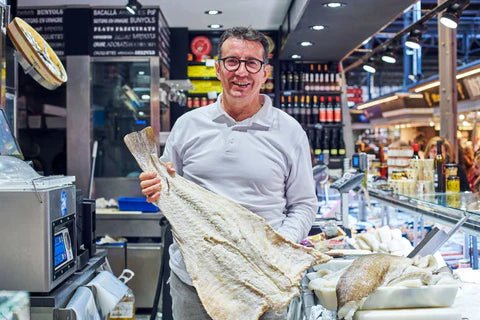
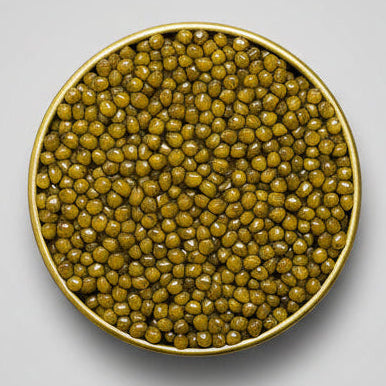
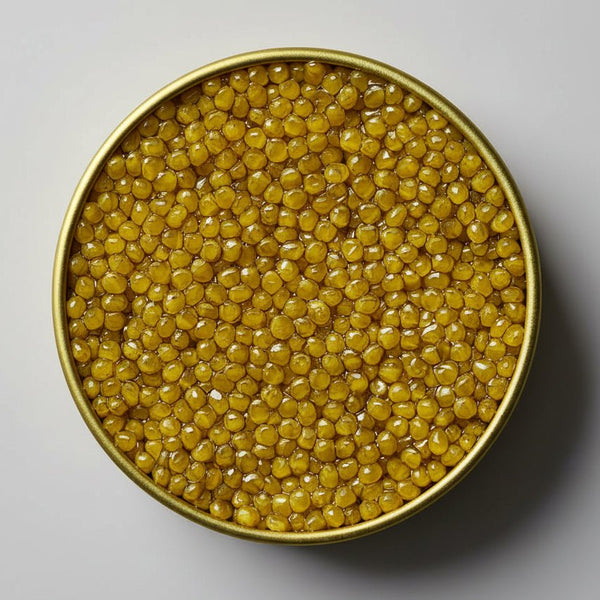
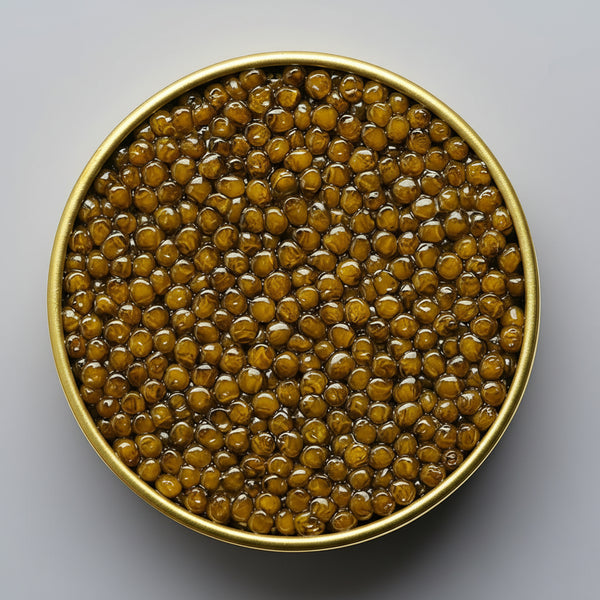
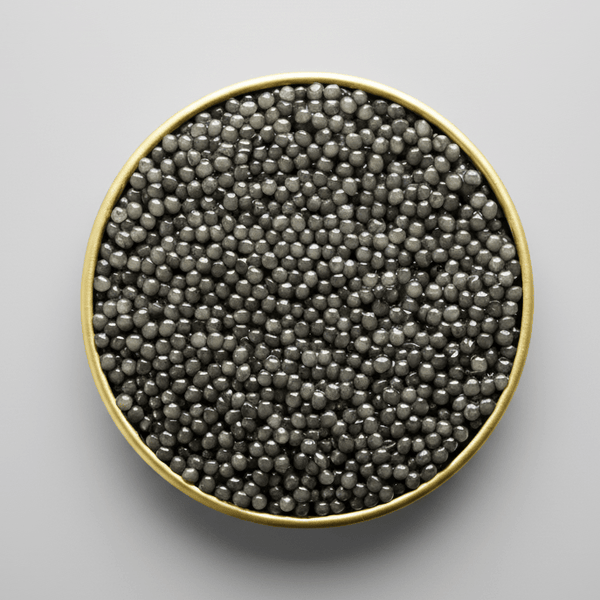


![Anchoas de Mercadona: Análisis Completo y Comparativa [2026]](http://bacalalo.com/cdn/shop/articles/anchoa-del-cantabrico-exclusive-en-aceite-de-oliva-160-g-8181953_c57d8ec1-72a2-4fc3-8541-ad4412d5f95f.webp?v=1774815695&width=480)

