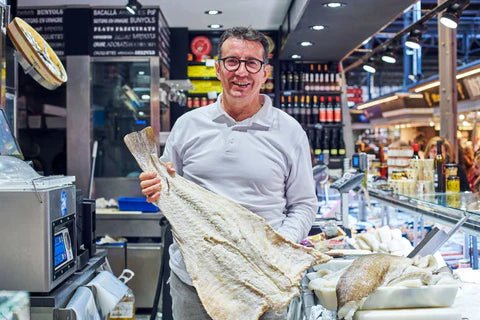
Abstract: At Bacalalo, we have been working with premium quality canned goods at the Mercat del Ninot in Barcelona since 1990. And if there's one question that constantly comes up among our customers, it's this: "What's the difference between boquerones and anchovies?"
The answer is a trick, because the correct answer is: they are the same fish processed in completely different ways. What changes is not the animal, but the preparation. And that difference changes absolutely everything: color, flavor, texture, culinary use, and price.
This guide provides a comprehensive answer to that question, plus everything you need to know to choose good preserved fish and enjoy it to the fullest.
Contents
- Boquerones vs. Anchovies: The Same Fish, Two Different Worlds
- Types of Boquerón/Anchovy Preserves
- How to Choose Good Canned Anchovies
- Boquerones in a Can: Do They Really Exist?
- What to Pair with Boquerones and Anchovies
- Anchovies and Cod: The Perfect Pair of Seafood Preserves
- Storing Anchovies at Home
Boquerones vs. Anchovies: The Same Fish, Two Different Worlds
The Fish
Both boquerones and anchovies are the same animal: Engraulis encrasicolus, the European anchovy. A small blue fish between 10-20 cm long, abundant in the Mediterranean, the Cantabrian Sea, and the Eastern Atlantic.
The terminological confusion arises because in Spain we use both names for the same fish, but the preparations are radically different:
- Boquerón: The fish processed raw with acid (vinegar) or simply fresh
- Anchovy (cured boquerón): The same fish subjected to salt curing for months
The Preparation of Boquerones in Vinegar
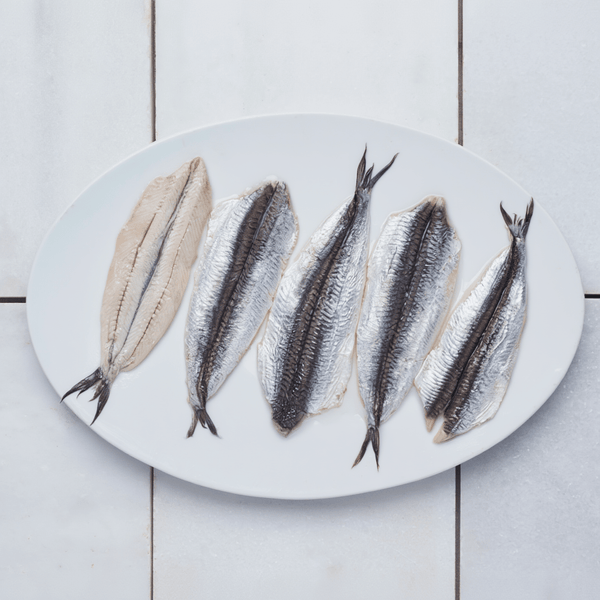
Boquerones in vinegar (the white ones you see at tapas bars) are prepared by acid maceration:
- Fresh boquerones are cleaned, butterflied, and cleaned again
- They are submerged in a mixture of vinegar (or lemon juice) and salt
- For 8-24 hours, the acid "cooks" the fish cold — proteins denature and the fish changes from transparent to opaque white
- They are seasoned with olive oil, garlic, and parsley
The result: a firm but delicate texture, an acidic and fresh flavor, and a white color. It's not a preserve in the strict sense (it's not sterile) — it lasts 3-5 days in the refrigerator.
The Preparation of Cured Anchovies (Canned Boquerones)
Cured anchovy is a completely different process:
- Fresh boquerones are beheaded and cured in sea salt in alternating layers (salt-fish-salt)
- Cold curing for 3 to 18 months (the best: 12-24 months)
- During this time, the fish's own enzymes act on the proteins, producing a profound transformation: collagen breaks down, fats oxidize slightly (the controlled process that gives flavor), the color changes from grayish to reddish-brown
- At the end of the curing, they are filleted by hand, cleaned, and packed in olive oil in a can or glass jar
The result: a very different texture (softer, almost melting), an intense umami flavor, a reddish-brown color, and a sterile preserve that lasts for years. It's the ingredient that chefs call a "natural flavor enhancer."
Types of Boquerón/Anchovy Preserves
1. Cantabrian Anchovies
Cantabrian anchovies (especially from the Santoña, Laredo, and Comillas areas in Cantabria) are the most highly prized in Spain and worldwide. Why?
- Cantabrian boquerones are fished between April and June, when they have the highest fat content (necessary for curing)
- The cold, humid climate of the Cantabrian coast favors slow curing
- The artisan tradition of the area (introduced by Sicilian fishermen in the 19th century) is at its peak
- The best anchovies are filleted by hand, one by one, by specialized workers
The reference brands for Cantabrian anchovies are those that year after year manage to get the right season, the fish at its peak, and the necessary curing time. Awards and mentions in gastronomic media are useful indicators, but the best test is always the palate.
At Bacalalo, we work with Cantabrian anchovies selected for quality, not price. If you want to know what we have available, ask at the counter.
2. Mediterranean Anchovies
Mediterranean boquerones exist, but they differ from Cantabrian ones:- Fished at different times of the year (without the "peak" fat content of spring in Cantabria)
- More variable sizes
- Curing can be faster in industrial companies
Quality Mediterranean anchovies exist and are very good. Industrial ones (large distribution cans) are the lower tier — edible but without the complexity of a well-cured artisan anchovy.
3. Portuguese and Other Origin Anchovies
Portugal has a significant canning tradition. Portuguese anchovy preserves (in increasingly fashionable designer cans) have variable quality — artisan products from small producers are excellent; industrial ones are similar to mid-range Spanish ones.
Other producing countries: Italy (especially Sicily and Liguria), Morocco, Peru. Peruvian and Moroccan ones are usually of more variable quality and lower price.
How to Choose Good Canned Anchovies
1. Read the Label
- Fish origin: Cantabrian? Mediterranean? North Sea?
- Curing period: The best cans indicate it (vintage, season)
- Oil: Extra virgin olive oil > olive oil > sunflower oil
- Ingredients: Should only be: anchovy, oil, salt. Nothing else.
2. Observe the Product
If it's in a glass jar (allowing you to see it without opening):- Color: uniform reddish-brown, not grayish or very dark
- Visible texture: fillets should be firm but not hard, without breaking
- Oil: transparent or slightly yellow. If cloudy or very dark, it may indicate rancid anchovies
In a can, you trust the brand more. That's why producer traceability matters.
3. Price as an (Imperfect) Indicator
Artisan Cantabrian anchovies of real quality have a price that surprises those who are not used to it: €15-€40 per 100g is not exceptional. Anchovies for €2 a can are a different product.
This doesn't mean that the most expensive are always the best, but it does mean that below a certain price, it's impossible to produce an artisan quality anchovy.
Related Products from Bacalalo

Recommended Products

Cantabrian Anchovies in Olive Oil - 50g...
€3.95

Deluxe Cantabrian Assortment
€67.00

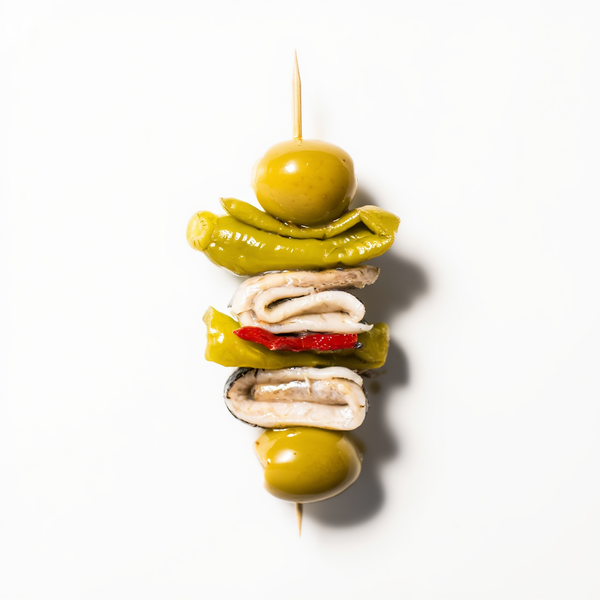
Artisan Cantabrian Anchovy Gilda Handcrafted...
€9.90

Northern White Tuna Belly in Olive Oil...
€16.95
Refrigerated shipping 24-48h throughout the Peninsula
Boquerones in a Can: Do They Really Exist?
This is an interesting question. The terminological confusion reaches the point where many people search for "canned boquerones" when they are actually looking for "canned anchovies" (the cured version).
Boquerones in vinegar (white) are not generally packaged in cans for commercial sale, because they are not a sterile preserve — they require refrigeration and have a short shelf life.
What are called "canned boquerones" in the market are usually, in reality, anchovies (cured boquerones) in a can. This is the stable, ambient-temperature preserve that lasts for months or years.
Some producers do sell boquerones in vinegar in glass jars (refrigerated, with a short expiry date), but this is not the usual product.
Conclusion: If you're looking for "canned boquerones," you're probably looking for cured anchovies canned in oil. And that's exactly what you should be looking for.
What to Pair with Boquerones and Anchovies
The difference in flavor and texture leads to completely distinct uses:
Boquerones in Vinegar: Tapas Recipes
Boquerón montadito with tomato:- Toasted bread
- Grated tomato with salt and oil
- 2-3 boquerones in vinegar
- Extra virgin olive oil
- Fried Padrón peppers
- Boquerones on top
- Fleur de sel and oil
Boquerón vinaigrette for salad: Finely chop 3-4 boquerones in vinegar. Mix with oil, apple cider vinegar, chives, and mustard. Serve over green salad.
Cured Anchovies: Uses and Recipes
Anchovies alone: The best Cantabrian anchovies need nothing else. Just good bread, butter if you like, and the anchovy on top. That's the ultimate test.
Anchovy toast with butter:- Quality toasted bread
- Quality butter at room temperature
- Anchovy on top
- Freshly ground black pepper
Anchovies in cooking: Cured anchovies are an exceptional cooking ingredient because they act as a flavor enhancer (natural glutamate). A couple of anchovies added to a sofrito, a tomato sauce, or a stew dissolve completely and give a depth of flavor impossible without them.
Sauce with anchovies:- 4-5 anchovies, melt them in a pan with hot oil (they dissolve on their own)
- Add halved cherry tomatoes
- Capers
- Black olives
- Simmer for a few minutes: you have a quick puttanesca sauce perfect for pasta or cod
- Open canned piquillo peppers
- Place 2 rolled anchovies inside
- Drizzle with a little oil from the can
- Serve at room temperature or slightly warmed
Anchovies and Cod: The Perfect Pair of Seafood Preserves
At Bacalalo, anchovies are the natural companion to cod. We have worked with both for decades because they share the same philosophy: the transformation of fish through traditional techniques that concentrate flavor and make it more complex.
Where cod is transformed by salt and time (from fresh to cured), anchovy is transformed by salt and enzymes (from fresh boquerón to dark, intense anchovy).
They are two distinct fish, two distinct techniques, but with the same principle: time and technique in service of flavor.
Buy Cantabrian anchovies and seafood preserves at Bacalalo
Storing Anchovies at Home
Unopened can: In a cool, dark place (not necessarily the refrigerator), canned anchovies will last until the indicated expiration date.
Opened can: Transfer the anchovies to a glass container with a lid, covered in oil. In the refrigerator, they will last 1-2 weeks.
Unopened glass jar: Similarly, in a cool place. Once opened, refrigerate and consume within 7-10 days.
Can anchovies be frozen? Technically yes, but the texture changes (they become softer and less firm). For cooking (where they dissolve), it's acceptable. For eating them on their own, it's not recommended.
Frequently Asked Questions
Are boquerones and anchovies the same animal?
Yes. They are the same fish (Engraulis encrasicolus), processed in completely different ways. Boquerones in vinegar are made with acid that "cooks" the fish cold. Anchovies are made with long salt curing, which transforms the fish through its own enzymes over months.
Why are anchovies so expensive?
Because of the amount of artisanal work involved: selecting fresh fish in season, curing for months while controlling temperature, hand-filleting one by one, and manual cleaning and packing. The best Cantabrian anchovies require 12-18 months from fresh fish to can. It's time, labor, and premium raw material.
What are "00" or "triple zero" anchovies?
The "00" or "000" (triple zero) is not an officially regulated designation. It is a commercial reference that producers use to indicate the largest, fattest, and cleanest anchovies in their selection. There is no universal standard — each brand has its own criteria. That said, the "00" or "000" from reputable brands are usually indeed the best pieces of the season.
Can I make "boquerones en vinagre" (vinegared anchovies) at home?
Yes, and it's simple: fresh anchovies, cleaned and butterflied, covered with white wine vinegar and salt for 8-12 hours in the fridge. The vinegar will "cook" them. Drain, season with olive oil, garlic, and parsley. Consume within 3-4 days maximum. Caution: vinegar does not eliminate parasites — if the fish is not certified as previously frozen, freeze it for 48h at -20°C before the process.
Do anchovies contain gluten?
Anchovies themselves do not contain gluten (they are fish, salt, oil). However, some brands may have traces of gluten due to being manufactured in shared facilities. If you have celiac disease, look for certified gluten-free products. Always read the label.
How many anchovies are in a standard can or jar?
It depends on the size of the anchovy and the container. A 100g jar can contain between 8-15 fillets. A small can (50g) usually has 6-10. Formats vary greatly depending on the producer.
What is the difference between anchovies in olive oil and in sunflower oil?
Olive oil adds flavor and is more stable. Sunflower oil is more neutral. For consuming anchovies alone, extra virgin olive oil gives better results. For using anchovies in cooking (where the oil is also used), olive oil is also preferable. Sunflower oil usually indicates an inferior quality product.
Are canned anchovies healthy?
Yes, nutritionally speaking. They are rich in high-quality protein, omega-3, vitamin B12, iron, and calcium. Sodium content is high (as in any salted preserve), which is relevant for people with hypertension. The caloric content is moderate.
How do I open a can of anchovies without breaking the fillets?
Using a plastic or wooden spoon or fork (to avoid oxidizing the oil), carefully remove the fillets by lifting them from one end. Do not use a metal fork inside the can. Quality anchovies are fragile and break easily.
Can I make homemade anchovies?
Yes, but it's a long process. You need very fresh anchovies, coarse sea salt, a heavy container for pressing, and patience. The minimum recommended curing time is 6 months, and the best results are achieved at 12 months. It's a satisfying project for enthusiasts, not for those looking for quick results.
At Bacalalo, we have been selecting real quality preserves in the Mercat del Ninot since 1990. The anchovies we offer in our store are the same ones we eat ourselves. If you want advice on which brand to choose or how to use them in cooking, come visit us — we've been answering those questions for decades.
Products you might be interested in
Discover more