Summary: There are few sauces in Spanish cuisine that generate such heated debates as vizcaína sauce. The starting point of the debate is always the same: does it contain tomato or not?
The short answer is no. Authentic vizcaína sauce does not contain tomato.
The long answer is this article.
At Bacalalo, we have been in Mercat del Ninot in Barcelona since 1990, with cod as the focus of our activity. We are not Basque—we are Catalan. But we have been selling and talking about cod a la vizcaína for thirty years, and we know perfectly well what separates the authentic version from the more or less successful adaptations that have proliferated throughout Spain.
Contents
What is Vizcaína Sauce: Definition and Context
Vizcaína sauce (salsa bizkaina, in Basque) is a Basque sauce made primarily with rehydrated choricero peppers, onion, and garlic. It is the base for "bacalao a la vizcaína"—one of the three great Basque cod dishes, along with pil-pil and Club Ranero.
But vizcaína sauce is interesting in its own right, beyond its use as a cod sauce. It is an independent ingredient with applications in other dishes, and understanding its preparation process is to understand a fundamental Basque culinary technique.
The sauce as an ingredient, not just an accompaniment
This is the perspective that differentiates this article from a conventional "bacalao a la vizcaína" recipe. Vizcaína sauce is not simply a bath for cod—it is a preparation with its own identity that can be used in:
- As a cod sauce (the most well-known use)
- With broken or poached eggs
- In stuffed roasted peppers
- As a base for soupy rice dishes
- In marinades for red meats
- In croquettes with a bacalao a la vizcaína filling
The History of Vizcaína Sauce
Vizcaína sauce originated in the Basque Country in the 19th century, when the choricero pepper—brought from America—had already been integrated into Basque and Navarrese cuisine for centuries.
The choricero pepper (Capsicum annuum variety, a red pepper dried in the open air) arrived on the Iberian Peninsula in the 16th century. In the Basque Country and Navarra, it became particularly deeply integrated into the cuisine: dried, it becomes a concentrate of flavor, color, and sweetness that transforms any stew.
Vizcaína as a sauce specifically for cod developed in Bilbao throughout the 19th century. Cod and Bilbao have a deep historical relationship—Basque cod fishermen sailed to the fishing grounds of the North Atlantic. The choricero pepper, dried and preserved, was the perfect counterpoint to salted cod: sweet, fleshy, with enough body to create a sauce without the need for thickeners.
Tomato: the misunderstanding
Tomato entered vizcaína recipes through gastronomic contamination. When bacalao a la vizcaína began to gain popularity outside the Basque Country, chefs from other regions—accustomed to using tomato in their red sauces—added it because they thought it was the "normal" way to make a red sauce.
The result is not bad. But it is something else.
In the Basque Country, the controversy over tomato in vizcaína is almost constitutional. Defenders of the tomato-free version—who are the Basque purists—argue that tomato radically changes the flavor profile of the sauce: it adds acidity and water that dilutes the choricero pepper concentrate. The authentic version is denser, darker, and has a deeper, more specifically "Basque" flavor.
Choricero Pepper: The Central Ingredient
Understanding vizcaína sauce begins with understanding the choricero pepper.
What is a choricero pepper
The choricero pepper is a red pepper (Capsicum annuum variety) that is harvested ripe and air-dried, hung in strings or spread on sunny surfaces. The drying process concentrates all its natural sugars, color, and flavor.
It has a sweet taste with mild smoky notes, without heat (or with almost imperceptible heat in milder varieties). Its dried flesh rehydrates well in warm water, releasing a deep red pulp that is the essence of vizcaína sauce.
How to choose a good choricero pepper
- Color: intense red, without black or gray areas indicating spoilage
- Texture: flexible but dry. A choricero pepper that breaks into powder is too dry. One with visible moisture is poorly preserved.
- Aroma: sweet, with notes of dried pepper, without mold or rancid smell
- Origin: Navarra and the Basque Country produce the best choricero peppers. The "choricero pepper" designation from these areas guarantees quality.
Format: whole vs. jarred pulp
Choricero peppers are found in two formats:
Whole dried: the traditional format. They are rehydrated in warm water for 20-30 minutes, then the seeds are removed, and the pulp is scraped with a spoon, separating it from the skin.
Jarred pulp: ready-made, preserved choricero pepper pulp. Practical and with good results. The yield is direct—no need to rehydrate or scrape. It is the most common option in professional kitchens with high volume.
Related Bacalalo Products


Recommended Products

Natural Cod Liver Foie Gras - 120g | Smoked Icelandic Cod Liver...
3,90 €

CHATKA Wild King Crab 60% Legs 40% Shredded...
95,00 €

Smoked Cod Carpaccio Artisan Cut | 1 Tray P...
15,90 €

Dried Cod Tongues (1 tray) - 500g
19,95 €
Refrigerated shipping 24-48h throughout the Peninsula
The Authentic Vizcaína Sauce Recipe
This is the sauce alone, without the cod. Once you master the sauce, using it with cod (or anything else) is trivial.
Ingredients (for about 600ml of sauce)
- 8-10 dried choricero peppers (or 200g of jarred pulp)
- 3 medium onions (about 500g), thinly julienned
- 2 cloves of minced garlic
- 1 slice of day-old bread
- 100ml extra virgin olive oil
- 200ml cod stock (or mild fish stock)
- Salt to taste
- (Optional) a pinch of paprika from La Vera to enhance color
Step 1: Rehydrate the choricero peppers
If using whole dried peppers: wash, cut in half, remove seeds. Place in a bowl with warm water and rehydrate for 20-30 minutes. Remove, drain, and scrape the pulp with a spoon, separating it from the skin.
If using jarred pulp: measure the amount and set aside. No preparation needed.
Step 2: The base sofrito (the key to success)
In a large saucepan, heat the oil over medium-low heat. Add the thinly julienned onion with a pinch of salt. Cook over low heat for 45-60 minutes, stirring occasionally, until the onion is completely translucent, golden, and very soft. There are no shortcuts in this step.
The onion is the structure of the vizcaína sauce. Poorly poached onion (over high heat, with residual water, without enough time) produces an acidic sauce with an inappropriate body. Well-poached onion provides concentrated sweetness that complements the choricero pepper.
Halfway through poaching, add the garlic. In the last 10 minutes, add the chopped bread and let it integrate with the onion.
Step 3: Incorporate the choricero pepper pulp
Add the choricero pepper pulp to the onion sofrito. Stir well. Cook for 5-10 minutes over low heat so that the pulp integrates with the onion.
Step 4: Add the stock and cook
Add the cod or fish stock. Cod stock (the final desalting water, filtered, or a mild fish bone stock) perfectly complements the sauce. If not available, a mild fish stock works well.
Cook over low heat for 20-25 minutes, stirring occasionally.
Step 5: Blend and strain
Blend the sauce vigorously with an immersion blender until smooth. Strain through a fine-mesh sieve to remove any remaining pepper skin and obtain a completely homogeneous sauce.
Taste for salt. The sauce is ready.
Expected result
- Color: intense dark red, almost garnet
- Texture: dense, coating the back of a spoon, without lumps
- Flavor: sweet with notes of pepper, depth from caramelized onion, without acidity
- Aroma: intense but harmonious, without bitter notes
How to Use Vizcaína Sauce with Cod
Once you have the sauce, using cod is simple.
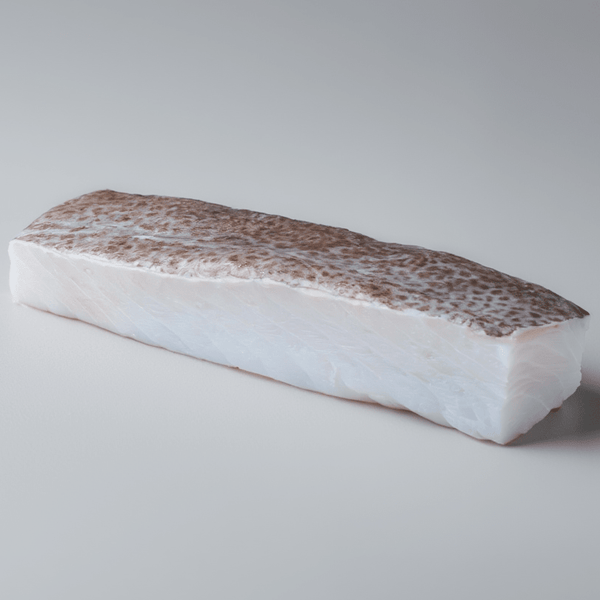
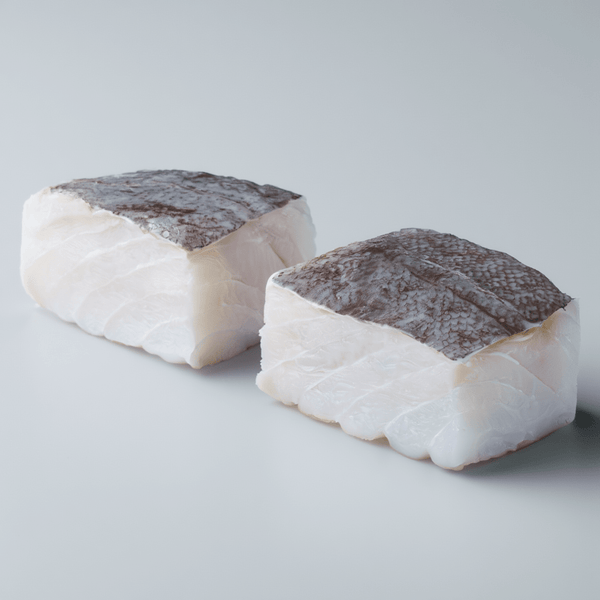
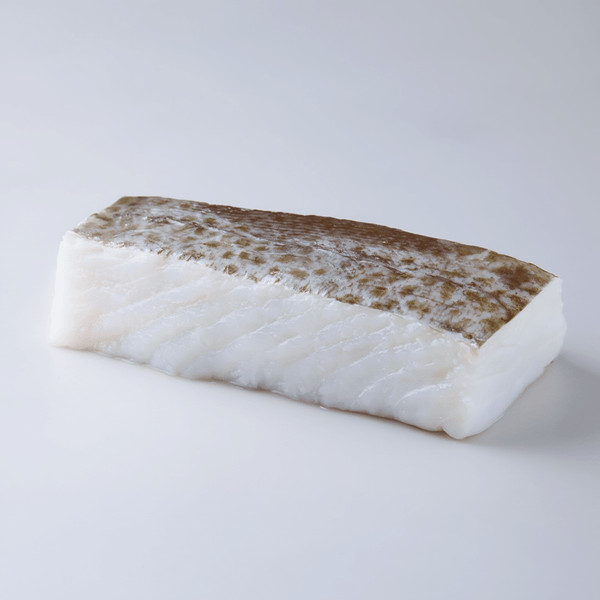
Cod for vizcaína: desalted cod loin, perfectly seasoned. Thickness matters—thick loins (more than 2cm) work best because they withstand cooking in the sauce without falling apart.
The process:- Lightly brown the cod loins in olive oil (skin-side up first, 2 minutes, then flip and 1 more minute). Do not cook completely—it will finish cooking in the sauce.
- Heat the vizcaína sauce in a large saucepan.
- Add the cod loins to the hot sauce, skin-side up.
- Cook over very low heat for 8-10 minutes, basting the cod with the sauce occasionally.
- Serve in the same saucepan or on individual plates, generously drizzled with the sauce.
Differences with Other Red Cod Sauces
Vizcaína is a red sauce, but it is not "a tomato sauce with cod." The differences are fundamental:
| Characteristic | Vizcaína Sauce | Tomato Sauce | Brava Sauce |
|---|---|---|---|
| Base | Choricero pepper + onion | Tomato | Tomato + paprika |
| Texture | Dense, no free water | Variable, more watery | Variable |
| Sweetness | High (pepper + caramelized onion) | Medium (tomato) | Low |
| Acidity | Minimal | High (tomato) | Medium-high |
| Color | Deep dark red, garnet | Orange-red | Intense red |
| Flavor Profile | Deep, umami, sweet | Fresh, acidic | Spicy, seasoned |
Storage of Vizcaína Sauce
- In the refrigerator: up to 5-7 days in an airtight container.
- In the freezer: up to 3 months. Vizcaína sauce freezes perfectly—it is one of the best sauces to prepare in large quantities and freeze in portions.
- In sterilized jars: can be stored for several months if packaged hot in sterilized jars and processed in a bain-marie.
Frequently Asked Questions about Vizcaína Sauce
1. Does authentic vizcaína sauce never contain tomato? Correct. The traditional Basque Country recipe does not include tomato. Versions that do are adaptations that exist outside the region, or modern interpretations. They are not incorrect per se—they are simply not traditional vizcaína.
2. What is the difference between vizcaína sauce and jarred pepper sauce? Jarred pepper sauce (generally piquillo peppers or roasted peppers) is different in flavor and texture. Choricero pepper has a much more concentrated and specific flavor. They are not interchangeable.
3. Can I use paprika instead of choricero pepper? Paprika adds a dry pepper flavor but doesn't provide the same texture or depth of flavor as choricero pepper pulp. It can be added in small quantities to enhance the color, but it's not a substitute for choricero pepper as the main ingredient.
4. How long does it take to make Vizcaína sauce? The sauce takes between 1 hour and 1.5 hours, including the time to sauté the onion. There are no shortcuts when sautéing—it's the key to the flavor. It can be prepared in advance and stored in the refrigerator or frozen.
5. Is Vizcaína sauce spicy? No. Choricero pepper is a sweet variety, with no significant capsaicin. Authentic Vizcaína sauce is not spicy. If you prefer to add heat, a pinch of cayenne or chili pepper can be included, but it is not traditional.
6. Can cod broth be substituted with chicken broth? It is not recommended. Chicken broth introduces flavor notes that do not belong in this dish. If cod broth is not available, it's better to use tap water or a mild vegetable broth.
7. Why does Vizcaína sauce contain bread? Bread (a slice from the previous day) acts as a natural thickener and helps give body to the sauce during blending. It is an ancient technique of Basque and Mediterranean cuisine—pochados (slowly cooked dishes) with bread are denser and have a better texture than those that use only vegetables.
8. Can I make Vizcaína sauce without cod broth? Yes. Cod broth adds a marine flavor that complements the sauce when used with cod, but the sauce works without it using water or mild fish broth. If the sauce is to be used with other dishes (not cod), cod broth can be omitted completely.
9. What cut of cod is best for Vizcaína? Thick loins. Vizcaína sauce is dense and powerful—it needs cod with character and structure. A 200-250g loin per person, well desalted, is the ideal cut. Flakes or small pieces would disintegrate in the sauce.
10. Can Vizcaína-style cod be made with fresh cod (not desalted)? It can, but the traditional recipe uses desalted salted cod. The salting and desalting process changes the texture of the cod (making it firmer) and adds a specific flavor that is part of the dish's profile. Fresh cod will produce a different result—not necessarily bad, but not the traditional Vizcaína.
Conclusion
Vizcaína sauce is one of the great achievements of Basque cuisine: dense, dark, sweet, without the tomato that others habitually add to it. Understanding it as an independent sauce—not just as "the cod sauce"—opens up a range of uses that go far beyond the classic dish.
The secret lies in the choricero pepper and time: slowly sautéed onion, well-integrated pulp, and cod broth that brings it all together. There are no shortcuts in this sauce—and precisely for that reason, the result justifies the process.
And the cod that goes into it matters. At Bacalalo, we select desalted cod loins with the criteria demanded by this dish: thickness, salt point, texture. Since 1990, the same standards.
Buy cod for Vizcaína at Bacalalo
Discover more